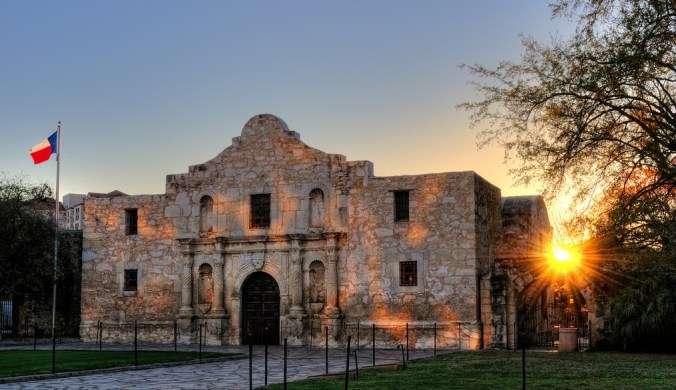
WaPo: “Republican Overseeing Alamo Renovation Ousted After ‘Woke’ Social Media Post” Ethics Alarms: “Better Safe Than Sorry.”

I know, I know: Ethics Alarms’ annual “Remember the Alamo!’ posts usually don’t start until February. But an important Alamo story with ethics lessons reaching beyond the legendary Texas battle is in the news, and attention should be paid.

Kate Rogers had been leading the $550 million renovation of the Alamo in San Antonio, Texas. Texas Lt. Gov. Dan Patrick reviewed a copy of her 2023 PhD dissertation on museums affecting history is taught in schools. “Personally, I would love to see the Alamo become a beacon for historical reconciliation and a place that brings people together versus tearing them apart, but politically that may not be possible at this time,” her dissertation stated. Patrick asked her to resign as CEO of the Alamo Trust based on that sentiment, and Rogers refused. declined. The next day, Patrick publicly called for her resignation. This time, Rogers complied.

This week, Rogers sued, alleging wrongful termination. The theory: forcing her to resign for what she wrote in her dissertation was a violation of her free speech rights. The dissertation wasn’t the whole story, however. On her watch, a social media post from the Alamo Trust had prompted this letter…

Continue reading

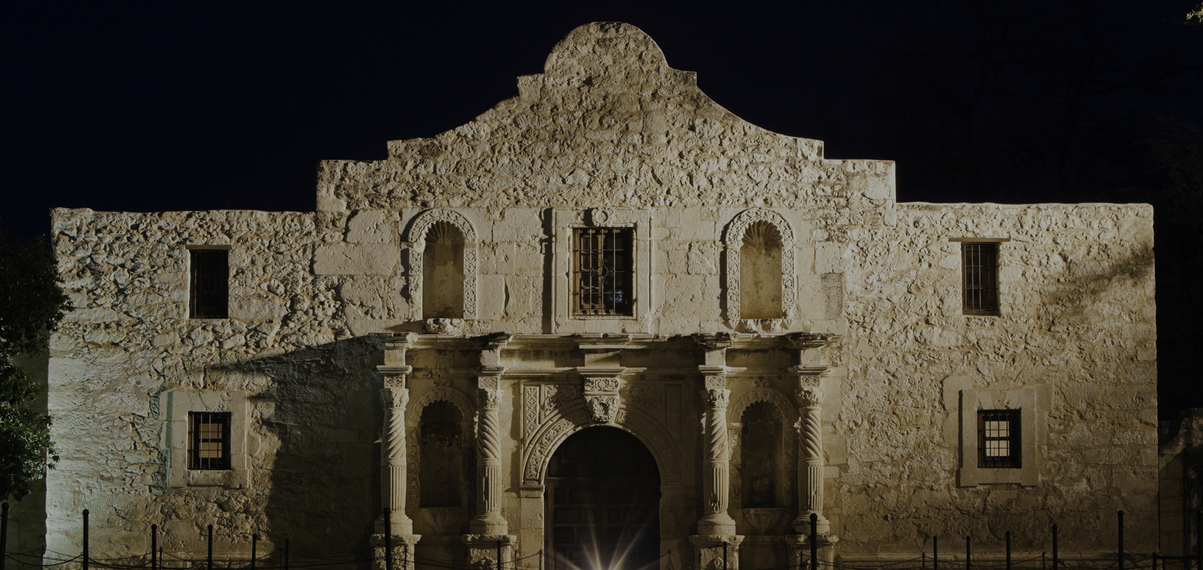
Remember The Alamo Today, March 6, When The Fort Fell, And Entered American Lore And Legend Forever.

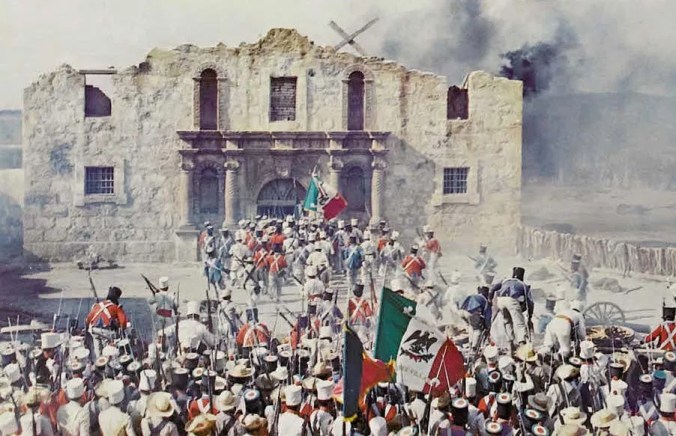
No, I didn’t forget the Alamo, and I hope against hope that more Americans than not are at least noting the anniversary of when the mission that became a fort fell in the early morning hours of March 6, 1836. As soon s I get this post up, I’m going to re-watch the 1960 John Wayne movie commemorating the siege and the men who died that day. The Duke’s film has plenty of flaws, but a lack of conviction and passion isn’t one of them; in the end that, plus the Demiri Tiomkin score, is what what makes “The Alamo” my favorite cinematic telling of the story.

Did the old newspaperman’s manifesto from another John Wayne movie, “The Man Who Shot Liberty Valence” ever apply more perfectly to an event in American history?  “When the legend becomes fact, print the legend.” “I answered them with a cannon shot.” The line in the sand. The couriers who came back to the fort to die. Jim Bowie fighting from his sickbed. Davey Crockett fighting to the end. Truth and fiction, the Alamo is my favorite of all American history tales, and the Alamo itself is my favorite historical site to visit in the United States.

I didn’t have a new inspiration to justify a new post this year, so I’m reprising the one from this date in 2023. Among other things, it included the climax of the Alamo diary Michael West contributed a few years ago.

Now the bugles are silent
And there’s rust on each sword
And the small band of soldiers
Lie asleep in the arms of the Lord.

***

I regard the siege of the Alamo one of the signature ethics events in U.S. history, both for what it was and what it came to represent. There have been many posts on the subject as well as many references to the Alamo in other posts, all of which are accessible here.

Today, March 6, marks the fall of the converted mission. Ethics Alarms has two pieces from its archives to present: Continue reading

I’m Not Forgetting The Alamo This Year, and Other Concerns…

That is one of several plaques around San Antonio that memorializes William Barrett Travis’s desperate but inspiring letter on this date in 1836 calling for assistance as the fortress Travis commanded found itself under siege by the Mexican army. Last year at this time, I’m ashamed to say, I was too preoccupied to write about the Alamo, its defenders and its importance in American history and lore. I’m just as preoccupied now, frankly, but also determined not to neglect my duty to give proper respect and acknowledgement to 220 or so volunteers who, by their courage, comradery and dedication to a cause, displayed the best of the American spirit. Travis, Bowie, Crockett, Bonham and the rest would have really gotten a kick out of Trump’s post-assassination attempt theater.

Meanwhile,

1. I won’t be using the History Channel’s daily history prompts from now on. It seriously hacked me off, first by insisting that I consent to an A&E “Consumer Agreement” and not making a way to consent to it evident, but worse, presenting me with this monster (skip to the end; for God’s sake don’t try to read it!)

I have lectured and written abut this before. No ethical lawyer should prepare such a thing which they know with 100% certainty that literally no one can or will read. That’s not informed consent. That’s chicanery. Nor should a consumers have to pay lawyers to explain what what they are agreeing to. If I were asked to advise a client about the propriety of inflicting such a document on anyone, I would a) end up charging them several thousand dollars for my time and b) tell them that if they couldn’t cut the agreement down to three pages while defining every legal term in it, I would regard it as signature significance for an untrustworthy company. Give consumers a video to listen to that explains what the document covers in simple English. Something…anything but that mess. This is how Disney ended up using the agreement to sign up for a free trial on Disney+ to try to dodge a negligence suit at EPCOT. Over the past year, as I have been digging out from a financial disaster, I’ve become really good at saying, “You know what? I don’t want or need this service enough to tolerate the way you manipulate and mistreat customers. Screw you.”

Continue reading

Remember The Alamo Today, March 6, When The Fort Fell, And Entered American Lore And Legend Forever.

I regard the siege of the Alamo one of the signature ethics events in U.S. history, both for what it was and what it came to represent. There have been many posts on the subject as well as many references to the Alamo in other posts, all of which are accessible here.

Today, March 6, marks the fall of the converted mission. Ethics Alarms has two pieces from its archives to present:

I. Last year, Texan and Ethics Alarms stalwart Michael West’s provided Ethics Alarms readers with a day by day account of the Alamo’s the final days, March 5 and March 6.  Here it is:

March 5, 1836

After the previous day’s war council (on March 4), Santa Anna was content that his glorious assault would occur. But evidently, according to several reliable Mexican sources, a civilian woman from the town, who had retreated to the Alamo with the Texans, made it out of the Alamo during the night and gave dire information to the Mexicans. Evidently the Texan garrison was increasingly despondent. According to the lady who escaped, Travis and the garrison had discussed their options and one of the more forceful arguments made was that they should consider surrender.

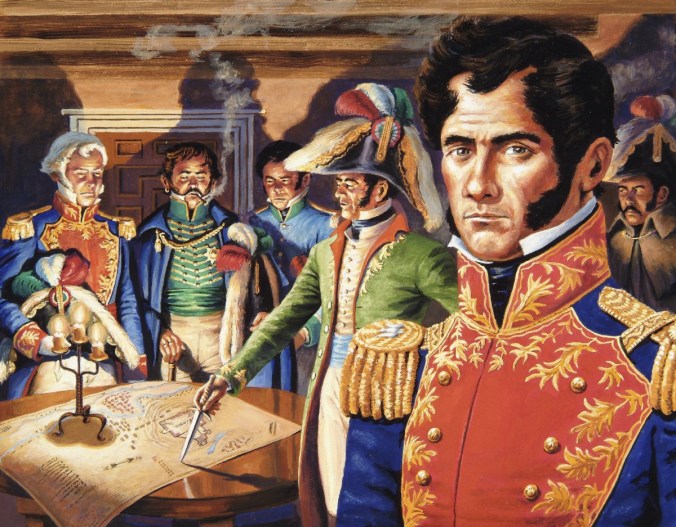
Santa Anna wanted none of this, and accelerated his assault time-table (which he hadn’t necessarily meant for the 6th of March but for the 7th or even the 8th).

The Mexican soldiers would have received their orders in the morning and spent the rest of the day making preparations. There was little physically they had to do other than check the locks of their muskets, ensure they had the requisite number of extra flints (which would occasionally break in battle – testing the coolness of even the most experienced soldier), or assist in the production of several ladders Santa Anna had commanded each battalion to have prepared.

No, most of the preparation would have been mental. A deeply Catholic people, the Mexican soldiers would have spent their energies on prayer and confession. New soldiers would have been nervous about how they would perform under fire, simultaneously trying to hide their nerves from the experienced soldiers, who would have recognized the unique challenge before them. Almost none had been asked to climb tall walls after traversing several hundred yards under fire against an enemy who had, in the previous 12 days, proven that their rifled muskets out-ranged the standard Mexican issue musket by nearly 300%Some of Santa Anna’s soldiers were eager to get into the fight – to uphold the honor of the Mexican nation against, not only rebels, but rebels seemingly motivated by pro-American attitudes. Some of Santa Anna’s soldiers had been farmers pressed into service only months before, who would have had a partially begrudging attitude and were mostly  leaning towards “let’s get this over with so I can get home.” Some of the dictator’s soldiers were convicts for whom the upcoming bloodshed was just one more act of brutality to endure in an already brutal and brutalized life. For a large number of the soldiers, for whom soldiering was life, this would be a terror that they  knew would be expected of them. Regardless of their motivations, there would be no getting out of the upcoming ordeal and every single one of them would be in the same peril  when a Texan cannon roared out at their formation.

Set to wake up at midnight to begin movements to their attack positions, the  few soldiers could fall asleep would have tried to do so by twilight.

Inside the Alamo, evening would draw a miserable day to a close. Earlier that day, according to Enrique Esparza, aged 8 (who’s father, Gregorio, was fighting with the Texans), the faeful courier entered the Alamo with news that despite  all the hopeful reports, no immediate help was on its way. Travis would have discussed with the men their options – a break-out attempt in case of a successful assault would be their best recourse. A break out during the day would be impossible and one at night would be extremely risky. Whatever was said, it appears all but perhaps one of the men decided to stay

For the Texans, sleep would come quickly that evening. For the first time in 12 days, Santa Anna’s cannons didn’t create chaos inside the compound. It was silent. There could be no doubt that the defenders knew what this meant, but they were exhausted. They would have kept watch and pure anxiety might have boosted their necessary alertness. Nonetheless, they began succumbing to sleep deprivation and may have been deep in dreams of life after the war – or perhaps of life before the war.

Before collapsing in whatever position suited rest, most would have reviewed their plans in their minds of how to get out once they’d done what they could to slow or halt the Mexican advance. No shame in that: when a battle is clearly lost and standing your position doesn’t buy anyone else on the battlefield any opportunity to turn the tide, there’s no principle of warfare that requires that a soldier  die on principle.

Most would have recognized that with San Antonio immediately to the west, and several Mexican artillery batteries to the north and south, the east would be the best direction to break out for should the situation so demand. That was also where the gathering Texan army could be found, eventually.

Right after dusk, Travis dispatched the final courier on yet another appeal for assistance. Then, as in each night during the siege , Travis assigned several men outpost duty beyond the walls of the Alamo to provide an early warning before turning the watch over to another officer.

He hoped to get a little bit of sleep himself.

March 6, 1836: The End

Continue reading

Michael West’s Alamo Diary Concludes…

On this date in 1836, the Battle of the Alamo and the courageous 12 day stand that preceded it began its journey into memory. The day before, March 6, near dawn, saw the fortress fall in a bloody but hopeless battle in which the Texans were overwhelmed in less than an hour.

Here is Texan and Ethics Alarms stalwart Michael West’s account of the final days, March 5 and March 6:

March 5, 1836

After the previous day’s war council (on March 4), Santa Anna was content that his glorious assault would occur. But evidently, according to several reliable Mexican sources, a civilian woman from the town, who had retreated to the Alamo with the Texans, made it out of the Alamo during the night and gave dire information to the Mexicans. Evidently the Texan garrison was increasingly despondent. According to the lady who escaped, Travis and the garrison had discussed their options and one of the more forceful arguments made was that they should consider surrender.

Santa Anna wanted none of this, and accelerated his assault time-table (which he hadn’t necessarily meant for the 6th of March but for the 7th or even the 8th).

The Mexican soldiers would have received their orders in the morning and spent the rest of the day making preparations. There was little physically they had to do other than check the locks of their muskets, ensure they had the requisite number of extra flints (which would occasionally break in battle – testing the coolness of even the most experienced soldier), or assist in the production of several ladders Santa Anna had commanded each battalion to have prepared.

No, most of the preparation would have been mental. A deeply Catholic people, the Mexican soldiers would have spent their energies on prayer and confession. New soldiers would have been nervous about how they would perform under fire, simultaneously trying to hide their nerves from the experienced soldiers, who would have recognized the unique challenge before them. Almost none had been asked to climb tall walls after traversing several hundred yards under fire against an enemy who had, in the previous 12 days, proven that their rifled muskets out-ranged the standard Mexican issue musket by nearly 300% Continue reading

Comment Of The Day: The Alamo, March 4, 1836

I hope a lot of you are enjoying Michael West‘s generous labor of love during the countdown to the Alamo’s fall. It is, as I’ve said here often, one of the most vivid and fascinating of all ethics chapters in U.S. history, and the fact that it is neglected in popular culture and public education to the degree it is disgraceful, like much of this nation’s negligent and cavalier attitude toward history.

I want to apologize to readers and especially Michael for a mistake I have made. One of my sources, echoing others, printed the Mexican dictator’s name as “Santa Ana,” with one “n.” Convinced that I had been perpetrating an error, i began lnocking off the second “n” in Michael’s posts and my own, though I always had assumed that “Anna” was correct.

Well, it was and is correct. His full name is Antonio de Padua María Severino López de Santa Anna y Pérez de Lebrón. Now I have to go back and correct the correction.

Here is Michael’s focus on Day 11 of the siege, March 4, 1836.

***

It was cold that evening that the Mexican Artillerymen of the 1st Brigade under command of General Gaona settled down into their camp somewhere south of modern day Yancey, Texas. They had been on a forced march since late January. The moon was full that evening, perfect for night operations – and despite the Texans being bottled up about 45 miles away, Native American raiders were still a possible threat. Reports had been received that straggling soldiers had been ambushed. Continue reading

Comment Of The Day: The Alamo, March 3, 1836

Michael West’s dedicated account of the last days of the Alamo in 1836 continues with Day 10 of the siege, March 3. Michael’s mention below of the Alamo couriers reminds me of what I found to be the most moving of the commemorative bronze plaques at Alamo National Monument in San Antonio. It lists the couriers, and reminds us that every one of them headed back to the make-shift fort, knowing what was probably in store for them.

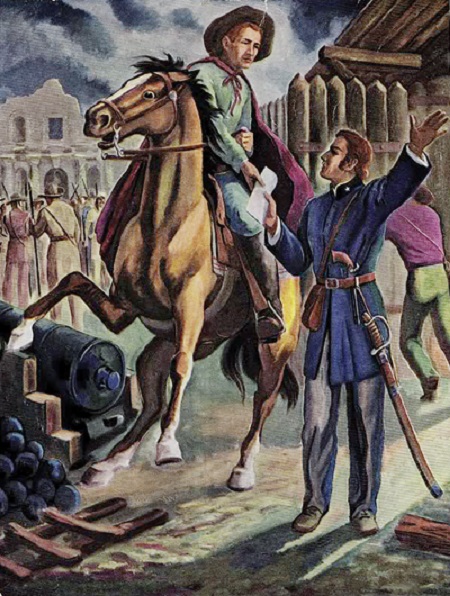
As far as I can determine, two of Travis’s final couriers didn’t arrive in time to participate in the final battle, and thus lived to tell the tale. James L. Allen (1815-1901) was probably the last courier to be sent by Travis, as he carried a final appeal to Fannin at Goliad. He reached Goliad on March 8, and was preparing to return to the Alamo when he learned that it had fallen. John William Smith  (1792-1845), who had been sent out from the Alamo by Travis previously, was sent again on March 3 1836. Smith was returning with 25 volunteers from when the Alamo fell. In John Wayne’s movie, Smith is played by Frankie Avalon, and is a composite of Allen, who was young (21) like Frankie, and the real Smith, who actually made it back only to find that the battle was over. Frankie’s big scene occurs when, having delivered a message relaying the fort’s dire situation to Sam Houston (Richard Boone), Houston offers him food and rest. “No sir!” “Smitty” says, turning his horse. “I gotta get back to the Alamo!”

Here’s Michael’s Comment of the Day on Day 10 of the Alamo story...

Continue reading

Comment Of The Day: The Alamo, March 2, 1836

Michael West has been counting down the days of the Alamo Siege for us, which is generally regarded as beginning on February 3, 1836, and ending on March 6. That makes March 2, yesterday, the 9th day of the iconic historical event. (As Michael reminded us in an earlier post, 1836 was a Leap Year, so there’s an extra day in there.)

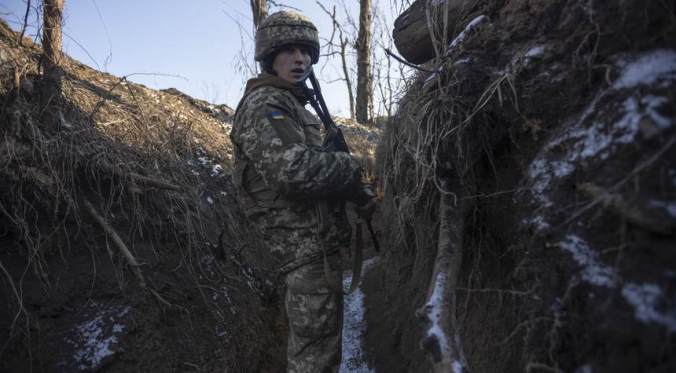
Reflecting on The Alamo is always appropriate, but perhaps more this year than usual. The siege of Ukraine has more than a little in common with the desperate stand of the Texans against another ruthless dictator, and the values at stake are the same. Travis, Bowie, Crockett, Dickinson, Bonham and the rest decided to stay and fight for what they believed in and also for those seeking to establish their independence, though they were outnumbered and surrounded. Ukraine’s president, Volodymyr Zelenskyy, resembles the Texas patriots in his determination to stay with his nation’s endangered citizens, because he knows his courage, sacrifice, and likely martyrdom, will be crucial in preserving his nation in the long run.

In many ways Zelenskyy resembles Davey Crockett, a celebrity known for his humor who found himself first thrust into politics and later in deadly fight that required him to rise to new heights of character.

My favorite Alamo history is “Three Roads to the Alamo” by William C. Davis, who makes the case that the mission’s story is a microcosm of the American saga. Each of the three major players in the drama, Travis, Jim Bowie and Crockett, embody an archetype of how the nation came to be. Crockett was the restless pioneer who ventured first into unsettled lands. Bowie, apart from being the bona fide frontier fighter that the public believed Crockett to be, was the land speculator, part of a group that brought business, finance, and corruption to the West. Finally, Travis was the law-maker and politician, who promised to build a civilized structure where families could thrive.

Indeed the Alamo and its participants would support a whole course that would teach young Americans about history, politics, war, human nature, ethics, economics, law and more. Teaching its many complexities and lessons would definitely be more enlightening and productive than focusing on slavery as the defining feature of U.S. culture.

Here’s Michael’s Comment of the Day on Day 9 of the Alamo story...

***

Continue reading

The Snake Island Episode Is A Perfect Opportunity To Explain Moral Luck To Your Family And Friends

The legend was quick to take hold. The account was that as the Russian military pounded targets across Ukraine with bombs and missiles, a small team of Ukrainian border guards on rocky, desolate Zmiinyi Island, “Snake Island” to its friends, received a warning that the Alamo defenders would have recognized: Surrender or die. “I am a Russian warship,” the invaders said, according to a recording. “Lay down your arms and surrender to avoid bloodshed and unnecessary deaths. Otherwise, you will be bombed.”

Travis answered the equivalent message with a cannon shot. The defenders of Snake Island’s answer was more reminiscent of the famous reply of the 101st Airborne Division’s acting commander Anthony McAuliffe during the Battle of the Bulge. Defending Bastogne, McAuliffe gave a one-word reply to a German surrender ultimatum: “Nuts!” The Ukrainians’ version: “Russian warship, go fuck yourself.”

[Quick digression here: As I have mentioned before on EA, my WWII vet father, who fought in the Battle of the Bulge and got a Silver Star for his efforts, insisted that nobody in the Infantry believed for a second that “Nuts” was the actual reply. He said the consensus of those who knew McAuliffe as well as the way soldiers talked in the field were certain that he had really answered exactly like the Ukrainians. Meanwhile, how absurd is it for today’s media to celebrate the courage and defiance of the Snake Island defenders’ response, yet feel compelled to censor it by printing “f—“? ]

Digression over. The story reported in the news media was that the Russians opened fire, killing all 13 border guards. They became instant martyrs and their fate became inspiration for the brave Ukrainian refusal to accept Russian domination. Ukrainian President Volodymyr Zelensky later announced the deaths and said that the island’s defenders will be bestowed with the title “Hero of Ukraine,” the highest honor the Ukrainian leader can award.

Continue reading

Ethics Footnotes, 5/11/21: Misremember The Alamo, and Other Alarming Things That Could Never Happen Here

the-artwork-for-1984-142271

1. The glorious defeat of the Alamo by that champion of diversity, General Santa Anna! The San Antonio Express-News reports that a local activist and university professor, Mario Salas, who has taught African American studies and somehow ended up on the city’s historical commission (though he is not a historian), is claiming that Santa Anna’s army in 1836, the one that slaughtered the defenders of the Alamo, had an all black regiment that has been erased from history. The theory seems to be that if the Mexican dictator had an all-black regiment, he’s not the villain in the Alamo story, he’s the tragic hero: a woke dictator who opposed slavery and fought against the white supremacist Alamo defenders. Like most of the historical revisionism designed to smear American history and its heroes, this requires ignoring a lot of facts.

The Texas Revolution was part of a much wider war that engulfed Mexico at the same time, not a rebellion based on slavery and race. From much of northern Mexico and including Texas as well as states as far from Texas as Yucatan, the war’s primary issue was Santa Anna’s betrayal of the federalists and his abrogation of the 1824 Mexican constitution when he sought absolute dictatorial power. He abolished state legislatures and redrew state boundaries into military districts. His favored treatment of those who opposed him was to execute whole regions. Keeping slavery in Texas was indeed a bone of contention among the mostly Southerners who settled the region, but non-slave states in Mexico were rebelling as well.

Santa Anna would have been a villain if all his soldiers were black.

2. Oh! The defendant deserved to be attacked by the judge! Chief Magistrate Cary Hays III of Crawford County, Georgia “physically assaulted an inmate while the inmate was handcuffed, shackled at the feet, and accompanied by a law enforcement officer,” according to an ethics complaint. This is officially an allegation, but there is a video, and there were plenty of witnesses.

On December 2020, the inmate began cursing at Judge Hays and continued to do so as he was led out of the conference room where his bond hearing took place. Judge Hays “verbally engaged the inmate,” who cursed at Hays again. Hays followed the inmate into the hallway, grabbed him and pushed him into and up against a wall. The inmate did not physically threaten Judge Hays, attempt to escape or flee from custody.

Judge Hays’ defense? He says he didn’t hurt the guy, and if the video had sound and included what the inmate called him, his actions would be considered justified.

No, Your Honor, they wouldn’t.

Continue reading