Ethics Quote Of The Month: Texas Republican Elector Art Sisneros

art-sisneros

….As an Elector, I came to conclusion I have three options under our current system. I can 1) vote for the nominee of their party under which I was elected, 2) vote for someone else and be considered a faithless elector (a term I despise), or 3) I could resign my position if the candidate turns out to be someone I can not, in good conscience, vote for. I believe under the right circumstances every option is not only valid, but can be ethically the righteous thing for a Christian to do. The question that everyone wants answered is, what will I, an Elector who is under the conviction that our nominee is not a biblically qualified candidate, do? After wavering back and forth, my conscience is finally at peace with the decision I’ve made….If Trump is not qualified and my role, both morally and historically, as an elected official is to vote my conscience, then I can not and will not vote for Donald Trump for President. I believe voting for Trump would bring dishonor to God. The reality is Trump will be our President, no matter what my decision is. Many are furious that I am willing to have this discussion publicly. Personally, I wish more civil officers would be honest about their convictions. Assuming a Trump Presidency is their ultimate goal, they will get that. The problem is, that isn’t what they want. They want a democracy. They will threaten to kill anyone who challenges their power to vote for Skittles for dinner. That is evidence alone to prove that our republic is lost. The shell may remain, but in the hearts of the people and functionality of the system our republic is gone.

…I believe to resign is to honor the intent of the pledge as it relates to the people of my district. Since I can’t in good conscience vote for Donald Trump, and yet have sinfully made a pledge that I would, the best option I see at this time is to resign my position as an Elector. This will allow the remaining body of Electors to fill my vacancy when they convene on Dec 19 with someone that can vote for Trump. The people will get their vote. They will get their Skittles for dinner. I will sleep well at night knowing I neither gave in to their demands nor caved to my convictions. I will also mourn the loss of our republic.
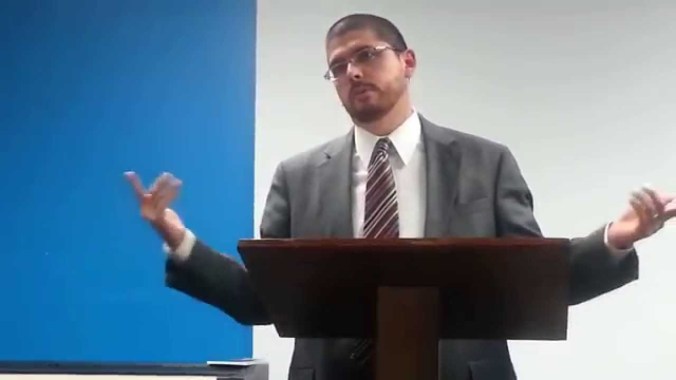
This excerpt doesn’t do the tortured elector justice, as he expounds on his torment in detail in this remarkable blog post.

Observations:

1. His ultimate decision was the ethically correct one, the “book answer”: Resign, and let someone who can and will do what the voters expect take his place. He reached it using some unethical and crooked paths, though.

2. His post is a rationalization-fest with muddled thinking and dubious history thrown in. Sisneros inadvertently makes an ironclad case for why we don’t want electors like him to have the power to veto the electorate. This guy is too confused and emotional, not to mention biased and theocratic, to be trusted for such a job. Who knows? The other electors may be even worse. Continue reading

Presenting Three New Rationalizations: “Narcissist Ethics,” “The Dead Horse-Beater’s Dodge,” And “The Doomsday License”

the end of the world

I knew this was going to happen. Even as the Ethics Alarms Rationalizations list approached 70 self-serving lies in all, the cracks and crevices between them were being explored, mined and exploited. All three of today’s new additions turned up in a single, ill-begotten comment to a recent pots, and while I immediately recognized them as rationalizations, I also failed to find an exact fit for any of them on the list. It is by such a process that all rules and laws inevitably expand into near uselessness, because humans are so adept at finding loopholes.

I’m going to have to be vigilant lest the rationalizations become so thinly sliced that the list is too burdensome to be useful: some of the current entries have been criticized as redundant already. Nonetheless, I believe the three being unveiled now cover rationalization territory worth mapping. Here they are:

Rationalization 8A. The Dead Horse-Beater’s Dodge, or “This can’t make things any worse”

Rationalization 8, The Trivial Trap  or “No harm no foul!”, relies on #3. Consequentialism, or  “It Worked Out for the Best” for its dubious logic, but is less demanding. #3 posits that unethical conduct that ends up having beneficial or desirable results has been purged of its unethical nature. #8 argues for an even more lenient standard, holding that as long as the unethical conduct—usually a lie—has no negative effects, it can’t be wrong. The Dead Horse-Beater’s Dodge, carries things even further with the theory that as long as a situation can’t be made worse by wrongful conduct, the conduct itself can’t be wrongful. The most famous invocation of #8A of recent vintage is Hillary Clinton’s exasperated question during the Benghazi hearings, “At this point, what difference does it make?” Her argument: a lack of candor now about the fatal events in Benghazi can’t bring back the dead, so why harp on it?

In ethics, wrongful conduct is usually identifiable by its nature and intent. “This can’t make things any worse” is an assumption that individuals seldom can make with guaranteed accuracy, and it usually presumes consent from the supposedly bottom-lying individual or organization that the unethical act is done to. Get the informed consent, 8A devotees, and then we’ll talk.

No, looters, the fact that a business is a smoldering wreck does not make stealing even damaged merchandise from it “okay.” No, pulling the plug on a comatose patient without his previous consent or that of someone he has authorize to give it is still wrong, both legally and ethically. In most cases, the presumption that conduct unethical in its form and substance will not “make things any worse” is something about which the rationalizing wrong-doer can’t possibly be certain. That’s what makes it a rationalization: it is a lie we tell to ourselves.

Rationalization 50A.  Narcissist Ethics , or “I don’t care” Continue reading