The Cruelest Month And The Duty To Remember

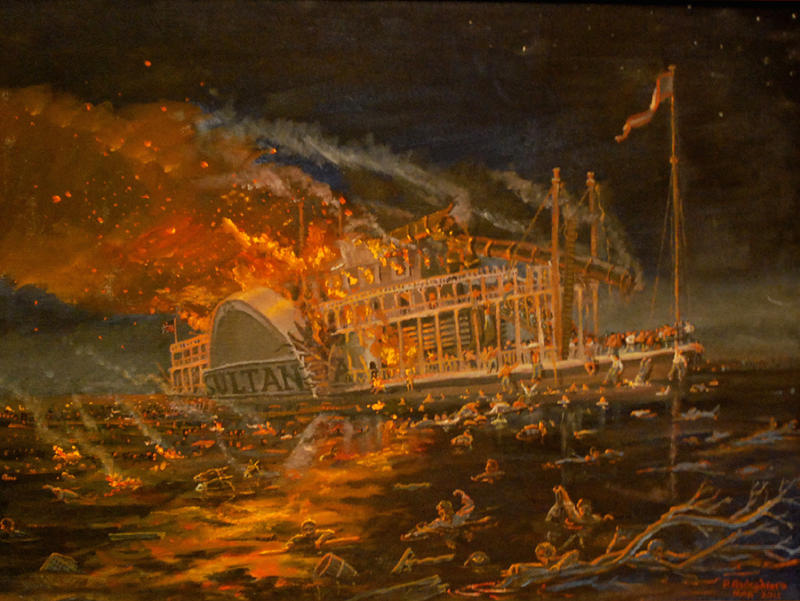
sultana-ablaze

If we have the education, curiosity, perspective and respect for our origins and those who have gone before us, the calendar is a source of constant reminders of what matters in life, and how we can be better citizens and human beings. It is a common belief among Millennials, and a lot of older Americans too, that history is irrelevant to their lives, and this is both a fallacy and a self-inflicted handicap. Not that keeping history in mind is easy: in this month, which T.S. Elliot dubbed “the cruelest,” paying appropriate respect by remembering is especially difficult.

Still, respecting history is our duty. It won’t be remembered, perhaps, but in April, 2012, a 23-year-old drunken fool named Daniel Athens was arrested for climbing over a barrier to urinate on a wall at the Alamo. Monday, a Texas judge threw the book at him, sentencing him to 18 months in state prison for vandalizing a National Monument and a shrine. The sentence seems extreme, and is a good example of how the law is a blunt weapon with which to enforce ethics. The Alamo has near religious significance in Texas, brave men died there, and the ruins serve as a symbol of critical virtues like loyalty, sacrifice, dedication, courage and patriotism. Athens, himself a Texan, defiled the memory of the fallen and symbolically rejected the values and heritage of his community and fellow citizens. Unfortunately, the harshness of the sentence will create sympathy for him: 18 months for peeing? But how else does a culture reinforce the importance of respect for the past? I don’t have an answer. Perhaps I would have sentenced him to take an exam on the lives of Travis, Crockett, Bowie, Seguin and the rest, as well as the siege itself, and imposed the jail term only if he flunked.

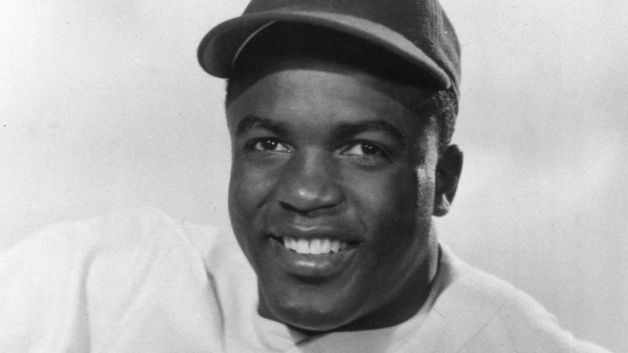
Yesterday, Major League Baseball celebrated the heroism and transformative life of Jackie Robinson, who broke baseball’s color barrier on April 15, 1947 by becoming baseball’s first black player, setting in motion powerful forces that propelled the cause of civil rights. Every player wore Robinson’s now retired uniform number 42, and there were commemorative ceremonies in the ball parks where it wasn’t too cold and wet to play ball. This remembrance had a difficult time competing with tax day, as history usually does when our immediate life concerns beckon.

Other important historical events deserving reflection, however, were more or less ignored entirely, for April 15 is a historically awful day: Continue reading

Your National Hispanic Heritage Month Assignment: Remember The Amazing Elfago Baca (February 10, 1865 – August 27, 1945)

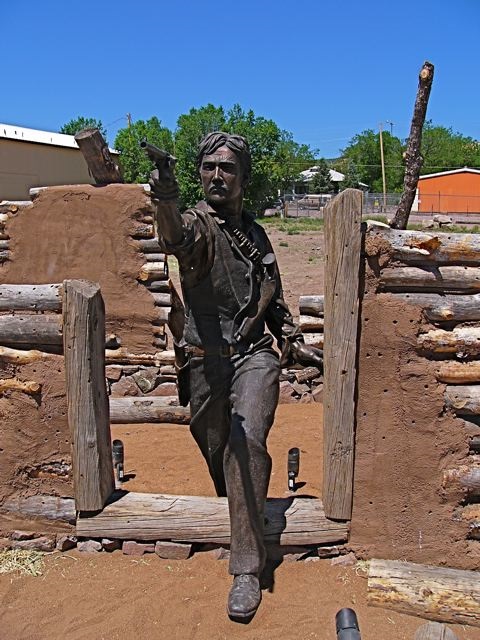
Baca statue

As frequent readers of Ethics Alarms know, I fervently believe that history is important, and that we all have a duty to remember and honor the remarkable Americans who have gone before us, their exploits, triumphs, struggles and achievements, both for our sakes—for we can learn much from them—and theirs. I am constantly discouraged by the inspirational stories and fascinating historical figures who have nearly been forgotten. The schools don’t teach our children about them, and popular culture ignores them. This weakens the flavor and the power of our shared culture: it is wrong, that’s all.

Today, as I realized we were in the midst of National Hispanic Heritage Month ( September 15-October 15), I want to do my part to help keep alive the name and the story of a Mexican-American who may have faded from memory because the events of his life seem more fictional than real. Indeed, for most of my life, until a couple of years ago, I thought Elfago Baca was a creation of Walt Disney’s creative staff, who wrote a ten episode mini-series about him called “The Nine Lives of Elfago Baca” for the “Disneyland” show (“Now…from Frontierland!”) in 1958. I loved that series, but it never occurred to me that the series’ tales of a gunslinging, lawyer-sheriff in Old New Mexico could possibly have any connection to reality.

But they did. The real Elfago was, if anything, even more improbable than his fictionalized counterpart, portrayed by a very young and athletic Robert Loggia, who is best known as the toy magnate who plays “Chopsticks” on the giant keyboard with Tom Hanks in “Big.” Continue reading

I Guess Remembering “The Maine” Is Out of the Question

Hey, Matt: What was this? Anybody?

Hey, Matt: What was this? Hello? Anybody?

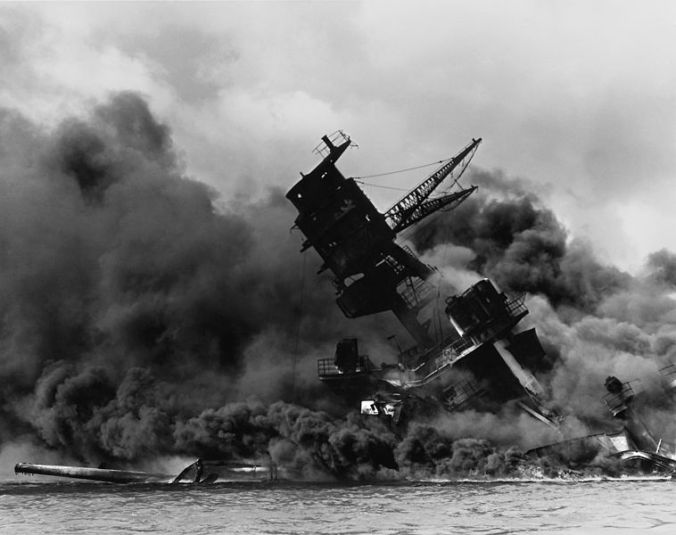
I was going to write a depressing post about how neither the Washington Post nor CNN, nor the Today Show (though I missed some of it, and can’t be completely sure) bothered to mention Pearl Harbor this morning, on the anniversary of the day when a sneak air attack by Japan nearly destroyed the U.S. fleet at Pearl Harbor at Oahu, Hawaii. 2,335 U.S. servicemen and sixty-eight civilians died in the attack, as 1,178 soldiers and civilians were wounded. The tragedy launched U.S. participation in World War II, which took another 416,000 American lives among the horrendous 60 million killed in that conflict. Naturally, none of this was deemed worthy of mention by our journalistic establishment, or perhaps they just forgot. After all, the Grammy nominations were announced last night.

Then I caught this exchange among Harold Reynolds, Ken Rosenthal, and host Matt Vasgersian on the MLB Network’s live off-season show, Studio K, leading into a story about the Philadelphia Phillies obtaining outfielder Ben Revere in a trade yesterday: Continue reading

Closing the Memory Hole: Remembering the Dance Marathons

“Marathon ’33”

“Man lives by a lingering ember,

“And while there are beautiful things to remember,

The ugly things, one should forget.”

—-“Things to Remember” from the musical “The Roar of the Greasepaint, The Smell of the Crowd”  by Anthony Newley and Leslie Bricusse

Jews sometimes are criticized for evoking the Holocaust at every opportunity. Their explanation is that we “must never forget,” an argument I once thought was bizarre. “Who could forget the Holocaust?,” I wondered. Something so unique and horrible would be impossible to forget; it would be like pretending the Grand Canyon didn’t exist.

That was ignorant of me. Nations, religions, cultures and groups of all kinds are stunningly effective at forgetting historical episodes which challenge their self-image and most cherished illusions. Jews are rightfully and wisely vigilant at reminding the world of what was done to them as the rest of humanity passively looked on in the 30’s and 40’s, because their extermination at the hands of the Nazis is a prime candidate for history’s memory hole, where good and sensitive people, along with their nations, communities and cultures, dispose of memories too ugly to remember. Once the memories are gone, they no longer haunt us, it is true. They no longer teach or warn us, either. The ethical course of action is to remember our worst moments, and evoke them as often as possible. We can only be our best by admitting our worst. Continue reading