Facebook’s Sad, Ignorant, Compassionate, Irresponsible Post-Orlando Freakout

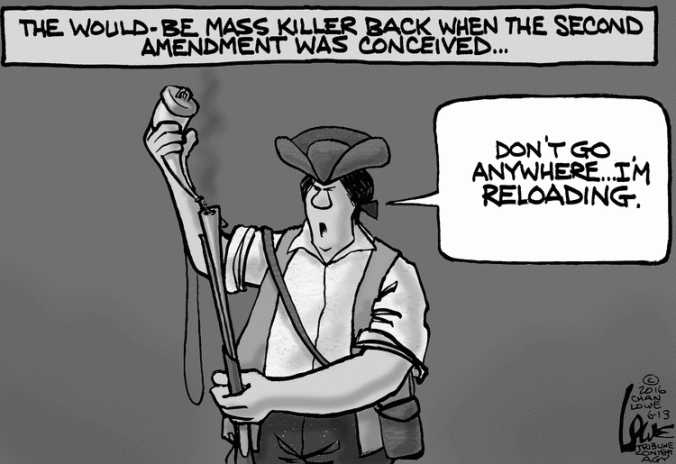
antigun cartoon

If I had the time and wanted to anger about two-thirds of my friends, I could go around Facebook and explain to them why their latest posted anti-gun meme, or latest simple-minded anti-gun cartoon, or furious rant against the NRA, Republicans and “gun nuts,” show them to be ignorant, hysterical, and irresponsible citizens. Maybe I’ll spend a day doing this and see what happens.

The culprits are everywhere, from all backgrounds. These aren’t just my actor friends, who tend to memorize lines with their brains and think with their hearts. It’s many of the lawyers I know too….also journalists, writers, policy-makers—all kinds. As they quote with approval partisan and ignorant anti-gun pundits, actors or elected officials, they also erupt with emotion, counting on a welter of “likes,” “loves” and crying faces from the friends, who uncritically cheer the sentiment without challenging the execrable law and logic. The process repeats over and over, like a rinse cycle, until the original posters are not only convinced that they are right, but that anyone who disagrees is an evil promoter of violence not worthy of human association. I have read, more than once, “If you disagree, keep your opinion to yourself, or I’ll unfriend you.”

I confess, I’ve resisted my natural instinct to take up those dares, because these people are in pain, and, frankly, temporarily deranged. Many of them are gay, an identify personally with the victims. I sympathize with that. They also have a right to their anti-gun opinions, but they are polluting an important debate and making any resolution impossible by being willfully ignorant, and rebelling in it. The lawyers are especially disgracing themselves. Again—it is irresponsible, and it is bad citizenship.

If I were going to be a Facebook vigilante and point out the serious flaws in the various anti-gun rants, my Facebook friends would find more notes like this one, which I left in response to a good friend’s rant against the head of the Gun Owners of America  blaming the Orlando shooting on “Gun Free Zones.”  My friend wrote…

“I’m willing to entertain just about any argument for gun rights, but this one is SHIT. I will not be convinced that on Sunday evening, even a few, trained, people violating the Gun Free Zone in a dimly lit club, with HUNDREDS of panicked, perhaps inebriated, people running in every direction for their lives, could get a “good shot” to take out the man responsible for this atrocity. I believe the result is called more deaths by “friendly fire.”

I responded in part…

The argument is that murderous shooters will be less likely to come to kill when there is a chance that someone will be armed. This is not “shit”…This is the oldest pro-gun/anti-gun divide of all: the criminals and terrorists aren’t the ones who will follow the gun regulations; law abiding citizens are. That should be obvious. I don’t believe for a moment that one can blame the massacre on ” Gun Free Zones.”…but the argument that a shooting occurred because an area wasn’t a Gun Free Zone is even more silly. Is a terrorist going to say, “Ooops! Can’t slaughter gays in that club—it’s a Gun Free Zone!” Of course not. Might a terrorist choose not to attack a venue where he knows that one or more people might be armed, rather than one where he knows the law-abiding victims will be defenseless? Maybe.

Your point of bias, and it’s a common one, is that the presence of a gun makes one unsafe. The presence of a maniac makes one unsafe. If you happen to have a gun, maybe you’re a bit safer. Agree or not, that isn’t “fucking insane.” What I do think is fucking insane is people allowing emotion to eat their brains all over Facebook. It doesn’t help.

It just doesn’t help.  This friend is rational and thoughtful, and I expect him to take my critique in the spirit in which it was offered.  I can’t always count on a reasonable response, however, such as from the friends have posted this meme:
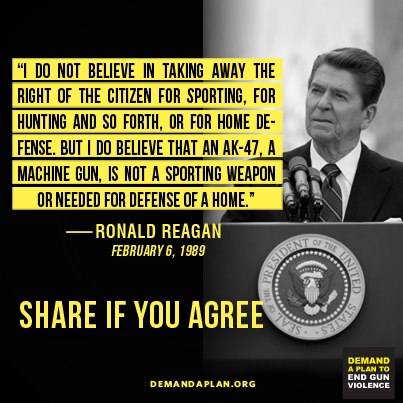
Anti-Gun meme 1

Machine guns and automatic weapons are illegal. The meme goes along with the laments of those who believe that the Orlando shooter used an “assault rifle” or a military weapon in the shooting. When you point out that it was not an “assault weapon,” they just shrug the distinction off as an irrelevant detail, and this is a tell. All guns are indistinguishable to many of my friends. Guns are bad, that’s all. This undercuts the lie—and I am now convinced that it is a lie—that they don’t want to ban guns and repeal the Second Amendment.

Ken White wrote perceptively, as he usually does, on why this approach is both dishonest and counter-productive:

I support the argument that the United States should enact a total ban on civilians owning firearms.

Oh, I don’t support the ban. I support the argument.

I support the argument because it’s honest and specific. It doesn’t hide the ball, it doesn’t refuse to define terms, it doesn’t tell rely on telling people they are paranoid or stupid in their concerns about the scope of the ban. The argument proposes a particular solution and will require the advocate to defend it openly…There’s a very good reason to care about what you mean when you argue that “assault weapons” should be banned: the term is infinitely flexible. If you think it inherently means something specific, you haven’t bothered to inform yourself about the issue. “Assault weapon” means whatever the definers decide it should mean. Banning “assault weapons” is the gun version of banning “hate speech” or “disruptive protest” or “dangerous persons” or “interfering with a police officer” — it’s a blank check. And I don’t like handing out blank checks to the government to ban things and jail people…

A lot of my Facebook friends do, however. Here’s a link approvingly posted by a lawyer friend, saying in part.. Continue reading
Ethics Observations On The Unethical Quote Of The Week, By Senator Joe Manshin (D-WV)

Manshin

“But due process is what’s killing us now.”

—- Democratic Senator Joe Manshin, of West Virginia, on MSNBC bemoaning the fact that the government can’t take away your rights based on “suspicion.”

Naturally, nobody on the network immediately responded, “WHAT???” I wonder if there are any broadcast journalists who would have challenged that crypto-fascist statement by a U.S. Senator. Think about that for a minute.

Just so you are clear that the quote isn’t out of context, here is what Manshin said (you can also watch the video here)

“The problem we have and really the firewall that we have right now is due process. It’s all due process. So we can all say, yeah, we want the same thing but how do we get there?” If a person is on the terrorist watch list like the gentleman, the shooter in Orlando, he was twice by the FBI, we were briefed yesterday about what happened, but that man was brought in twice. They did everything they could. The FBI did everything they were supposed to do, but there was no way for them to keep him on the nix list or keep him off the gun buy list. There was no way to do that. So can’t we say that if a person’s under suspicion,  there should be a five-year period of time of time that we have to see if good behavior, if this person continues the same traits, maybe we can come to that type of an agreement? But due process is what’s killing us now.”

Observations: Continue reading

Ethics (and Legal) Dunces: Hillary Clinton And Everyone Else Who Is Suggesting That The Government Should Be Able To Keep Someone From Buying A Gun By Placing Them On A “No-Fly List””

This post would be barely worth writing, except that I have just listened to several cable channels state with great urgency that it is a “controversy.”

It’s no controversy. The government cannot take away a citizen’s rights without due process. Currently, as explained in an ACLU lawsuit, the No-Fly List procedure itself appears to lack due process, so linking it to Second Amendment rights would be similarly unconstitutional:

“There is no constitutional bar to reasonable regulation of guns, and the No Fly List could serve as one tool for it, but only with major reform…. the standards for inclusion on the No Fly List are unconstitutionally vague, and innocent people are blacklisted without a fair process to correct government error. Our lawsuit seeks a meaningful opportunity for our clients to challenge their placement on the No Fly List because it is so error-prone and the consequences for their lives have been devastating.  Over the years since we filed our suit — and in response to it — the government has made some reforms, but they are not enough.”

Continue reading

The Times’ Timothy Egan Doesn’t Get It: Hillary Lies, Trump Just Has No Respect For Facts

polygraph

In a Sunday Times op-ed called Lord of the Lies, Timothy Egan argues that Donald Trump, and apparently only Donald Trump, should be fact-checked live in any Presidential debates. Egan is adopting the current fad among journalists, which is the argument that Trump is so bad, the media should apply a double standard, making sure his misrepresentations are immediately debunked, while presumably allowing Hillary to continue to issue whoppers every time she talks about Benghazi, her State e-mails, the Clinton Foundation, her record as a champion for victims of sexual assault, etc.

I already pointed out how unethical it was for CNN to employ an  on-screen fact-check of a Trump speech ( “Trump: I never said Japan should have nukes (he did).” ) especially since they will never do the same to Hillary (“Hillary:I never sent e-mails marked classified (She did…)”)  Egan thought CNN’s intrusion was just peachy, though, because the news media now believes their task isn’t to be fair to both candidates and treat them the same, but to employ any means necessary to defeat that one journalists have determined shouldn’t win.

A larger problem with Egan’s thesis—even more than his apparent belief that the notoriously biased PolitiFact is “non-partisan”)—is that he doesn’t know what a lie is. He adopts the flat-out wrong definition of lie used by most fact-checkers in fact: if they disagree with a statement or can show it is untrue, it’s a lie. That’s not what makes a statement a lie. For example, PolitiFact is demonstrably biased and Democratic-leaning, far more so than the Washington Post’s Factchecker or Fact Check.org. But I wouldn’t assume that Egan is lying when he says otherwise. Progressive journalists just assume PolitiFact is fair and non-partisan because they think they are fair and non-partisan. They are deluded, not lying. That’s an important distinction. Continue reading

Signature Significance: Katie Couric “Regrets” The Deceptive Editing Of Her Anti-Gun Documentary, But Isn’t Going To Fix It.

I'd think she'd want to have that fixed...

I’d think she’d want to have that fixed…

Today Katie Couric made all of her defenders look just as bad as I said they were.

“I can understand the objection of people who did have an issue about it,” Couric said at TheWrap’s Power Women Breakfast in New York this morning, when asked to address the intentionally deceptive editing in “Under the Gun,‘ the anti-gun documentary she produced. “Having said that, I think we have to focus on the big issue of gun violence. It was my hope that, when I approached this topic, that this would be a conversation starter.”

She then said that the documentary will not be re-edited to fix the lie it contains.

This is signature significance: all by itself, it proves beyond a shadow if a doubt that Katie Couric is a dishonest journalist. No more evidence is needed, for an honest journalist would never make this choice. Not once, not ever.

“The objection of people who did have an issue about it” clearly states that Couric herself had no “issue with it,” meaning that, as I wrote, she only regrets the controversy, not the lie. Continue reading

UPDATE: Even More Reasons To Distrust Katie Couric, Which Means More Reasons To Distrust The Journalists Who Want To Excuse Her

film editing

The Washington Post criticized Katie Couric’s role in approving the deceptive “Under the Gun” documentary edit but also noted that it is “one instance of bad judgment in a long career.” This was an instance of the “Just One Mistake” rationalization…

20. The “Just one mistake!” Fantasy

Related to #16 but still distinct is the excuse that a particular unethical act should be ignored, forgiven or excused as an aberration because “it was just one mistake.” This argument intentionally glosses over the fact that one mistake can be so blatantly unethical and harmful that an ethical person literally never does such a thing, and thus the “one mistake” is a reliable indicator that the actor does not deserve to be trusted. Abuse of power is in this category. Defenders of the unethical also often use this excuse dishonestly and deceptively to designate as one mistake an ongoing episode of continuous unethical conduct. For example, Bill Clinton didn’t make “one mistake” regarding Monica Lewinsky, but hundreds of them, involving lies, deceits, cover-ups and betrayals.

The versatile excuse was applied by one member of the liberal-biased school of journalism to another, and says more about the Post writer ( Callum Borchers) than it does about Couric. He was actually right on the money when he wrote, only to say later it was “unfair,” this:

Couric thinks the media needs to be tougher on Trump. The reality is the current level of toughness hasn’t dented his campaign. What’s the next level of toughness? One could conclude, based on the misleading edit in Couric’s gun documentary, that it involves distorting interviews to produce manufactured flubs, in hopes that one of them will accomplish what no organic mistake has done so far.

Why yes, one could not only conclude that, but witness it in the media’s successful efforts to turn a dumb Trump quote about a judge’s reasons to be biased against him in a law suit into an imaginary smoking gun that proves he’s a racist. Journalists have been eager to allow the public to forget about Couric’s endorsement of misleading and dishonest editing techniques in the service of the anti-gun rights agenda, because her methods are their methods. The woman should be fired. Journalists must be regarded like accountants and auditors: one they have shown that they will lie, even once, they are worthless. Is that a fair standard? I believe it is. Why then are journalists eager to have Couric held to a lower standard? Easy: they don’t want to be held to the appropriate ethics standard either.

The apologists for Couric have been especially revealing; once again, any journalist who defends Couric can be safely placed along with her in the UNTRUSTWORTHY File. Here’s Mediaite’s Rachel Stockman embarrassing and indicting herself, for example, saying that people are being mean to Katie for impugning her integrity… Continue reading

Res Ipsa Loquitur Ethics Quote Of The Day: Law Professor/Blogger/Irony Master Ann Althouse

free-bingo-design

The NYT article tells us that Sotomayor’s remarks were published in the Berkeley La Raza Law Journal and that she also said:

“Whether born from experience or inherent physiological or cultural differences,” she said, for jurists who are women and nonwhite, “our gender and national origins may and will make a difference in our judging.”…

… Judge Sotomayor questioned whether achieving impartiality “is possible in all, or even, in most, cases.” She added, “And I wonder whether by ignoring our differences as women or men of color we do a disservice both to the law and society.” She also approvingly quoted several law professors who said that “to judge is an exercise of power” and that “there is no objective stance but only a series of perspectives. Personal experiences affect the facts that judges choose to see,” she said.

So has Donald Trump refrained from doing a disservice both to the law and society?

—-Ann Althouse, making a slam-dunk point about the hypocrisy of the uproar over Donald Trump’s “racist”suggestion that a Hispanic-American judge might be biased against him.

Althouse and I are right, and almost everyone else is wrong. It’s obvious, and beyond rebuttal on the facts. Althouse has joined me as one who also deplores everything about Donald Trump but who is determined to call out intellectual dishonesty and unfairness in the attacks against him. She also posted this… Continue reading

Ethics Observations On The Donald Trump-“Mexican” Judge Affair

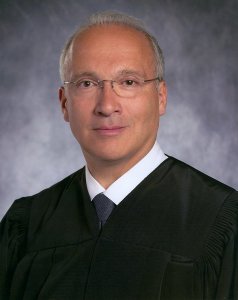
Judge Curial. Funny, he looks white to me...

Judge Curial. Funny, he looks white to me…

“Everybody says it, but I have a judge who is a hater of Donald Trump. He’s a hater. His name is Gonzalo Curial… We are in front of a very hostile judge. The judge was appointed by by Barack Obama – federal judge. [Boos]. Frankly he should recuse himself. He has given us ruling after ruling, negative, negative, negative. I have a top lawyer who said he has never seen anything like this before. So what happens is we get sued. We have a Magistrate named William Gallo who truly hates us..Watch how we win it as I have been treated unfairly. . . . So what happens is the judge, who happens to be, we believe Mexican, which is great. I think that is fine. You know what? I think the Mexicans are going to end up loving Donald Trump when I give all these jobs. I think they are going to love it. I think they are going to love me. . .I think Judge Curiel should be ashamed of himself. I think it is a disgrace he is doing this… It is a disgrace. It is a rigged system…They ought to look into Judge Curiel because what Judge Curiel is doing is a total disgrace. “

This is what Donald Trump said about Mexican-American judge Gonzalo Curial, who is currently presiding over the civil law suit involving now-defunct Trump University. That is all of it, with the rest being general Trump-speak.

The initial reaction in the news media and from the anti-Trump legal commentators (that is, essentially all legal commentators except the ones who have to eat alone at their law school dining rooms) was that Trump’s entire rant that contained the sentiments above were a threat to the rule of law and judicial independence. As I explained here, that was both hyperbole and a double standard.

It also, as I expected, was far too technical a complaint for the average voter to understand or get upset about, even if it had been valid and fair, which it wasn’t. So the anti-Trump forces, which are mighty and legion, decide to shift gears, and rather than attack the statement as a threat to the Constitution, condemn it  as “racist.” It was so racist that Buzzfeed decided that it could get brownie points by pulling out of an ad deal it had made with the Republican Party by professing revulsion at the party’s presumptive nominee’s “racism.”

The news media has now decided that it is just a fact that Trump’s comments about the judge were “racist.” That’s how the topic is being discussed. Nobody looks at the statement that sparked this nonsense: Trump said something racist, and that’s all there is to it.

Except that he didn’t.

I can’t keep track of all of the subsequent statements Trump has made or will make to defend himself. Since he talks like a stream of consciousness novel written by a Red Bull-guzzling cab driver, he may have said or will say something that is more inflammatory than the statement being attacked; remember, the man literally doesn’t know what is going to come out of his mouth until he hears it. For now, I’m going to stick to the statement that started this.

1. He said that Judge Curiel “was a hater.”

2. He implied that he was biased against Trump, and that this was a “disgrace.”

3. He said, in what I am certain was one of those examples where Trump’s tongue got the jump on his brain, that “we believe” the judge was “Mexican.”

4. He said that the system “was rigged,”that Judge Curiel should recuse himself, and that Curiel should be ashamed.

That’s it!

None of that constitutes a “racist” statement. It does not even constitute  a bigoted statement, and it is in no way the magnitude of offense the Democrats, media and Trump opponents are claiming, indeed, stating it to be.

Before I list the ethics touch-points in this disturbing event (the event being a news media lynch mob devoid of proportion or fairness controlling the discussion and misrepresenting a Presidential candidate), let me make this clear, as if I hadn’t already in dozens of Ethics Alarms posts: Continue reading

Ethics Quiz: The Washington Post’s Trump Hair Orgy

Trump Hair

Preface: I believe that it is existentially essential and an ethical duty of citizenship to prevent Donald Trump from becoming President of the United States. I also believe that the news media is obligated to report the campaign objectively and fairly, admittedly something they have increasingly appeared both unwilling and unable to do. For the mews media to elect the President by allying itself to one party is a far more dangerous threat to democracy than, for example, organizations of citizens being allowed to make whatever political statements they choose during the course of a campaign. Democrats like Bernie Sanders don’t see the news media placing its weighty foot on the scale as a problem, because they know where that foot will go: on their side of the scale, hard, like it did in 2008 and 2012.

All signs point to the news media planning to metaphorically stomp on the scale in the coming campaign and justifying it because of Trump. This is also known as “the ends justify the means.”

Today’s Ethics  Quiz continues the Ethics Alarms ongoing inquiry into what ethical journalism standards should be during the 2016 Presidential race.

Late last week, I was somewhat stunned to see the Washington Post Style Section dominated by a feature of the sort the Post usually reserves for holidays, like News Years or Valentines day. Almost the entire front page of the section was devoted to the single topic of ridiculing Donald Trump’s appearance, specifically his hair. Titled “The 100 greatest descriptions of Donald Trump’s hair ever written,” it began in part,

“Here, in the most comprehensive and highly scientific endeavor of its kind, culled from 30 years of news articles, we present the top 100 unique descriptors of the Trump mane, written by journalists or pontificators who secretly fancy themselves poets.”

Among the entries…

9. An ambitious corn dog that escaped from the concession stand at a rural Alabama fairground, stole an unattended wig, hopped a freight train to Atlantic City and never looked back

15. A mullet that died in some horrific accident

62. A dead skunk

70. A dishrag that on closer inspection is alive with maggots

Stipulating that this article appears in the Style Section, along with the comics, movie reviews and human interest stories, your Ethics Alarms Ethics Quiz of the Day is…

Was this orgy of hair ridicule of a Presidential candidate being published in a major newspaper fair?

Continue reading

From “The Ethics Incompleteness Theorem” and “The Ends Justify The Means” Files, The Pautler Case: My Favorite Legal Ethics Dilemma Ever!

"Irena's Vow" Pictured L to R: Maja Wampuszyc, Tracee Chimo, Tovah Feldshuh (kneeling), Gene Silvers

The Sundance Channel was doing a “Law and Order” marathon this week, and I happened to see an episode from 2002 that I had missed. It was based on the Pautler case in Colorado from the same year.

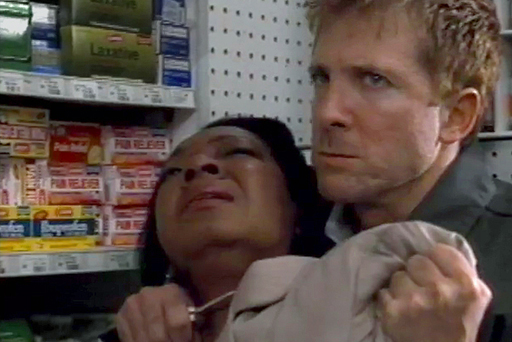
In “DR 1-102,”  Assistant DA Serena Southerlyn (Elisabeth Rohm) deals with a hostage crisis in which a man suspected of bludgeoning two women to death claims he will release his captive, held at knifepoint (above), if he can consult with an attorney. Southerlyn volunteers to enter the scene, and obtains both the hostage’s release and the killer’s  surrender, but only by deceiving him into believing that she is his lawyer, and not a prosecutor working for the police and the State. Although Southerlyn is hailed as a hero, the bar seeks to disbar her, charging her with violating Disciplinary Rule 1-102 (now New York RPC 8.4 d., which prohibits lawyers from lying.  .

Actually, Serena did a lot more than that, as did her model, Mark Pautler, the Jefferson County (Colorado) assistant D.A. whose real life conduct created a legal ethics dilemma that is debated to this day.

On June 8th, 1998, Chief Deputy District Attorney Mark Pautler  arrived at a gruesome crime scene where three women lay not just murdered, but chopped in the skull.  All had died from hit in the head with a wood splitting maul. The killer was William Neal, who had apparently abducted the three murder victims, one at a time, and killed them over a three-day period. Now, police said, he was at another locale, having released three hostages he had held in terror for about 30 hours. Neal left in the apartment a tape recording that detailed all of his crimes, including a fourth murder and rape at gun point.

Neal contacted police at the apartment using his cell phone and personally described his crimes in a three-and-a-half hour conversation. The officer speaking with Neal took notes of the conversation and occasionally passed messages to Pautler and other officers at the scene. A skilled negotiator, she urged the maniac to surrender peacefully. Efforts to ascertain the location of Neal’s cell phone were unsuccessful, and it was feared that if Neal did not surrender, others would die.

Neal made it clear he would not surrender without legal representation. The police did not trust the public defenders office to handle the situation, fearing that a defense counsel’s advice might lead Neal not to place himself in police custody. Pautler also believed that a public defender would advise Neal not to talk with law enforcement. Neal was savvy enough, he felt, that a police officer could not effectively pretend to be his lawyer, so Pautler agreed to impersonate a defense attorney over the phone He told Neal that his name was was “Mark Palmer.”

Though in the ensuing phone conversation Pautler tried to avoid giving direct legal advice, it was clear that Neal believed “Mark Palmer” worked for the public defender’s office and represented him. And the deception worked: Neal eventually surrendered without further incident.

Not surprisingly, the Colorado Bar had problems with Pautler’s conduct. He was charged with violating two ethics rules, the equivalent of the one used in the “Law and Order” episode and also Colorado Rule 4.3, which requires a lawyer to inform an unrepresented party so it is clear that he isn’t representing him, and to give no legal advice other than to get an attorney. They could easily have charged him with violating others. like Rule 1.3, requiring diligent representation (Call me a stickler, but trying to trick your client into surrendering to police isn’t what the rule has in mind), Rule 1.4, which requires a lawyer to keep a client informed (“Oh: I’m really a prosecutor!“), Rule 1.6, Confidentiality (Pautler shared what Neal told him with police; a lawyer can’t do that! ) Rule 1.7, Conflicts of Interest (Ya think?) and Rule 4.1, which prohibits lawyers making false statements of fact, like “I’m here to help you.” Continue reading