Ethics Dunces: The Hugo Chavez Fan Club (Michael Moore, Sean Penn, Rep. Jose Serrano (D-NY), Oliver Stone and Joe Kennedy III

"We love you Hugo, we really do-oo! There isn't anyone, we love like you-oo! When you're not with us, we're blue! Oh, Hugo, we love you!"---From the new musical, "Bye-Bye Chavez," written by Oliver Stone, starring Sean Penn!

“We love you Hugo, we really do-oo! There isn’t anyone, we love like you-oo! When you’re not with us, we’re blue! Oh, Hugo, we love you!”—From the new musical, “Bye-Bye Chavez,” written by Oliver Stone, starring Sean Penn!

What do we learn from those who mourn the passing of Venezuelan autocrat Hugo Chavez and praise his leadership? Chavez leaves his nation with a corrupted judiciary, an intimidated and manipulated press, a soaring violent crime rate, massive debt, crumbling infrastructure, galloping inflation, government-sanctioned anti-Semitism, and the prospect of political instability for the foreseeable future. When we hear an American praise Chavez, we learn that he or she neither trusts or values the institutions of democracy, like a free press and independent judiciary. We learn that such an individual believes that indeed the ends justify the means; that lies, repression, manipulation of news and public opinion, cultism, divisiveness and class warfare are all forgivable and even laudable in pursuit of “social justice,” roughly defined in the manner of Lenin, Stalin, Mao and Castro, murderers all. Continue reading

Easiest Ethics Question Of The Month

" Dear Ellie: The firm seems a little shady to me, but I need the experience. Should I take the offer?"

” Dear Ellie: The firm seems a little shady to me, but I need the experience. Should I take the offer?”

Over at Above the Law, Ellie Mystal posts a request for advice from a desperate job-seeking lawyer, and polls readers for their response. The lawyer has an offer from a local attorney she says has a reputation for being unethical and untrustworthy. He has filed for bankruptcy once; he is being investigated by the local bar and the government, and former employees say he’s atrocious to work for. The inexperienced lawyer asks,

“Is this really bad for an entry-level lawyer to work for an (arguably) bad lawyer? Is it an absolute NO? Which one is more important: get some experience or working at a right/good firm? To put it another way, which one is worse: having no experience or working at a bad firm? I keep searching job postings and there is no opening for entry-level. Everyone looks for experienced lawyers. So I get the impression that no experience is the worst.

“I don’t know what to do with this offer. Feels not right to accept this offer but cannot just forgo. So give me some advice — should I accept his offer?”

Well, let me th—NOOOOOOOO!!!! Absolutely NOT! Never in a million years! NEVER!

And yet, almost 20% of Above the Law’s mostly lawyer readers voted for the choice reading, “Yes. Beggars can’t be choosers.”

That is disturbing. Continue reading

Ethics Dunce: Melowese Richardson, Ohio Poll Worker

Melowese Richardson

Melowese Richardson

Melowese Richardson, Ohio poll worker, doesn’t understand why she’s being investigated for voter fraud. Oh, she voted at least twice, no doubt about that, and she doesn’t deny it: According to Hamilton County records, Richardson’s absentee ballot was filed on Nov. 1, 2012 along with her signature. Later, she told an official she also voted at a precinct polling place because she was afraid her absentee ballot would not be counted in time. Double voting is something of a family tradition, for Richardson’s granddaughter, India Richardson, also cast two ballots in November, her first time as a voter. Melowese sees nothing wrong with any of this, or this either: absentee ballots for Montez Richardson, Joseph Jones and Markus Barron all came from Richardson’s Whetsel Avenue address, were received by the board the same time as Richardson’s, and the handwriting on all four of them was similar. Continue reading

Comment of the Day: “Ethics Quote of the Day: Blogger Jeff Dunetz”

I know the blog has been heavy with gun control essays of late, but the post-Sandy Hook Hysteria Express is the current runaway train wreck right now, with no end in sight. Michael R. (formerly just Michael) scores another Comment of the Day by focusing on one of the aspects of the President’s kids-and-guns show yesterday that set my teeth on edge but that somehow was left out of the post about  all the other things that set me teeth on edge about the event. Well done.

Here is his Comment of the Day on the post, Ethics Quote of the Day: Blogger Jeff Dunetz:

“I always find it troubling when someone uses the sentence “If it just saves one life, it is worth [giving up one of our rights and freedoms]“. There is no way to say it without dishonoring the memory of the many people who have died to uphold those freedoms, to establish those freedoms. How many people have died to preserve these rights and freedoms? Will we willingly give them away so cheaply?

“As far as our problems go here are some causes of death: Continue reading

Danger! Shameless Opportunists At Work!

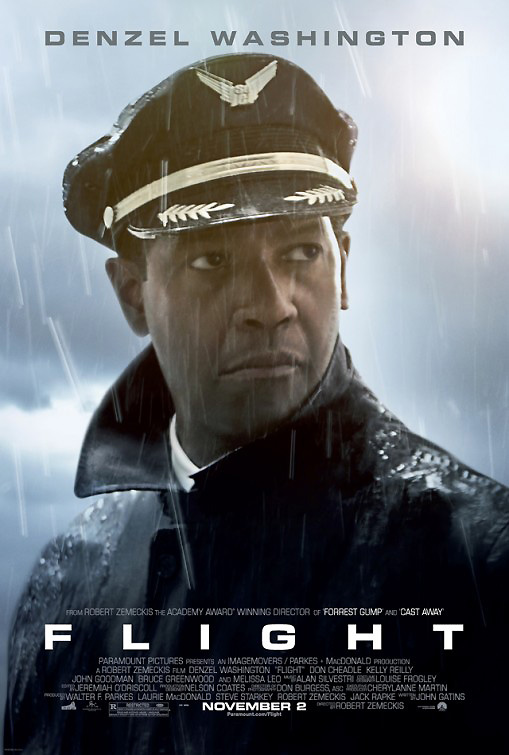
Lance Armstrong wouldn't understand this movie at all.

Lance Armstrong wouldn’t understand this movie at all.

Less than two weeks after Ethics Alarms wrote about the ethics-free deliberations in the Lance Armstrong camp about whether or not to finally tell the truth and “apologize,” Armstrong prostrated himself in a 90 minute confession to Oprah Winfrey, who has branded herself as America’s confessor, capable of washing away sin and shame with a hug, a tear, and a stern word.

It makes me want to vomit, frankly.

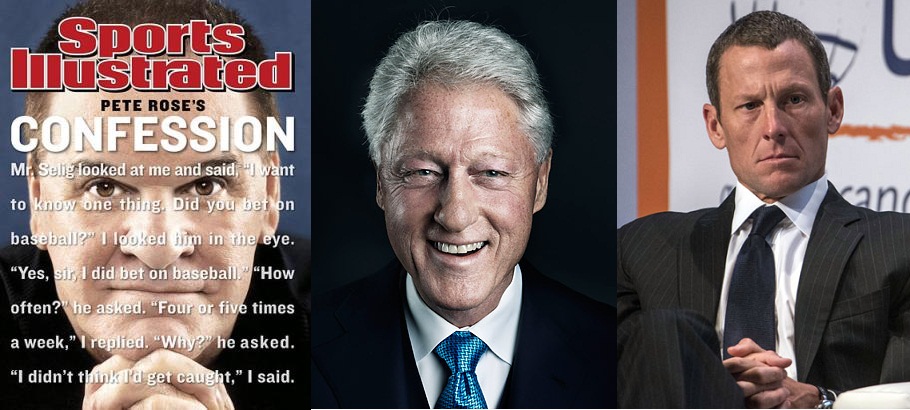
I saw this coming, of course, as did you. One thing we could count on with Lance (and Bill, and Pete, whose odious club Armstrong joins with the Oprah tactic) was that he would do whatever was necessary to benefit him. There is nothing, absolutely nothing, in common with a genuine confession and a real apology in Armstrong’s 180 degree reversal with Oprah, or in the necessary preparations for it he engaged in, like apologizing to the cycling community and the Livestrong staff. When Armstrong thought he could continue to fool some of the people all the time by lying, posturing, and viciously attacking—sometimes with lawsuits—those who he knew were telling the truth about his cheating, he continued to lie. Now that the jig is up and he has no other options, he’s going to come clean and weep softly with the Big O. Sociopaths are usually very good actors. Some of them have won Academy Awards. Continue reading

Lance Armstrong and the Sociopath’s Dilemma: When Honesty Is No Longer Ethical

Welcome to the club, Lance.

Welcome to the club, Lance.

Rose

In 2004, 15 years after he had been banned from baseball after a finding by the Major League Baseball’s Commissioner’s Office that he had violated the games rules against betting on Major League Games, Pete Rose publicly admitted that his denials over that time were all lies. Yes, he had bet on baseball, and he was very, very sorry. Rose’s admission did little to change the verdict in and out of baseball that he was a rogue and a liar. His confession was obviously part of a cynical and calculated strategy to get reinstated in the game, after the strategy of denial and waiting proved ineffective. In addition, Rose needed money, and the confession was part of the hook for his new autobiographical book, which was released at the same time he withdrew his protestations of innocence.

For Pete Rose, honesty was not an ethical value that he respected or returned to in penance after years of straying. It was just another means to an end.

Clinton

In 1998, President Bill Clinton was in the midst of the Monica Lewinsky scandal, denying that he had ever “had sex with that woman.” He called up his old friend, advisor and pollster, Dick Morris, and asked what he should do. Together they decided that Morris ought to take a poll to see what the public’s reaction would be if Clinton retracted his denials and admitted the affair. Morris reported back, after taking such a poll, that while the public would forgive the sexual relationship, anger over the President’s untruthful denials might sink his administration. Clinton decided that honesty would not work to his advantage, and continued to lie.

To Bill Clinton and Morris, honesty was just one of several tactical options to solve a political crisis. If had nothing to do with ethics, or doing the right thing.

Armstrong

It is 2013, and the New York Times reports that Lance Armstrong, now stripped of all his cycling titles, banned from athletic competition worldwide and separated from his commercial sponsors and the cancer charity that bears his name,

“has told associates and antidoping officials that he is considering publicly admitting that he used banned performance-enhancing drugs and blood transfusions during his cycling career, according to several people with direct knowledge of the situation. He would do this, the people said, because he wants to persuade antidoping officials to restore his eligibility so he can resume his athletic career.”

Armstrong, it is clear, is traveling in the well-worn and slimy footsteps of Rose and Clinton, fellow sociopaths to whom conscience, shame, contrition and remorse are alien concepts and for whom atonement and redemption are just games to win, with honesty being an indispensable, if unpleasant, tactic. When one is considering whether or not to be honest and admit what one has long denied based on cold calculations of personal costs and benefits, truth-telling is no longer a matter of ethics, or doing the right thing regardless of consequences. It is merely another weapon, along with lies, manipulation, deceit and posturing, in the arsenal of one of the lifetime predators whose sole goal in life is to prevail and profit over the rest of the trusting suckers who share the Earth with them, and who will do anything, even to the extent of briefly embracing ethical principles, to get what they want.

Should he decide to finally admit what everyone knows and he has long denied, even to the extent of suing those who declared his guilty, Lance Armstrong should be seen as no more ethical or noble than the criminal who pleads guilty in court on the advice of his lawyer, because the evidence is overwhelming, conviction is certain, and confession is the only route to a lighter sentence.

Individuals like Pete Rose, Bill Clinton and Lance Armstrong defile ethical values by their brief embrace of them.


Ethics Elephant In The Room: The ASPCA Was Wrong, And Should Admit It

circus-elephants-

The  Association for the Prevention of  Cruelty to Animals finally capitulated and has agreed to pay over 9 million dollars in damages to the Ringling Bros. Barnum & Bailey Circus. Way back in 2000, the ASPCA and other animal advocacy groups sued the circus company’s owners, alleging cruel treatment of elephants. The problem was, courts found, that the law suit had been built on the claims and testimony of a former Ringling barn helper who had been paid at least $190,000 for his participation in the lawsuit. This meant that the suit was dead.

Ringling Bros. Barnum & Bailey Circus counter-sued, as would I, as would you. I don’t doubt that elephants are abused sometimes in the circus; I’m sensitive to the argument that putting elephants in a circus is inherent abuse. It seems clear that a lot of dedicated, well-meaning people who care deeply about animals and their treatment couldn’t press their claims persuasively without help, so, essentially, they cheated. You can’t pay witnesses, whether the witness is telling the truth or not. It’s unfair. It’s illegal. It corrupts the justice system. Continue reading

Comment of the Day: Ethics Bob Asks: “Did Torture Lead Us To Bin Laden”? My Answer: “So What If It Did? It Was Still Wrong.”

How did we end up discussing torture on Christmas Eve?

Sorry about that.

timebombHere is a stimulating comment by Zoebrain in the “Zero Dark Thirty” torture thread. I’m especially fond of it, because as theoretical and probably impossible as her resolution would be in practice, it neatly addresses the central problem conflict in the “torture is an absolute wrong but you might have to use it to save the world” scenarios, like the familiar “ticking bomb” hypothetical.  In her analysis. one violates the absolute rule, but accepts a proportional penalty for doing so.

I advocate a similar approach in legal ethics in situations where a lawyer decides as a matter of personal conscience that he or she must violate core legal ethics values, like keeping the confidences of a client, in furtherance of a higher objective not recognized be the Rules of Professional Conduct, such as keeping a serial killer from going free.

Here is Zoebrain’s Comment of the Day on the post, Ethics Bob Asks: “Did Torture Lead Us To Bin Laden”? My Answer: “So What If It Did? It Was Still Wrong.” Continue reading

Ethics Bob Asks: “Did Torture Lead Us To Bin Laden”? My Answer: “So What If It Did? It Was Still Wrong.”

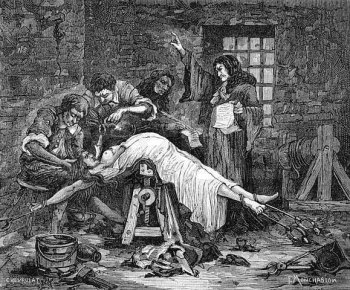
It's all for the best.

It’s all for the best.

The last time my friend “Ethics Bob” Stone blogged about ethics, it was way back in August, and he was writing about some guy named “Romney.” Now he’s back on the job, thank goodness, with a comeback post titled “Zero Dark Thirty: Did torture lead us to Osama bin Laden?”. And he’s ticking me off.

“Zero Dark Thirty” is Hollywood’s treatment of the search, apprehension and execution of Osama Bin Laden. The film suggest that methods of torture were employed by the CIA to uncover crucial intelligence that led to the terrorist mastermind’s demise. Torture opponents, including some U.S. Senators, are alarmed by this, and disputing the film’s account. (Imagine that: a movie that misrepresents history!) Meanwhile, conservatives, neocons, Bush administration bitter-enders, talk radio hosts and admirers of Dr. Fu Manchu and James Bond villains are citing the film as confirmation that they were right all along: torture is a wonderful thing.

I am puzzled that Bob got in the middle of this debate as an ethicist. “It worked!” and “It came out all right in the end!” are not valid ethical arguments or justifications. The first is an embrace of a pure “the ends justify the means” rationale, a favorite tool of Auric Goldfinger and Dr. No. The other is consequentialism. When ethicists and principled opponents of torture allow the issue to be adjudicated on this basis, they are surrendering their principles at the outset. “Torture doesn’t work” is a pragmatic argument, not an ethical one. If the societal consensus regarding torture is going to be determined by how much we can benefit by returning to the rack and wheel, then ethical considerations have already been jettisoned. Continue reading

Unethical Quote of the Week: W.G. Hamm

“What I know about Lance Armstrong is that he inspired thousands of cancer victims and made their lives better. What I know about Mr. Armstrong is that when my wife and my son were both suffering from cancer, his story and his book helped them cope with their diseases. What I know about Mr. Armstrong is that the good that he did far outweighs the fact that he was trapped in a culture of drug use within the cycling fraternity. What I know about Mr. Armstrong is that he has been needlessly demonized by people who do not realize the balance between his good deeds and his bad deeds.”

—-W. G. Hamm, in his Letter to the Editor of the Washington Post. Hamm was praising a fatuous, rationalization-riddled  column by Post sportswriter Sally Jenkins in which she catalogued and endorsed every excuse and justification trotted out by Armstrong’s enablers and defenders.

would have loved Vlad.

W. G. would have loved Vlad.

I don’t know W.G. Hamm. I’m sure he’s the salt of the earth, and a part of me is queasy about picking on his letter praising Jenkins’ ridiculous column rather than tackling the truly ethically offensive and brain-dead column itself. One reason is that I have written extensively, frequently and recently about the arguments, if you can call them that, made by Jenkins. Her column really is spectacularly bad; here’s one passage that send me to the bathroom, for example:

“Maybe I’m not angry at Lance because for two decades now I’ve had serious questions about the wisdom and fairness of the “anti-doping” effort, which consists of criminalizing and demonizing athletes for what boils down to using medications without a prescription.”

No, it boils down to using medications without a prescription and using them to cheat in athletic contests for money and fame, while defrauding the public, you silly, dishonest woman. Continue reading