Another Botch From “The Ethicist”

Bad ethicist. BAD ethicist!

I don’t understand what warped ethics dimension the latest column [Gift link!] from “The Ethicist” hails from, but I wouldn’t recommend going there.

An inquirer wants to know if she should alert a new renter of a neighborhood home that the previous tenants left after telling her that the place has black mold, which can be deadly. “Our concern is that we’ve seen families with small children looking at the house. We believe that we might be in legal jeopardy if we were to inform prospective tenants about the mold issue, but what is our moral obligation?” she asks.

The inquirer means ethical obligation, though “Love thy neighbor (and thus don’t let him walk into a death trap)” is part of the most famous moral code of them all.

But I digress. After his usual long discourse, Prof. Appiah says, “You’re not under a moral obligation to act, and you wouldn’t be wrong to stay out of it.”

The inquirer would be absolutely 100% wrong, just as “the Ethicist” is! Of course there’s an obligation here: The Golden Rule, or reciprocity, dictates warning the new neighbor. So do absolutist principles, which hold human life to be the highest priority. We all share ethical responsibilities for our fellow human beings’ health and welfare. How many analogies do we need here? “Should I tell my new neighbor that I think I saw an escaped mass murderer in the house’s window?” “Should I tell my neighbor that I think I saw his landlord burying a body in the back yard?”

All the inquirer has to say is: “The previous tenant said that she believed your house is infested with black mold. I have no idea if that’s true, but I thought you should know.” There’s no legal jeopardy, and even if there were, the ethical mandate is to be principled and courageous: the health and welfare of innocent parties are at stake.

The supposed expert is paid to opine on ethics and reaches this indefensible conclusion? The New York Times need to find a new columnist for “The Ethicist.”

“Oh, And We Have Deadly Snakes In Our Yard…”

The Ethicist (Kwame Appiah to his friends and NYU students) gets a lot of questions about a common dilemma: what kind of things does a selling homeowner have an ethical duty to inform a potential buyer about? My favorite version of this issue—because you know how I am—involves houses where horrible murders have taken place, or ones that are rumored to be haunted.

Most of these non-horror movie situations are solved by a strict adherence to the Golden Rule. Would you want to be told that a property has X? If so, tell the potential buyer. Yeah, being ethical may cost you some money, or even a sale. Nobody ever said being ethical was easy or always beneficial to the ethical actor.

Last week Kwame was asked by condo seller of she was bound to tell a potential buyer that the condo association uses “pesticides, herbicides and other chemical treatments” that environmentalists regard as harmful, even though they are legal. The seller has been part of a group trying to force the association to go “green” without success. The Ethicist’s answer was reasonable: if the condo association was obeying local laws and ordinances, the dispute was none of the purchaser’s business until after the property was transferred. “[W]hen it comes to selling your unit, your responsibility doesn’t extend to reshaping a buyer’s worldview,” he wrote. “Those who dissent should make their case for reform, but disclosure is usually reserved for departures from what is recognized and approved — from what a reasonable person would anticipate. You’re free to voice your concerns. You’re not required to.”

Continue reading

“The Ethicist” and Ethics Alarms Agree For Once. The Topic: Registered Sex Offenders

A none-too-bright inquirer and perhaps an officious busy-body who wants to ruin people’s lives writes “The Ethicist” (Prof. Appiah to his friends and students at NYU)…

“I recently reneged on an offer to buy a house because I discovered that a registered sex offender lived across the street….Now that I know about it, should I keep it a secret…? ….I feel uncomfortable telling my friends the truth about why I dropped out of the contract that I had entered for this house, because I feel I have discovered private information that I should keep secret. In the end, I think I would rather not have made this discovery in the first place.”

That last sentence is what strongly suggests that the writer is an idiot. It’s a childish sentiment: in “War Games,” the teen who discovers that a rogue computer program is about to start W.W. III says that he wishes he didn’t know, and that he would just be suddenly fried in the coming nuclear Armageddon. But because he does know, the kid is able to stop the disaster. More knowledge, even knowledge that creates dilemmas and conflicts that must be dealt with, is preferable to ignorance and misapprehension.

The writer’s reaction to learning that the individual (whom he has never met and knows nothing else about) is to be feared and shunned is also an ominous sign. It has been 14 years since Ethics Alarms delved into the problem of registered sex offenders. My coverage of the topic reached its climax with a guest post, from a friend, who authored, “’I Am One of Those Untouchables’ : The Unethical Persecution of Former Sex Offenders.” My introduction read, “No ethical person can read this and conclude that such treatment by society is fair, responsible, compassionate or American. It is the ethical duty of every citizen who believes in our society’s commitment to the freedoms guaranteed by the Declaration and the Constitution to oppose efforts to persecute former sex offenders, because our elected officials will not oppose them. It is, in the end, a matter of choosing national integrity over bigotry and fear.”

Continue reading

Briefly Noted: The Dumbest Question “The Ethicist” Has Ever Chosen to Answer

Here it is: “Can Male Authors Publish Books Under Female Names?”

Well, of course they can, but the real question is little better. “I’ve recently heard some sharp comments from friends about male authors publishing books under female names. The pseudonyms are sometimes gender-neutral, but in genres dominated by women, readers assume that these writers are women too,” blathers “Name Withheld.” ” I know there are historical examples of the inverse: female writers using male names or gender-neutral names that are assumed to be male. But are these equivalent? Whatever difficulty male authors may face in majority-female literary genres today cannot compare to women’s historical struggle to live a public life. Is it unethical for these male authors to present themselves this way?”

Continue reading

Ethics Alarms Presents: The Shortest Commentary on a Question to “The Ethicist” Yet…

The Question: The inquirer’s 15-year old son is dating a 15-year-old girl. The parents just found out that the girl’s parents, who are immigrants and from another culture, do not want their daughter dating yet. The boy’s parents want to know if they should tell the girls’ parents about the relationship or, perhaps, tell their son not to date her. The ultimate question: “I’m worried I could get my son’s girlfriend in big trouble or even put her in danger. Can I just supervise them at my house and absolve myself of enforcing her parents’ rules?”

The Shortest Answer from Ethics Alarms: No.

The Slightly Longer Answer from Ethics Alarms : It’s the Golden Rule, dummy!

The More Detailed Answer: Tell your son that he may not continue dating the girl against the will of her parents, and that if he does, you will be forced to blow the whistle on her.

Oh yeah, one more thing: Remind your son the “Romeo and Juliet” is just a play.

[I didn’t even bother to read The Ethicist’s answer before I wrote this when I saw that Prof. Appiah took over 500 words to explain the easiest of ethics calls. I did notice that he mentioned “Romeo and Juliet,” however.]

“The Ethicist” Begins 2025 With a De Minimis Ethics Dilemma and an Impossible One

2024 was a bad year for the New York Times’s ethics advice columnist, Kwame Anthony Appiah. “He”The Ethicist” showed unseemly sympathy for the Trump Deranged all year, and not of the “You poor SOB! Get help!” variety, but more frequently of the “You make a good point!” sort, as in “I can see why you might want to cut off your mother for wanting to vote for Trump!” I was interested to see if the inevitability of Trump’s return might swerve Prof Appiah back to more useful commentary on more valid inquiries. So far, the results in 2025 have been mixed.

This week, for example, Appiah thought this silly question was worth considering (It isn’t):

I am going to tell a brief story about my friend at his funeral. The incident happened 65 years ago. The problem is that I am unsure whether the details of the story, as I remember them, are factual or just in my imagination. No one who was a witness at the time is still living. Should I make this story delightful and not worry about the facts, or make the story short, truthful and perhaps dull?

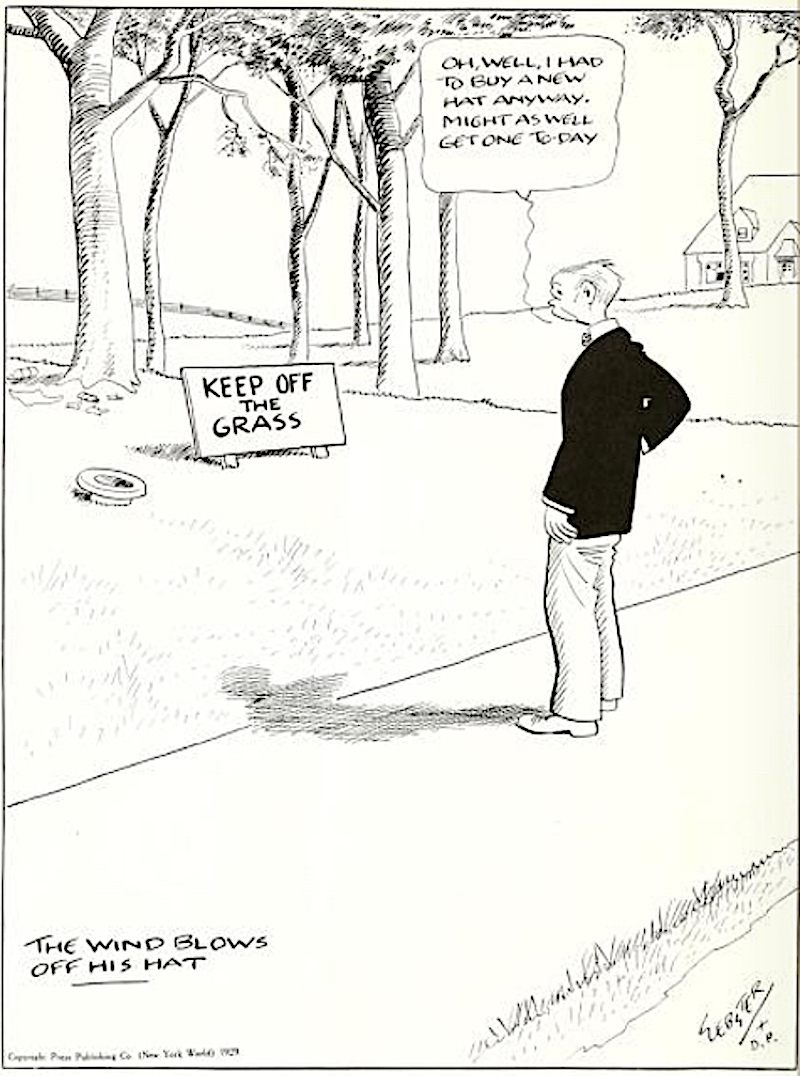
Good heavens. This guy is the living embodiment of Casper Milquetoast, the famous invention of legendary cartoonist H.T. Webster. Casper was the original weenie, so terrified of making mistakes, defying authority or breaking rules that he was in a constant case of paralysis. The idea of a story at a memorial service or funeral is to reveal something characteristic, admirable or charming about the departed and, if possible, to move or entertain the assembled. This guy is the only one alive who can recount whatever the anecdote is, so to the extent it exists at all now, he is the only authority and witness. So what if his memory isn’t exactly accurate? What’s he afraid of?

The advice I’d be tempted to give him is, “You sound too silly to be trusted to speak at anyone’s funeral. Why don’t you leave the task to somebody who understands what the purpose of such speeches are?” Or maybe tell him to watch the classic Japanese film “Rashomon,” about the difficulty of establishing objective truth. “The Ethicist,” who shouldn’t have selected such a dumb question in the first place, blathers on about how “everybody does” what the inquirer is so worried about and cites psychological studies about how we edit our memories. Blecchh.

Continue reading

Look! “The Ethicist” Has A Real Ethics Question That Doesn’t Involve Trump Derangement!

The New York Times Sunday advice column “The Ethicist” has been indulging itself by joining in the mass Times mourning over the election of Donald Trump and the failure of the paper’s years long propaganda campaign against him. The past four featured questions have been “Is It Fair to Judge a Friend by the Way She Voted?”, “Can Voters Be Held Accountable for Their Candidate’s Behavior?”, “Am I a Hypocrite for Calling Donald Trump a Liar?”, and my personal favorite, “My Mom Voted for Trump. Can We Let It Go?” It has taken a month to get back to genuine ethics dilemmas and conflicts, but at last Prof. Appiah is where he is supposed to be all the time.

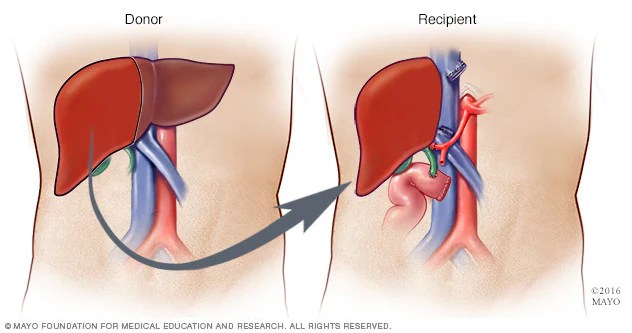
This weeks query was “A Guy I Know Had a Liver Transplant. Now He’s Boozing Again.” [Gift link! Merry Christmas!]It raises more than one ethics question worthy of discussion, including:

1. Should alcoholics who have destroyed their livers be eligible for liver transplants?

2. Is the recipient of a liver transplant behaving unethically if he or she returns to the same lifestyle that ruined the first one?

3. Do the friends of the now boozing liver transplant recipient “have an obligation to tell this man’s wife that he’s still drinking?”

The first one came up for debate nationwide when Mickey Mantle, the hard-drinking baseball great, strangely came up at the top of a liver transplant list despite being predominantly responsible for his first liver’s demise. Organ transplant waiting lists are created using several formulas and weighted values, which makes sense when distributing rare commodities. On the other hand, this is a slippery slope that slides directly into punishing people for not exercising enough, eating too much pizza, smoking or favoring dangerous hobbies, like motorcycle racing, and withholding medical care or insurance coverage of the adverse results. Alcoholism, as I learned the hard way, is not volitional though alcohol abuse is, and good luck telling the two apart.

2. The second question is also squarely in an ethics gray area. Once the liver is in an individual’s body, he or she should have complete autonomy. Sure, it’s irresponsible for someone with obligations to others to take unnecessary risks with his or her life, but that’s true with or without a new liver. I can’t define a special obligation to those who did not receive a particular liver that should affect the recipient’s decisions going forward. What happens to the new liver won’t help or harm those who didn’t get it.

3. The third question is the easy one, and Golden Rule 101. Would you want to be told if your loved one was secretly endangering his or her health? Sure you would. However, if the wife in this case has been paying attention to her alcoholic husband, I doubt very much that anyone needs to tell her that he’s drinking again.

But did he vote for Donald Trump????

If There Was Any Doubt That “The Ethicist” Is Pandering To NYT’s Trump Deranged Readers, There Is No Longer…

Since last week, in succession, “The Ethicist” who hangs out at the New York Times Magazine has chosen to answer “My Mom Voted for Trump. Can We Let It Go?,” then “Am I a Hypocrite for Calling Donald Trump a Liar?” (which was too stupid for Ethics Alarms to even make fun of) and now comes the brain-melting “Shouldn’t Trump Voters Be Viewed as Traitors?”

“Name Withheld” writes, “From my perspective, the attack on the Capitol spurred on by Donald Trump on Jan. 6, 2021, the efforts to nullify the results of the 2020 election with false electors and unfounded court cases and the persistent effort to discredit those election results without evidence amounted to an attempt to overthrow a pillar of our democracy. More to the point, 18 U.S. Code Chapter 115 includes crimes against the nation described as treason, misprision of treason, rebellion or insurrection, seditious conspiracy and advocating the overthrow of government. I hold anyone voting for Trump at least morally guilty for the consequences of Jan. 6 and everything that follows the recent election. Would you agree that people who vote for Trump in light of these circumstances are themselves guilty of treasonous acts?”

Continue reading

“The Ethicist” Weighs In On Mandatory Kitchen Remodeling

I was going to ignore this until the issue of giving money to homeless people came up on a thread about the “hero” who made sure the illegal immigrants sneaking into the U.S. didn’t risk dehydration in the process.

The ubiquitous “Name Withheld” asked Prof. Appiah whether it would be uethical to give a friend down on his income and luck the money to remodel his kitchen, which is in dire need or repair, but to make the gift conditional on the struggling friend only using the money for that purpose. Apparently NW’s partner wants to attach strings to the financial “gift,” and “Name Withheld” doesn’t. The couple have been periodically giving their struggling, single-dad friend donations to help him make ends meet for some time.

How hard is this? If you want to make certain your gift is a kitchen remodeling—who is “Name Withheld,” Betty Crocker?—you say: “I am giving you a new kitchen. Here’s the number of a good contractor; have him send the bills to me. Just keep the cost within X dollars.” If you give someone money, the money is the gift. Sure, you can say, “Now, I’m giving you this so you can remodel that dump of a kitchen,” but you can’t say, “If you use the money for anything else, then I’ll want it back.”

Continue reading

“The Ethicist” Gets A Genuinely Hard Question…And I Don’t Like His Answer

This time, I’d like to concentrate on the answer “The Ethicist” gave to a question more than the question itself. Prof. Appiah was asked by a woman (or man) who had been sexually molested by his (or her) father whether it was time to finally inform family members about the abuse, now that this son or daughter has decided to cease contact with the father for other reasons as well as the obvious one. He or she says the mother and siblings think the decision to cut off Dad is cruel, and that the father should have a chance to make amends—but they don’t know the whole story.

“If I were to share these details with my mother, I’d risk destroying a decades-long marriage in a single conversation,” the inquirer writes. “If I were to tell my siblings, I’d do irrevocable damage to their relationship with our father. Should I continue my silence to protect the rest of my family from emotional harm? Or do I owe it to them to tell them the truth? As I write this, I’m also painfully aware that if I break my silence, he will try to manipulate them into believing that none of this is true, that I’m delusional — he has done it successfully before.”

I’m not a nuanced kind of person regarding situations like this. My reaction: The truth shall set you free. Would I want to know if my spouse or father was a monster? Absolutely. That the information would be painful doesn’t mean I’d rather live in contrived ignorance. The writer has no obligation to protect his father, and it’s not protecting the mother or siblings to enable a lie.

Here’s the philosophy professor’s answer, in a few bite-size chunks:

“Now, an immediate issue is whether your father could be in a position to repeat his crimes with other children — that there aren’t others suffering in silence. If that’s the case, staying silent isn’t an option. You don’t raise this as a concern, but you need to be confident that it isn’t one.” 

And how exactly could that confidence be justified? It can’t be. The writer has already stated that this man has managed to fool his entire family for decades. The rest of “The Ethicist’s” answer is superflous: “staying silent isn’t an option.” A man who molested his own child isn’t trustworthy, and never can be.

Suppose you told him that you’ll keep quiet if he tells the family that he accepts that you don’t want to see him owing to a serious wrong he did to you. The problem is that questions would arise about the nature of that wrong, and that he may not be willing to deal with them. Nor is it obvious that keeping the details vague would leave your parents’ relationship intact. Besides, your father doesn’t sound like the sort of person who could be talked into taking responsibility.

Never mind that: bargaining with the damaging information comes to close to extortion for my ethics alarms.

Even if you reveal the truth, he may be confident, rightly or wrongly, that he can get people to believe you’re not to be trusted.

So what? Don’t be a weenie. Tell the truth, and if the family chooses to believe the abuser, that’s their problem, and their tragedy.

Whatever you decide, though, you shouldn’t be motivated by the thought that you owe this truth to anyone. It’s not that there isn’t reason to care that they know the truth. Many people in your family have relationships predicated on ignorance. They might even feel, were it to come out, that you should have told them before, precisely because we want to live a life in which our important relationships are not based on a failure to understand what our intimates are like.

Yet these reasons to disclose what happened don’t impose a duty on you of doing so. You may judge that they are outweighed by the fact that sharing the truth will cause pain and disruption to many lives without doing enough compensating good. Nor are you obliged to subject yourself to the pain and disruption that your father’s manipulations may bring you.

I disagree completely. There is no duty owed to the father to keep the ugly truth from the family, but the family has a right to know.

“Which brings me to my final thought: Taking measures to protect your well-being isn’t selfish when you are, objectively, the wronged and wounded party. Will your well-being be best protected by your admittedly painful policy of steering clear of both your father and the tumult of disclosure?…”

“It’s OK to be a coward if that’s the easiest path for you.” Again, I disagree.

The last point I have to make is that I doubt very much that the mother doesn’t know about the abuse. Spouses of child-abusing parents almost always either know or are in denial.