Mother’s Day 2024 Ethics Warm-Up

Happy Mother’s Day. It’s not going to be a happy one at the lonely Marshall house, though my sister and I will be having dinner to celebrate her motherhood as well as the two dead mothers in the family. She talked me out of bringing Grace’s urn to the dinner, as I expected she would. I’m still tempted.

In more dark news, it seems a cruel twist of fate that the major event in U.S. history that occurred on this date was the discovery of the kidnapped Lindbergh baby, dead. Happy Mother’s Day!

On to the ethics inventory…

1. About that Trump trial…I haven’t written much about Alvin Bragg’s blatantly political and partisan prosecution of Donald Trump in New York. I’m not there and it’s not being broadcast; meanwhile, the news media is setting new records for completely slanted and biased coverage: going back and forth among Fox News, MSNBC and CNN is like visiting parallel universes. But even a legal analyst on CNN confessed that the prosecution had yet to prove any crime had been committed, and it seems clear that the judge’s decision to allow Stormy Daniels to testify extensively about the alleged sexual activities engaged in with the former President guarantees a guilty verdict being thrown out. From what I can determine, the judge should throw out any guilty verdict as a matter of law, because guilt beyond a reasonable doubt cannot be legitimately found when the two primary witnesses for the prosecution are as inherently unbelievable as Daniels and Michael Cohen, who is a disbarred lawyer, a disgruntled former employee of Trumps, and an admitted perjurer. Jonathan Turley, who has registered his utter contempt for this case (recent posts here, here, and here), had a funny line about waiting to see if the courthouse is struck by lightning when Cohen takes the oath before testifying.

It is so clear, in listening to the MSNBC and CNN commentary on the trial as well as print and online accounts like Maureen Dowd’s column“Donnie After Dark” that the real objective of this trial is to humiliate Trump and expose his “bad character.” This is not an ethical or legitimate use of the justice system, but Democrats are committed to it. How desperate they are. I was thinking about this even as I laughed at Jerry Seinfeld’s movie sharply tweaking Democratic icon Jack Kennedy’s serial adultery and sex addiction: after JFK, after Bill Clinton, and with a their own current President credibly accused of rape and caught on film sniffing and touching young girls as his own daughter’s diary documents them showering together, this is the best they can muster to impugn Trump? And how many Trump supporters are under the delusion that he has embraced high moral and ethical values in his private life? if anything, Trump’s handling of the lawfare assault on him has raised my opinion of his character. His determination and resilience are amazing. He epitomizes the lesson of “Laugh-In” comic Henry Gibson’s favorite poem (by Frank Lebby Stanton), “Keep A-Goin’.”

Continue reading

Oh-Oh. Another Ethically Obtuse Question for “The Ethicist”

Maybe it’s just a coincidence, but it sure seems to me that the questions being asked of the New York Times “The Ethicist” column (or the ones he’s choosing to answer) are increasingly obtuse. This suggests a dangerous trend. Are most Americans really that ethically incompetent? Or are the increasingly frequent (it seems to me) instances of blatantly unethical conduct modeled by our elected leaders and shrugged off by our news media causing galloping ethics rot?

The latest query for “The Ethicist” was, in my estimation, steeped in grade school-level ethics ignorance. A female designer who used to work for a sexually harassing boss when she was just getting started eventually told the bastard off and was fired in retaliation. Now she asks,

Continue reading

Speaking of Wills (I’m Searching for One Now)…”The Ethicist” Wants a Word

Well, the world here at Westminster Place is getting grimmer and more desperate by the second, so I’m escaping to my office for a nonce to see if a break helps. As it happens, our old friend “The Ethicist,” Kwame Anthony Appiah, had a recent exchange involving death-related matters, and I didn’t care much for his analysis.

But what do I know? I couldn’t even figure out that my wife needed to go to the hospital regardless of what her protestations when in fact she was dying…

But I digress. A questioner asked the Times Magazine’s resident ethics advice columnist (and the fourth to hold The Ethicist title) whether his plan of “giving half of my inheritance to my brother without telling him of his exclusion from [their father’s] will, sparing him any additional hurt feelings,” would be ethical. Mad Dad is 90, the inquiring son is the executor of the father’s will, and he has seen that his brother has been cut out..

His question concludes, “Would this be ethical, or does the need for truth override my plan? To be clear, I would not lie. This would be more a misdirection by omission.”

Continue reading

This Question to the Ethicist Sends Me to the Wood-chipper

[That would be my foot sticking out. I’m sure my good neighbor Ted would be willing to get me through…or any one of the thousands of people I’ve infuriated over the years.]

You can read Kwame Anthony Appiah’s answer to the most discouraging question he’s ever been asked (my description, not his) if you like. Essentially “The Ethicist” says (I’m counting here), “No, no, no, no, no, no, no, no, no, and no!” As usual the New York Times “Ethicist ” is thorough, but he could have written his response in his sleep, as I could have, and if you’re reading an ethics blog, so could you.

Here’s the question, and hold on to your heads…

A close friend of many years whom I’ve always thought of as an extremely honest, ethical person recently confided in me that she shoplifts on a regular basis. She explained that she never steals from small or independently owned businesses, only from large companies, and only when no small business nearby carries the items she needs. She targets companies that are known to treat their employees badly, or that knowingly source their products from places where human rights are violated, or whose owners/C.E.O.s donate to ultraconservative, authoritarian-leaning candidates, etc.

My friend volunteers in her community and has worked her entire life for nonprofit antipoverty and human rights organizations. While she isn’t wealthy, she is able to afford the items she steals and believes that she is redistributing wealth; she says she keeps track of the value of what she’s stolen and donates an equal amount to charity. She thinks of her actions as civil disobedience and says she will accept the consequences if she’s caught.

When she told me, I thought, Stealing is wrong. But as we discussed it, I realized I was oversimplifying a complex moral issue. Is it wrong to steal food to feed your starving children? What if I stole a legally purchased gun from a person I knew was about to commit a mass shooting? Are those who bring office supplies home from their workplace also thieves? I find myself struggling with the question of whether an individual’s actions are morally defensible if they do more good than harm. — Name Withheld

Continue reading

Two Ridiculously Easy Questions For “The Ethicist” Draw Me To The Woodchipper…

Am I wasting my time? How can so much of the public be so hopelessly incompetent at analyzing basic ethics issues?

Two back-to-back questions to Kwame Anthony Appiah, the philosophy prof who moonlights as the Times’ ethics advice columnist, have me wondering if its time to do something more useful, like, say, anything. Both questions involved what is ethical to write about. Both questions shouldn’t have to be asked by anyone whose judgment regarding right and wrong is superior to that of the Clintons, or Willie Sutton. Both were deemed interesting and controversial enough to be featured by “The Ethicist” as if substantial numbers of his readers are likely to be similarly puzzled by the alleged dilemmas they present.

Really? The first inquirer asked if it would be unethical for a writer to use the real life stories of alcoholics that she heard in her A.A. meetings without their consent, as long as she didn’t use their names….just their “profession, physical appearance, hobbies and other specifics.” Participating in Alcoholics Anonymous is conditioned on absolute confidentiality. The answer should be self-evident. Why isn’t it?

Continue reading

“Confronting My Biases” Meets “The Ethicist”: The Webcam Model Son

“The Ethicist,” Kwame Anthony Appiah, was oh so sensitive answering this query from a concerned parent:

….I have just found out that my [college age] son is a “model” on a pornographic streaming service. My initial reaction was shock, revulsion and shame. But the longer I think about it, the more I wonder, is there really anything immoral or otherwise wrong about what he is doing? He does it from the privacy of his home, alone, and seems to earn a substantial amount of money. If he likes what he does, is there any reason on my part to feel alarmed, ashamed, guilty or worried?

The NYU philosophy prof essentially says that nobody is being hurt by the son’s activities, so they cannot be called “wrong.” He then explains, as I cut through the verbiage…

“If we agree that your son’s camming isn’t wrong, what explains your initial sense of revulsion? Part of your response might arise from the familiar intrafamilial squeamishness about sexual disclosures. That response, then, may have been connected not with what he was doing but with you, as his parent, knowing about it….you can also have prudential concerns. How would his prospects be affected if word got out about his webcam gig? Livestreams can be recorded and uploaded. Even if you think that erotic livestreaming is neither wrong nor shameful, it’s natural, as a parent, to worry about how others might react…There’s nothing hypocritical about compartmentalizing a cam gig. Pretty much all cultures — and subcultures — have ideas about modesty, privacy and discretion, and so understandings about the contexts where erotic display or simply nudity is appropriate.”

Continue reading

Two Women Who Never Read Kant

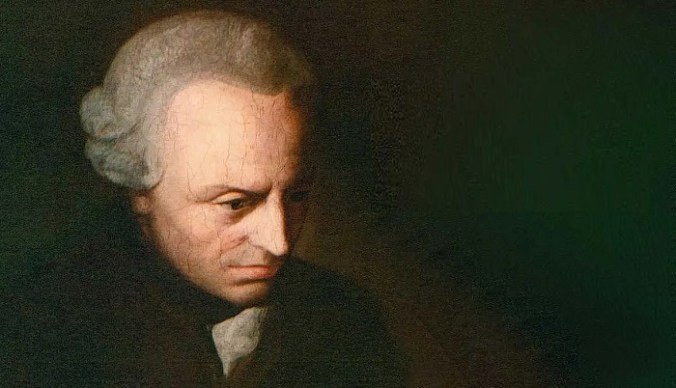
German philosopher Immanuel Kant ( 1724 – 1804) was the all-time champ at rules-based ethics, concocting several useful formulations of what he called “the categorical imperative,”or the principle of absolute morality. All of them are, as absolutes, the starting points for hopelessly convoluted debates and “what ifs?,” but philosophy geeks love that stuff. For me, the main value of Kant’s absolutism as that they are useful for pinging ethics alarms.

Kant’s “Formula of Humanity” stated (in German, of course): “So act that you treat humanity, whether in your own person or in the person of any other, always at the same time as an end, never merely as a means,” or in the short version, “Never treat another human being as merely as means to an end.”

Abortion, for example, is an ethical controversy that Kant clarifies quickly: abortion rationalizers have long tried to duck the “Formula of Humanity” by denying that a fetus with human DNA created by humans that will grow to be a born and eventually a walking, talking, member of human society isn’t a human being at all, and thus killing it for the benefit of its mother isn’t using whatever it is as a means to an end.

You can get in the high weeds of Kant’s most famous rule here. For instance, Kant holds that it may be wrong for a person to treat himself or herself merely as a means: now there’s a metaphorical rabbit hole. But for the purposes of this post, let’s just look at two recent examples of people who probably can’t spell Kant, never mind recognize when they are defying him.

Continue reading

Another Ethics Quizworthy Query To “The Ethicist”: The Dying Man’s Secret

My mind’s made up on this one, and I disagree with “The Ethicist’s” answer, but I have a strong bias, and I want to see what EA readers think. “Name Withheld,” who for some reasons sends The Ethicist (Kwame Anthony Appiah) a lot of questions, asked in part,

I am 76 and have lived a full and interesting life. My doctor recently gave me the news that the cancer I was treated for last year has returned and metastasized. I have started a course of immunotherapy treatments that, hopefully, should keep the cancer at bay for roughly the next two years.

I have not told my wife, my son or any of my friends about this. I don’t want to have to endure two years of pity. I would rather enjoy life with everyone as I have always done — and then break the news only when the time comes….Am I wrong to keep this from the people I love?

The Ethicist replies that he is wrong. “By depriving your loved ones of the facts, you deprive them of the chance to face the future together with you,” he concludes. “Because your diagnosis affects their lives as well, I hope you’ll let them come to terms with this important truth.”

Your Ethics Alarms Labor Day Weekend Ethics Quiz is…

Is “The Ethicist” right?

Continue reading

My Answer To “Name Withheld’s” Question To “The Ethicist”: “Tell Sis To Shut The Hell Up!” Yours?

An inquirer to “The Ethicist,” Kwame Anthony Appiah, asked this week:

“A year ago, I was told I had a form of ovarian cancer and was given two to three years to live — five years, if I’m in the top quartile of patients. I nursed my husband through metastatic lung cancer for 15 months. It was horrific; I am hoping that God takes me early. My sister, whom I love very much, is part of a fundamentalist Christian church and is one of their top “prayer warriors.” As such, she calls me nearly every day and launches into long prayers asking God to send my cancer to the “foot of the cross.” She implores me to pray with her and says that if I just believe that God will cure me, he will.I grew up Catholic and have fallen away from the church. I believe God is bigger than what we can understand as human beings. I am a data-driven health care practitioner: I believe that everybody has to die of something, and this happens to be my fate. I’ve told her as tactfully as I can that her praying for me and expecting me to pray with her for my cure is upsetting to me. It makes me feel that if there is a God, he must really hate me; otherwise, he would have cured me. (She says that he wants to use me as a “messenger” to others and that it’s the Devil, not God, who gave this disease to me.)…

“What do I say to my sister without belittling her beliefs? I’ve told her that if she wants to pray for me, I would rather she do it on her own time and not ask me to participate. But she is persistent, thinking that she’s going to “save my soul” and my body at the same time. She disputes every reason that I give her and insists that what she is doing is helpful. But it’s not helpful; it sends me into a terrible depression.”

Continue reading

“No Questions Asked” Ethics

Kwame Anthony Appiah, the long-running most recent occupant of the NYT’s “Ethicist” throne, received what I initially thought was one of the dumbest inquiries ever last week. After thinking about it, I decided that it was a good ethics quiz after all.

A man’s son had his mountain bike stolen, and the father issued a notice that there would be a $500 reward for its return, “No questions asked.” The tale continued,

“To my surprise, I got a response from someone, and we set a time to meet. Then I became worried that I was being set up to be robbed. So I called my son. Next thing I knew there were six hulking 20-somethings tagging along with me in my minivan. At the agreed-upon meeting spot, the guy appeared with my bike in hand. …while I’m looking the bike over, they said, in no uncertain terms, that it was not necessary for me to pay for the bike. The guy looked scared, and I wanted things to end safely, so I peeled off half the stack. “How about $250?” The guy took the money and ran off.” 

The inquirer asked the Ethicist whether he did the right thing, since it was obvious to all present that the guy was the thief. Should the father have instead paid the whole promised amount, or nothing at all?

Continue reading