Ethics Malpractice from “Dear Margo”: The Tale of Witchy, Tubby and Sue

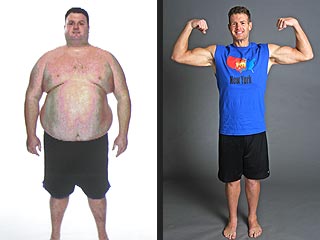
"Well sure---his inner qualities are much more important to me now that he's so hot!"

I read a lot of advice columns, which often involve ethical issues and very often expose the ethical incompetence of the supposed experts who write them. Some advice columnists are ethically spot-on with regularity, like The Washington Post’s Carolyn Hax. Some, like the past and present”Ethicists” of the New York Times, are off-base almost as often as they are on. Then there are the advice mavins like “Margo,” in the Boston Globe. I don’t know how such people get to be advice columnists, but I suspect it either involves picking names out of a hat or the exchange of sexual favors. [Full disclosure: I give out personal ethics advice myself over at AllExperts.com, when a legitimate questioner can find me—ethics isn’t listed as one of the site’s topics—and when the question isn’t a thinly veiled homework question, which it usually is.]

As an example of ethics malpractice, consider this question posed to Margo. “Sue” wrote that she had broken up with her ex-boyfriend over arguments about his weight and eating habits, which “grossed her out.” Eight months later, he’s fit and fabulous, and has a new girlfriend.  “I really would like him back because he’s hot and slim,” Sue writes, plaintively. “How can I step on his witchy new girlfriend so I can get him back?” Continue reading →

Loop-Hole Ethics and The New York Times

The NYT’s website paywall plan floats in a sea of holes.

Ariel Kaminer, author of “The Ethicist” column in The New York Times Magazine, made an interesting assertion in her answer to a reader who asked about whether he could exploit several loop-holes in the Times’ new paywall plan for its website.

Noting that he was a struggling freelance journalist who visits the Times website often, he asked if it was unethical for him to use his parents’ free access to the content, since they are subscribers.  Then he Mused about other scenarios. “If I buy online access, can I share the password with my live-in girlfriend, even if I move to New York for the summer? What about our other housemates?” Continue reading →

Sunday Ethics Blast: An Overly-helpful Teacher, A Hands-on Youth Counselor, A Poverty Program Slacker and a Redeemed Ethicist

Here are some quick links and observations to get your ethical juices going this Sunday… Continue reading →

The Times’ New Ethicist Commits Malpractice

The new Times "Ethicst" shows her dark side.

Randy Cohen’s replacement as “The Ethicist” in the New York Times Magazine, Ariel Kaminer, had a flawless maiden flight last week, but crashes and burns on her first question this week. As was too often true of Cohen, she messes up in the area of honesty and legal ethics.

The inquirer, an applicant for law school, had asked a former professor to write a recommendation.  The professor, an apparent creep, said she was too busy—Honestly: writing recommendations for students applying to graduate students is part of her job, and how long does it take?—but if that if the student would write it, she would gladly “edit as needed” and submit it under her own name. Ariel’s inquirer felt uncomfortable writing her own letter of recommendation, but did not “wish to jeopardize my chances of being accepted into my top-choice school by being overly conscientious.” Ariel’s question to answer: is it ethical to draft the letter? Continue reading →

A Shocking Farewell Confession From “The Ethicist”

In Randy Cohen’s farewell column for “The Ethicist” today—he was sacked by the new editor of The New York Times despite providing an entertaining, well-written and provocative column for many years— he makes a statement that I find shocking, and one that challenges the core assumption of this blog and indeed my occupation.

Writing the column has not made me even slightly more virtuous. And I didn’t have to be: it was in my contract. O.K., it wasn’t. But it should have been. I wasn’t hired to personify virtue, to be a role model for the kids, but to write about virtue in a way readers might find engaging. Consider sports writers: not 2 in 20 can hit the curveball, and why should they? They’re meant to report on athletes, not be athletes. And that’s the self-serving rationalization I’d have clung to had the cops hauled me off in handcuffs.
What spending my workday thinking about ethics did do was make me acutely conscious of my own transgressions, of the times I fell short. It is deeply demoralizing.

Amazing. Randy, we hardly knew ye, and we sure didn’t understand ye, either. How can someone possibly spend one’s working day “thinking about ethics” and not become more virtuous in his daily conduct? Continue reading →

“The Ethicist” is Dead; Long Live “The Ethicist”!

Boy, I got my post being nice to Randy Cohen, “The Ethicist” of the New York Times Magazine,  up just under the wire. Monday, new Times Magazine editor Hugo Lindgren fired him, and announced that the NEW “Ethicist”—the identity is a little like “the dread pirate Roberts”—will be Ariel Kaminer, most recently the Times City Critic.

She, like Cohen when he was hired, has no professional or scholarly ethics background. If I was in a cynical mood, I might suggest that the New York Times doesn’t take ethics seriously enough.

I didn’t always agree with Cohen, who sometimes let his politics get in the way of his ethics advice, but I never missed his column, and often got a kick out of his wit. It is said that he’s trying to land an ethics program on NPR, another media organization that needs all the ethics it can get.

Good luck, Randy.

“The Ethicist” Nails A Rationalization

I have often been critical of Randy Cohen, the New York Times Magazine’s longtime writer of “The Ethicist” column. This distorts, I fear, Randy’s performance, for he is right far more often than he is wrong, and he is usually right with wit, humor and clarity.

As an effort to balance the scales a bit, I want to salute “The Ethicist” for explaining, concisely and lightly, what is wrong with one of the commonly used rationalizations for unethical conduct: “If I don’t do it, someone else will”:

Responding to a man who felt that it was wrong to take a job facilitating his industry’s outsourcing of jobs overseas, Cohen assured him that there was nothing unethical about the assignment. He then added,

“That is fortunate, because your wife’s argument — if you don’t do it, someone else will — would not justify nefarious conduct. Someone else will do pretty much anything. I’ve met ‘someone else,” and he’s quite the little weasel.”

Well said.

Incompetent Advice from “The Ethicist”

Randy Cohen,”The Ethicist,” really doesn’t apply ethics to the intriguing questions sent to him in his long-running column in the New York Times Magazine. What he applies is Randy’s customized social justice agenda, which has a strong class bias (Rich people deserve to be brought down a peg whenever feasible), endorses redistribution of income (stealing from rich people is different from stealing from poor people) and a belief that if a rationalization can provide a green light to allow a deserving person to stick it to a company or wealthy citizen, by all means, embrace it. Because Cohen is a smart and instinctively ethical guy, he still get the answers right the vast majority of the time, as he has done for quite a few weeks now. Eventually, however he’ll reveal the Real Randy in a column like today’s, in which “The Ethicist” endorses vigilante justice. Continue reading →

“The Ethicist” and His Definition of “Unethical”

Eureka! Bingo! At last!

While explaining in this week’s column why he hesitates to label a manifestly unethical practice unethical, The New York Times Magazine’s ethicist, Randy Cohen, clarified a couple of questions that have been bothering me for quite a while. Why do so many people react so violently to my conclusion that they have done something unethical? And why does Randy Cohen, a.k.a. “The Ethicist” so frequently endorse unethical conduct, especially dishonesty, when he believes it is motivated by virtuous motives? Continue reading →

Elevator Ethics

Randy Cohen surprised me today. “The Ethicist,” in his weekly column in the Times Magazine, responded to a  question from a Chinese citizen whose office building had only one working elevator, resulting in long lines of office workers waiting to catch a lift to distant floors. Cohen’s inquirer asked if it was unethical for him to run up the stairs to a higher floor, and secure a place on the elevator before it arrived on his original floor, one below.

Cohen said he was “cutting in line,” and that it was unethical. Randy may well be right, but I’m not immediately convinced. Continue reading →