
Why I Just Billed A Client For My Dog’s Evening Walk….

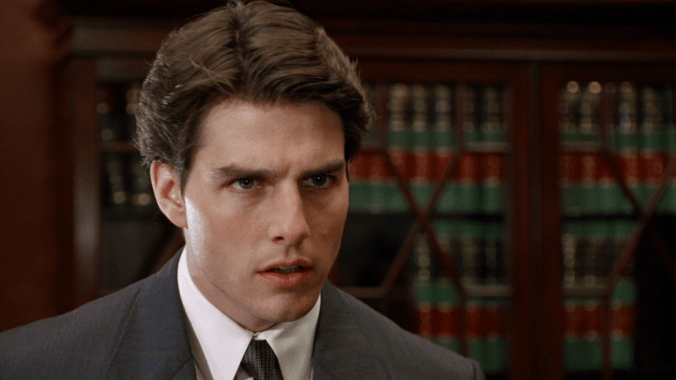
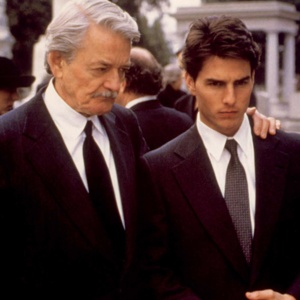
In “The Firm,” the corrupt lawyer played by Gene Hackman tells new associate Tim Cruise that he is supposed to bill for every second he is thinking about a client’s work, in the shower, on the toilet, at the movies. Inflating fees is one of the most flagrant and common of all lawyer misconduct, and it is almost impossible to prove unless a lawyer does something stupid like billing more than 24 hours a day (and an amazing number of lawyers have tried that). In the film version of “The Firm,” in fact (though not in the novel) Cruise’s character uses proof that the mobbed-up firm he worked for was over-billing clients to wiggle out of his own legal and ethical dilemma.

As a general rule, I think it’s generally dishonest to bill clients for every thought.

I am preparing an ethics report, and doing so with a famous, legendary, super-credentialed lawyer who charges four times what I do as my ethical adversary. His experience and credentials make me look like comparative piker, but 1) I’m on the right side of this issue 2) his ethics report was pathetic and 3) this case is in my wheelhouse, not his.
Continue reading

Real Life Imitates Fiction, In This Case, “The Firm”

Remember how, in the film adaptation of John Grisham’s “The Firm,” the young lawyer Mitch McDeere (Tom Cruise)who is  trapped in a mob-owned law firm wiggles out of his dilemma in part by proving that the firm’s lawyers were routinely over-billing clients?

Well, the Boston-based Thornton Law Firm and the Labaton Sucharow law firm in New York were caught inflating their billings on a similar scale.

Judge Mark L. Wolf concluded that the two firms double-billed  for their attorneys’ work on a class-action lawsuit involving State Street Bank, and even billed for the work of other attorneys not employed at either firm. Thornton’s managing partner, Garrett Bradley,  listed his brother as an attorney on the case and charged $200,000 for his time even though Michael Bradley was barely involved. Uncovering this scandal was another triumph of the Boston Globe Spotlight Team, the investigative reporting division that uncovered Boston’s predator priest cover-up in 2002. Continue reading

Oh, Great: 21% Of Lawyers Are Stealing From Their Clients.

This should be a shock, but it isn’t. When the screenwriters for the film adaptation of “The Firm” changed the ending to focus on the fact that the mob’s law firm was over-billing clients, lots of lawyers and legal ethics specialists squirmed. Widespread over-billing in the legal profession has been a scandal waiting to break for decades.

The ABA journal reveals that a recent study by  CEB Inc. and Wolters Kluwer NV’s ELM Solutions, companies that work with corporate legal departments to manage their budgets, examined legal invoices from about 100 companies, and found that 21% of lawyers “upbilled” for their time in 2015. Upbilling is the practice of rounding up legal hours hours worked to the next hour or half hour. This could raise the annual legal bill for a partner billing 2,000 hours a year by about $29,000. Spread over all the clients and all the lawyers charging by the hour, the 21% figure translates into millions of dollars taken by fraud, and maybe billions, every year. You can read summaries of the reports  here and here. Continue reading

“The Firm” Ethics: Mitch Should Have Known What He Was Getting Into

I was just watching “The Firm” again after many years—my old friend and the terrific actor, the late Bart Whiteman, played “Dutch”—to get the ick of “Cabin Fever 3” out of my head. (It was part of last night’s Halloween triple feature at my house.)

Pay attention, Tom...

Pay attention, Tom…

In an early scene in the film, Harvard Law student Mitch McDeere (Tom Cruise) is being courted by big law firms offering perks and cash. Then a small Memphis firm he never heard of —later, he learns that it is run by the Mob— blows him away with an offer he can’t refuse. The firms partners tell him that they wanted him so much, they bribed the clerk at Harvard’s placement office to learn what salaries the other firms had offered Mitch, then matched it plus 20% more. Tom is impressed, and flattered, and greedy, and takes the offer, even though the firm had openly revealed itself as unethical and proud of it.

He should have seen this as signature significance of a dangerously unethical culture in a profession with high ethical obligations, and walked out the door. A young lawyer with well-maintained ethics alarms would have. Who knows? Maybe this was a test the corrupt firm used to weed out ethical associates.

I always thought Mitch was just unlucky, but in the film, at least, he ended up in a bad firm because an ethics alarm wasn’t working.