the Founders
Ethics Quote Of The Week: John Adams, 1814
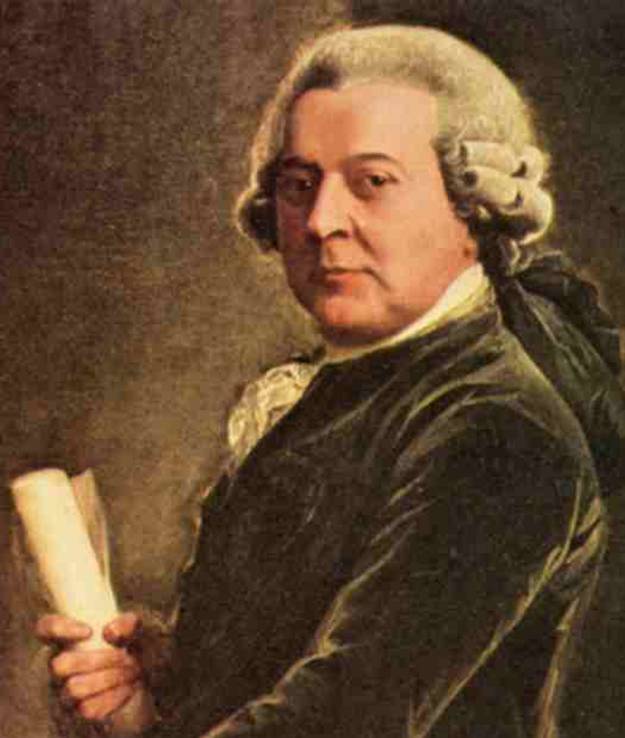
“I dare not look beyond my Nose, into futurity. Our Money, Our Commerce, our Religion, our National and State Constitutions, even our Arts and Sciences, are So many Seed Plott’s of Division Faction, Sedition and Rebellion. Every thing is transmuted into an Instrument of Electioneering.”
—John Adams, in a letter to Thomas Jefferson, Feb. 1814.
To add some perspective.
Of course, John was always a Gloomy Gus.
The Electoral College’s Day Of Reckoning, Part II: Dunces, Heroes, Villains, And Fools
The failure of the ugly Electoral College revolt scheme that ended yesterday—let’s ignore the coming storm of frivolous lawsuits for now, all right?—with the official, irreversible, like it or lump it victory of Donald Trump over Hillary Clinton also settled some distinctions, some desirable, some not.
- Ethics Heroes: All of the Republican electors who resisted the harassment, propaganda, intimidation and bad arguments and did their duty, avoiding a crisis and foiling the attempts of Democrats to cheat, which is exactly what the effort to flip the electoral vote was. The faithful electors get bonus points for making so many Democrats and progressives look silly in the process, a fate they richly deserved.
Come to think of it, it was predictable that Democratic appeals to electors would persuade more Democratic electors than Republicans. Which leads us to…
- Ethics Dunces: A bevy of Hollywood B-listers joined forces in an offensive video that, like Brezenoff’s petition, misrepresented history and the Constitution to gull star-struck electors into defying the public’s will and its trust that their votes would be respected by electors. Led by Martin Sheen, who has no credentials in government or political science but played a wily President on TV, Debra Messing, James Cromwell, B.D. Wong, Noah Wyle, Freda Payne (Quick: who is Freda Payne?), “Better Call Saul’s” Bob Odenkirk, J. Smith Cameron (?), Michael Urie, Moby, superannuated M*A*S*H stars Mike Farrell and Loretta Swit, Richard Schiff, Christine Lahti, Steven Pasquale, Emily Tyra and Talia Balsam tell the electors that they will be following the Founders’ intent by rejecting Donald Trump. This is flatly dishonest, as they are attributing the contrarian position of Alexander Hamilton, who detested popular democracy, to all the Founders, who rejected Hamilton’s proposals on how the government should be elected and structured.
“What is evident is that Donald Trump lacks more than the qualifications to be president. He lacks the necessary stability and clearly the respect for the Constitution of our great nation,” say the celebrities. Obviously it is NOT evident, since Trump’s voters won the day. The Federalist accurately describes what was behind the video:
“The message is clear: the candidate for whom these celebrities spent months shilling lost the Electoral College, the metric granted ultimate primacy by Article Two of the Constitution. Now, as individuals with no substantial political background, these celebrities have organized en masse to produce content designed to “educate” our electors, chosen for their political pedigree, on their electoral duty. The whole situation reeks of condescension, dirisiveness, and social hubris. What these self-ordained celebrities are demanding is nothing short of the very opposite of what they claim to be purporting. They assert that they “stand with…all citizens of the United States,” yet admittedly only if those citizens agree with their political viewpoint. If said citizens disagree, then, unfortunately, these celebrities decidedly do not stand with them. In fact, they would prefer electors to actively oppose the wishes of these very citizens, so that the candidate they personally believe to be the best suited has a second shot at the presidency.”
That’s about the size of it, yes indeed. Continue reading
The Electoral College’s Day Of Reckoning, Part I: Revelations

After all the protests, the petitioning, the grandstanding, the misinformation and bad law and false history, after all the harassment and intimidation aimed at getting state electors to violate their pledges, duty and the trust of theirs state voters, all designed to keep Donald Trump from attaining 270 electoral votes and thus forcing the Presidential election into the House of Representatives for the first time since 1876, the results were just another humiliation for the Democrats and Hillary Clinton. Donald Trump was officially elected President of the United States, and it wasn’t close.
Four Democratic electors in Washington, a state Clinton won, voted for someone else, giving her just eight of the state’s 12 electoral votes. They will be prosecuted, apparently, for breaking a Washington statute. Colin Powell, a Republican, received three of the faithless elector votes and Native American tribal leader Faith Spotted Eagle received one, apparently because one elector decided that rather than vote for Senator Elizabeth Warren, a real Native American was preferable. Single electors in both Maine and Minnesota attempted to cast ballots for Bernie Sanders, but state laws requiring electors to follow the statewide vote invalidated both rebellious ballots. One Hawaii elector did vote for Sanders, an especially outrageous betrayal of the vote since Hawaii went to Clinton even more decisively than California. Never mind: this unknown, unvetted, undistinguished citizen decided that no, he or she knew better. That’s the model Democrats were promoting.
The one Republican elector, Texas’s Christopher Suprun, of Texas, who had trumpeted his intention not to vote for Trump despite his state heavily favoring the President Elect voted for Ohio Governor John Kasich as promised, and another Texas elector defected to vote for Ron Paul. Thus the almost six week Democratic push to use the Electoral College to pull victory from the jaws of defeat had the net effect of increasing Trump’s Electoral vote advantage over Clinton by three, with Hillary Clinton becoming the candidate with most defecting electors in over 200 years.
George Will’s favorite phrase “condign justice” leaps to mind. First the Wisconsin recount increases Trump’s vote total, and now this.
Three Ethics Observations from one of the most embarrassing spectacles in U.S. election history: Continue reading
Post-Election Morning Ethics, Early Edition [UPDATED]
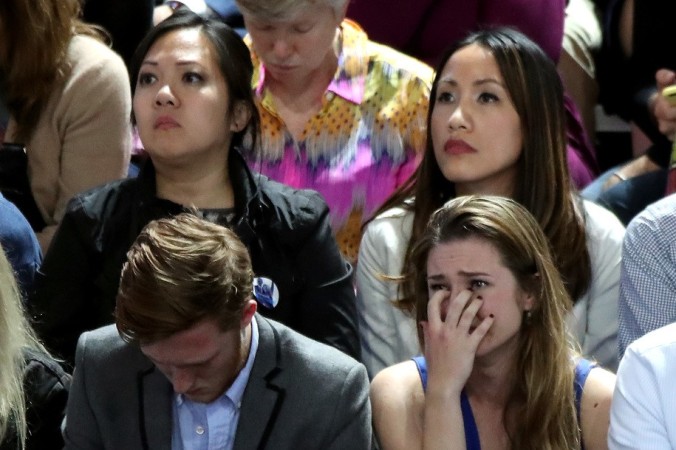
Initial ethics observations following an amazing night in American history:
1. Give Trump a chance, and take note of those who will not.
He is now in the most difficult job in the nation at the age of 70, with less relevant experience and preparation than any previous occupant of the office. For once, it’s a good thing that he’s an egomaniac and a narcissist, because otherwise he might be perseverating in terror right now. One cannot say that he begins with the most daunting set of problems any POTUS has ever faced, but it’s close. Give him a chance. Nobody becomes President wanting to fail, and not wanting to do a good job for his country and his fellow citizens. Begin with that, and let’s see what happens.
2. Those who are capable of being fair and objective should salute the shades of Mr. Madison, Mr. Jefferson, Mr. Adams, Mr. Hamilton and their colleagues. The Founders wanted a system that was capable of peaceful political upheaval when the public was dissatisfied and demanded change, and their unique creation was strutting its stuff last night. So much has taken place over the last year—the last eight years, really—that has undermined our democracy that it is refreshing to see its resilience and vitality. As before, I still believe that Trump is a cautionary tale about the danger when people who don’t understand leadership, ethics and government become the majority. On the other hand, it’s their country too, and the “elites” (how I detest that word) forgot that, repeatedly, shamelessly, and in many ways.
Jefferson would have reviled Donald Trump, but he would approve of the uprising.
3. Trump’s victory speech last night was widely reviewed as statesmanlike and gracious, which it was. It was also unusually coherent for him. Still, who can’t give a gracious victory speech? The effusive praise being lavished on this shows how low expectations are.
4. Hillary Clinton’s decision to not to appear in person at her headquarters and concede, also graciously, was a failure of character. On CNN, ex-Trump campaign manager Corey Lewandowski and ex-Obama flack Van Jones got in an argument over this, but for once in his life, Lewandowski was right. Given the backdrop of Clinton and the media questioning whether Trump would “accept defeat,” the decision by Clinton was just plain wrong: unfair to Trump, unfair to her supporters, hypocritical. Continue reading
Fourth Of July Ethics: The Signers, Snopes, And Fact-Checking

I received this inspiring bit of Americana from an old friend, a Marine and lawyer with a love of history. It’s a screed of unknown origin that has been circulating the internet since the 20th Century. Maybe you’ve seen it too:
The Price They Paid
Have you ever wondered what happened to the 56men who signed the Declaration of Independence?
Five signers were captured by the British as traitors, and tortured before they died.
Twelve had their homes ransacked and burned.
Two lost their sons serving in the Revolutionary Army; another had two sons captured.
Nine of the 56 fought and died from wounds or hardships of the Revolutionary War.
They signed and they pledged their lives, their fortunes, and their sacred honor.
What kind of men were they?
Twenty-four were lawyers and jurists.
Eleven were merchants, nine were farmers and large plantation owners; men of means, well-educated, but they signed the Declaration of Independence knowing full well that the penalty would be death if they were captured.
Carter Braxton of Virginia, a wealthy planter and trader, saw his ships swept from the seas by the British Navy. He sold his home and properties to pay his debts, and died in rags.
Thomas McKean was so hounded by British that he was forced to move his family almost constantly. He served in the Congress without pay, his family was kept in hiding. His possessions were taken from him – poverty was his reward.
Vandals or soldiers looted properties of Ellery, Hall, Clymer, Walton, Gwinnett, Heyward, Rutledge, and Middleton.
At Battle of Yorktown, Thomas Nelson,Jr., noted that the British General Cornwallis had taken over the Nelson home for his headquarters. He quietly urged General George Washington to open fire. The home was destroyed, and Nelson died bankrupt.
Francis Lewis had his home and properties destroyed. The enemy jailed his wife, and she died within a few months.
John Hart was driven from his wife’s bedside as she was dying. Their 13 children fled for their lives. His fields and his gristmill were laid to waste. For more than a year he lived in forests and caves, returning home to find his wife dead and his children vanished.
So, take a few minutes while enjoying your 4th of July holiday and silently thank these patriots. It’s not much to ask for the price they paid.
Remember: freedom is never free! We thank these early patriots, as well as those patriots now fighting to KEEP our freedom!
I hope you will show your support by sending this to as many people as you can, please. It’s time we get the word out that patriotism is NOT a sin, and the Fourth of July has more MEANING to it than beer, fireworks, HOT DOGS, and picnics……

The purpose and primary message of the post is irrefutably true. Those who signed the Declaration did so at great personal risk and sacrifice. Had the new nation failed in its revolution—and really, it is amazing that it didn’t—all of them would have been hanged as traitors. It was an act of principle and courage, and what happened later is entirely moral luck. The signers would have been no less honorable, remarkable and heroic if every single one of them, by various strokes of good fortune, had become wealthy, powerful, prospered in everything they did and died in advanced years, like Franklin, Adams and Jefferson. Unfortunately, most citizens lack the education, acumen and tools to figure this out, so we get stuff that equates random and uncontrollable misfortune with enhanced virtue. Continue reading
Nine Critical Questions About The Independence Hall Social Justice Warrior Park Ranger Tour Guide

Conservative columnist and former Justice Department attorney J. Christian Adams reported that Holly Holst, a federal employee of the National Park Service, took visitors on a guided tour of Independence Hall, during which she informed them that the Constitution and the Declaration of Independence were the product of “class elites who were just out to protect their privileged status.”
[UPDATE: Adams corrected his original report, which misidentified the ranger involved as Mary A. Hogan. Ethics Alarms has corrected it s original post accordingly. I apologize to Hogan and my readers.]
Adams writes that several attendees of her tour group on Monday told him that Holst repeatedly denigrated the Founders. She claimed that “the Founders knew that when they left this room, what they had written wouldn’t matter very much, ” and also told them that the “most important part of the Constitution written at Independence Hall was the ability to change it.”
Exemplifying her historical expertise was Holst’s alleged statement that King George III paid more attention to Parliament than the colonists “because they were right there and could remove him from office.”
Assuming that this is accurate information about Holst and her tour–remember that Adams is a passionate and often angry anti-Obama conservative—I have the following questions.
By the way, if the story above is accurate, my head has asked permission to do its best imitation of Krakatoa.
Questions: Continue reading
Remembering The President Whose Dedication To Ethics Made The U.S. Possible

We no longer honor George Washington on his birthday to the extent his importance to our nation warrants. George Washington died on this date, in his Mount Vernon Home, at the age of 67. Let’s think about him now, specifically his character.
Washington is still something of a mysterious man, but there is no question that he was one who was possessed of natural and remarkable leadership abilities, unusual instincts of common sense and justice, astounding courage, striking charisma and most of all, the rare ability, especially in one so celebrated and successful, to change his attitudes and beliefs over time. He was chosen, among the most outstanding collection of leaders this nation ever had at a single point in history, to lead them all, and the primary reason was that while few of our Founding Fathers trusted each other, they all trusted him. George Will calls him “the indispensable man,” and the assessment is apt.
One formative experience that created that indispensable man was his lifetime dedication to civility, respect, conscience, kindness and ethics as they were taught to him by his father. The elder Washington made young George copy a list 110 rules of civility and deportment into his school notebook when the President-to-be was about sixteen-years old. Scholars have determined that the list originated in the late sixteenth century in France, and had been in use there and in England before the elder Washington ever imbued his son with them. Biographers of George have been struck by the extent to which these maxims accurately describe his behavior, habits and ethical conduct throughout his life. He was quick to quote them; it has been said that if you awoke George from his slumber prior to breathing his last on that December 14, and asked him, “What’s Rule #7?,” he would have recited it on the spot. (“Put not off your clothes in the presence of others, nor go out of your chamber half dressed.”) The Library of Congress owns the original manuscript for the Rules of Civility.
Washington’s 110 Rules have been on the Ethics Alarms home page in the left margin under “Rule Book” almost from the beginning of the blog, and I posted them back in 2009. It’s time to look at them again, as we remember, and are properly grateful for, this special man. Many are funny, in retrospect, in their dated reflection on earlier times, but the ethics principles sounded still resonate, especially the last:
110. Labor to keep alive in your breast that little spark of celestial fire called conscience.
That one alone is worth a lifetime.
George Washington’s 110 Rules
The Rules of Civility & Decent Behavior in Company and Conversation
(As memorized by George Washington as a youth. Authorship unknown)
Independence Day Ethics: Historian Hype, Liberal Bias, And The Great Punctuation Mystery
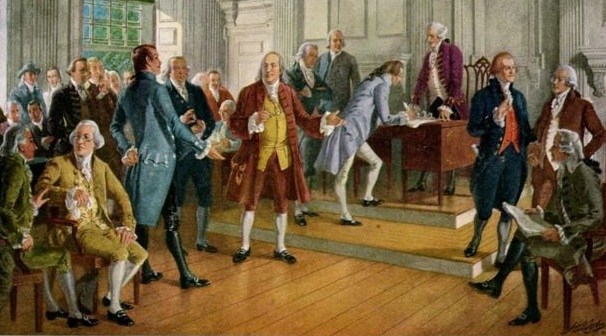
First, a little background…
I have often found it depressing that historians so often lack the ethical integrity necessary to do their jobs. If there was any profession in which avoiding bias would seem to be paramount, historical research and analysis would seem to be it, but that just isn’t the case. Because historians are academics and scholars, and because academia has become almost exclusively a hot-house of left-ward ideology for more than half a century, too many historians view their duty as using the past to manipulate the present and future.
My introduction to this came early, when I was a fifth grader suddenly fascinated with the U.S. Presidency as the first national election that I could follow approached. I read various assessments of who the greatest of our past POTUSes were, and there was near consensus, it seemed. Washington and Lincoln, naturally, were “the berries,” and they were joined as “greats” by Jefferson, Jackson, Wilson, FDR, and Truman, Democrats all. Teddy Roosevelt was “near great”; Eisenhower was a dud. What a great party this Democratic Party must be! Of course, Jefferson’s racial hypocrisy, Jackson’s lawlessness and persecution of Native Americans, Wilson’s racism and bungling of the peace after World War I and FDR’s complicity in locking loyal Japanese-Americans in prison camps was never mentioned. Over time, I learned that even the most respected American historians were likely to be pursuing partisan agendas. The classic example, of course, was Arthur Schlesinger, Jr., who carefully and unforgivably culled the facts he deemed worthy of revelation in order to add John Fitzgerald Kennedy to that list of brilliant Democratic Presidents. Was I surprised when a large number of prominent American historians signed a petition opposing the impeachment of President Clinton, a Democrat, thus asserting that a degree of dishonesty and lack of trustworthiness that was sufficient in every state in the union to mark a lawyer as unfit to practice was nonetheless not sufficient cause to remove a President from office?
I was not.
This brings us to the Case of the Missing Comma, brought to us by Danielle Allen, a professor at the Institute for Advanced Study in Princeton, N.J., aided and abetted by her left-leaning allies. Allen (who by the purest coincidence has a book out!) claims a major discovery. The iconic sentence in the Declaration of Independence—“We hold these truths to be self-evident, that all men are created equal, that they are endowed by their Creator with certain unalienable Rights, that among these are Life, Liberty and the pursuit of Happiness.–”—was not intended to end in a period, as all current quotations and reproductions show, and the official transcript produced by the National Archives and Records Administration indicates. Allen claims that her extensive research indicates that the period at the end of that phrase almost certainly did not appear on the original parchment version of the Declaration, and was mistakenly included in later versions. Just in time for July 4th (when Allen’s publicist calculated that her “Eureka!” would get maximum exposure) Allen explained to the New York Times that the extra period contributes to a “routine but serious misunderstanding” of the famous document signed by the Second Continental Congress in 1776. Continue reading
The Ignorant Citizen’s Ethical Duty Not To Make Others As Stupid As He Is
Here is the problem, of which the worst of the Tea Party movement is only the latest in a long line of examples.
We want typical citizens to participate in the democratic process. It is critical that they do. But the Framers recognized that participation in self-government needs to be responsible, and that responsible democratic government requires knowledge, common sense, and wisdom. They also recognized that the majority of any population doesn’t possess that; this is why they originally limited the right to vote.
Okay, that was a big mistake: if you are going to have free society, everyone should have a say in it. Still, a citizen has an obligation to be civically literate before he or she starts trying to tell everyone else the best way to run the town, the state or the country, and civic literacy, as anyone can tell by reading the comments on any news or public affairs website (except this one, of course), civic literacy, not to mention common sense, is in short supply. People either don’t value civic literacy, or more likely, don’t recognize when they don’t have it. Continue reading
 Ethics Alarms
With so much loose talk about impeachment going around (and by “loose” I mean “inexcusably ignorant”), texagg04’s review of the Constitutional standard for the removal of a President is a gift to readers of Ethics Alarms, and one of the most interesting and informative comments ever to appear here.
He was reacting to a New York Times op-ed, cited by another commenter, by political scientist Greg Weiner (no relation) titled, “Impeachment’s Political Heart,” in which the author concluded,
Having studied the issue myself, I immediately rejected Weiner’s analysis (which still is worth reading in its entirety) on the ground that a constantly evolving standard of what is a “high crime and misdemeanor” simply means that Presidents can be impeached for behaving, or governing, in ways that enough members of Congress, the news media and the public don’t like. That is what is being advocated now, and that approach would undermine our democracy, the power of elections, and the office of the President.
My gut response, however, is wan and insubstantial compared to tex’s masterful historical review and astute analysis, which (whew!) reaches a similar conclusion.
Here is texagg04’s fascinating Comment of the Day on the post, “Reluctant Additional Ethics Notes On A Manufactured “Crisis”: The Comey Firing Freakout”…I’ll have one brief comment afterwards: