A Proposed Guide To Spoiler Ethics

"It SINKS??? You spoiled the ending!!!"

“It SINKS??? You spoiled the ending!!!”

I was just admonished on Facebook by a friend (a real friend, not just the Facebook variety), for referencing the end of the last episode of Season One of “Orange is the New Black.”  He hadn’t finished viewing the season yet, and this was a breach of spoiler ethics. Or was it?

Ever since I encountered for real someone who was angry with me for “spoiling” the end of “Thirteen Days,” ( “Yes, World War III started and everybody died”), I have been dubious about spoiler etiquette. The advent of DVDs and Netflix has made this all the more annoying. If I’m in a group of five, and one individual hasn’t kept up with “House of Cards,” are the rest of us obligated to censor our discussion? As a devotee and fanatic devourer of popular culture, I admit that my first instinct is to say, “Keep up, get literate, or pay the price.” If I actually live by that rule, however, I will be a walking, talking, writing, spoiler machine.

Chuck Klosterman, “The Ethicist” in the world of the New York Times, recently pronounced himself an anti-spoiler absolutist:

“I’m an anti-spoiler fascist. I don’t believe that any conversation, review or sardonic tweet about a given TV show is more valuable than protecting an individual’s opportunity to experience the episode itself (and to watch it within the context for which it was designed). I’ve never heard a pro-spoiler argument that wasn’t fundamentally absurd.”

Even Klosterman, however, excepted sporting events (the question posed involved mentioning World Cup scores to a friend who was annoyed that the game had been “spoiled” for him) from his fascism, writing, reasonably:

“I must concede that live, unrehearsed events are not subject to “spoiler” embargoes A live event is a form of breaking news. It’s not just entertainment; it’s the first imprint of living history. …Because this guy is your buddy, you might want to avoid discussing the games’ outcomes out of common courtesy — but not out of any moral obligation. It’s his own responsibility to keep himself in the dark about current events.”

For once I agree with Chuck. But what are reasonable ethics rules for dealing with the other kind of spoiler, involving literature and entertainment?

Luckily, this is not new territory, though it is evolving territory. The underlying ethical principles include fairness, trust, consideration, compassion, and empathy, which means that the Golden Rule is also involved.

Back in 2010, an erudite blogger calling himself The Reading Ape proposed a draft “Guide to Responsible Spoiling.” That blog is defunct; the promised successor is not around, and so far, I haven’t been able to discover who the Ape is. Whoever he is (Oh Aaaaape! Come back, Ape!) , he did a very good job, though some tweeks might  improve his work, especially in light of the emergence of Netflix.  (I have edited it slightly, not substantively…I hope he doesn’t mind, or if he does, that he’s not a big ape.) His approach is to frame the problem as an ethical conflict, in which two competing ethics principles must be balanced. I think that’s right.

Here is his “draft”—what do you think?

“A Brief Guide to Responsible Spoiling”

by The Reading Ape (2010)

The objective is to balance two ethical principles:

I. The Right to Surprise: The inherent right of any viewer or reader to experience the pleasure of not knowing what’s
going to happen next.

II. The Right to Debate: The inherent right of any viewer or reader to engage in public discourse about the content of
a given work of narrative art.

Part 1: When Spoiling is Fair Game

In the following circumstances, one can discuss crucial plot details and reveal endings with a clear conscience. Continue reading

Ethical Conflict: The Case Of The Confused Cabbie

taxi1Heading to downtown Washington D.C. for an early morning ethics presentation for the Federal Bar (at the GAO building), I encountered an ethical dilemma that got the day off to a challenging start.

Traffic in D.C. is ridiculous, so I arranged to have an Alexandria cab pick me up at 8:15 AM for a 9:30 AM presentation, assuming that I would arrive close to 9:00. I would have too, except that my young, African-accented cab driver had no idea where he, or I was going. I should have foreseen the problem when the cab was ten minutes late (this company knows my address and typically arrives early), but it came into sharp focus when the driver asked “So you know how to get there, right?” (No, I don’t know how to get anywhere, which is why you are the cab  driver, and I’m not) and made it startlingly clear that he didn’t know how to read his GPS. As a result, he made multiple wrong turns, even though the screen in front of him was showing him the way, and I ultimately had to interpret the GPS directions for him. I barely arrived on time, and felt like I had done the driving.

My initial instinct was to call the company and complain. I even took down the cab number.

And my thinking went like this: Continue reading

Ethics Quiz: If There Is Going To Be A Racial Double Standard For Bigoted Statements, Can We Please At Least Know What It Is?

stop-sign2

Item: Donald Sterling, billionaire owner of the NBA Clippers, while speaking with his mistress/girl friend/ escort in the bedroom, announces that he doesn’t want her bringing black men to Clippers games. In the process, he does not say anything specifically derogatory about African- Americans. He believes the statement is private, and that he is talking to someone he could trust.He was wrong. A recording of the conversation was leaked to the press, and Sterling has been roundly vilified as a vile racist, threatened with a boycott by the players, mostly African-American, in the NBA, fined 2.5 million dollars and banned from the game.

Item: Via Mike Wise, Washington Post sports writer—

“Following Wednesday’s Pacers-Wizards game in Indianapolis, during the time when NBA rules permit media members to be present, the music blaring in the Indiana locker room was filled with vile language: racist, homophobic and misogynist. Afterward, I complained on Twitter that if Commissioner Adam Silver truly wants an inclusive league, he ought to address this (common) practice.”

Result: Wise, who is white, was attacked as a racist. What NBA players listen to in the locker room is none of his business, he is told (but what Donal Sterling says in his bed room is their business.) The NBA has done, and is expected to do, nothing.

Item: Appearing on ESPN where he is a commentator, Charles Barkley, former NBA star (and an African-American), decided to deride the women of San Antonio, Texas as fat. “There’s some big ‘ol women down there,” said Barkley. “That’s a gold mine for Weight Watchers.” He added, “Victoria is definitely a secret. They can’t wear no Victoria’s Secret down there.” A spokesperson for a fat acceptance group protested:

“Making slurs about body size is just as offensive as making comments about body color. One would think being a black man, he’d be more sensitive to having his physical body criticized. It’s totally out of line. He should absolutely apologize.”

Barkley not only refused to apologize, but defiantly challenged anyone objecting to his remarks, jokes or future comments to “change the channel.”  Nobody expects Barkley to suffer any consequences from this series of events.

Item: In 2007, talk show provocateur Don Imus got into a facetious discussion with a broadcast team member about how te women’s basket ball team from Rutgers was “rough looking” and had some “nappy-looking ho’s.” He also referenced Spike Lee’s “Do the Right Thing,” and the film’s “Jigaboos vs.  Wannabes.” Imus apologized profusely, pronouncing the exchange inappropriate, thoughtless and stupid. Under pressure from various civil rights groups,  WFAN, which produced his show, fired Imus, who has never regained his previous prominence.

Item: In 2013, media professional Justine Sacco tweeted a race-based joke before boarding a plane to Africa: “Going to Africa. Hope I don’t get AIDS. Just kidding. I’m white!” A furious cyber mob condemned her as a racist, and demanded her punishment. When she landed in Africa, she learned that she had  been fired.

Your Ethics Alarms Ethics Quiz for today is…

What the hell is going on here?

Continue reading

Are Haunted House Ethics The Same As Murder House Ethics?

Haunted-Homes2

I spent the wee hours last night watching “Insidious 2” (not as scary as “1,” and too confusing to watch while composing ethics blog posts), and, to fend off nightmares, the Wayans’ “A Haunted House” (sillier, grosser and not as funny as their two “Scary Movie” efforts). Naturally, this set me wondering about the ethics of selling a haunted house to an unaware buyer.

I thought I had covered this problem before here and here, where the topic was whether a property owner had an ethical obligation to divulge that the house in question had been the site of gruesome murders or suicides. The law in most states declares caveat emptor, but that’s only the law. The ethics verdict, in my view (but not everyone’s) is this, which my last comment on the topic, in 2013: Continue reading

Ethics Hero: Pasco High School (Dade City, Fla.)

Graduate

I need this story to get the previous post out of my head.

In Mark Harris’s novel “Bang The Drum Slowly,” best known as the inspiration for the film that introduced Robert DeNiro to the movie-going public, a major league baseball team exhibits uncharacteristic kindness toward a third-string catcher who is dying of Hodgkin’s Disease. The book, like the film and the stage adaptation, is about kindness and the Golden Rule, an ethical value that seldom inspires literature or art. Kindness is not particularly exciting, but it may be the most ethical of all ethical virtues. The serious illness and impending death of someone in our life often brings the importance of kindness into sharp focus. “Everybody’d be nice to you if they knew you were dying,” says the doomed catcher, Bruce Pearson, to his room mate and champion, star pitcher Henry Wiggen.  “Everybody knows everybody is dying,” Wiggen replies. “That’s why people are as good as they are.”

Pasco High School student Vanessa Garcia  learned that she had an inoperable brain tumor when she was in elementary school. Until two years ago, treatment had kept the tumor  in remission, but the mass began growing again when she was 15. Undaunted, Garcia continued to go to school, work diligently, and keep a positive and uncomplaining outlook, earning the admiration of her classmates, teachers and school officials. Continue reading

Ethics Quote Of The Week: Kareem Abdul-Jabbar.

“Shouldn’t we be equally angered by the fact that his private, intimate conversation was taped and then leaked to the media? Didn’t we just call to task the NSA for intruding into American citizen’s privacy in such an un-American way? Although the impact is similar to Mitt Romney’s comments that were secretly taped, the difference is that Romney was giving a public speech. The making and release of this tape is so sleazy that just listening to it makes me feel like an accomplice to the crime. We didn’t steal the cake but we’re all gorging ourselves on it. So, if we’re all going to be outraged…Let’s be outraged that private conversations between people in an intimate relationship are recorded and publicly played. Let’s be outraged that whoever did the betraying will probably get a book deal, a sitcom, trade recipes with Hoda and Kathie Lee, and soon appear on “Celebrity Apprentice” and “Dancing with the Stars.”‘

—Basketball legend Kareem Abdul-Jabbar, in an essay pointing out some of  hypocrisies and excesses in the reactions to the Donald Sterling saga.

"Gotcha! He's screwed now...but he's a racist scumbag, so it's perfectly OK."

“Gotcha! He’s screwed now…but he’s a racist scumbag, so it’s perfectly OK.”

Good for Kareem. I was just about to make this point myself, and preparing to be pilloried for making excuses for a racist. Kareem is a lot bigger than I am, and I’m happy to stand behind him.

I watched two African-American lawyers on CNN today erupt in over-the-top outrage that has become the norm in the “finger-wagging Olympics” that Abdul-Jabbar decries in the rest of his article. One of the lawyers called Sterling’s remarks defamatory—“defamatory?” Sterling didn’t say a word that was negative about blacks; he just said he didn’t want his girl friend taking photos with them. His comments constitute smoking gun proof of racial bias, sure, but they aren’t “defamatory.” The other lawyer called them “the most vile, disgusting...” on and on and on, comments that he had ever heard.  Really? I doubt that. You know, once you award the prize to Sterling’s racist comments, you have no more superlatives left  for really horrible racist remarks. The two sportswriters, Christine Brennan and Bill Rhoden, who preceded my commentary on NPR today, did the same thing. It was a contest over who could express the most outrage.

It is a small surprise, then, in this hyper-charged atmosphere, that the conduct of V. Stiviano is getting an ethics pass, as if betrayal doesn’t matter as long as the betrayed party is despicable, and what she did was justified because she exposed a racist to the world. It’s not justified. The ends don’t justify the means, when the means are betrayal and mean-spirited vengeance, and when the methods used threaten to become a social norm, turning American homes and bedrooms into Stalinesque trap where no secret is safe. We’ve seen this practice before and I’ve condemned it before: the Harvard Law student turned into a campus pariah by a jealous rival circulating a private e-mail to the people most likely to be offended by it; Alec Baldwin’s daughter releasing private communications with her intemperate father to harm his reputation; Mel Gibson’s girlfriend doing the same; e-mail jokes being intercepted and sent to political enemies as a tool of personal destruction; clumsy suitors having their fumbles turned into national ridicule by the objects of their affection. Continue reading

An Unethical Website, Golden Rule Malpractice And The Worst Anti-Bullying Program Ever

 Izzy

bully2buddy logo

The Golden Rule is a valuable ethics tool. No question about it. Its best feature is that it compels an ethical point of view, causing us to think about the impact of one’s conduct on others. This simple shift of perspective—that’s the other virtue of the Golden Rule: it’s simple; a child can understand it—-distances us from the powerful ethics alarms-muffling effects of non-ethical considerations, which are primarily our subjective wants and needs, and forces us to look past them to more ethical objectives.

The Golden Rule is not, however, a panacea, or even the most useful ethical system. It doesn’t work in complex systems , or when multiple inter-related interests are involved, or when chaos looms. You can’t run a successful business, organization or nation using only the Golden Rule; you can’t have a coherent legal system, or the rule of law, or a banking system. Yet there are a lot of people, many of them with advanced degrees, best-selling books and millions of followers, who continue to practice Golden Rule malpractice and preach that it will solve all society’s ills, despite the fact that the most cursory examination of history and human nature makes it blindingly clear that much as we would wish it otherwise, this just isn’t true. Some of these people are well-meaning, good-hearted chumps. Some are insane. Many are fanatics. Some of them are con-artists. All of them are dangerous.

The latter was illustrated when the fifth-graders in Lincoln, Nebraska’s Zeman Elementary School received flyers on how to deal with bullying. (To get the side issues this blog deals with periodically out of the way at the outset, the incompetent and naive advice the flyer contained is one of an endless number of examples of how the education establishment is inadequately trained, staffed and regulated to be trusted with the welfare of young children, and how any parent who blithely entrusts their offspring to public schools without monitoring them closely is irresponsible, because teachers and school administrators cannot be trusted to exercise good judgment.) The flyer contained some “rules” for bullied children to apply after and during bullying episodes. The flyer was disavowed after the Lincoln, Nebraska school system’s Facebook page melted from the abuse poured on it by shocked and disgusted parents, and so far, at least, nobody has transcribed all of what is barely readable on this photo of it, and I don’t see or type well enough to do it myself: Continue reading

Unethical Website of the Month: “Smosh” OR “Let’s Give A Big Hand To The Hilarious Comedy of Will Weldon!”

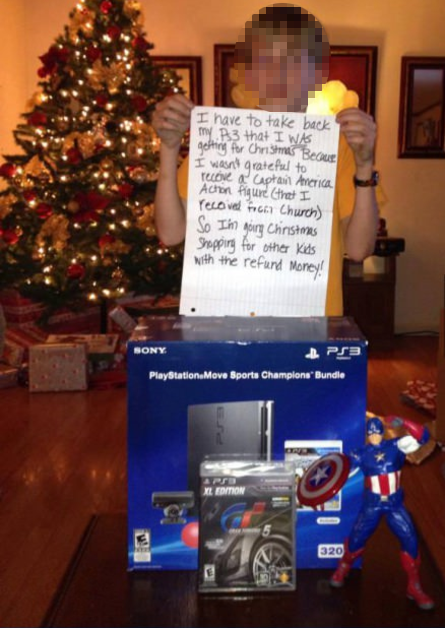
Blurry face boy

In a twist, this Unethical Website found me. Smosh’s despicable montage titled by the ethically clueless creep who concocted it, Will Weldon, “19 Funniest Examples of Kid Shaming” includes, among its hilarious examples, the photo above from an Ethics Alarms essay I posted about a year ago, with a link back here. Weldon appears to have stolen his post idea from an earlier version of it on the website Heavy, this by an equally warped wag named Elizabeth Furey. Heavy would have been an “Unethical Website of the Month” if I had known about its post last May, and everything I write about  Smosh applies to Heavey, just as everything I write about Will applies to Elizabeth.

In the linked Ethics Alarms post, I specifically condemned the practice of  parents forcing children to hold up a sign “confessing” some transgression, taking a photo of him or her*, and posting it on the web.  I wrote:

“I think any aspect of a punishment that outlives the effects of the offense and a continues to do harm long after the original wrongdoer has reformed is unfair, abusive and cruel. If, as seems to be the case, the boy’s parents added to his punishment of having to return his Play Station 3 by first photographing the kid holding a sign describing his transgression, and then memorializing his humiliation by posting it on the internet, they took the lesson into unethical territory. Punishing their child for his spoiled and ungracious behavior by taking away a cherished gift is a legitimate exercise of parental authority, if a bit excessive for my tastes, especially at Christmastime. Turning him into the web poster child for ungrateful and spoiled children everywhere is, I believe, an abuse of that authority.”

I was feeling uncharacteristically equivocal that day, it seems, infused as I was still by the holiday spirit. Let me be more assertive now.  Dog-shaming using this device is a “thing’ on the web now, and such photos can be funny. Needess to say…or rather, it should be needless to say, but apparently I need to say it for people like Will and Elizabeth…children are not dogs. Continue reading

Fun With Rationalizations: Considering Salon’s Attack On The New York Post

post_cover-620x412

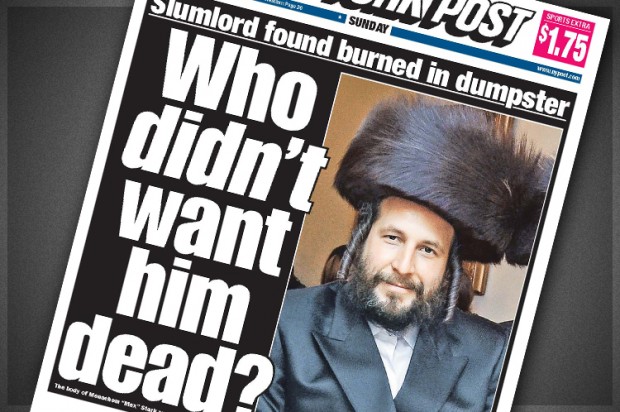
Let me dispense with the outrage over The New York Post’s brilliant (from their perspective, which is selling newspapers) and tasteless front page covering the death of Menachem Stark, a Hasidic real estate developer ( a.k.a. “slumlord”) who was found murdered and burned in a dumpster last Friday in Long Island.

The operative principle is not, as the reader who flagged the issue suggested, the Golden Rule. The Golden Rule does not often apply to the press, which is supposed to be truthful, not kind and diplomatic. There are provisions of most journalistic codes about avoiding unnecessary harm to third parties, which is pretty much a universal ethics rule in every field, from law to the military. When, however, you operate a tabloid, and not just any tabloid but a tabloid whose brand is defined by intentionally shocking, outrageous, assaultive and controversial headlines and photos, “Unnecessary harm to third parties” is almost an impossible principle to apply.

The headline is a perfect example of the Julie Principle, which I explained back in May. The Julie Principle comes into play when an undesirable or annoying  characteristic or behavior pattern in a person or organization appears to be hard-wired and part of their essence.  In judging such a person or entity, it is useful to keep the lyrics of Julie’s song from “Show Boat” (lyrics by Oscar Hammerstein Jr., music by Jerome Kern) firmly in mind, when she sings…

Fish gotta swim, birds gotta fly…

I’ve gotta love that man til I die

Can’t help lovin’ that man of mine!  Continue reading

Bob Newhart, Legatus And GLAAD: “What’s Going On Here?” Is Tricky To Answer

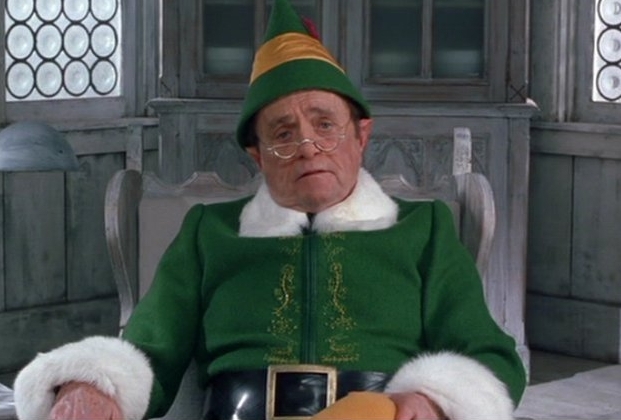
"Hey, Bob---What's going on here?"

“Hey, Bob—What’s going on here?”

The news item about comedian Bob Newhart cancelling an appearance for the Catholic executives networking group Legatus under pressure from GLAAD is fascinating.

From the perspective of Ethics Alarms, it illustrates a peculiar phenomenon I experience often, where a prominent story seems to have been designed by the Ethics Gods specifically to combine and coalesce several issues that have been discussed here recently. For Bob’s travails neatly touch on the issues of pro-gay  advocacy groups attempting to restrict expression they disagree with( The Phil Robertson-A&E Affair, Dec. 19), a comedian being pressured to alter the course of his comedy (Steve Martin’s Tweet Retreat, Dec. 23) and an entertainment figure being criticized for the activities of his audience (Mariah’s Dirty Money, Dec. 23). You would think I could analyze the Newhart controversy by just sticking my conclusions from those recent posts, plus some of the more illuminating reader comments, into my Ethics-O-Tron, and it would spit out the verdict promptly.

It doesn’t work that way, at least in this instance, and that prompts the other observation. In most ethics problems, the starting point is the question, “What’s going on here?”, which forces us to determine the factual and ethical context of the choices made by the participants. Here, the question can be framed  several diverging ways, leading to different assessments of the ethics involved. Thus, asking “What’s going on here?” in the Bob Newhart Episode, we might get: Continue reading