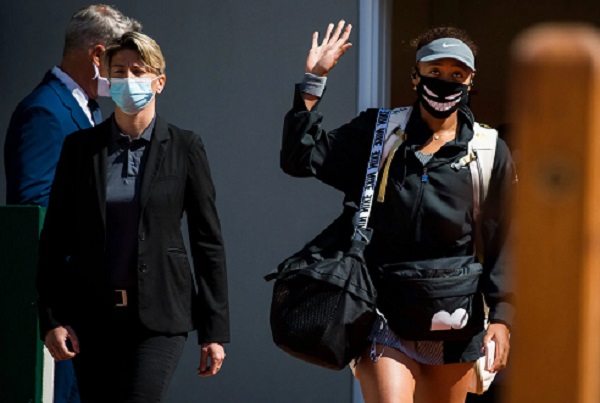
On Ethics Alarms yesterday, the controversy involving the current top female pro tennis star, Japan’s Naomi Osaka, was relegated to the morning warm-up rather than a stand-alone post. If you were not following EA yesterday, here’s a quick summary:
Citing her annoyance with repetitious questions from the news media that undermined her confidence, the 23-year old announced that she would violate the 2021 official Grand Slam rulebook, which requires players to participate in post-match news conferences. Violations result in fines of up to $20,000, but since Osaka made over 55 million dollars last year alone, more than all but the most elite U.S. professional athletes, this fine would be like a late fee at the library to normal people. I wrote in part,
“This is literally an example of a star announcing that rules are for lesser mortals. Verdict: Ethics Dunce. The reason Osaka makes so much money is that athletes are paid heroes and entertainers, and submitting to the idiocy of reporters is part of their job. Fines obviously aren’t enough: a tennis player who refuses to fulfill her obligations to the sport should be banned from competing until she does.“
Yesterday, after winning her first round match at the French Open, Osaka was fined (but only $15,000), and tennis officials proved that they read Ethics Alarms (I jest) and told Osaka that continuing her boycott of the media would result in her being suspended from the current tournament and others. Good. The organization had no other choice, unless it wanted to directly endorse the King’s Pass (Rationalization #11). If Osaka was allowed to snub the media with minimal consequences (for her), then no other player would feel obligated to cooperate either. Rennae Stubbs, a former player who is now a coach and ESPN analyst, stated the obvious while most of the players and former players were expressing sympathy for Osaka: “You cannot allow a player to have an unfair advantage by not doing post-match press. It’s time consuming, so if one player is not doing that and others are, that is not equal.”



 Ethics Alarms