Hall of Fame Ethics… Rock and Roll Hall of Fame,That Is

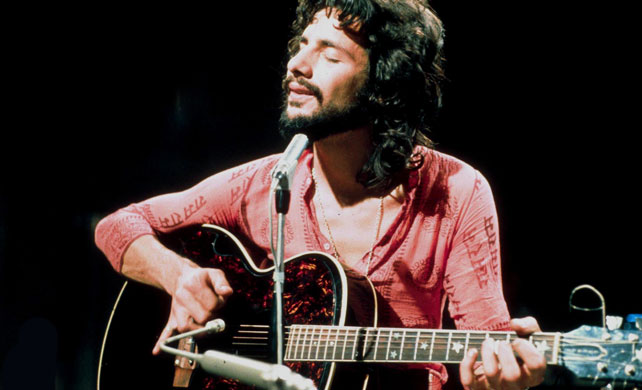
Cat Stevens

Conservative blogress Kathy Shaidle pleaded with voters not to enshrine Yusuf Islam, a.k.a Cat Stevens, into Cleveland’s Rock and Roll Hall of Fame, and then, when they added him anyway, expressed her disgust. Her objections were not based on music criticism (as would be justified with nominees like Yes), nor on Cat’s honor blocking more worthy nominees (like, say, The Zombies). She objects to Yusuf Islam on political and ethical grounds, complaining that during his activist days and perhaps even now, he qualified as a Muslim radical.

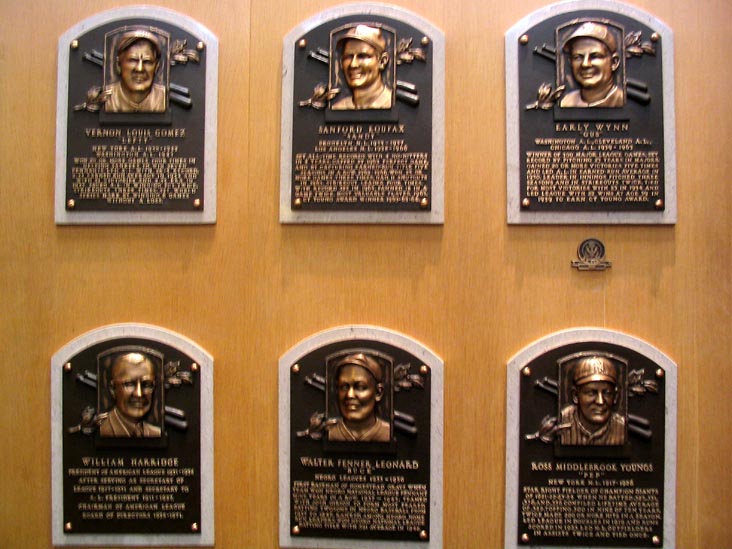
It doesn’t matter. Cat Stevens belongs in the Rock and Roll Hall of Fame because of his art, not his character. His character is irrelevant to the reach, influence and value of his art, as are his politics. The Rock and Roll Hall of Fame makes no pretense of making difficult measurements of an artist’s character, unlike the Major League Baseball Hall of Fame in Cooperstown, which has come up on Ethics Alarms frequently. Baseball players are cultural icons and societal heroes, whose symbolic exploits on the field of play evoke and inspire young people as well as the rest of us, embodying positive traits like courage, perseverance, fortitude, sacrifice, team play, loyalty, honor, fairness and honesty. As derided as it is by sportswriters and jaded fans who would like to see both the baseball Hall and its rosters filled with enabled and highly paid cheaters, felons, thugs, miscreants, deadbeat dads, and worse—like those of professional football and basketball—the character clause holds baseball players, at least those who want to be remembered as great ones, to a higher standard. And that higher standard is relevant to the game they play and our appreciation of it.

The character of artists, however, are simply accompanying trivia to the artist’s contributions to society. If there was a character clause in the Crooner’s Hall of Fame, Frank Sinatra and Bing Crosby might be barred from entry, meaning that it would then be the Imitators of Frank Sinatra and Bing Crosby Hall of Fame. For entrance to the Classical Composers Hall of Fame, Mozart and Wagner (and a lot more) would need to buy a ticket. Don’t get me started on the Novelist’s Hall of Fame, or the Hall of Fame for American Playwrights. Beautiful, transcendent, moving and immortal works have issued from ugly, warped, cruel and diseased minds, and it has always been thus, in Rock and Roll as well as every other art form. Picking on Cat Stevens, among all the others, smacks of anti-Muslim bigotry to me. Sure, I hated Cat’s politics; I hated John Lennon’s politics too.

It’s the art, and only the art, that matters.

______________________________

Sources: PJ Media 1, 2

And This, Craig, is Why Barry Bonds Should Only Get In The Hall Of Fame With A Ticket

Blame Barry, Chris.

Blame Barry, Chris.

In Baltimore, a young, slugging first baseman is leading the charge to get the Baltimore Orioles into the American League play-offs. He is on a home run pace that could net him 60  or more, and fans voted him the starting first baseman on his league’s All-Star team. Because his production this year far exceeds anything he had accomplished before, however, Chris Davis’s emergence isn’t being celebrated as much as it is being suspected. Another steroid scandal looms over major league baseball, one which threatens to engulf two former MVPs, as well as other players. Fans and sportswriters don’t trust players any more, or their power totals, not since Mark McGwire and especially Barry Bonds juiced and injected their way to shattering the game’s home run records.

This bothers lawyer/baseball blogger Craig Calcaterra, and it should., as someone concerned with justice. Of the smearing of Davis, he calls it…

“…utterly baseless speculation; Davis has always had tremendous power but is now, in the past year, matched it up with better plate discipline — is the product of a media landscape which has decided that every power hitter is a ‘roider. Jose Bautista got this treatment a couple of years ago. Davis is getting it now. Everyone who engages in this business does so because they’ve been convinced by the baseball media that such speculation is not just justified but necessary. It’s neither of those things. The drug testing system put in place had avoiding these parlor games as one of its primary justifications. But that’s not good enough for some, apparently.” Continue reading

Being Clear on Pete Rose and the Hall of Fame

Hall OFLast week, I raised the greasy topic of Pete Rose, in fact defending Pete against the unethical efforts by Topps to avoid invoking his name on their cards, as if he were baseball’s Voldemort. Somehow, the comments morphed into debate about whether Pete deserves to be in the Hall of Fame, and I fear that my position regarding Pete’s qualifications was muddled in the various exchanges.

No, Pete doesn’t deserve to be in the Hall of Fame, for two very clear reasons. His conduct in betting on baseball games, including his own team’s games, while he was a Major League manager requires that he be banned from baseball for life under Rule 21 of Major League Baseball’s official rules, and the Major League Baseball Hall of Fame in Cooperstown has its own rule that makes any player so banned ineligible for enshrinement. Rose is prevented from admission to the Hall by those rules, which were in place when his conduct brought them into play. He doesn’t deserve to be in the Hall, because the rules say so. Pete Rose broke a cardinal rule that potential Hall candidates cannot break. The ethical reason he should not be in the Hall is accountability, or as Tony Baretta used to say on the old TV show, “Don’t do the crime, if you can’t do the time.”

Is there anything at all about Rose’s career record as a player that doesn’t qualify him for the Hall, indeed, over-qualify him? No. Unlike Barry Bonds or Mark McGwire, his statistics are beyond challenge or criticism. He didn’t cheat. He was a great and admirable player in every way.

Was there anything in his conduct as a player on the field, as a player off the field, or off the field as a retired player, that constituted such egregious misconduct that it would justify refusing his admission the Hall of Fame under its so-called character clause? [ “Voting shall be based upon the player’s record, playing ability, integrity, sportsmanship, character and contribution to the team(s) on which the player played.”]

Here is where I want to clarify my position. My answer to this is “No.” Continue reading

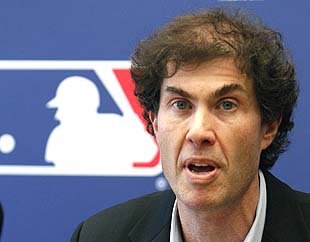
Unethical Quote of the Week: MLB Players Union Chief Michael Weiner

“Today’s news that those members of the BBWAA afforded the privilege of casting ballots failed to elect even a single player to the Hall of Fame is unfortunate, if not sad….To ignore the historic accomplishments of Barry Bonds and Roger Clemens, for example, is hard to justify. Moreover, to penalize players exonerated in legal proceedings — and others never even implicated — is simply unfair.”

—-Major League Baseball players union executive Michael Weiner, in a formal statement released after the news that the Baseball Writers Association of American had denied Hall of Fame admission this year to all-time home run leader Barry Bonds, pitching ace Roger Clemens, and several other players who have either admitted to steroid use or are strongly suspected of being users. No player was on the requisite number of ballots this year.

It takes a Harvard lawyer to be that unethical in so few words.

It takes a Harvard lawyer to be that unethical in so few words.

It’s not easy to pack so much bad ethics into one statement, but we should not be surprised that the baseball players’ union chief was up to the task. The union shares responsibility with baseball’s “see-n0-evil” management during the steroid era and the willful blindness of the sportswriting community for allowing steroids and other performance enhancing drugs to permanently scar the game’s integrity and distort its records beyond repair. Small wonder Weiner is eager to rationalize his organization’s complicity with an absurd, deceptive and corrupting assertion that none of it should make any difference:

  • The writers did not “ignore” Bonds’ accomplishments. To the contrary, his “accomplishment” of blatantly abusing steroids, launching a late career surge of power and prowess that was alien to the career arc of every other player who ever set foot on a field as he morphed into baseball’s version of the Hulk, all while lying his head off and convincing other players that drug-assisted cheating was the accepted way to achieve fame and fortune, was exactly why he was on less than 40% of the ballots ( 75% is required for enshrinement.) Continue reading

Ethics Heroes: The Baseball Writers Association of America

Nope.

Nope.

In the Baseball Hall of Fame balloting announced today, those who elect baseball’s greats to its shrine of heroes failed to give anyone the requisite 75% ballots required for election. That’s too bad: Craig Biggio, Jeff Bagwell, Tim Raines and Mike Piazza are deserving candidates.

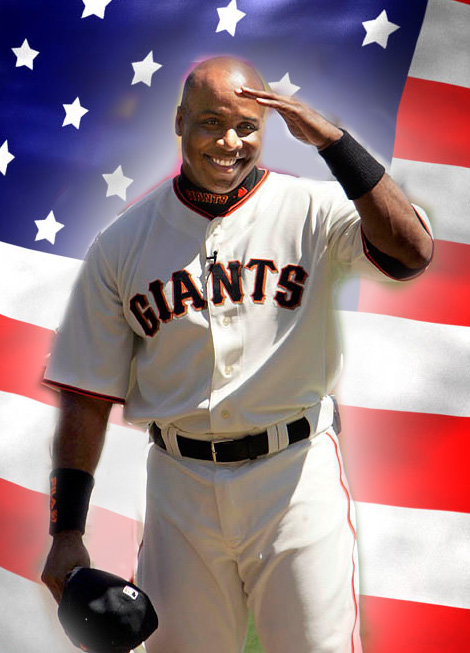
The writers also did not elect unrepentant cheater, record thief and game-corrupter Barry Bonds, however, who was on only 36.2% of the ballots, slightly less than suspected steroid cheat Roger Clemens (37.6).

Good.

Of Course Barry Bonds Doesn’t Belong In The Hall Of Fame

Buy a ticket, Barry.

Buy a ticket, Barry.

A full complement of baseball’s steroid class is among the 37 players on the 2013 Hall of Fame ballot, so it was predictable that a new round of arguments would surface claiming that it is unfair, illogical, inconsistent or otherwise unseemly to exclude Barry Bonds and others from enshrinement. Predictable but frustrating: the arguments in favor of Bonds are arguments against maintaining ethical values, in baseball, sports, and American society.  It is also an annoying debate to engage in, and I have been engaging in it in various forms for many years, because Bonds’ defenders typically represent themselves as modern, reasonable, and realistic, while anyone making the quaint argument that cheating on a grand scale should earn shame rather than honors is mocked as judgmental, sanctimonious and naïve.  As ever, I am a glutton for punishment, and since otherwise wise and perceptive commentators like NBC Sports’ Craig Calcaterra choose to ally themselves with Bonds, I really am obligated to point out what a corrupt, illogical and unethical position it is.  If I and people like me don’t persist in this, we’ll have cheating approved as a cultural norm before we know what hit us.

Calcaterra has been supporting Bonds as a Hall of Fame candidate for a while now, but the title of his latest essay, “It’s Lunacy To Keep Barry Bonds and Roger Clemens Out of the Hall of Fame” is a gauntlet that begs to be picked up.  “Bonds and Clemens,” Craig writes, “ are two players who, in a just world, would be unanimous selections for induction…”  I find this an indefensible, even shocking, statement, both before and after the writer attempts to defend it. In a just world, a member of a profession who achieved his prominence in part by breaking the law and the rules, as well as lying about it, should be accorded the highest honor that profession has!  What an astounding point of view.

For simplicity’s sake, I’m going to leave Clemens out of this, in part because I can see a Hall of Fame voter credibly deciding that there isn’t enough evidence to conclude that The Rocket really did use performance enhancing drugs on the way to forging one of the top five pitching careers of all time, and in part because I suspect Craig of pairing Bonds and Clemens to make his various rationalizations more pallatable than they would be in defense of Bonds alone.  Belief in Roger’s steroid cheating rests entirely on the testimony of a proven liar and slime-ball, his former trainer. MLB’s Mitchell Report sided with the trainer, and I’m inclined to as well, but Clemens’ unfitness for the Hall of Fame, unlike Bonds (and Mark McGwire, Rafael Palmeiro, and some others), is not an open-and-shut case.

I give credit to Craig for not raising my least favorite of the Bonds defenses, that he has to be regarded as innocent because he has not been “proven guilty.” Calcaterra is a lawyer, and he understands the over-use and misuse of that cliché, as well as how it only applies when “guilty” means “you’re going to jail.” Indeed, he begins by conceding the obvious, that the evidence that Barry Bonds used steroids is overwhelming, which it is.

His first argument, however, is terrible. Under the ironic heading “Baseball Bonafides,” Calcaterra begins by reciting Bonds’ (and Clemens’) impressive list of achievements, which taken at face value show Barry Bonds to be one the best of the best, not just a qualified Hall of Fame baseball player, but an epitome of a Hall of Fame player along with such legends as Babe Ruth, Walter Johnson , Ted Williams and Willie Mays. “Put simply,” Craig says in conclusion, Bonds is an “immortal.” But he’s not-–not if he cheated, not if he achieved his historic status by corrupting his sport and lying to team mates and fans. And, as Calcaterra admits at the outset, this he did. As a result, the fact that Bonds won a record seven Most Valuable Player Awards is irrelevant. He cheated to win some of those awards. He gets no credit for them.  In Bonds’s case, “baseball bonafides” are not bona fide at all. Continue reading

Bob Nightengale’s Rationalization Orgy

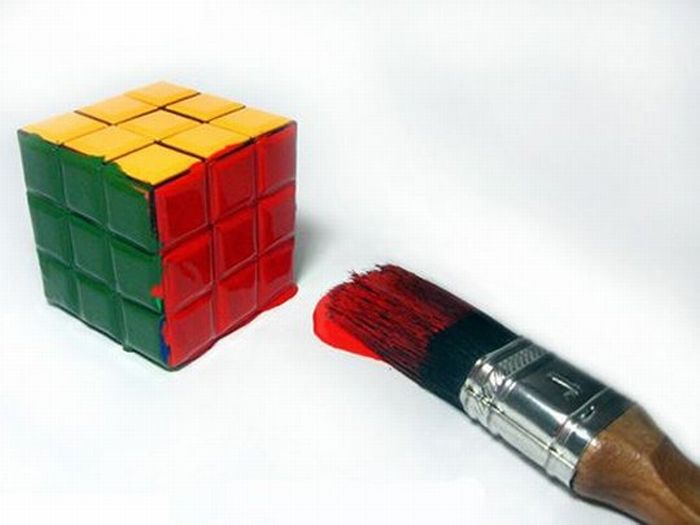
“OK, he got caught, but it doesn’t mean he isn’t still the BEST at Rubik’s Cube…”

I was interviewed on a radio news show early this morning, and one of the questions I was asked was whether what the host called “the decline of ethics in the country” could be reversed. I’m not convinced there has been such a decline, but if there is, it sure doesn’t help to have so many  journalists with big microphones displaying infantile analysis of ethics-related issues on a regular basis.

Today’s case was USA Today sportswriter Bob Nightengale, who took the occasion of the annual induction of new members into baseball’s Hall of Fame in Cooperstown this weekend to trot out nearly every rationalization and ethical invalid argument imaginable to explain why he would be voting for all the proven or suspected steroid cheats  for the Hall when their time comes:

“There, I said it. I will vote for Bonds. And Clemens. And Sosa. And Piazza. I’ll think about Bagwell. And will continue voting for Rafael Palmeiro, who tested positive in his final season when he reached 3,000 hits.”

And then come the rationalizations:

  • “Hey, it’s OK to admit racists, criminals, drunks and recreational drug abusers, but let’s not tarnish the sacredness of the Hall of Fame.” This is essentially a “there are worse things” argument with an overlay of ignorance and stupidity. This is a baseball Hall of Fame with very clear character requirements: “Voting shall be based upon the player’s record, playing ability, integrity, sportsmanship, character, and contributions to the team(s) on which the player played.” No other sports Hall of Fame has such standards: just wait for the fight over admitting Joe Paterno into the College Football Hall of Fame (O.J. is a member in good standing.). Continue reading

Would Dennis Rodman Qualify for the Baseball Hall of Fame?

Dennis Rodman, out of uniform

Of course not. Dennis Rodman didn’t play baseball. He was a pro basketball player, and as of yesterday, an inductee into the NBA Hall of Fame for his exploits on a basketball court. There is no question that he is eminently qualified for admission to the NBA Hall of Fame, because the NBA Hall of Fame doesn’t care if players are thugs, drunks, scofflaws, deadbeat dads and couldn’t define sportsmanship with a dictionary as long as they can shoot, score, pass, dribble and block shots.

The Major League Baseball Hall of Fame at Cooperstown, however, requires that its members demonstrate “integrity, sportsmanship, (and) character,” in addition to outstanding achievements and a remarkable career record.  Because of the steroid era that has rendered a whole generation of players suspect for cheating, an expanding number of baseball greats face being excluded from the Hall because cheating by using substances that are illegal and banned in the sport while implicitly deceiving the public about the use is, by any rational definition, a material breach of integrity and sportsmanship.  The natural reaction by many sportswriters, as in other fields when reasonable standards are routinely violated, is to attack the standards. Why should a sport care about matters like integrity and character? Isn’t it the performance that counts, and winning? Continue reading

The Bonds Verdict: Fair Enough

The results of the Barry Bonds trial, which today concluded with the jury finding baseball’s all-time home run champion guilty of obstructing justice by misleading a grand jury investigating the distribution of illegal and banned steroid to professional athletes but unable to agree on the perjury charges, helps to balance the ethical scales. It should silence the shameless Bonds defenders who misused the “innocent until proven guilty” standard to maintain poor Bonds was being unfairly suspected of inflating his biceps, head, statistics and income through the marvels of chemistry, though it was blatant and obvious in dozens of ways. Now he has been proven guilty—not of everything, but for celebrity justice, in a trial where much of the most damaging evidence was withheld from the jury, enough—, so the claims of racism and unfair prosecution will ring even hollower now. Continue reading

Manny Post Script: The Signature of a Jerk

Manny Ramirez, the now-retired ex-baseball slugger, provoked the predictable responses from the media and fellow players in the wake of his sudden retirement after being notified that he would be the first major league player to face a 100 game suspension for failing a mandated PED test (that’s “performance enhancing drugs” for all of you who don’t know who Barry Bonds is), because no player had ever been caught TWICE before.

Everyone was in agreement that this meant: Continue reading