“Print The Legend” Ethics Again: The Cuban Missile Crisis “Blink”

blink map

It is certainly in part a case of tweeking a rival, but the Washington Post and its “Factchecker,” Glenn Kessler, properly exposed a New York Times columnists’ perpetuation of a popular historical misconception, and worse, that paper’s adamant refusal to correct it.

The columnist was Thomas Friedman, one of the Times’ stable of liberal pundits, and the quote was this, in the opening sentence of of one of the many Obama foreign policy reclamation columns that have appeared lately from the President’s journalistic Maginot Line:

“There was a moment at the height of the Cuban missile crisis in October 1962 when Soviet ships approached to within just a few miles of a U.S. naval blockade and then, at the last minute, turned back — prompting then-Secretary of State Dean Rusk to utter one of the most famous lines from the Cold War: ‘We’re eyeball to eyeball, and I think the other fellow just blinked.’”

Kessler gives Friedman a full “four Pinocchios,” for the simple reason that this is untrue, a myth, a proven historical inaccuracy that has been enshrined in film, print, and Kennedy hagiography. He writes… Continue reading
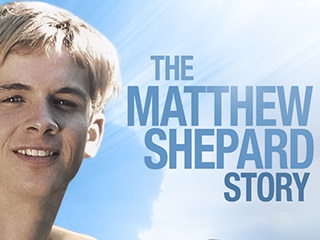
“Print the Legend” Ethics (Again): Does It Matter If Matthew Shepard’s Death Was Really A Hate Crime?

Powerful story; moving story; useful story. Does it matter if it isn't a true story?

Powerful story; moving story; useful story. Does it matter if it isn’t a true story?

It apparently matters to a lot of people for the wrong reasons—unethical reasons, in fact. As a result, legitimate efforts to determine what really happened to the gay rights icon, then a 21-year-old University of Wyoming student, who was beaten,  tortured and murdered  in Laramie, Wyoming  in 1998, have been exploited for ideological goals by adversaries of gay rights, and attacked by the media, gay rights advocates and good progressives everywhere. Just as it is important to the civil rights establishment, the black grievance community and anti-gun advocates that Trayvon Martin be seen as the innocent victim of a racist vigilante with murder in his heart—a characterization of Martin’s murder at war with all known facts and rejected by a jury after a fair trial—thus is it crucial to gay advocacy groups and others that Shepard be remembered as the victim of a hate crime, brutally killed because he was gay.

And facts be damned. Continue reading

“Print the Legend” Ethics: The Unjust Obscurity of Mary Quantrell

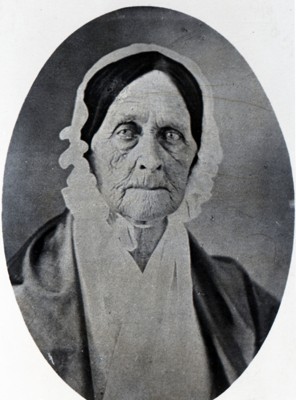
Barbara Fritchie, as in the poem. But the Barbara in the poem was really Mary.

Today is the anniversary of the Battle of Antietam, the single most bloody day in the Civil War, with nearly 21,000 casualties on September 17, 1862.  Most of us, at least those of my generation, were introduced to the battle with a poem, “The Ballad of Barbara Fritchie,” by John Greenleaf Whittier, telling the tale of a brave old woman, ninety years old, who confronted Confederate General Stonewall Jackson’s troops as they marched through Frederick, Maryland to the battlefield, by waving Old Glory after the troops had fired at it, and saying,

Shoot, if you must, this old gray head,
But spare your country’s flag,’ she said.

Barbara Fritchie is now an icon, and has been portrayed in novels and films. Her house is a historic landmark, and the town uses her name and the poem to market everything from candy to T-shirts. And, I learned this Sunday, it is all a lie, though not old Barbara’s fault. The poet got his facts wrong, or used excessive “poetic license” because “Barbara Fritchie” pleased his ear better than “Mary Quantrell”, the name of the real flag-waver, and a 90-year old patriot made for a more colorful plot than a mere 30-something with chutzpah. Whittier also made Jackson the antagonist of the tale, when in fact the general was the less flamboyant and famous A.P. Hill. In 1876 Quantrell wrote to Whittier pleading with him to correct the record, signing her letter, in quotes, as “Barbara.” He did nothing. Continue reading

Neil Armstrong’s Disputed Words: “The Ethics of Changing History”

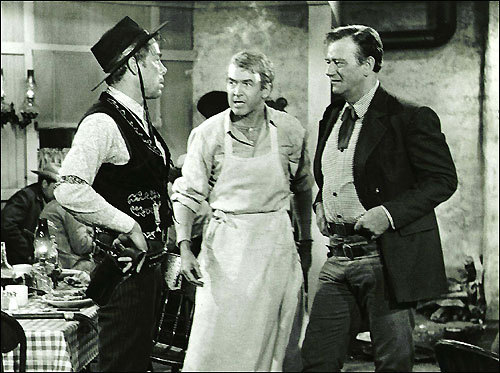
Pop Quiz: What does Neil Armstrong and this classic Western have in common?

[The death of mo0n-walking astronaut Neil Armstrong  ate the age of 82 reminded me of a 2006 essay about Armstrong’s famous quote that I wrote in 2006 on The Ethics Scoreboard. The AP just revisited the issue, and you can read the full text of my 2006 piece, The Ethics of Changing History: Of Crockett, the Titanic and “One Small Step” on the Scoreboard archive site. Here is the relevant portion of that article:] Continue reading