“Goodbye to clocks ticking — and my butternut tree! And Mama’s sunflowers — and food and coffee — and new-ironed dresses and hot baths — and sleeping and waking up! Oh, earth, you’re too wonderful for anyone to realize you! Do any human beings ever realize life while they live it — every, every minute?”
—- Emily Webb, the heroine of Thornton Wilder’s 1938 drama “Our Town,” in her climactic speech in Act 3, cutting short the one day in her life she has been permitted to relive after dying in childbirth.
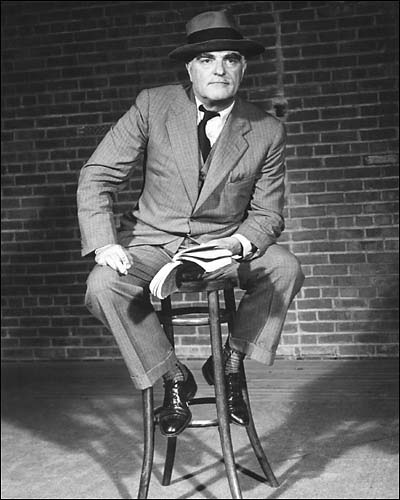
Thornton Wilder
It’s a gorgeous spring Sunday in Northern Virginia, and by happenstance Garrison Keillor chose today’s installment of his “Prairie Home Companion” to allude to Emily’s famous, heart-breaking speech at the end of “Our Town.” The speech is so familiar to many of us that we tend to forget how perfect and right it is, one of those remarkable, inexplicable times when a writer manages to express the important thought that is beyond expression.
Emily’s speech reminds us that the ultimate unethical act is wasting the remarkable opportunity that is a human life, and, at the same time, failing to appreciate the wonder that passes by our senses in the process. The answer to Emily’s question is, of course, no—nobody, not poets, not geniuses, not heroes nor saints—realize life every minute. Wilder’s, and Emily’s immortal words, however, spur us to try.
On this beautiful day, in this beautiful country, Emily’s speech is an excellent catalyst for calm, resolve, perspective, and hope.
 Ethics Alarms