Spin, Rationalizations and Denial From the Ron Paul Faithful: An Ethics Lesson

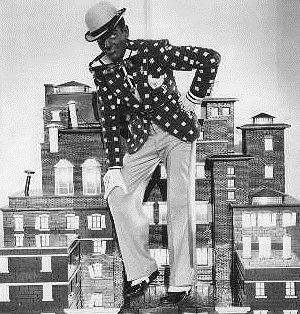
What does Fred Astaire in blackface have to do with Ron Paul? Not much.

There are a lot of reasons to regard Rep. Ron Paul, currently facing what should be his last hurrah in the idiosyncratic Iowa Caucuses, as the model for politics and leadership as we wish it could be. He says what he means. He doesn’t pander. He isn’t afraid of uncomfortable truths. He has integrity. This explains why the supporters of the one true libertarian in the U.S. Congress seem ready to fight to the end to preserve his presidential candidacy, though its long-term prospects are about the same as those of Frosty being elected President of Hell. They are, as a result, providing the rest of us with a textbook example of how loyalty and dedication can spawn intellectual dishonesty, cause otherwise good and intelligent people to substitute rationalizations for reason, and lead to corruption. How did all those idealistic young lawyers end up in jail supporting the plots of Richard Nixon?  Why did otherwise honest and ethical Democrats, elected officials and feminists twist their principles into pretzels to defend Bill Clinton’s using White House staff as a personal dating bar and lying about it under oath?  This is how. When you believe that a leader is good, then affirmative proof of flaws that disqualify him for leadership must be justified and explained away. It often isn’t even a conscious decision: this is cognitive dissonance at its strongest. The results, however, are the same as intentional deception.

Over at The Daily Caller, Wesley Messamore, who is Editor in Chief of the HumbleLibertarian.com, has registered an impassioned and angry defense against Paul critics who, like me, regard the content of his newsletters from the Eighties and Nineties an automatic disqualification for Paul as a presidential nominee. I don’t mean to pick on Messamore: his arguments are typical of Paul defenders; he’s no worse than the rest. His article, however, neatly covers all the unethical tactics Paul’s followers have had to embrace to convince themselves that their hero hasn’t failed the leadership test.

Here they are: Continue reading

Gift or Bribe? Barry Bonds’ Generosity to the NABJ

Barry Bonds, the retired baseball slugger who used banned or illegal performance enhancing drugs to fuel a late-carer transformation that allowed him to grow from merely great into Superman, breaking every home run record in sight as a result, has adamantly maintained his innocence despite a mountain of circumstantial evidence, positive drug tests, and the verdict of common sense. He has also played the race card when it seemed convenient to his cause. Bonds’ cheating ways have made him rich beyond belief, and his only real problems now are 1) the likelihood of a Federal perjury trial next year in connection with his Grand Jury testimony that he never knowingly took steroids, and 2) the fact that few of the sportswriters who vote for the Hall of Fame seem inclined to enshrine steroid cheats, based on their rejection, so far, of Mark McGwire, whose steroid-assisted single season home run record Bonds broke while he was especially pumped-up.

Both of these problems could conceivably be helped by some positive press opinion, something that Bonds has never cultivated, being inclined to treat all journalists as if they were something he had to wipe off the bottom of his shoe. Thus it raised eyebrows when  it was announced that the charitable foundation created and controlled by Barry Bonds has donated $20,000 to The National Association of Black Journalists. NABJ president Kathy Times told the Associated Press that the money will be used to fund an annual award promoting entrepreneurial spirit. Continue reading

Dubious Ethics Studies, Part II

There are good reasons to be skeptical of all studies purporting to analyze what people think according to how they fit into common ideological categories. In 2003, a study purported to portray conservatism as a kind of mental disorder. In 2008, another series of studies was packaged to make the case that liberals were compassionate in words only, that when it came to putting one’s money where one’s conscience was, it was those mean old conservatives who opened their wallets. Now comes a study called “Do Green Products Make Us Better People?”published in the latest edition of the “Journal of Psychological Science.” Its authors, Canadian psychologists Nina Mazar and Chen-Bo Zhong, did a series of experiments comparing the behavior of patrons of “green” products and the conduct of the less environmentally correct. Continue reading