
Real Life Bullying That Matters: The Persecution of Pat Rogers

Pat Rogers: prey.

Make no mistake about it, the word for what happened to New Mexico attorney Pat Rogers is bullying. Politicians, pundits and the public like to pontificate against bullying when it involves children, and are even willing to compromise basic First Amendment rights, so outraged are they over abuses of power that victimize kids. When it comes to the bullying of adults, however—good adults, innocent adults, adults who have done nothing to justify vicious efforts to crush them out of pure animus and nothing more—these supposed champions of fairness are as likely as not to side with the bullies.

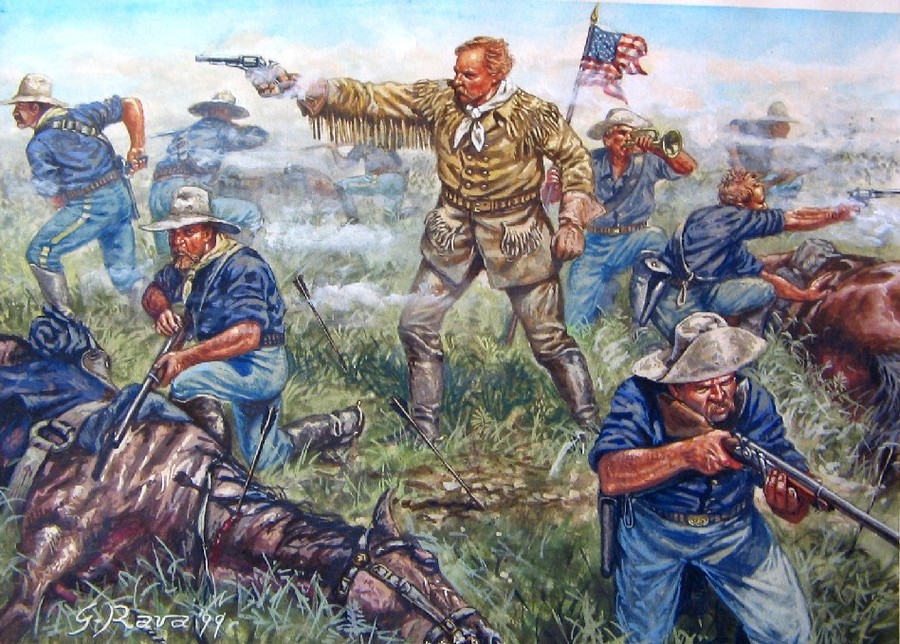
This sickening hypocrisy is on display now in the persecution of New Mexico lawyer Pat Rogers in the ethics train wreck I first described here.  Rogers, whose first offense appears to be that he is a Republican, bared his throat to his attackers by sending an obviously satirical e-mail on the occasion of Governor Susan Martinez, whom he supports, participating in a state Native-American tribal summit. His jocular e-mail went to members of her staff with whom he had worked and who know him, and read, “Quislings, French surrender monkeys. … The state is going to hell. Col. Weh would not have dishonored Col. Custer in this manner.” Continue reading
E-Mail Ethics Train Wreck in New Mexico

This is how things spin out of control.

This really has nothing to do with anything.

In New Mexico, Gov. Susanna Martinez, a Republican, attended a summit of the tribal leaders in the state. For reasons known only to himself, this inspired Pat Rogers, a member of the Republican National Committee and a partner at the prestigious law firm Modrall Sperling, to send a bizarre e-mail to Gov. Martinez’s staff that read,

“Quislings, French surrender monkeys. … The state is going to hell. Col. Weh would not have dishonored Col. Custer in this manner.”

Quisling was the Nazi puppet head of Norway during World War II, and his name has become a term for “traitor.” “French surrender monkeys” is a quote from “The Simpsons.” Col. Weh, a Marine, was Martinez’s opposition in the GOP primary for governor. Taking all of this together along with the fact that this was New Mexico, Custer’s last stand was in what is now Montana, and occurred in 1876, I think it is obvious that Rogers intended the e-mail as a joke, a tongue in cheek remark satirizing the kind of wacky complaints that a Republican Governor probably gets on a regular basis. Either it was a joke, or Rogers is insane. I don’t think he’s insane. Continue reading

Conservatives, Rotting Children’s Brains On Principle

Why can't today's TV pass on good taste like this to our children?

Perhaps I am over-reacting, but I was recently horrified. Sometimes conservatives allow their ideology to lead them into places that make it impossible to take them seriously, or  to view them as rational and responsible. This is especially true when it comes to the arts.

Yesterday, radio talk show host Laura Ingraham was bemoaning the coarsening of the culture, and the way she feels that television is poisoning the minds of children. She spoke nostalgically about how entertainment in the golden past was family-friendly, and reliably conveyed the values of humor and wit that enriched children’s minds, their taste, and their understanding of “good entertainment.” Those days are no more, Ingraham said. Television is vast slime-pool, and concerned parents can only look to past gems of the comic arts to teach their children “humor and wit.”

So what show did Laura Ingraham, accomplished writer, former Supreme Court law clerk, and author of political satire extol as epitomizing these lost values? What classic TV show’s complete set of DVDs did she reveal that she had given to a colleague so he could save the minds and souls of his children?

“Gilligan’s Island.”

“GILLIGAN’S ISLAND!” Continue reading

Nuclear Crisis Ethics

Meltdown! Radiation! Mutations! Well, I guess that's all we have to know.

I just heard, for the twelfth time, Sen. Joe Lieberman telling “Face the Nation” that the United States should put the brakes on nuclear energy plant construction “right now until we understand the ramifications of what’s happening in Japan.” Meanwhile, the anti-nukes crowd is out in full force, seeing Japan’s crisis as their opportunity to scare the bejesus out of the public, which is nervous about nuclear energy anyway since they know nothing about it, other than that something bad happened at Three-Mile Island, the Russians had a catastrophe at Chernobyl,  Jane Fonda made that scary movie, “The China Syndrome,” where they shot Jack Lemmon— “And don’t they make bombs with that nuclear stuff?”—and the fact that Homer Simpson works for a nuclear plant that creates three-eyed fish and is run by that evil old Montgomery Burns. Continue reading

Ethics Quiz: Amazon, Project Gutenberg, and Montgomery Burns

Amazon is taking public domain texts from a free site, and selling the books for profit to Kindle users.

Question: Is this ethical or unethical? Continue reading

The Incredibly Unethical BP Boycott

Readers of Ethics Alarms know that I think boycotting is at best economic bullying, at worst a non-violent form of terrorism, and generally unethical except in cases so rare that they are difficult to imagine. The current BP boycott is close to the worst variety, blunt and destructive mob anger akin to the reaction of the excitable citizens of Homer Simpson’s Springfield, whose solution to every crisis seems to be a riot.

BP was outrageously and perhaps criminally negligent in creating the conditions that led to the Gulf oil spill, and it is right and just that the burden of accountability and responsibility has fallen on them. And it certainly has fallen on them: as much as every citizen of the United States may want to personally kick the company while it is prone, the fact is that the dire consequences of its misconduct are already overwhelming, both long and short-term. Right now, the Gulf states are still dependent on the diligence and expertise of the company to try to limit the damage it has caused, and the company is, if only for its own survival, doing the best it can to succeed. This fact alone would make a public boycott of BP at this time senseless and counter-productive.

The boycott is also unfair. Continue reading

Unethical Website: The Brittany Murphy Foundation

This is strange in so many ways, not the least of which being that TMZ, the generally worthless celebrity gossip website, is responsible for blowing the whistle.

Actress Brittany Murphy, best known for her break-out role as the cool-girl wannabe in “Clueless,” collapsed and died in the shower in December, another apparent victim of too much stress, too many diets, and too many prescription drugs in her system. “The Brittany Murphy Foundation,” set up by her family and husband, Simon Monjack, began soliciting contributions on its website in January, supposedly for arts education for children. TMZ received a tip that something was amiss, did some investigation, and discovered that no such foundation had been registered with either the IRS or the State of California. Continue reading

Comedy Ethics, Censorship, and Culture

(The current uproar over the use of  various versions of the word “retarded” by Rahm Emanuel and Rush Limbaugh seems to warrant a reprint, slightly revised, of the following essay on ethics and comedy, a January 2008 post on The Ethics Scoreboard. The word “retard” also came in for criticism in a comic context last year, with its use in the Ben Stiller comedy “Tropic Thunder.” Of course, comedy is one thing, and gratuitous cruelty is another. In either case, the issue is the use of a word, not the word itself. As discussed in the previous post, it is appropriate for any group to promote sensitivity and to encourage civility. It is unethical to try to bully others into censoring their speech by trying to “ban” words, phrases or ideas. )

Here is the essay:

Comedy Ethics

“Saturday Night Live” has, not for the first time in its three decade run, ignited an ethics controversy with politically incorrect humor. Was SNL ensemble member Fred Armison’s impression of  New York Governor David Paterson, who is blind, including as it did a wandering eye and featuring slapstick disorientation, legitimate satire or, as Paterson and advocates for the blind have claimed, a cruel catalyst for discrimination against the sight-challenged?
It is not an easy call, though the opposing sides of the argument probably think it should be. And it raises long-standing questions about the balance between ethics and humor. Continue reading

Disney, Mickey, and Childhood’s Betrayal

The Disney Corporation has decided to do something about Mickey Mouse’s image. It’s too nice, you see. In the edgy 21st century, where Hannah Montana does a pole dance, female tennis champs threaten to kill line judges for making a correct call, and Glenn Beck can become a hot commodity by calling the President of the United States a racist, Mickey Mouse is bland and boring. For more than fifty years, Mickey’s status as the symbol of Walt Disney’s empire (Walt did Mickey’s first voice) meant that he was polite, dignified, and always, always, child-appropriate. His typical role was as the MC, his job with the original Mickey Mouse Club, where Mickey often appeared in black tie and tails. With his characteristic nervous laugh, he never did anything wrong, mean, or even annoying. The funny bits were reserved for Donald Duck, Goofy, and Chip and Dale. Mickey slowly evolved into more of a corporate symbol than a cartoon character, but when he went on screen, he was always a good mouse. Continue reading