Sign Language Interpreter Ethics Epilogue: “A Christmas Carol”

Gavin Alvedy rehearses a scene from the Downriver Youth Performing Arts Center's "Miracle on 34th Street" as DYPAC alum Emily Zaleski signs alongside him. Zaleski, who grew up performing on DYPAC’s stage, now is a certified American Sign Language interpreter with Synergy on Stage and will interpret during the Dec. 8 performance.

Sign language interpreters and their advocates descended on Ethics Alarms in indignation aftert  my March post about “showboating sign language interpreters for deaf audience members.” It took until December for my commentary to reach this passionate interest group, but when it did, I was called many names, including “ablist,” and had to put up with comments like this one from the ironically named “Danny Who Knows About Stuff”:

I would take this “ethics” person seriously if he/she seemed to know anything about the ethics that guide sign language interpreting. And, I suppose it would be helpful if the person understood anything about linguistics, sign language, Deaf culture, or audience response theory. This article is more about the individual than than the issue. In short, this person is no more an ethicist that is Donald Trump.

How I love the quote around “ethics.”

Danny was pretty typical. See, I don’t need to know about any of Danny’s “stuff” as a director of a play or musical. All I need to know is whether a feature of the performance detracts from it by foiling the focus that the staging was designed to facilitate. Every competent director knows that. The needs of the signer and the signer’s much, much smaller audience cannot be permitted to wag the dog, or make the dog trip on its tongue.  or perish of neglect.

“Danny Who Knows About Stuff” became “Danny Who Is Banned From Ethics Alarms,” in case you didn’t guess.

If I had already experienced what I experienced yesterday with a “professional” signer, that March post would have been much tougher. I directed an staged reading of “A Christmas Carol” with a cast of 30 terrific actors for a single free performance for D.C.’s Martin Luther King Library, and was told that the library would be sending a signer. Now, a signer for your usual staged reading is like having a signer for an oil painting. It makes no sense. In readings, the actors mostly read. Presumably the deaf can read “A Christmas Carol” themselves. You could say they would want to see the performers, but  in readings the performers’ acting mostly consists of vocal expression, which the deaf audience can’t hear, and facial expressions, which they won’t see if they are watching the signer. As it happens, I don’t do staged readings like that; there is a lot of movement and staging, so a signer makes some sense.

But they didn’t know how I would stage it.

By the time we got to the final rehearsal, I had forgotten about the alleged signer, who was supposed to at least attend one rehearsal so I could fit her onto the stage where she would be seen and not get in the way. She arrived, for the first time, 15 minutes before the performance, and immediately announced that she didn’t know whether she would be signing or not.  That’s helpful. She also complained that the script was very well adapted for signing (Why, thank-you!) and that the show, at 90 minutes, was impossibly long for a single signer to do: she was waiting to see if a second signer was coming, as she had assumed. Now, nobody warned me that I had to make room for two signers in the small performing space, neither of whom would deign to attend a rehearsal. ( Her complaint about length was also nonsense. I have had single signers for many shows longer than 90 minutes, and they didn’t collapse from exhaustion or finger cramps.) Continue reading
Audience Ethics And Ethics Dunce Kelvin Moon Loh

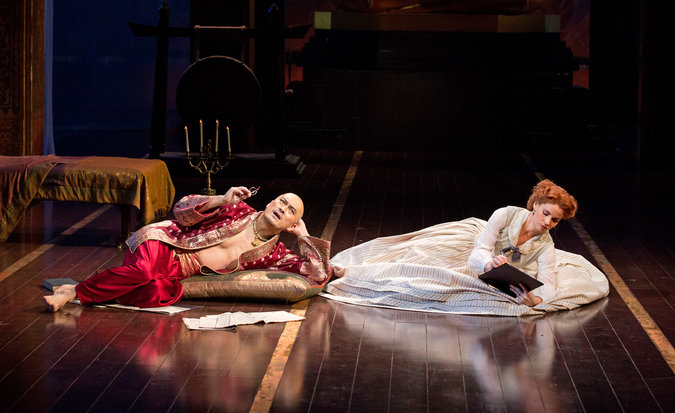
"I hear child screaming in audience, so audience cannot hear King. Is a puzzlement! But brave..."

“I hear child screaming in audience, so audience cannot hear King. Is a puzzlement! But brave…”

I don’t want to be harsh, because Mr. Loh is obviously a sensitive and compassionate young man who means well. However, he is also receiving plaudits on Facebook and in the media for taking a position that is not ethical, and is in fact just more political correctness guilt-mongering and double standard-peddling. It is also likely to provoke disrespectful and arrogant parents to believe that they have a right to impose their problems on unsuspecting theater audiences.

At  Broadway’s Vivian Beaumont Theater, a screaming child disrupted a matinee performance of “The King and I.”  Some members of the audience agitated for the child to be removed, and the woman with the child indeed left.

One of the understudies in the production, Kelvin Moon Loh, defended the woman who brought the child to the performance in a post on his Facebook page, in which he assumed the kid was autistic and used the incident to argue for compassion and “inclusiveness” in the theater, and compassion.  Loh actually praised the woman as “brave.” Brave she may be; she also was selfish, irresponsible, disrespectful and absolutely wrong.

This is not an issue of tolerance. This is not an issue of compassion. The ethical issue is whether one person has a right, and can be right, to ruin a theatrical performance for the rest of the audience, or to unreasonably risk doing so. It’s an easy call: noNever. It is no more “brave” to take a child who cannot behave properly to a Broadway show (or any show) than it is to take a cranky infant to a movie. This is not like the airplane situation, where the mother has no choice, and the child’s noise doesn’t interfere with the flight’s main purpose, which is to get to the destination. The mother doesn’t have to see “The King and I,” nor does she have to bring her child to potentially disrupt it. Doing so is inconsiderate; defending her conduct, as Loh does, stands for a kind of etiquette affirmative action, in which being the mother of an autistic child relieves one of any obligation to care about anyone else. Continue reading

Unethical Quote Of The Month: William Spencer Reilly, Executive Director of the Sheen Center

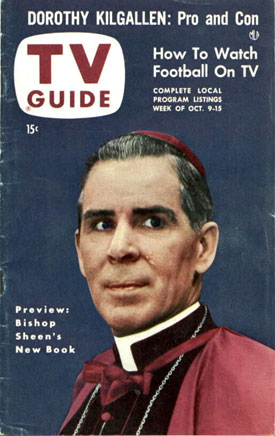
This was Bishopr Sheen, after whom the Sheen Center is named. Having spent a lot of time watching and listening to Sheen, I am fairly certain that he would not concur with the Sheen Center's decision. Why? Because, among  other reasons, he was a lot smarter than that.

This was Bishop Sheen, after whom the Sheen Center is named. Having spent a lot of time watching and listening to Sheen, I am fairly certain that he would not concur with the Sheen Center’s decision. Why? Because, among other reasons, he was a lot smarter than that.

“When an artistic project maligns any faith group, that project clearly falls outside of our mission to highlight the good, the true, and the beautiful as they have been expressed throughout the ages.”

William Spencer Reilly, the executive director of Manhattan’s Sheen Center,  in an email announcing that it was cancelling an anti-censorship benefit event at its theater because the organizers refused to allow the Center to change a play’s title and redact the content of some speakers’ remarks.

Yes, a theater found an anti-censorship event unacceptable because it refused to submit to censorship.

Ethics Dunce is too kind for Mr. Reilly, though I suspect he is more likely a traitor to his art and profession because he wants to keep his job. He is, however, a strong candidate for Hypocrite of the Decade. He rents out the Center for a theatrical project to condemn censorship, and then attempts to censor the event.

Cowabunga.

There were two ethical courses open to him: either refuse to rent the space to the event, or rent the space, knowing its purpose, and leave the event alone. What he did instead was ludicrous, and indefensible.”The management of The Sheen Center actually suggested that we alter the title of Neil LaBute’s play, and alter the content of some of our panelist’s speeches,” said the artistic curator of “Playwrights for a Cause.” “Which we find completely out of line with the anti-censorship mission of the benefit.”

Ya think? Yes, I’d say that is res ipsa loquitur. Also indefensible was Reilly’s tortured interpretation of the Sheen Center Mission Statement, which is, admittedly, a pompous mess:

“The Sheen Center for Thought & Culture is a forum to highlight the true, the good, and the beautiful as they have been expressed throughout the ages. Cognizant of our creation in the image and likeness of God, the Sheen Center aspires to present the heights and depths of human expression in thought and culture, featuring humankind as fully alive. At the Sheen Center, we proclaim that life is worth living, especially when we seek to deepen, explore, challenge, and stimulate ourselves, Catholic* and non-Catholic alike, intellectually, artistically, and spiritually.”

Continue reading

Sign Language Interpreter Ethics

Let’s see, I haven’t gotten disability advocates angry at me in a while. It might be time.

Jonathan Turley posted the video above in a blog post titled “You Decide: Which Is The Greater Draw – The Singer Or The Signer?” The title, and especially the video, reminded me of a live entertainment phenomenon that has annoyed me for decades. I had forgotten about it, because producers learned long ago that I wouldn’t tolerate it in shows I was involved in. The ethics issue: showboating sign language interpreters for deaf audience members.

I have no objection to having signers at special performances of live stage presentations, as long as those signers understand their purpose and obligation. Their purpose is to communicate the words to hearing-impaired audience members. Their obligation is to do so as unobtrusively as possible, so as not to draw focus from the performance itself, or  interfere with the integrity of the production.

Unfortunately, a large percentage of the sign language interpreters who specialize in signing plays and operas don’t see their job this way. They think they are supposed to be as flamboyant–that is, obtrusive–and demonstrative as possible. Well, they’re not going to do that in one of my shows.

I’m not going to work over a grueling six week rehearsal schedule to perfect audience focus, the arc of the show, the lighting, sound, stage picture and all the other artistic elements that need to be coordinated to fully realize a work of live performance art  only to have someone show up who I have never seen before and improvise his or her own act in competition with the performance on stage. If I thought it would enhance “A Steetcar Named Desire” or “The Music Man” to have Marcel Marceau or Red Skelton jumping around and waving their arms next to the performers, I would have staged the shows that way. Continue reading

“The Death of Klinghoffer” : The Metropolitan Opera Flunks Its Ethical Duty

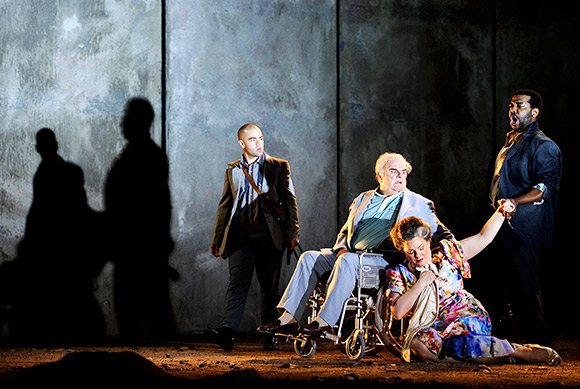
Death of Klinghoffer

New York’s Metropolitan Opera is scheduled to present John Adams’s 1991 opera, “The Death of Klinghoffer” this fall. [Full disclosure: Adams, then an unknown, was one of my professors in college] The opera is a dramatization of the 1985 Achille Lauro hijacking,in which the Palestine Liberation Front murdered the wheelchair-bound Jewish-American businessman Leon Klinghoffer. The opera has always been the target of Jewish and other critics who believe that it is too sympathetic to the Palestinians, and is thus anti–Semitic. Predictably (although for some reason the Met seemed not to be prepared for it) the Anti-Defamation League and conservative pundits are condemning the new production, typified by the reliably simple-minded Michele Bachmann, who denounced the Met for sympathizing with terrorists.

This is, and I state this without moderation or equivocation, is anti-cultural, anti-art, anti-free speech political correctness bullying from the right. This is an opera, and it, like any work of art, stands for itself. Whatever the political message of “The Death of Klinghoffer,” it is secondary to the main purpose of any opera, which is music and entertainment. The Met, as an organization dedicated to music and opera, should not be held to any standard in producing it other than whether it meets the company’s standards of excellence. An arts organization like the Met is apolitical, and should never allow the political or ideological messages of the artists whose work is presented there change its programming in any way. This means telling critics like those of “The Death of Klinghoffer,” be they advocacy organizations, would-be public censors or embarrassments to Congress like Bachmann to go fly a kite when they attempt to dictate what art is or isn’t “appropriate.” Continue reading

Great, Now Magneto Wants To Wipe Out Professional Theater…

Magneto McKellen

Maybe he should run for Vice-President on a ticket with Elizabeth Warren.

Quoth revered British actor Ian McKellen, Magneto (and Gandalf ) in the flesh:

“The one thing you can ask, I think, is that actors get paid a living wage. I would like it if all the repertory theaters that currently exist could do that. It would make a huge difference.”

It sure would. It would put most small professional theaters out of business, make theater unaffordable for any but rich theater-lovers, and eliminate a huge number of acting jobs. It is an idiotic, ignorant, irresponsible, but very, very nice, liberal, compassionate, well-intentioned and Elizabeth Warrenish suggestion that willfully ignores reality and basic economics—in other words, it is consistent with progressive mythology. We owe the Magster a debt of gratitude for illustrating exactly what is wrong with blanket endorsements of minimum wage increases and “living wages.” Continue reading

Theater Ethics: The Big Daddy Affair

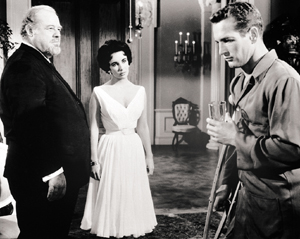
"Yes, why DON'T you want to make love to a young Liz Taylor, Brick? I've been wondering about that myself..."

“Yes, why DON’T you want to make love to a young Liz Taylor, Brick? I’ve been wondering about that myself…”

It is convenient when the perspectives of my longtime dual personas as a stage director and an ethicist are simultaneously relevant, so I couldn’t pass up this juicy story.

From the LGBT blog of the LA Weekly:

A Southern California production of the Tennessee Williams classic “Cat On a Hot Tin Roof” was canceled today after a homophobic outburst in the audience led to a physical confrontation, the firing of an actor, and an apparent cast revolt….the Repertory East Playhouse… announced in a statement today that the run of the play was “suspended” …as a result of “cast members leaving the show with no time to adequately re-cast their parts … “[A] man in the audience was allegedly drunk and heckling the performers during Saturday night’s performance….The heckling had been building up, …with whistling and cat-calling aimed at the character Maggie, as if the heckler and his friend “were at a strip club.”….at the moment Brick is asked why he rejected a kiss from Maggie….the heckler called out something like, “Because he’s a fag,” according to the director. At that point the actor playing Big Daddy, John Lacy, went into the audience to confront the man…”

“It was almost like he [Big Daddy] was still in character,” another actor told the LA Weekly blogger, Dennis Romero. He and a third actor then left the stage, and helped subdue the drunken audience member and his friend. Apparently the audience applauded the scene—does this remind anyone else of “My Favorite Year”?—and the play continued. Said a cast member: “The rest of the play has more resonance than ever.”

The theater fired Lacy after the show.  Anton Troy, the actor playing Brick who had been heckled, then announced on Facebook that he was quitting the production in protest, saying in part, “I will not support homophobia or an establishment that doesn’t support its talent. Hate in any form is not something I choose to subscribe to. John is a seasoned professional and an honorable man. It should never escalate to a point where the talent has to handle an unruly drunk in the audience themselves regardless of the outcome. Producers dropped the ball..”

Other actors quit the production as well, and the entire run, which was to have included a tour, was cancelled.

Wowsers.

Here are some ethics observations: Continue reading

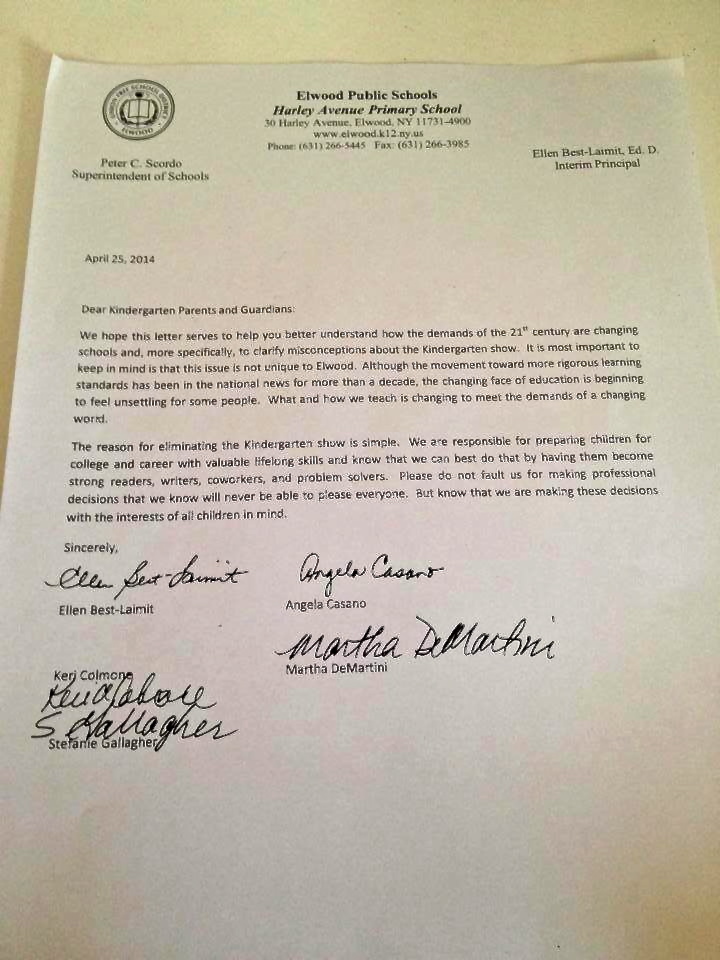
More Proof, As If More Were Needed, That The American Education System Breeds Hopelessly Dim And Foolish Administrators Who Understand Neither Children, Education, Childhood, Or Life, And Therefore Should Not And Must Not Be Entrusted With The Welfare Of Our Young In Any Way, Since These Fools Possess Neither Common Sense Nor The Judgment Possessed By The Average Garden Slug:

Kindergarten-1

Here’s the easy-reading version:

April 25, 2014

Dear Kindergarten Parents and Guardians,

We hope this letter serves to help you better understand how the demands of the 21st century are changing schools, and, more specifically, to clarify, misperceptions about the Kindergarten show. It is most important to keep in mind is [sic] that this issue is not unique to Elwood. Although the movement toward more rigorous learning standards has been in the national news for more than a decade, the changing face of education is beginning to feel unsettling for some people. What and how we teach is changing to meet the demands of a changing world.

The reason for eliminating the Kindergarten show is simple. We are responsible for preparing children for college and career with valuable lifelong skills and know that we can best do that by having them become strong readers, writers, coworkers and problem solvers. Please do not fault us for making professional decisions that we know will never be able to please everyone. But know that we are making these decisions with the interests of all children in mind.


Continue reading

Law vs. Ethics, The Cynical “War on Women,” And Stacking The Deck for Hillary

Let me begin by reprinting, in its entirety, a post from the earliest days of Ethics Alarms, one then titled, The Difference Between Law and Ethics:

In the instructive category of “Lawsuits that demonstrate the distinction between law and ethics,” we have the Massachusetts case of Conley v. Romeri.

Ms. Conley met Mr. Romeri when they were both in their 40s and divorced. As romance beckoned, Ms. Conley told her swain that she was childless, and wanted to begin a family before her biological clock struck midnight. The defendant, who had sired four children already, told her “not to worry.” He had seen a fortune-teller who had predicted that he would increase his number of children from four to six.

That held Ms. Conley for seven months. Then he told her that he had been vasectomized years ago.

Ms. Conley sued the bastard, claiming that her now ex-boyfriend had fraudulently misled her into believing he could father little Conleys in order to prolong the relationship, and that his actions had thrown her into emotional distress and depression.

Let us pause here and say that Mr. Romeri is a cur. Knowing that Ms. Conley was desperate for children and running out of time, he nonetheless deceived her for his own purposes, costing her perhaps her only chance to have the family she desired. For the fans of Bill Clinton out there, he was also clearly adept at Clintonesque deceit: he said “don’t worry” about having children, not that he was capable of creating them; he said a fortune- teller has assured him that he would have more kids, but never said her prediction was plausible. Mr. Romeri, like millions of deceitful people before him, probably doesn’t think he really lied. But of course he did.

The Massachusetts Appeals Court, however, found that while Mr. Romeri may have behaved abominably, it was not the place of the law to punish him.

Such claims, the judges said,

“…arise from conduct so intensely private that the courts should not be asked to resolve them….It does not lie within the power of any judicial system to remedy all human wrongs. Many wrongs which in themselves are flagrant–ingratitude, avarice, broken faith, brutal words and heartless disregard–are beyond any effective remedy.”

Our hearts go out to Ms. Conley. But the law will never succeed in making people be honest, caring, and fair. Only we can do that by creating a society in which boys grow to manhood knowing that behavior like Mr. Romeri’s is wrong, and at the same time, a society where women take responsibility for their own welfare, without seeking government remedies for every challenge.

——————————————–

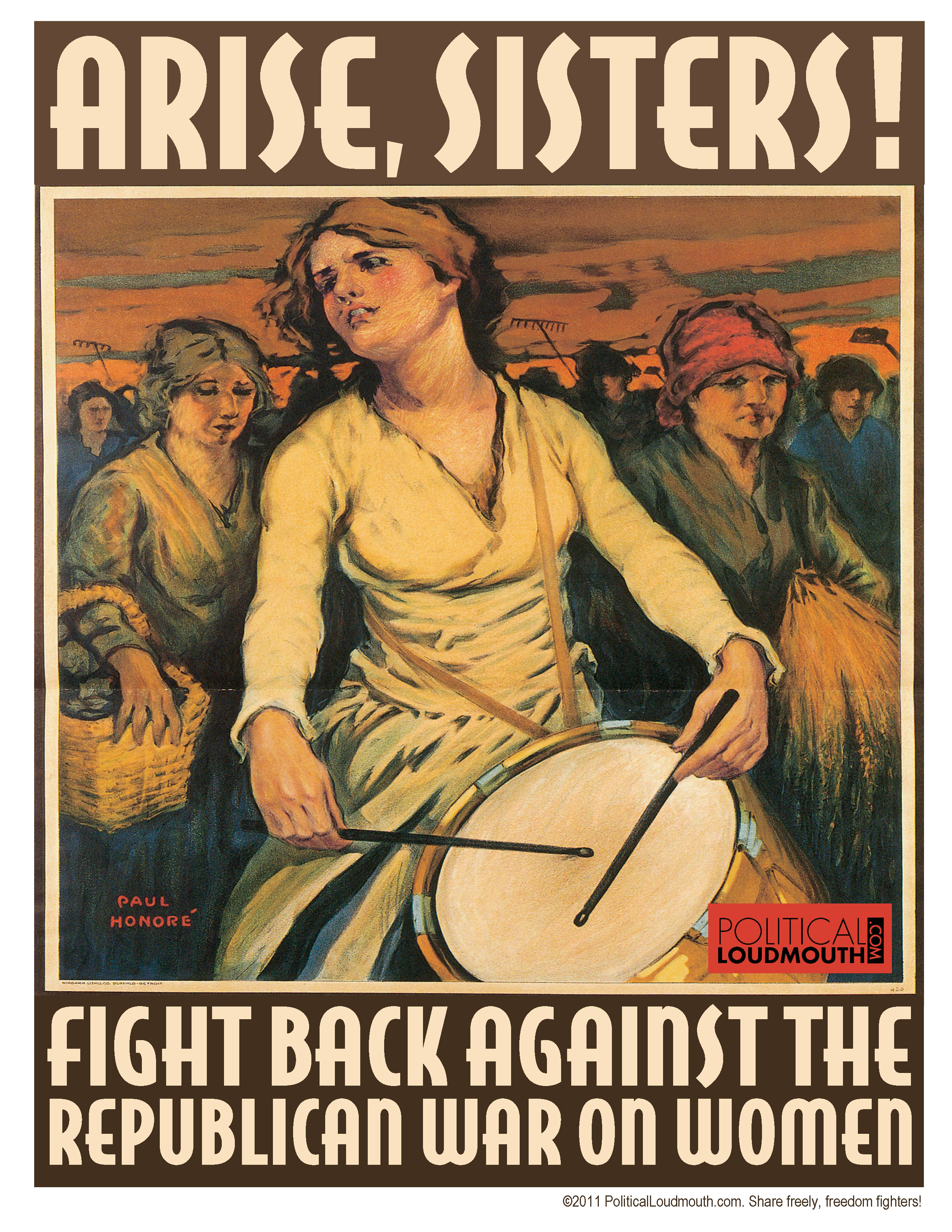
Reading this post again, and watching the (I think) overtly cynical and political effort by Democrats and the Obama Administration to increase the weight of the already heavy hand of the law in matters involving problems that are unique to or that disproportionately affect women, I think the importance of Conley v. Romeri extends beyond the original reason I posted it. Among other things, the case stands for the proposition that the government need not and should not treat women as if they are helpless against adversity, and must be accorded special privileges and protection Continue reading

The Reasonable, Ethical Firing of Maria Conchita Alonso

V_logo_currenteventsOnce again we confront a variation of the “Duck Dynasty” issue of entertainers losing their jobs over their expression of political, religious or other opinions that have nothing to do with their performances.

Actress María Conchita Alonso, who has been an outspoken advocate of conservative  policies on occasion, was recruited by the camp of the Tea Party candidate for governor of California, Tim Donnelly, to appear in a campaign video.  Donnelly is a hardliner on illegal immigration, or as supporters of open borders and stolen U.S. benefits of citizenship like to call it to blur the issues, “undocumented workers.”  Following the ad’s debut, many Hispanic residents of San Francisco protested and threatened to boycott the Brava Theater Center’s production of a Spanish-language version of “The Vagina Monologues,” which was starred the actress.

Not any more. Alonso “resigned”from the cast—actually she was the cast, since “The Vagina Monologues” is a one actress show—which means she was forced to quit or be fired. Continue reading