“The Ice Child” and Staging Theft Ethics

Copy or inspiration?

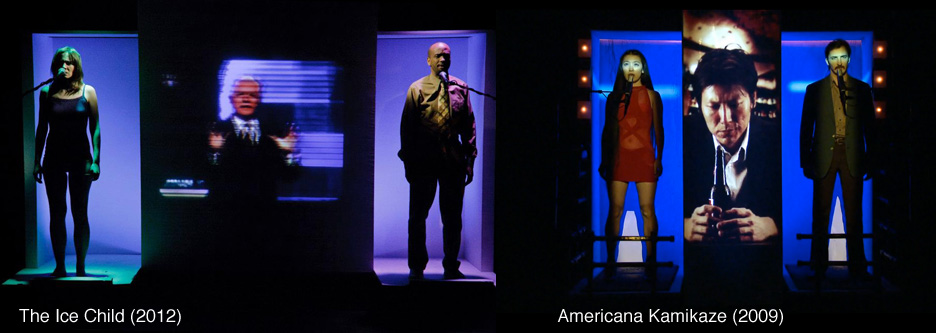
Well-reviewed, received and attended, the Washington D.C. production of “The Ice Child,” an original horror play by members of the three-year-old ensemble Factory 449, has stirred controversy because of its staging and production design, which is not only strikingly similar to a New York production of another horror play, “Americana Kamikaze,” but the company candidly admits that its visual concept was inspired by the 2009 work. Factory 449 also maintains that the plays are different, and that their appropriation of the design elements of the Temporary Distortion production of “Americana Kamikaze” is within the realm of acceptable, and ethical, theater practice. In a statement responding to charges of theft of creative output, the company wrote: Continue reading

My Field of Dreams

Yesterday, an Off-Broadway musical closed that I launched on its remarkable run nearly 12 years ago. The show had productions in four states, D.C. and London; it had over 450 performances; it became the cornerstone of one very talented (and very nice) actor’s career, and an important opportunity for several others. It gave a dear friend immense pleasure, satisfaction and recognition in the final decade of his life, and probably saved my theater company from bankruptcy. Most important of all, perhaps, is that it entertained thousands of people. If I got bopped by a trolley tomorrow, the show would undoubtedly stand as one of the major accomplishments of my entire strange, eclectic, under-achieving life.

And yet…feeling good about the unlikely saga of the show, now that it has finally (probably—it has risen from the dead before) seen its last audience, takes considerable effort for me, and has from the beginning. My satisfaction is more intellectual than emotional, because I know that I personally benefited less from the show in tangible ways in proportion to my contribution to it than anyone else involved. Although I restructured the script, re-wrote, added and cut lines, wrote new lyrics to one song and added two others to the show, including the finale, I’m not credited as a co-auther. I own no part of the property, and never received a dime in compensation. Those closely connected with the original production know all of this, but the extent of my role in the creation and success of the show has been invisible to audiences for over a decade. Continue reading

Mike Daisey Follow-up: Behold! The Classic Response of the Self-Righteous and Unethical!

Mike Daisey in China. Or, standing in front of a big poster. What difference does it make which, really?

Soon after I posted my article about Mike Daisey’s representation of fabricated events and facts as truth in his January feature on NPR, the actor/activist posted this dismissive explanation on his own blog.  It is Dan Rather’s Memogate excuse taken to the next level, the epitome of self-justification of the unapologetic zealot who believes that all is fair in the battle against (what he regards as) evil, employing a full battery of rationalizations for unethical conduct:

1) Daisey’s lies don’t matter, because they were used to expose a real problem (a.k.a “the ends justify the means”); Continue reading

Unethical Quote of the Month: Mike Daisey

“Well, I don’t know that I would say in a theatrical context that it isn’t true. I believe that when I perform it in a theatrical context in the theater that when people hear the story in those terms that we have different languages for what the truth means.”

Actor, writer, activist Mike Daisey, in an interview with NPR’s Ira Glass, exploring how Daisey was able to justify fabricating facts and accounts for the earlier aired—and just retracted—“American Life” installment called “Mr. Daisy  Goes To The Apple Factory.” NPR checked the particulars of Daisey’s first hand account of the human rights and labor violations he claimed to witness at Apple’s factory in China, and found that the writer had embellished, exaggerated,  and misrepresented much of what he reported. What NPR had broadcast as journalistic reporting was an excerpt from Daisey’s acclaimed touring one-man stage show, The Agony and Ecstasy of Steve Jobs.”

Mike Daisey, lying to us for our own enlightenment

Daisey’s quote, which is both illuminating and chilling, argues that using made-up stories and personal accounts in a theatrical context qualifies as truth, even if the same misrepresentations in a journalistic context are inappropriately false. The problem with his argument, and the flawed ethical theory behind it, is that both the NPR audience and his theater audience believe that Daisey is telling the truth. Daisey’s solution to the problem is simple: his one-man show does tell the truth…it just uses lies to do it. Continue reading

Actor Ethics: Welcome to Colombia!

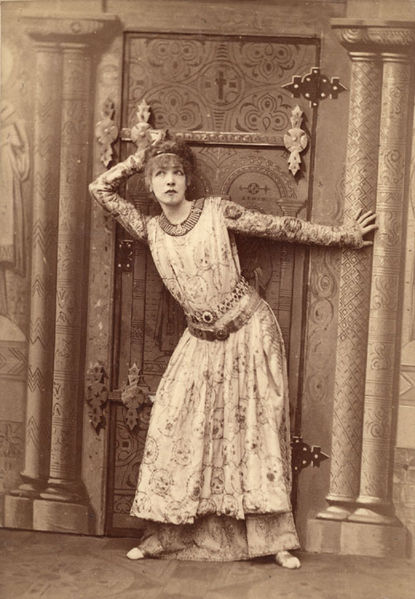
Yes, Sarah Bernhardt was probably unethical too. Actors!

I just blacklisted an actor, at least as far as my theater company is concerned, and I feel badly about it, because I don’t like banishing artists even when they deserve it. This individual did deserve it, however.

I held auditions a couple of months ago for a very difficult and complex production requiring special talents and a large cast. The turn-out was excellent, and the quality of talent was superb, with the actors obviously excited about the project. Since the script needs to be tailored to individual performers, the fear of an actor dropping out after being cast was especially strong (the maxim in the theater community is “cast early, cast often…”), so I took the unusual step of asking every auditioner who had a good chance of being cast to be honest about their commitment to the show. “If you want to be considered for this project,” I said, “I need to have your assurance that you are serious about it and will not tell me, after we have decided to cast you, that you have changed your mind. The show is like a big jigsaw puzzle, and casting you will affect whether we cast other actors, not just in your role but in roles that interact with yours. And I definitely do not want to cast someone who is going to turn around in a week or a month and say, ‘Sorry, I got a better offer.’ This is a commitment, and if we are committing to you, I need to know that you are committing to us.”

When the offers went out, a few actors nonetheless refused. One had just learned that she needed to seek more lucrative employment because her husband had been laid off; another had union problems. Over the next several months, there was another major loss, as an actress whom I had cast even before auditions—right before the delivery of her first child—told me that parenthood was more involving in reality than she had predicted when she committed to jumping into a major role so soon. I had thought this might happen, and, frankly, now felt that she was making the right decision.  I told her: “As a director, I was happy to let you be irresponsible for the benefit of my show, but as a parent, I’m glad your priorities are straight.”

The other day, however, one of the actors who had gladly accepted a role sent our producer a terse e-mail saying:

“Unfortunately, I can no longer do the show.  Thank you so much for all your help with everything; I’m very sorry for the inconvenience.” Continue reading

“Pay-What-You-Can” Ethics

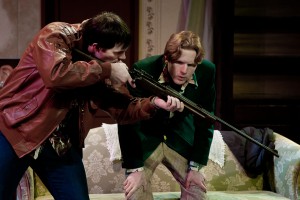
A live performance of Jules Feiffer's "Little Murders" at a regional theater in Arlington, Va. that holds "pay-what-you-can" performances over the periodic objections of its artistic director, me.

Toronto Star ethics columnist Ken Gallinger does a pretty good job today answering a query from a financially strapped theater-lover who feels guilty about attending “pay-what-you-can” professional stage productions. “…My husband says paying less than full fare takes advantage of the theatre company. Technically, we could pay the ticket price; we still have access to credit. And there are things we could cancel…What do you think?” asks the inquirer.

Gallinger explains the benefits to the company of not having a sea of empty seats facing the actors, and also how discount tickets have promotional value to theater companies. All true: the theater companies wouldn’t offer “pay-what-you-can” if they didn’t think it was in their companies’ long term interest. There are other benefits that Gallinger doesn’t mention. For example, the increased audience size still contributes to the average audience statistics that a non-profit company can use to seek advertisements and to argue for community foundation grants.

Even this wouldn’t cover the topic, however. “Pay-what-you-can” and other discount ticket programs are essential if theater companies are going to meet their own ethical obligations to the community, and if live theater is going to survive at all. The ticket prices at most large, established regional theaters are, in a word, unconscionable. Justifiable perhaps, since live theater costs more to produce than can be paid for by box office receipts, but still unconscionable. Continue reading

Ethics Dunce: Lexington (Mass.) High School Principal Natalie Cohen

“Columbinus” is a tough play by Stephen Karam and PJ Paparelli that combines interviews and news footage about the Columbine shootings with dramatic and cinematic techniques to explore the human and cultural issues raised by the tragedy. It is not “Grease,” by any means, and though many high schools have produced it successfully, I would not quarrel with the decision by any school official who decided that the show was inappropriate for high school drama and that it would better to do, say, “The Mikado.”

But Lexington High School principal Natalie Cohen managed to make this decision in the worst way imaginable, for the worst reasons imaginable, showing rank ignorance of the purpose of theater while being irresponsibly dismissive of the efforts and creative energies of her students. Continue reading

For Broadway Patrons, A Bill of Non-Existant Rights

What do Broadway theater-goers have a right to know and expect? The blog Gratuitous Violins has proposed a “Ticket-Buyer’s Bill of Rights.” While superficially reasonable, this manifesto embodies what is wrong with the expectations of consumers in general and theater patrons in particular. “Let’s face it,” the blogger, “Esther”, writes, “the producers are selling a product and we consumers should be able to make an informed purchase.” Okay. An informed purchase, however, does not require being routinely informed of all aspects of the production, particularly when the information is readily available to the responsible consumer.

Here are Esther’s three tenets of the “Bill of Rights”: Continue reading

Why Professional Reviewers Are Unethical, and Why We’ll Be Better Off Without Them

When Variety recently announced that it was firing its in-house film and drama critics, there was much tut-tutting and garment-rending over the impending demise of professional reviewing in magazines, newspapers and TV stations. The villain, the renders cry, lies, as in The Case of the Slowly Dying Newspapers, with the web, which allows any pajama-clad viewer of bootleg videos to write film reviews, and any blogger who cares about theater to write a review of a play. “I think it’s unfortunate that qualified reviewers are being replaced,” said one movie industry pundit, “but that’s what’s happening.”

I say, “Good. It’s about time.” (And also: QUALIFIED?”) If there has ever been an excessively influential non-professional profession that caused as much damage as reviewing, I’m not sure I want to know about it. The end of full-time film and drama critics as we know them can only prove to be a boon for artists and audiences alike. Continue reading