Something made me watch Ken Burns’ documentary “The Roosevelts” again last week. I was not looking for current perspective or political enlightenment, and the stories told are all very familiar to me, being an admirer of Teddy from childhood and fascinated by the complexities and contradictions that were Franklin. But history always surprises, and it often resonated differently depending on when it is examined. I realized, for the first time, that the Roosevelts have much to teach us about the conflict roiling the nation now….and the worse roiling that seems to be on its way.
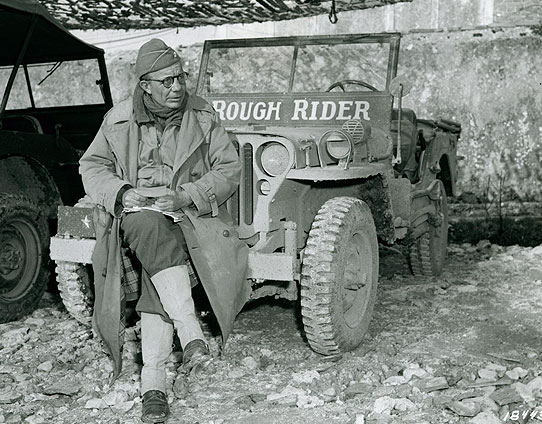
Theodore Roosevelt Jr.
“The Longest Day,” Darryl F. Zanuck, D-Day, And Us
Today is June 6, the anniversary of the Allies’ invasion of Normandy, the audacious military strike that changed the course of history. I’ll be interested in seeing how it’s commemorated this year, 71 years later, especially by the news media. A lot of Americans under the age of 40 know almost nothing about it, or worse, the values it represents to the United States.
Fortunately, there is an easy and entertaining way to teach a young American about what happened on this day 71 years ago. That is to have him or her watch “The Longest Day,” producer Darryl F. Zanuck’s epic film based closely on historian (and sole credited screenwriter) Cornelius Ryan’s 1959 book. (You can get it at Amazon, here.)I usually find understanding military battles nearly impossible; written accounts completely confound me, and few movies about any battle make a serious effort to explain the tactics and strategy without reducing the facts to pablum. (I remember how much my father, who fought in the Battle of the Bulge, detested the big budget movie of the same name, which he found outrageously sloppy, and which he summarized as “Henry Fonda won the war.”)
Not “The Longest Day,” however. Since seeing the movie with my father as a kid, I have learned a lot about what was left out, but the movie is remarkably clear and accurate about what happened and why without being either too detailed or too simplistic. It’s also just a great, inspiring movie.
That we have “The Longest Day” is entirely due to the courage of one of Hollywood’s most dynamic, flamboyant and successful studio moguls, Darryl F. Zanuck. The original producer of the adaptation of Ryan’s book (which is terrific ) gave up on the project when 20th Century Fox refused to allow him an adequate budget. Zanuck, who was still producing films but no longer ran the studio he had built, bought the rights, and was determined to do the story, the event, and the men who fought the battle justice by mounting a production almost as ambitious as the invasion itself. Continue reading
Memorial Day Ethics Hero Emeritus: Theodore Roosevelt, Jr., 1887–1944
The latest inductee into the Ethics Alarms Heroes Hall of Honor has a familiar name that burdened him with exorbitant expectations his entire life. Yet against all odds, he managed to add to its prestige.
With some notable exceptions that you can probably name, being the son of a President of the United States has proven to be a burden and often a curse. Being the oldest son of our most flamboyant President was particularly hard on Teddy Roosevelt’s boy who shared his name, and through young adulthood, Theodore Roosevelt, Jr. experienced migraine headaches and other symptoms of anxiety and stress. The President was even cautioned by a family friend and physician that his constant badgering was ruining his son’s health.
Young Ted still followed his father’s path to fame by enrolling at Harvard, then became a partner in a Philadelphia investment banking firm. With the U.S. entry into the Great War, Roosevelt enlisted in the army, fought in Europe, rose to the rank of lieutenant colonel, and was gassed and shot in the kneecap in 1918. Roosevelt received the Distinguished Service Cross. He was renowned for his courage under fire as well as his unusual concern for the men under his command: at one point, he personally purchased new boots for his entire battalion. After the war, Roosevelt was instrumental in the founding the American Legion in 1919. Continue reading