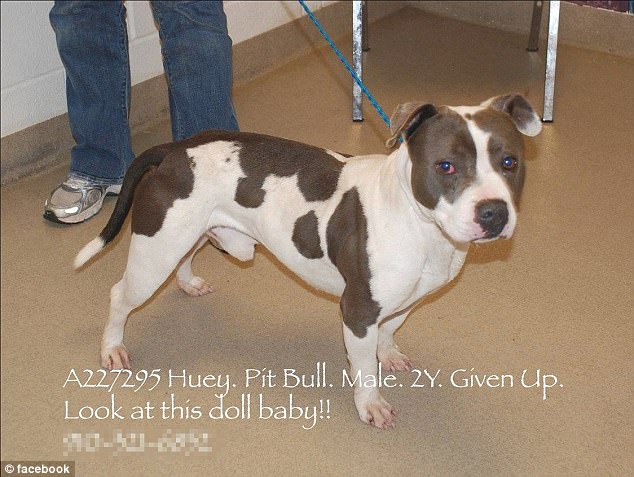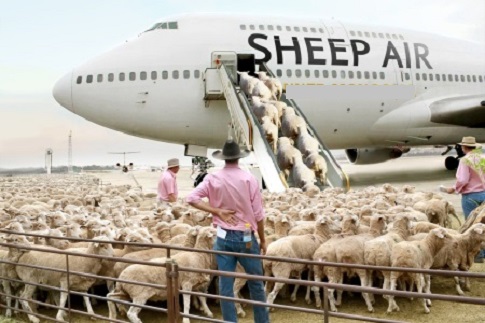
Comment Of The Day (1): “A Cruel And Stupid Flight Attendant, A Dead Puppy, And A Plane Full Of Sheep”

Choosing the best among so many excellent comments on this topics was nigh impossible. I chose two in the end, beginning with Michael West’s systemic analysis that also opens several ethics issues that could justify separate posts on their own. The second COTD, coming up forthwith, addresses a completely different aspect of the story.

Here is Michael West’s Comment of the Day on the post, A Cruel And Stupid Flight Attendant, A Dead Puppy, And A Plane Full Of Sheep”

1) Airlines have clearly delineated standards for carry-on sizes. Enforcement of these sizes has been perennially neglected to where passengers routinely carry noticeably larger than permitted carry-on bags. This is marginal rule breaking.

2) No doubt this puppy was in such a carry-on that would never have been permitted if rules were enforced…NOR EVER EVEN ATTEMPTED if the owners knew that rules were enforced. But the larger culture has acquiesced to the flouting of a “no big deal” rule. Continue reading
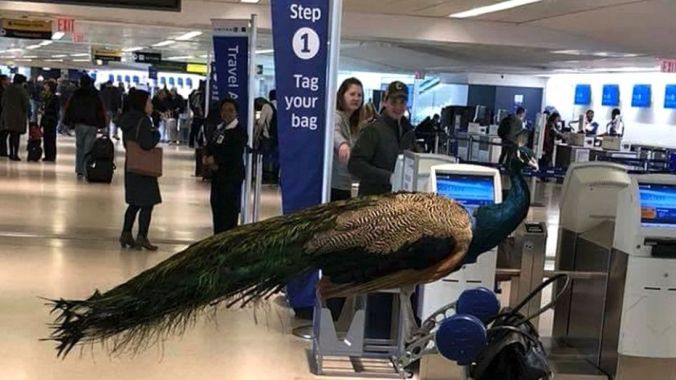
The Emotional Support Peacock And The Tragedy Of The Commons

The Tragedy of the Commons is a term originating in ancient economic theory describing a situation in which a shared-benefit system is destroyed by individual users who selfishly behave contrary to the common good by depleting or spoiling the resource involved. Ignorance or denial of this principle, which is based on centuries of observing the human race, is core to progressive and liberal ideology, unfortunately. Another way of expressing the tendency is the old adage, “Give them an inch, and they’ll take a mile.”

Federal regulations over the last decade–I’m assuming under Democratic auspices, but I don’t care to check,  it doesn’t matter to the post—have required airlines to accommodate passengers with not just seeing eye dogs but “therapy animals” and “emotional support animals” that supply the passengers who own them with relief from anxiety. These creatures must fly at no cost and uncaged, and so far, no discrimination regarding species have been set.  It’s a nice regulation, don’t you think?  I think its nice.

However, if there ever was a policy that guaranteed the Tragedy of the Commons, this was it. Many passengers exploit the rules by calling their pets “therapy animals”—and really, aren’t they all?—to save money and hassle. The number of animals flying in the cabin with passengers doubled, and doubled again.  Some passengers were bitten by dogs. Some animals defecated in the aisles. Some of the passengers  flew or attempted to accompanied by  comfort turkeys, goats, gliding possums known as sugar gliders, snakes, reptiles, spiders, and even more exotic companions. Continue reading

Comments Of The Day (3): “An Especially Ugly Ethics Quiz: Cam Betrayed”

There have been many excellent posts on the Ethics Quiz about the couple that executed their apparently loving therapy dog, a Staffordshire Bull Terrier named Cam. Three comments stand out (I could easily have selected twice this many, however) , one by Paul W. Schlecht, another by slickwilly, and a third by Elizabeth II. They cover some common ground, and together show the complexity and breadth of this issue, which goes beyond mere animal cruelty to our society’s emotional connection, confusion and hypocrisy about animals generally. I decided that they complement each other, and am posting them as a set.

First, here is slickwilly’s Comment of the Day on the post, “An Especially Ugly Ethics Quiz: Cam Betrayed”:

Growing up rural, animal management is a way of life. You care for ‘commercial’ animals and you care for ‘pets.’ Confusing the two causes problems with regards to ‘final disposition.’ You never torture the animal (as this was considered a lack of character and a sign of a dangerous person) but attempt to make the act as painless as possible. (Note this is why you never hunt deer with an insufficient caliber, or take low probability shots that may wound but not quickly lower the target’s blood pressure to induce unconsciousness. Not only is is more humane, but also prevents the meat from being tainted or lost.)

A good working definition of a commercial animal versus a pet is driven by what type of profits are earned on the animal. We (generally) keep and pay for pets for emotional reasons (a type of profit), and do not expect monetary profit. Commercial animals are for food and profit. The line can blur, as in the case of military bomb dogs or ‘barn’ cats, but this generally is the case. It is a pet if you cannot bear to think of eating it. Cows can be pets. Dogs can be junk yard guard animals. The owner’s feelings make the difference.

I remember some folks who were unable to kill their show chickens, pigs, sheep, (or whatever) for delivery to the buyer (who did not bid on a live animal, and paid well over market value to support the college aspirations of the seller.) The Ag teacher’s advice was to never name a meat production animal, if you intend to sell it. Reluctance to complete the life cycle of such animals indicated the person was not suited to that sort of rural agricultural activity. Go grow corn if you like, but don’t raise beef. There was no shame in this: find what you like to do and do it. But make no mistake: anyone who has cared for 20 pigs knows they are NOT pets, and they EAT a lot, which has to be paid for.

Continue reading

An Especially Ugly Ethics Quiz: Cam Betrayed

This story is too disturbing to describe, so I’m going to just give you the link.  Briefly, it involves a couple, she a veteran, he a soldier, killing their therapy dog, laughing as they did it, and filming the event. They were arrested on charges of animal cruelty. Read the story, here, and then consider the Ethics Alarms Ethics Quiz of the Day, which is…

What is the fair, proportionate, and reasonable punishment for this conduct?

Continue reading