“It’s not the role of our media and our journalists to shield us from truth; it’s their job to confront us with it. In this respect, the plurality of imagery is both a blessing and a curse, because in the sort of panic that follows an event like yesterday’s bombing, anything could be real. But equally, it’s also the volume of images and coverage — graphic and otherwise — that help us get a clearer picture of reality than we ever did in the days when our opinion was shaped by one journalist and a few photographs.”
—- Tom Hawking in his essay “The Ethics of Disaster Photography in the Age of Social Media,” discussing the controversy over whether graphic images from catastrophes like the Boston Marathon bombing ought to be published by the mainstream media, or should be toned down, edited, or withheld altogether.
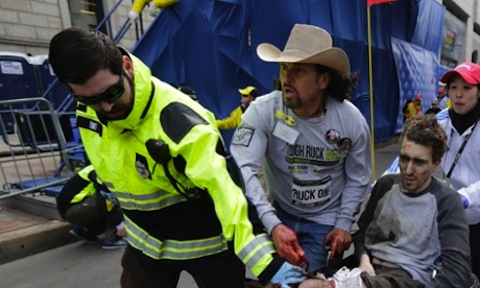 Hawking’s conclusions are spot-on, and you should read the entire essay here. Obviously horrendous photographs shouldn’t be thrust in readers’ and viewers’ faces; we should all have the opportunity to avoid seeing images we know would upset us. ( I have not looked at any of the graphic images from Boston. The text descriptions are plenty for me, thanks.) Leaving it to editors and journalists to decide how much realism we can stand, however, is folly. To be blunt, there is no reason to trust them. One of the blessings of the web and social media is that the traditional media no longer have the power to withhold information based on their biased and paternalistic judgement, which they are thoroughly unqualified by intellect, education to render.
______________________________
Source and Graphic: Flavorwire (Tom Hawking)
Ethics Alarms attempts to give proper attribution and credit to all sources of facts, analysis and other assistance that go into its blog posts. If you are aware of one I missed, or believe your own work was used in any way without proper attribution, please contact me, Jack Marshall, at jamproethics@verizon.net.
 Ethics Alarms