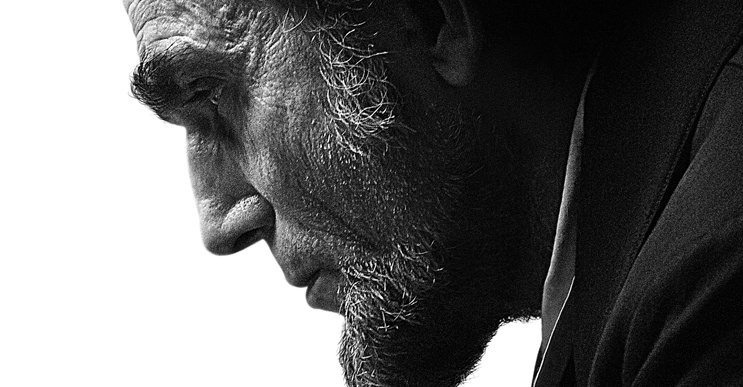
I won’t hold you in suspense, and no, it’s not that I expect or deserve any awards. What Steven Spielberg’s justly acclaimed historical drama and this blog have in common is being unfairly peppered with a presumptuous breed of complaint that nears the top of my all time “Unfair Criticisms List.”
Here, the complaint usually takes this form: “Why are you writing about Chex Mix labeling when [Pick ONE:] a) we’re about to give up our sovereignty and let anyone just break the law to come across the border? b) Fox news lies to the public every day? c) there are unethical things going on that I care about more ?” Regarding Lincoln, the favorite criticism in the media and on the web of late has been that in the process of showing the sausage-making and political maneuvers that allowed the 13th Amendment to become the law of the land, Spielberg neglected to show the evils of slavery, which, of course, if he were to do without risking the criticism (which he would get anyway) that he did so in a perfunctory and inadequate way, would require either lengthening the film to an unwatchable length, or cutting out significant portions of the story he chose to tell. This obnoxious complaint was brought to a full-throated crescendo by Tony Gittens, director of the Washington, D.C., International Film Festival, in today’s Washington Post. He writes:
“Steven Spielberg’s film “Lincoln” will probably walk away with this year’s Academy Award for best picture, and that would be unfortunate. As Post film critic Ann Hornaday pointed out , “Enslaved people and the terror they endured in the 19th-century South are never portrayed” in the film. Mr. Spielberg did not shy away from depicting the extent of man’s institutionalized cruelty in his moving “Schindler’s List.” Why not in “Lincoln”? Worse, the film ignores the contributions African Americans made toward their own liberation. Instead, they are portrayed as loyal Union soldiers and observers from the balcony as Congress debates their fate. This was simply not the case. From the moment they were brought to these shores, African Americans resisted their enslavement, spawning leaders such as Harriet Tubman and Frederick Douglass. In fact, at the time “Lincoln” takes place, Washington had a significant free black population, many of whom walked the streets in front of the White House. But this is not portrayed. “Lincoln” concludes with stalwart abolitionist Thaddeus Stevens, a white man, in bed with his compliant African American housekeeper. All of the dramatic political maneuvering we had just witnessed on the screen, the struggle of lawmakers to come to grips with how to help make right years of unjust legalized oppression — all of this is reduced to the conjugal relationship between two disparate individuals. Here, once again, “Lincoln” misses the point.”
No, Mr. Gittens misses the point, and it should be a hard point to miss. Continue reading
 Ethics Alarms