The Cruelest Month And The Duty To Remember

sultana-ablaze

If we have the education, curiosity, perspective and respect for our origins and those who have gone before us, the calendar is a source of constant reminders of what matters in life, and how we can be better citizens and human beings. It is a common belief among Millennials, and a lot of older Americans too, that history is irrelevant to their lives, and this is both a fallacy and a self-inflicted handicap. Not that keeping history in mind is easy: in this month, which T.S. Elliot dubbed “the cruelest,” paying appropriate respect by remembering is especially difficult.

Still, respecting history is our duty. It won’t be remembered, perhaps, but in April, 2012, a 23-year-old drunken fool named Daniel Athens was arrested for climbing over a barrier to urinate on a wall at the Alamo. Monday, a Texas judge threw the book at him, sentencing him to 18 months in state prison for vandalizing a National Monument and a shrine. The sentence seems extreme, and is a good example of how the law is a blunt weapon with which to enforce ethics. The Alamo has near religious significance in Texas, brave men died there, and the ruins serve as a symbol of critical virtues like loyalty, sacrifice, dedication, courage and patriotism. Athens, himself a Texan, defiled the memory of the fallen and symbolically rejected the values and heritage of his community and fellow citizens. Unfortunately, the harshness of the sentence will create sympathy for him: 18 months for peeing? But how else does a culture reinforce the importance of respect for the past? I don’t have an answer. Perhaps I would have sentenced him to take an exam on the lives of Travis, Crockett, Bowie, Seguin and the rest, as well as the siege itself, and imposed the jail term only if he flunked.

Yesterday, Major League Baseball celebrated the heroism and transformative life of Jackie Robinson, who broke baseball’s color barrier on April 15, 1947 by becoming baseball’s first black player, setting in motion powerful forces that propelled the cause of civil rights. Every player wore Robinson’s now retired uniform number 42, and there were commemorative ceremonies in the ball parks where it wasn’t too cold and wet to play ball. This remembrance had a difficult time competing with tax day, as history usually does when our immediate life concerns beckon.

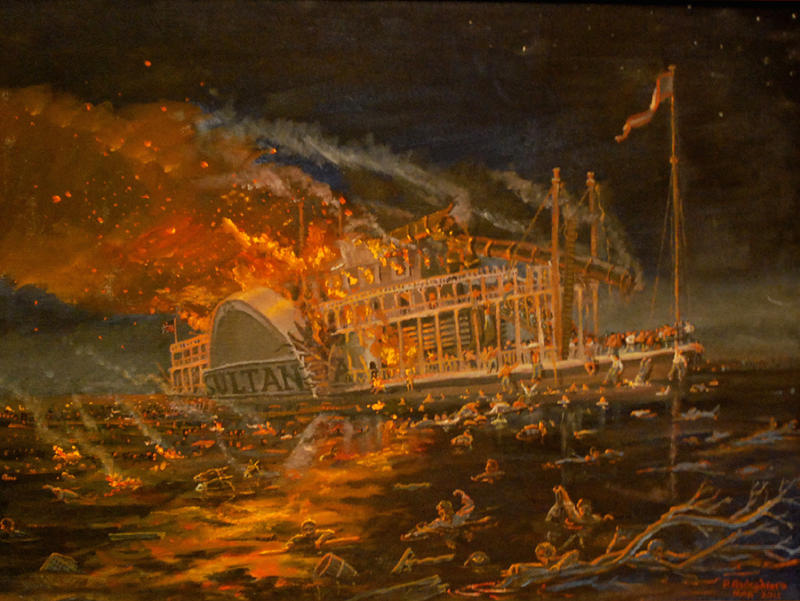
Other important historical events deserving reflection, however, were more or less ignored entirely, for April 15 is a historically awful day: Continue reading


The Internal Revenue Service’s Unethical Compassion

News Item (ABA Journal):

Too bad---if only your family tragedy had gotten more publicity, the IRS might have given a damn.

Too bad—if only your family tragedy had gotten more publicity, the IRS might have given a damn.

“After Monday’s fatal bombing near the finish line of the Boston Marathon, the Internal Revenue Service has announce that the April 15 income tax filing deadline will be extended by three months for those affected by the crime…”

Oh! Does this mean that the Internal Revenue Service has a new policy that grants penalty-free extensions to taxpayers who experienced a personal tragedy on or about April 15? Well, no, it doesn’t. Does it mean that all the other victims of crimes and tragedies across the nation will get similar compassionate treatment? No, it doesn’t mean this either. What it means is that someone—I wonder who?—is using a Federal Agency to make political hay and get positive publicity from journalists who are incapable of thought.

This is an ethics foul, a significant one, and I would think an obvious one as well. The government’s tax-collecting agency must display absolute integrity and consistency at all times, and must not be influenced or driven by politics or public relations. There are citizens across our land who had family members raped on April 15, or who were raped themselves; who had children or parents die, who were in horrible accidents, whose home or business burned down, who lost their jobs, or who were diagnosed with dread diseases that will change their lives forever. Why are the Boston victims receiving compassionate treatment,while  these citizens are not? You know why: because this was a high-profile tragedy, to which I say, so what? What is the ethical principle being articulated here that is worth sacrificing the IRS’s integrity? That high-profile victims deserve more compassion than other victims? No, the principle is that a government gets better PR brownie points by making beneficent gestures to well-publicized victims who are on TV than it does, say, to a tax-paying father whose kid was gunned down in a drive-by on tax day.

Well, it’s a cynical, sloppy, incoherent, irresponsible ad hoc principle that operates on a double standard, and is inherently unfair and unjust. It also necessarily raises the questions, how else does the IRS play favorites? What other political activities does the IRS perform for its masters?

That’s how trust in the government erodes, and the IRS is asking for it.

_______________________________

Pointer and Facts: ABA Journal


Comment of the Day: “Annoying and Ill-Timed Tangential Issue Dept.: There’s Nothing Especially Virtuous About Running A Marathon”

Here is a helpful Comment of the Day from Rich Page, providing important perspective to the issue of marathoning and marathoners. I am especially grateful for comments like these, which add leavening to posts that can be a little more jarring than I intend, even though I know exactly how they will be taken when I post them. 

I didn’t want to get too deep into all the many reasons people run, so what was intended as an observation about many marathon and running enthusiasts could have been taken as a knock on running for fun, for example. Fun is important; fun is natural; fun is grand. I think fun is a wonderful reason to do anything. I do a lot of things just for fun, and always have—luckily, I find my various jobs fun, all of them. 

Rich’s post balances mine perfectly, and makes it whole and better. As to the timing—I agree, I wish I could have “hung it on a different hook,” and perhaps I should have waited for another one, since I have been waiting a while as it is.Perhaps my rule should be that if I can’t conceive of any graphic or photo that won’t risk being offensive to a lot of readers, that’s a strong indication that I should postpone the topic to another day.

This is the Comment of the Day on “Annoying and Ill-Timed Tangential Issue Dept.: There’s Nothing Especially Virtuous About Running A Marathon”: Continue reading

Annoying and Ill-Timed Tangential Issue Dept.: There’s Nothing Especially Virtuous About Running A Marathon

I sincerely apologize for the timing of this topic, which has actually been percolating in my brain for a while. I first considered it after finding myself annoyed by a commercial running on television of late, comparing various artists who completed major works after their 55th birthdays with a similarly aged woman who recently ran a marathon. Then, yesterday, in the wake of the terrorist attack on my home town, I read multiple Facebook posts from otherwise intelligent people expressing profound sadness for all the marathoners who trained so hard for Boston and were not able to finish. That did it.

I believe we can stipulate, can we not,  that any marathoner who returned home whole after watching fellow competitors having their arms and legs blown off  and complained that the race was terminated before he could finish would immediately be eligible for the Jerk Hall of Fame. If horror, grief and empathy for the victims, concern for the nation, and gratitude for the pure luck of being spared doesn’t wash such selfish thoughts right out of a runner’s mind, then that person needs to keep on running until he has left civilization. Meanwhile, the increasingly accepted cultural attitude that running a marathon or an iron man competition is especially admirable shows something is out of whack in our value system.

I didn’t feel like confronting my Facebook friends yesterday, but please tell me how being prevented from running in a race one has trained for is any more of a tragedy than a thousand other minor disappointments we all face every day, and far less worthy of sympathy than thousands of others. A while back I was blocked from giving a seminar in Tennessee that I had prepared for, because of a storm that grounded all usable flights. That cost my company $5,000. It meant that a lot of Tennessee lawyers had to hustle to find other ways to get their ethics credit, and the ways they found were going to be a lot more boring than I am. Those are real consequences, tangible and significant. What is the result of not being able to finish the Boston Marathon? Who is significantly harmed? Nobody. The marathoner is disappointed and inconvenienced, that’s all. There are other races. He or she is in shape, They did the best they could. The Marathon will be held next year. The terrorist attack is a tragedy. The fact that racers couldn’t cross the finish line is trivial. It just doesn’t matter very much, or shouldn’t.

I’m not condemning runners, any more than I condemn people who spend their spare cash on jewelry, summer houses and vacations instead of saving the whales: it’s their lives and and their priorities, not mine, and they can do what they choose. At the same time, the aura of virtue surrounding extreme runners and the popular myth that running a marathon is more ennobling than commonplace altruistic and practical uses of an individual’s time is bizarre. That commercial I mentioned speaks of being productive in latter years. Running a marathon doesn’t produce anything more than playing a videogame does. Picasso, whose late career artwork is mentioned in the spot, created something beautiful that will be enjoyed for centuries: now that’s productive, and also worthy of admiration and praise. Whose life is enriched by the completion of a marathon, other than the runner’s? It isn’t a communal act, a generous act, a productive, charitable, creative or selfless act. It is a completely self-absorbed and self-focused act, requiring many hours that could just as easily be used communally, generously, productively, charitably, creatively and selflessly. Again, it’s the runner’s life, and if he or she wants to use their brief time on earth to complete manufactured and artificial challenges that accomplish nothing tangible and leave the world no better than it was before, that’s an individual choice; running a marathon doesn’t harm anyone, either, unless it interferes with being a good and attentive father, spouse, and friend. Extolling this kind of activity, however, just distorts societal values, and bestows heroic status on the wrong people, for the wrong things.

Ethics Dunce: Lexington (Mass.) High School Principal Natalie Cohen

“Columbinus” is a tough play by Stephen Karam and PJ Paparelli that combines interviews and news footage about the Columbine shootings with dramatic and cinematic techniques to explore the human and cultural issues raised by the tragedy. It is not “Grease,” by any means, and though many high schools have produced it successfully, I would not quarrel with the decision by any school official who decided that the show was inappropriate for high school drama and that it would better to do, say, “The Mikado.”

But Lexington High School principal Natalie Cohen managed to make this decision in the worst way imaginable, for the worst reasons imaginable, showing rank ignorance of the purpose of theater while being irresponsibly dismissive of the efforts and creative energies of her students. Continue reading

Tony C., Chaos, and the Ethics of Blame

“And then one night

The kid in right

Lies sprawling in the dirt.

The fastball struck him square—he’s down!

Is Tony badly hurt?”

Just about everyone who lived in Boston, Massachusetts in 1967 knows that bit of doggerel, an epic poem written to commemorate the Boston Red Sox miracle “Impossible Dream” pennant that year. Tony, “the kid in right,” was Tony Conigliaro, or Tony C. for short, the 22-year-old Italian stud from nearby Swampscott who was ticketed for the Hall of Fame. Tony had everything: looks, talent, an adoring hometown public and a flair for the dramatic—everything but luck. On August 19, 43 years ago today, an errant pitch from Angels starter Jack Hamilton struck him in the face, nearly killing him. The beaning began a series of events that turned “The Tony Conigliaro Story” from a feel-good romp to an epic tragedy. He was never quite the same after the beaning, though he bravely played three more seasons with a hole in his vision he never told anyone about. He quit, tried pitching, actually made a second comeback that was derailed by injuries, and quit again. He was about to become the Red Sox cable TV color man when he suffered an inexplicable heart attack that left him brain-damaged and an invalid until his death, at only 45, in 1990.

Since 1967, there has been a storyline connected with Tony C.’s beaning, and it resurfaces every year. Let’s have an enthusiastic Red Sox blogger tell the tale: Continue reading