
The Raymond Jefferson Mystery: Isn’t There Ethics Training for Obama Administration Officials?


Raymond Jefferson's government ethics tool box

Based on the sorry Raymond Jefferson scandal, I would assume that the answer to that question is: “What’s ethics training?” Sure, there are reams and reams of government ethics regulations; I’ve read a lot of them. Apparently there is no one making sure that high-ranking officials have read them or understand them, however.

Jefferson, the Assistant Secretary of the Labor Department’s Veterans’ Employment and Training Service appointed by President Obama to oversee a job-training program for veterans, has resigned following an inspector general’s finding that he violated federal procurement rules and ethics principles by fast-tracking lucrative consulting contracts to his friends. Jefferson, says the report from the Labor Department’s inspector general, engaged in “a pattern of conduct . . . which reflects a consistent disregard of federal procurement regulations, federal ethics rules and the proper stewardship of appropriated dollars.” Continue reading
Chess Learns to Cheat

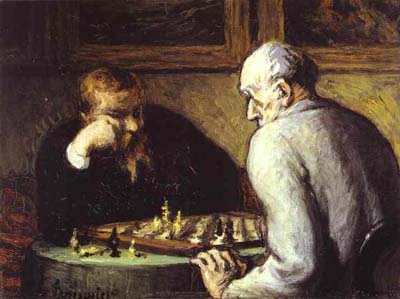
The French chess federation has suspended three of its best chess players for cheating in a tournament last Fall. Sébastien Feller, a 20 years old grandmaster, Cyril Marzolo, and Arnaud Hauchard, who is the French team captain, secretly used a computer to feed them moves during their matches. The games were broadcast over the Internet, and a confederate fed the game positions into a computer with a sophisticated chess-playing program (computers beat the world’s best human player very regularly now).  Once the computer made its move, the confederate sent it to the human grandmaster using a text message. The three French chess whizzes matched the  computer almost move for move.

Amazing. Continue reading

Lindsay Lohan Has Privacy Rights Too

Lindsay Lohan brings enough problems on herself. She doesn’t need unethical professionals to make her life even more chaotic by violating her privacy rights. Continue reading

A Real Estate Appraiser Discovers “the Appearance of Impropriety”

You won’t find a better example of the ethical breach known as “the appearance of impropriety” than this, a question from a real estate appraiser posted on appraisersforum.com. (Note: This is one of the infuriating websites that won’t allow you to post a reply or a comment until you register, and then informs you that it may be a day or more before the registration is approved, so you still can’t post a comment. Yes, the site is so crucial that I will hold my comment…or maybe write it down and save it in a file labeled “pending Appraisers Forum comments”—and wait with palpitating anticipation while my plea to be allowed to interact with a bunch of real estate appraisers is evaluated for worthiness. )

Here is the question: Continue reading

The Training Myth and Connick v. Johnson

The U.S. Supreme Court is deliberating on the issue of whether a District Attorney’s office can be held liable when individual prosecutors commit serious misconduct, on the grounds that the government breached its duty to train its prosecutors and ensure their competence. The case is Connick v. Thompson, and it began when it was discovered that a New Orleans man had been sent to Death Row for 18 years for a crime he hadn’t committed. John Thompson was innocent, and a lab report proving that the blood found at the crime scene belonged to someone else would have proven it. Prosecutors withheld the evidence from the defense attorneys.

When Thompson was freed he was understandably angry, but the options for redress when the criminal justice system ruins your life are severely and unjustly limited. In 1976, the Supreme Court decided in Imbler v. Pachtman that prosecutors have absolute immunity from lawsuits, even when there is genuine, malicious and illegal conduct. The Court acknowledged that its ruling “does leave the genuinely wronged defendant without civil redress against a prosecutor whose malicious or dishonest action deprives him of liberty,” but declared the alternative was worse: making prosecutors timid and fearful of making a mistake that could leave them penniless. The Court suggested that professional discipline would be enough to keep prosecutors honest, but that hasn’t been the case: a USA Today study found that even in egregious cases of prosecutorial misconduct, attorneys who put innocent people in jail almost never had to endure any punishment at all. Thompson sued the District Attorney’s Office on a theory of negligent training, and won 14 million dollars from a sympathetic jury. Now the Supreme Court is deciding whether such suit can stand in light of the ruling in Pachtman.

It should, but the theory behind the lawsuit is a myth, and I suspect that everyone knows it. Continue reading

“The Good Wife” Ethics, Season #2: Alicia, Kalinda, and Pretexting

The acclaimed CBS series “The Good Wife” premiered last night, with an episode called “Taking Control.” The title is ironic in one respect. Because the legal profession regards lawyers as being in control of the non-legal staff that works for them, good wife and whiz-bang attorney Alicia Florrick (played by Juliana Margulies) violated one of the most important legal ethics rules in the very first episode. This was far from unrealistic, however. Her ethical breach is not only a common one, but also one that many lawyers are careless about. It is also unethical conduct that the public assumes is standard practice for lawyers…because movies and TV shows make it seem that way. Continue reading

ER Ethics: “Oh…should I not have done that? Was that wrong?”

Most Unethical Facebook Conduct of the Week: Staff members at a Long Beach, California hospital took pictures of a gruesomely wounded man in the emergency ward (his throat was cut) and posted them on Facebook. Yes, they really did they did. Continue reading

Wanted: Ethical Teaching Aide to Stop Abu Ghraib, Jr.

Yesterday, I wrote about the disturbing incident at an Ohio elementary school, where a sixth grader was systematically mortified and subjected to ridicule because of the length of his hair. That was bad; this is worse.

A teacher at a New York City public school, P.S. 65 in the Ozone Park neighborhood, turned his fourth-grade classroom into a fighting ring and forced two children to duke it out. Continue reading