I am in full sympathy with anyone who gets the creeps from Ted Cruz. The news media’s problem with Cruz, however, is also soaked with pure ideological bias. It doesn’t like his religiosity, nor his conservative fervor. If they turned one-fifth of the intensity of their anti-Cruz zeal on Hillary Clinton, maybe a few more of her more zombified followers might finally feel some neurons firing. (I don’t know if Trump shooting someone would dissuade his herd, but I have talked to Hillary supporters who would either refuse to believe it or claim it was set up by Republicans.)
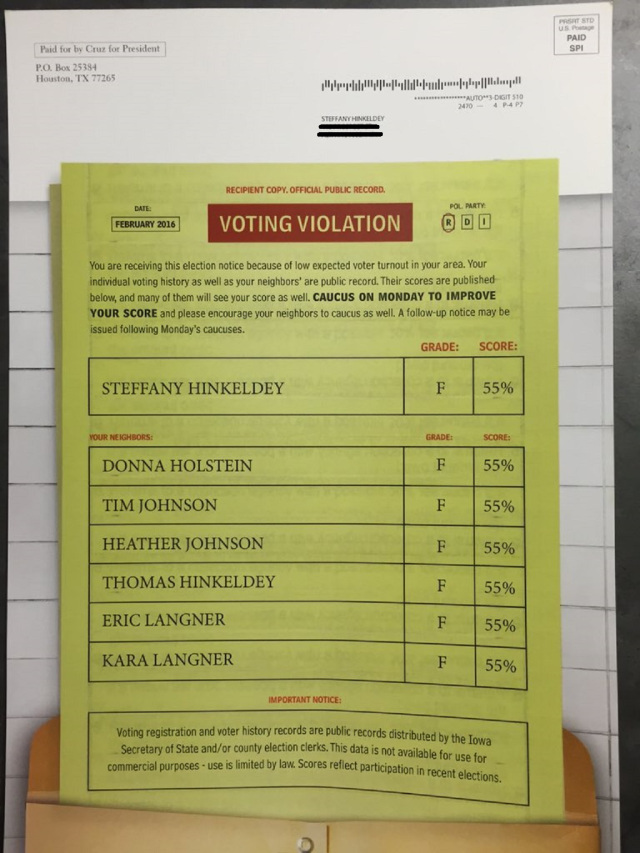
Apparently Cruz’s kamikaze legislative tactics, mendacity and dirty tricks in his current campaign isn’t enough ammunition for those who want to derail his ambitions: now the news media is just looking for dirt, or manufacturing. Supposedly legitimate news organizations have scraped the bottom of the academic barrel to find lawyers who would argue that Cruz isn’t a natural born citizen, even though the same editors would have leapt out of their windows before seeking scholarly endorsement of Obama birther theories. Even non-political publications are doing it: Psychology Today just disgraced itself by publishing the ultimate pseudo-science junk piece from a professor of neurology at George Washington University, Dr. Richard E. Cytowic, who explains in clinical terms why he, at least, finds Ted Cruz creepy. It is nothing but an ad hominem attack based on his opinion that Cruz is funny-looking, exactly as wrong as criticizing Obama’s ears, Hillary’s calves or Bernie’s wrinkles.
Ah, but Ted Cruz deserves this, you see, because he is conservative, Republican, genuinely rather than tactically religious—can’t have that—and one of the “Cuban guys.”
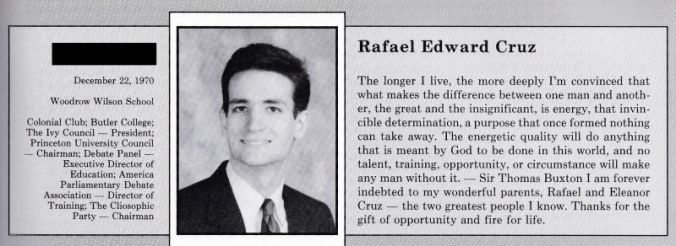
Piling on after the cheap shots taken at Cruz via Twitter by his jealous Hollywood jerk Princeton roommate, journalist Ellie Shechet decided to track down as many of Cruz’s college acquaintances as possible. allegedly to investigate a “rumor” of young Ted doing something disgusting, but really to see who would trash him. Here’s an example of her “investigative journalism”: Continue reading



 Ethics Alarms
Rising Ethics Alarms comment star Zoltar Speaks! has weighed in with a passionate and perceptive comment inspired my recent overview of the ethical bankruptcy among the public’s current top choices to be our next President. Most commentators, even partisan ones, have become sensitive to what ZS describes, though they describe it in differing ways. Here’s a fascinating post on City Journal, giving Arthur Schlesinger, Jr., Kennedy’s hagiographer and once influential liberal/Democratic historian credit for predicting the phenomenon:
Government, especially democratic government, relies on trust. Nixon and Watergate exacerbated the decline in trust created by the Vietnam War, then Clinton betrayed the dignity and image of his office to make almost any conduct by the President not just imaginable, but defensible. Sam Donaldson famously said that Clinton would have to resign if the allegation about Monica were true, and he had lied. Sam was right under previous rules, and a President who cared more about the country’s trust than himself would have done as Donaldson predicted.
Next came the completely random catastrophe of the tied 2000 election. Democrats, to their undying shame, employed it as a wedge, and to insist that the election had been stolen, a practice I described at the time as picking at the connective threads of the tapestry of our society. 9-11 was used to suggest that our government would murder its own people; Katrina was used to suggest that our government would allow black people to die because they were black. Bush’s administration blundered into a war, and then into a near-depression—in past generations, these would both be attributed to miscalculations. But the tapestry, as I warned, was unraveling. Now those mistakes were being seen as deliberate, sinister.Then came Obama, once promising hope and harmony, who has deliberately exacerbated divisions and distrust to build a political firewall around his own incompetence. Public trust in government, before the Vietnam protests, was at 73%; it is below 25% today. Of course it is. The question is: Now what?
Here is Zoltar Speaks! in his Comment of the Day on the post, Ethics Update: The Frontrunners: