Heeeeeeeeeere’s JOHNNY’S BETRAYAL!!!!

henry_bushkin_johnny_carson

Lawyers are forbidden by the ethics rules of their profession in every state from divulging the secrets of their clients, their former clients, or even their dead former clients, except in the rare circumstances when doing so will save a life or prevent a crime, and often not even then. Client confidences include all information a lawyer learns about a client in the course of the representation whether or not it is germane to the representation or not, if the client would be embarrassed by the information or would want it to remain secret.

The duty to maintain client confidences goes to the core of the professional relationship between citizens and their lawyers, and any attorney who breaches it not only harms his or her client but undermines trust in the entire profession as well. So sacrosanct is the duty that a Massachusetts court agreed with the Fall River law firm that represented Lizzy Borden in her famous murder trial, when Lizzy’s heirs tried to force it to reveal whether she did, in fact, “give her mother forty whacks” (and her father forty-one) with an ax, that it could not reveal Borden’s secrets even in the interests of history.  The firm, said the court, was quite correct: Miss Borden hired it based on its lawyers’ assurances that her secrets were safe with the firm forever, and to allow otherwise now, even a century after the crime, would betray her trust and undermine the profession’s integrity. The Massachusetts Bar agrees.

So how can it be that Henry Bushkin, for decades the late Johnny Carson’s personal lawyer and thus charged with keeping the secrets of the famously reticent comic’s personal life, is now publishing a tell-all book filled with juicy stories about his conveniently dead client? Continue reading

Ethics Quote Of The Week, Government Shut-Down Ethics Train Wreck Division: Unidentified Park Ranger

“We’ve been told to make life as difficult for people as we can. It’s disgusting.”

An unidentified U.S. Park Ranger, quoted by the Washington Times, in connection with a story about the Park Service shutting down the parking lot at Mount Vernon, George Washington’s home, which is not run by the Park service.

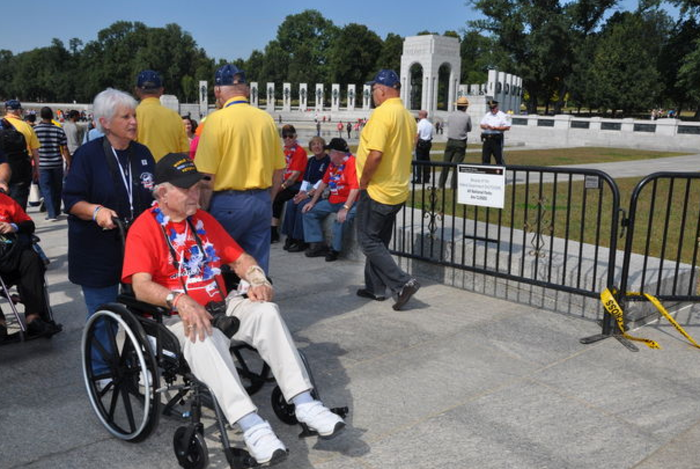
My Dad would have been in this picture. Having his own nation that he risked his life for intentionally target him as a pawn would have hurt and angered him deeply. For the first time since Dec. 1, 2009, I'm thankful that he's dead.

My Dad would have been in this picture. Having his own nation that he risked his life for intentionally target him as a pawn would have hurt and angered him deeply. For the first time since Dec. 1, 2009, I’m thankful that he’s dead.

My late father, a decorated World War II veteran, loved the World War II Memorial. He was an invited guest at its dedication, and I accompanied him. Up until a few days before Dad died, he would wear a vest covered with his patches, insignias and medals, including the Silver Star, and just hang out there, often signing autographs for young visitors who treated the real life World War Two relic as both part of the Memorial and as a celebrity. Sometimes I accompanied him. It is a large, wide open space, without a discernible entrance. No government employees were ever in evidence while I was there. Beyond routine maintenance and cleaning, there is no need for any. Security? Just try vandalizing that space with the veterans there, old as they are. I dare you.

So why has the Park Service expended extra funds to block access to that memorial, where visitors just wander in and out, as well as non-government attractions like Mount Vernon, and even private operations that serve visitors to government attractions, like the Pisgah Inn, a private hotel that holds a concession on the Blue Ridge Parkway? Continue reading

Now THAT’s Unprofessional!

"911...what is your emergency?"

“911…what is your emergency?”

There are many professions where a whimsical, even a black sense of humor is useful, perhaps essential. If M*A*S*H taught us anything, it taught us that. 911 operator, however, is not one of them.

I say this knowing that I would be dreadful at the job, as I find it hard not to see humor in disasters that befall others, or even myself—-too many Warner Brothers cartoons, perhaps. 911 operators must maintain a cool, calming, respectful demeanor, even when they are being told by a panicked mom that her kid super-glued a rat to his sister, that her home has been invaded by thugs dressed as Muppets, or the house has been engulfed by a flood of molasses. I couldn’t do it.

But then, it’s not my job.

It was the job of the operator on this call, though: Continue reading

Grassy Knoll Ethics: How Deception Breeds Distrust

UmbrellaMan2

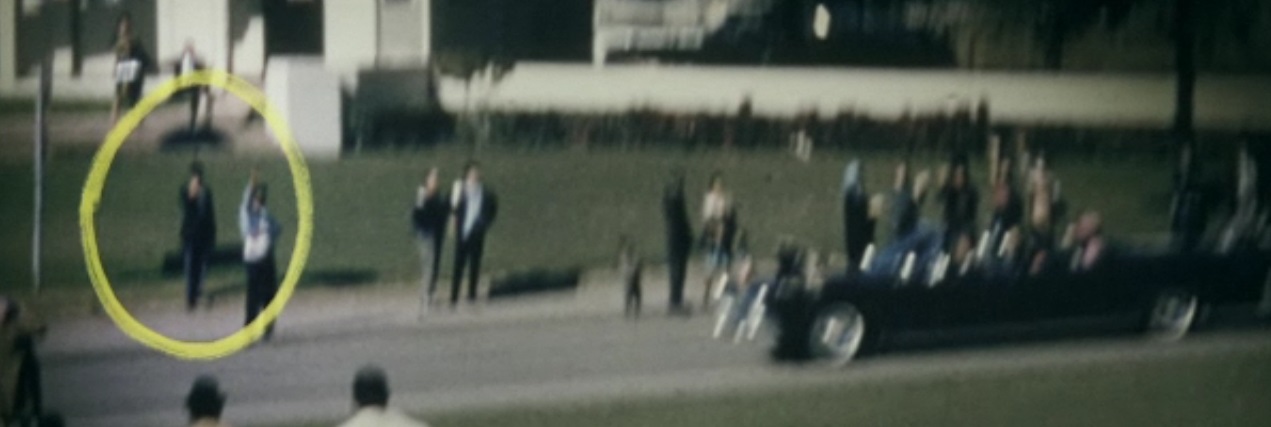
We once again must squarely face the hoary  quote from Walter Scott’s epic poem Marmion: “Oh what a tangled web we weave when first we practice to deceive.” It is hoary because it is true, and this month’s Smithsonian Magazine reminds us of how true it is, recounting how well-intentioned deceptions by the news media regarding evidence in the assassination of President Kennedy helped create a conspiracy theory that will not die, and that may have begun the slow, relentless deterioration of America’s trust in its own government that has reached dangerous proportions today.

Frame 313 of Abraham Zapruder’s accidental record of one of the pivotal moments in U.S. history gave him nightmares, and when he sold the rights to his amateur movie to Life Magazine, he insisted that frame be withheld from the public, and not published. “We like to feel that the world is safe,” documentary maker Errol Morris explains in the article.“Safe at least in the sense that we can know about it. The Kennedy assassination is very much an essay on the unsafety of the world. If a man that powerful, that young, that rich, that successful, can just be wiped off the face of the earth in an instant, what does it say about the rest of us?” I understand, but withholding the truth is not the way to make the world seem safer. As the story of the conspiracy shows, it is how we end up trusting no one. Continue reading

Online Review Ethics: Yelp And The Law Firm

"...and so do our own employees!"

“…and so do our own employees!”

Is it professional misconduct for members of a law firm or the non-lawyer assistants for which they are responsible to post fake reviews of their work to a consumer website? I would argue that could be: it is almost certainly deceptive advertising, which is prohibited to a greater or lesser degree in all state ethics codes, and it is dishonest and misleading communications of the sort that has drawn discipline for some attorneys in other circumstances. Whether or not such a slimy, if common practice (at least among other professions, like wrtiting) is sufficient to raise “a substantial question as to that lawyer’s honesty, trustworthiness or fitness as a lawyer in other respects” will be determined by lawyers themselves, and you would be amazed at what many of them  don’t consider sufficient to do this. I am admittedly extreme on this issue: I don’t think lawyers should lie, and take a dimmer version of even harmless deception than most in my field. This is profession that depends on trust, and the more someone lies—I don’t care about what—the less trustworthy they are.

These issues arise because the online consumer site Yelp appears to have caught employees of the law firm The MacMillan Group posting fake positive reviews about itself, on behalf of fictional clients. Continue reading

The Authority Trap: Elizabeth O’Bagey’s Three Ethics Strikes

Woman-pulling-off-a-mask

It is not, you see, enough to have a good idea, an original argument, or a brilliant solution.There must be reason for important people, people who make decisions that affect lives, to pay any more attention to you than they do anyone else who claims to have such things, because its is often difficult for even intelligent and experienced individuals to distinguish genius from well-expressed garbage. There must be something that elevates that unique and valuable perspective you bring to a problem above the swirling mess and noise generated by the blabbering and shouting competition, and the thing is, if you really have a valuable perspective to contribute, you owe it to not just yourself, but to your country, even humanity.

There is one asset, if you are otherwise unknown, that will provide that elevation besides the inherent virtues of your brilliant idea, and that is authority...a book, a connection everybody knows and respects, or, perhaps most of all, academic credentials. And there are two things that will make it impossible to raise your special contribution above the throng, and they are a conflict of interest, and a reputation for hiding the truth. These are the murderers of trust.

This brings us to the strange case of Elizabeth O’Bagy, a senior analyst at the Institute for the Study of War, who managed to get the Wall Street Journal to publish her analysis of the civil war in Syria, and her conclusions, based, we were to assume, on her study, analysis and time in the country, regarding the benefits of U.S. employment of military force in the region. Continue reading

Your Introduction To “Private Re-Homing”

Puppy, child, what's the difference? The point is make it someone else's problem, right?

Puppy, child, what’s the difference? The point is t0 make it someone else’s problem, right?

Every time you see a national newscast take up valuable time telling us about Miley Cyrus, the Kardashians, Chelsea Clinton or the White House waterdogs, think about Inga, or Quita, victims of the increasingly common practice of underground adoption known as “private re-homing,” in which adopted children are traded around like dogs or kittens, and abused dogs and kittens at that.

I don’t have a lot of commentary about this horrible practice. My life was a little bit happier before it was brought to my attention. In the history of Ethics Alarms, perhaps the most upsetting story I have had to write about was the horrific conduct of Torry Hansen, a Tennessee mother who adopted a Russian child and then, finding that she couldn’t cope with his problems, put him, alone, on a plane bound for Russia with a note pinned to his jacket. I wrote that post with tears in my eyes; it upsets me to write about it now. Yet something very like what Hansen did to her son is being done via the internet, frequently and with little interference from the government or anyone else. I wish I didn’t know about this—no, that’s not quite right. I wish this wasn’t a feature of our society, so I wouldn’t have to know about it, much less write about it. Continue reading

Leadership Trust: Is This Finally The Public’s Tipping Point On President Obama?

giant-jengaTipping points are events that establish major shifts in public attitudes and the culture, and what determines a tipping point varies from circumstance to circumstance. When the switch is flipped on public trust, a leader is done for, at least in a democracy. This is why, in a parliamentary system,  prime ministers call for elections at such times, or even resign. It’s a tradition the U.S. might do well to consider.

The tipping point on the George W. Bush presidency was glaringly obvious: it was the botched handling of Hurricane Katrina, even though that particular fiasco was mostly an example of effective  blame-shifting by New Orleans mayor Ray Nagin. Bush had already accumulated many legitimate reasons to doubt him, but the traditional American eagerness to like and trust whoever holds the same job as Washington, Lincoln and FDR had kept his presidency afloat…until it drowned in Katrina. All was downhill from there.

Interestingly, nobody at the time argued that Americans should support the lousy response to Katrina because not doing so would cripple the Bush presidency going forward. But I digress..

Now it appears that the Obama proposal/decision/ argument—who knows what it really is?—to engage in a limited missile attack on Syria may be the public tipping point on Obama’s leadership, the moment when the veils fall and the nation reluctantly but decisively admits that the man it elected—twice—as its leader cannot be trusted. If so, it is remarkable this took so long, testimony to how much we all wanted our first African-American President to succeed. The tipping point for me was years ago. Following the Bush experience, I thought that the bungled government handling of the Gulf oil spill would clinch it, but no. Then came the Benghazi mess, with an ambassador and other Americans murdered without any decisive response other than deceptive spin and obfuscation to avoid electoral consequences—the I.R.S. tea party harassment (still being investigated, and looking worse all the time)—the NSA revelations, and the growing evidence that while the Affordable Care Act may not be the cataclysmic socialist disaster conservatives claim it is, it is also far from what the President promised. No tipping point though, until Syria, and the consequences flowing directly from the President’s undisciplined off-the-cuff rhetoric—a constantly repeated flaw in his leadership style.

Now, as tipping points do, this current controversy is resuscitating all of the past incidents, and serving as the catalyst for a reappraisal of Obama’s leadership. The looming conclusion is that he cannot be trusted.

Occasionally am beaten to the punch by a pundit or blogger who delivers an essay that says exactly what I was preparing to write, even as I was almost finished writing it. Such a pundit is Forbes contributor Merrill Mathews, who delivered an article on that publication’s website over the weekend, titled “What Happens When You Can’t Believe A Thing The President Says?” (My title was going to be “When Trust Is Gone”).

Some key quotes from the article: Continue reading

And Here’s Why The Supreme Court Majority Was Right In Shelby v. Holder…

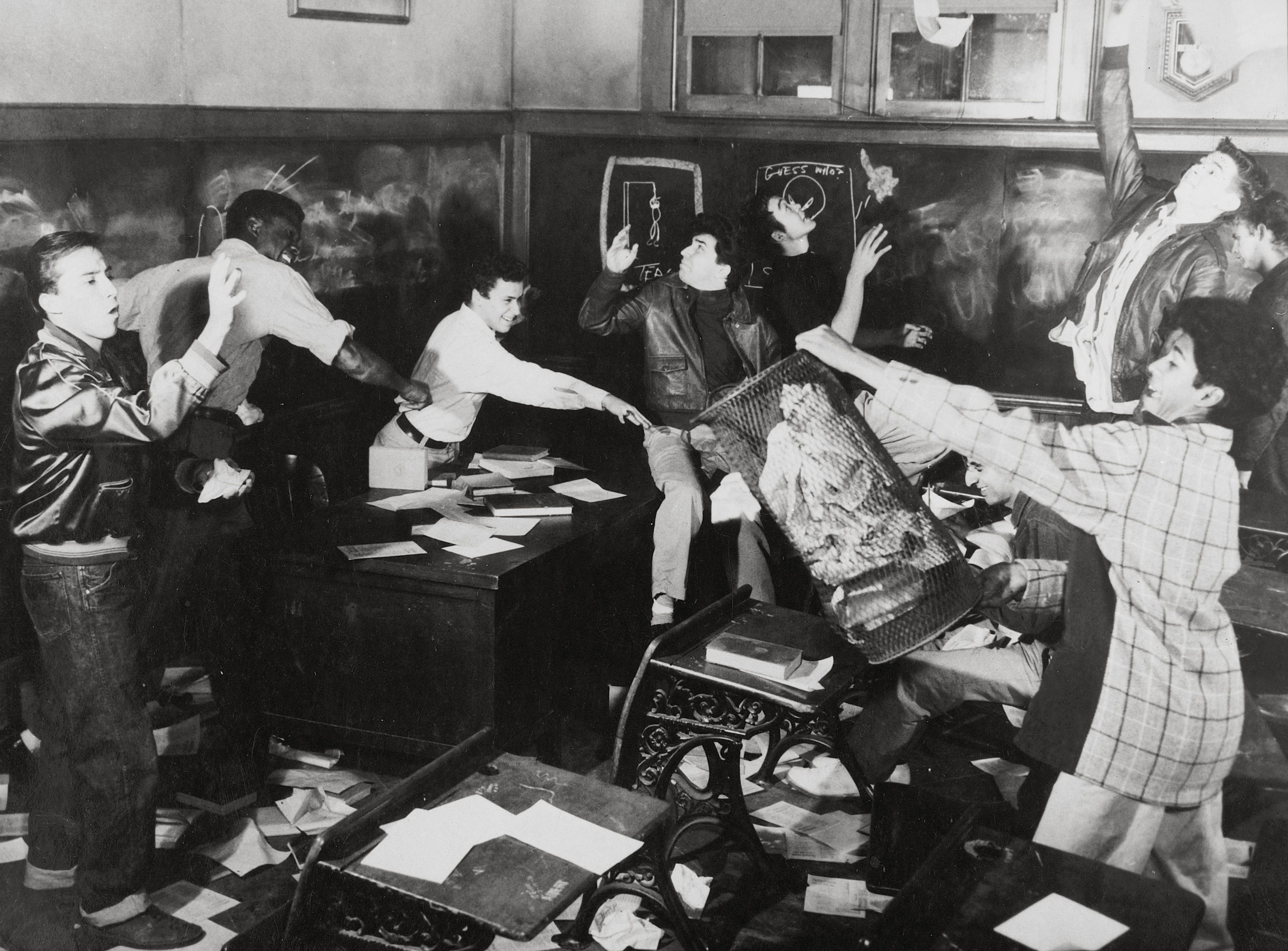
Ok, if you don't buy the theory that they hurt the public schools, how about this: they're racist!

Ok, if you don’t buy the theory that they hurt the public schools, how about this: they’re racist!

In its much maligned decision in Shelby v. Holder, the Supreme Court declared that the Justice Department could not interfere with state legislative decisions affecting voting rights based on 60 year old data about racist practices prior to the 1965 Voting Rights Act. The Federal government should not be able to over-ride the will of the people and its elected legislatures without a compelling and overwhelming interest, and allowing the large list of states designated as subject to the Act invited abuse of power. What kind of abuse? This kind:

The U.S. Justice Department has filed a lawsuit to stop the Louisiana from distributing school vouchers to poor black families in any district that remains under a desegregation court order. Over 600 public schools are affected. The argument of Holder’s Justice Department  is just as ridiculous as it reads: it is that “many of those vouchers impeded the desegregation process.” You see, if black children are able to go to better, private schools thanks to the vouchers, the percentage of whites to blacks in failing but desegregated public schools will go up, “impeding” desegregation. Can’t have that! What citizens would want politicized, absurd bureaucrats who reason like this second-guessing their legislature?

As the Washington Post noted in an incredulous editorial it called, pulling no punches, Justice Department bids to trap poor, black children in ineffective schools: Continue reading

No, It’s Actually Allison Benedikt Who’s A Bad Person

Hang in there--the schools will be better in a few generations...

Hang in there–the schools will be better in a few generations…

There may be some persuasive arguments to be made for sending your child to a public school system you don’t trust. The obvious one is that you have no choice, which is true for many Americans. There are also some good reasons to write a “manifesto” called “If You Send Your Kid to Private School, You Are a Bad Person,” the best of which is to cause people to focus on the problem of the failing and unacceptable public school system, and what should be done about it. However, Allison Benedikt, who actually wrote an article with this title and presumably this intent, failed so miserably at making a coherent and persuasive argument of any kind that her provocative title amounts to an unethical assertion itself: if you are going to make a blanket indictment of the character of millions of people, you had better be able to produce an ethical argument or two, or at least demonstrate that you comprehend a little bit about ethics. Allison doesn’t. Based on this piece, I not only wouldn’t trust her (oh, by the way, Allison, the core objective of ethical conduct in your profession—any profession, actually—is trust) to provide advice about how to educate my child, I wouldn’t trust her to walk my dog. Continue reading