Anti-Terror Surveillance Flip-Flops, Fools, Converts and Heroes

Flag peek

There has been much ink and pixels spilled about the supposed hypocrisy of Republicans and Democrats in their disparate reactions to the revaluation of far more extensive phone and internet data-gathering by the government than those of us not wearing tin-foil on out heads ever suspected. For example, a recent Pew survey shows this...

Pew survey

Naturally, Republicans and Democrats are calling each other hypocrites, suggesting dishonesty and lack of integrity. There are surely some hypocrites in there, but for the most part, the flip-flopping is neither dishonest nor theoretically unreasonable. Even if we assume that the level of NSA intrusion under Bush and Obama administrations are the same (and to be fair, it appears that the current gathering of all domestic phone records goes well beyond what we understood to be the limited surveillance permitted under the Patriot Act), they are materially different in one key aspect, from the perspective of partisan citizens.

Think about it this way: Let’s say on successive days you discover your best friend and your business rival, both of whom visited your home for various reasons, looking through bills and financial papers on your desk. They did the same thing, but while you might be peeved at your friend, if he had a credible explanation like “I think I can save you some taxes,” you would not view his actions as sinister, and might even be grateful for it. When you found your rival looking over the same private papers, however, you would be furious, suspicious, and justly so. The difference is a matter of trust. You trust your friend, his motives and loyalty; you don’t trust your rival. Continue reading

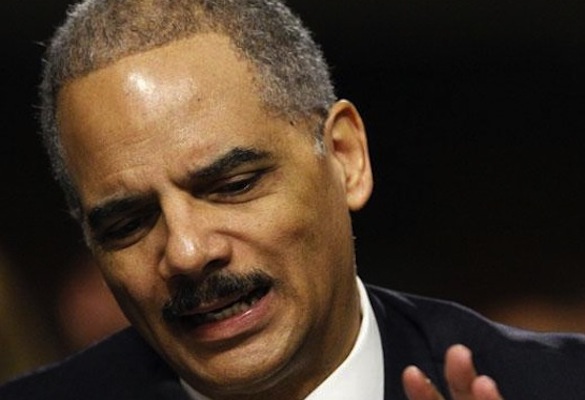
Eric Holder Has President Obama’s “Confidence”—What Does That MEAN?

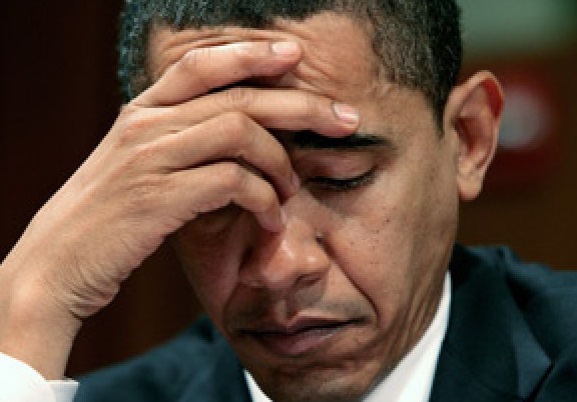
Uh, Mr. President? When "mediocre" is puffery, something's wrong.

Uh, Mr. President? When “mediocre” is puffery, something’s wrong.

Two weeks ago, the various pundits on multiple current events talk shows agreed that the hopeless, untrustworthy, bunging and double-talking Attorney General, Eric Holder, would remain in office despite evidence beyond a reasonable doubt that he is a liability in the job, as long as “he retains the President’s confidence.” Sure enough, after another week in which Holder’s Justice Department came under even more bipartisan fire, White House political hatchet-woman Valerie Jarrett told the press that Holder  “will be in his position for quite a while” and “continues to have the president’s full confidence and respect.”

Not to be unkind, but this tells us that… Continue reading

Ethics Dunces: The Wall Street Journal Editors

nsa-wiretap-eagle_0There may be good arguments to support that massive trolling of Verizon Business phone records by the NSA revealed yesterday, but so far, the justifications are either disingenuous, rationalizations, or leaps down the slippery slope. None exemplified this better than the Wall Street Journal, in its editorial defending the recently revealed surveillance. My favorite paragraph:

“The critics nonetheless say the NSA program is a violation of privacy, or illegal, or unconstitutional, or all of the above. But nobody’s civil liberties are violated by tech companies or banks that constantly run the same kinds of data analysis. We bow to no one in our desire to limit government power, but data-mining is less intrusive on individuals than routine airport security. The data sweep is worth it if it prevents terror attacks that would lead politicians to endorse far greater harm to civil liberties.”

Hmmm.

  • “The critics nonetheless say the NSA program is a violation of privacy, or illegal, or unconstitutional, or all of the above.” “The critics?” Can someone honestly say that taking my personal and private phone communications data without my knowledge or consent is not a violation of privacy?  To argue that is the definition of Orwellian. “We’re not violating your privacy, we’re just secretly examining your private communications.” Oh. Continue reading

Ethics Quote of the Week: The New York Times

Late to the party

“Within hours of the disclosure that the federal authorities routinely collect data on phone calls Americans make, regardless of whether they have any bearing on a counterterrorism investigation, the Obama administration issued the same platitude it has offered every time President Obama has been caught overreaching in the use of his powers: Terrorists are a real menace and you should just trust us to deal with them because we have internal mechanisms (that we are not going to tell you about) to make sure we do not violate your rights. Those reassurances have never been persuasive — whether on secret warrants to scoop up a news agency’s phone records or secret orders to kill an American suspected of terrorism — especially coming from a president who once promised transparency and accountability. The administration has now lost all credibility. Mr. Obama is proving the truism that the executive will use any power it is given and very likely abuse it.”

—–The New York Times, a largely passive Obama cheerleader and enabler for the past four years, in an editorial regarding the revelations of NSA monitoring of personal phone calls of American citizens, The Times approvingly quoted Representative Jim Sensenbrenner, (R-WI), who introduced the Patriot Act in 2001, that “Seizing phone records of millions of innocent people is excessive and un-American.”

There is not much that needs to be added to this, except… Continue reading

No Surprise: Michele Bachman Lies On Her Way Out The Door

I won't have Michele Bachmann to kick around any more. Good.

I won’t have Michele Bachmann to kick around any more. Good.

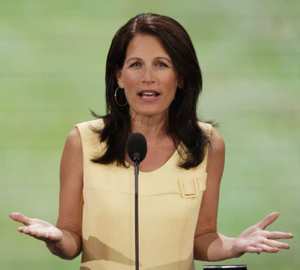
Tea Party advocate and history-addled Congresswoman Michele Bachmann suddenly announced that she will not be running for re-election in 2014, and everyone knows why: she is the object of serious investigations regarding financial improprieties and violations of election laws during her run for the Republican presidential nomination in 2012. She was also facing a rematch against the same opponent she barely defeated last year. Rather than destroy her brand by losing in an overwhelmingly Republican district (Romney took it easily), Bachmann made the reasonable career decision to leave voluntarily before she was fired.

She didn’t have to lie about it, though. That’s just the way she is. Continue reading

Unethical Quote of the Week: White House Spokesman Jay Carney

“We could go down the list of questions–we could say ‘What about the president’s birth certificate? Was that legitimate?’”

—–Jay Carney, in yesterday’s news media briefing, apparently suggesting that public concern with at least four episodes raising legitimate questions regarding  serious misconduct at high levels of the Obama Administration was the equivalent of “birtherism.”

Welcome to the club, Jay!

Welcome to the club, Jay!

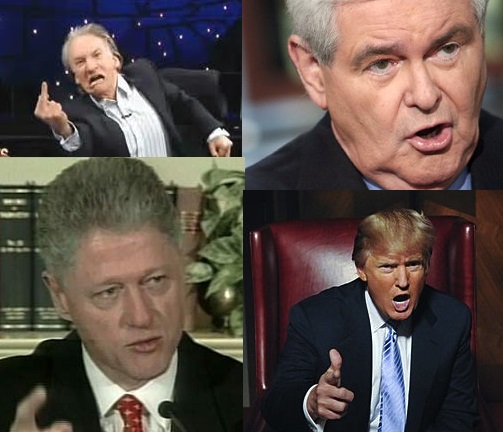
At this point, it is fair to say that Jay Carney can no longer be expected to be honest, responsible or professional, and thus can be included among the elite class of public figures, like Donald Trump, Bill Clinton, Bill Maher and Newt Gingrich, to whom absurd and unethical utterances are like breathing in and out, are shameless, and barely noteworthy on an ethics blog. Unethical people say and do unethical things. That pretty much covers it.

Carney, however, is not like the others in that he speaks for the White House, and Barack Obama. Continue reading

A Side Benefit of the I.R.S. Scandal: Self-Identification By Dishonest Partisan Hacks

You know better, Gov.

You know better, Governor.

I mentioned this once already, but it bears repeating: any spinner, excuser, minimizer or defender of the I.R.S. scandal who uses the “it was a Bush appointee” talking point has insulted your intelligence or impugned his own, as well as marked himself or herself as an untrustworthy hack. I’m taking names and making lists myself now, and it’s growing by the hour.

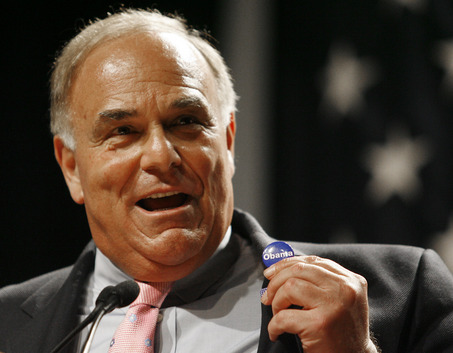
Yesterday I added Pennsylvania Governor Ed Rendell, whom I once believed had some integrity, and Donna Brazile. Today Richard Cohen, among others, joined the list. It really is shocking, and it’s increasingly more difficult to shock me. It is also ominous. Things we haven’t yet learned must really be ugly for such a transparently desperate excuse to be trotted out so early by people who almost certainly know what garbage it is.

Yesterday I heard Rendell literally drive Joe DiGenova, the former Attorney General, to apoplexy—Joe’s eyes were popping out of his head and I though he was going to fall over to the floor foaming at the mouth— by stating repeatedly that the I.R.S. fiasco “couldn’t be a conspiracy because a Bush appointee was in charge.” This is either unbelievably ignorant or despicably dishonest, and I suspect the latter. As I wrote in a previous post, Continue reading

Twelve Ethics Observations On “The Scandal Trifecta”

Obama

1. “The Scandal Trifecta” may be gaining traction in D.C. and in the news media as the hot term to handily describe the Obama Administration’s three instances of serious and significant misconduct: the Benghazi deceptions, the I.R.S. harassment of conservatives and conservative groups, and the Justice Department’s surveillance of Associate Press reporters. It should be rejected. I know conservatives and Republicans are especially smug and gleeful right now to have their suspicions and warnings confirmed, but this is a national crisis, at a time of dire challenges to the nation, and tragic in many ways. It is not a game, and should not be likened to one. Nor should the three situations be lumped together, though they have, to some extent, common seeds. They are each important in and of themselves, and packaging them like stop-light peppers risks allowing all or some of them receive less than the individual attention they must have. This is the first and last time I’m using the term, and I urge everyone, in the media or out of it, to similarly drop it. Labels matter, in this is a bad one.

2. Here’s someone Democrats and the rest of us can blame, in part: the left-biased news media. You see, knowing that the news media is looking to expose them when they make mistakes, blunder, show corruption and otherwise do a bad job when entrusted with the welfare of the greatest nation on earth makes our leaders better, more responsible, more objective, and more competent, out of fear, if nothing else. The media does nobody any favors when it lets its biases take over and lies down on the job—not the public, not Republicans, certainly; not the nation, not their profession, but also not even those they are desperately trying to help succeed. Continue reading

Jon Stewart’s Lesson On Trust

I am teaching this morning, so a more substantial post will be appearing later. In the interim, those who haven’t seen Jon Stewart’s meltdown over the scandal avalanche exposing the ineptitude and ethics blindness in the Obama Administration should go here. I suspect much of the mainstream media that has been abdicating its role of objective reporter for the pat four years is reacting in much the same way; in fact, I know it is, based on the sudden confluence of op-eds, columns, and on-screen rants about the President’s disinterest in management, oversight, and, you know, governing, as if this was a new phenomenon.

Stewart expresses his horror that after the revelations of the last couple of weeks, the burden of proof will now be on the government to show it is worthy of being trusted to impose ourselves on our lives, and the concerns of those who distrust the expansion of government power can no longer be dismissed as paranoia and conspiracy theories. In truth, nothing has changed, for this always has been the case. That is why our nation’s founding documents are both written from the perspective of those who are wary of the inherent corruption and abuse that government power always risks, based on the tragic lessons of history.

The remarkable thing isn’t that these most recent examples occurred, but that otherwise intelligent people like Jon Stewart seem to be genuinely surprised by it.

Ethics Dunce: Washington Post Columnist Richard Cohen

Richard Cohen, a fair and smart liberal columnist who sometimes jumps the ethics rails...like now.

Richard Cohen, a fair and smart liberal columnist who sometimes jumps the ethics rails…like now.

Richard Cohen, the veteran liberal columnist at the Washington Post, is not your usual knee-jerk partisan pundit. He’s that rarity, a thoughtful and fair opinion journalist who does not choose his positions according to which side he would rather have drinks with. He really, really doesn’t like Republicans and conservatives, but he is capable of siding with them, or at least against his philosophical brethren, when common sense and matters of basic right and wrong beckon. I used to think of him as a left-biased partisan, but then I had a chance to read E.J. Dionne and Eugene Robinson on a regular basis, and Cohen’s relative objectivity and fairness became obvious.

He does have blind spots, however. One is sexual harassment, which, as an older guy who likes flirting with young women at the gym and doesn’t understand that whole “unwelcome advances” thing, he just doesn’t comprehend. Another is the compliance delusion. To be seriously unethical in Cohen’s eyes, you have to break the law. Otherwise, it’s “everybody does it.” Cohen is prone to fall for other classic rationalizations as well.  He is a “gut instinct”analyst where ethics are concerned, and gut instincts aren’t enough. They will eventually lead you astray. They lead Cohen astray.

This was the glaring flaw in his recent column about the Benghazi controversy, where Cohen fell into line with the Obama protectors in the media whose argument is, “So they lied…who cares?” He wrote in part…

“…President Obama was then really Candidate Obama and he surely did not want the words “terrorist attack” uttered during the presidential campaign. In addition, the CIA and the State Department were in a cat fight and could not agree on the wording of the talking points — or even, from a fair reading of their clashing e-mails, who the fanatical enemy was: al-Qaeda or members of Congress? In all this, it’s almost possible to forget that four Americans died in Benghazi. The event was a tragedy and it hardly matters, as then-Secretary of State Hillary Clinton vociferously maintained, if the attack occurred spontaneously or was planned. Either way, it was a success for the terrorists and a debacle for the United States.

“It is good to find out how this happened — who’s responsible for the inadequate security, etc. — and it is also good to hold the Obama administration accountable for putting out a misleading statement. But the record will show that a thorough report was, in fact, compiled. Its authors were Thomas Pickering, an esteemed retired diplomat, and Adm. Mike Mullen, an equally esteemed retired chairman of the Joint Chiefs of Staff. They found the standard mistakes and snafus — but no crime….Watergate, though, was a crime. Iran-contra was a crime. Government officials were convicted and some of them went to jail. Fudging a press release is not a crime. Compromising on wording is not a crime…It is not a crime either to make a mountain out of a molehill, but this particular one is constructed of a fetid combination of bad taste and poisonous politics. Dig down a bit and it becomes clear that some — many? — Republicans suspect that Barack Obama and-or Hillary Clinton are capable of letting people die to cover up a terrorist attack. Either that, or this is what they want us to think.”

It’s a fascinating passage, because you can see Cohen slowly going off the ethical rails: Continue reading