Our Sick, Sick, Untrustworthy Schools

And you thought Hogwarts was dangerous...

And you thought Hogwarts was dangerous…

The easiest place to render oneself disconsolate regarding the pit of warped values we must send our public school children into every day is Fark.com, which cheerily documents the child predators in the teaching ranks and their exploits. Let’s see, I haven’t checked in a while…I wonder what the tally is for February? Hey, February’s a light month! I have to go all the way back to the 19th to find the first, LaShawn Simmons, a 41-year-old former Pasadena middle-school math teacher who had sex with four students. She’s charged with sexual assault of a child, two counts of improper relationship between an educator and a student, online solicitation of a minor and possession of child pornography.

Actually, February was a terrible month to go to school, just not one with a bumper crop of child-molesting teachers. For example, in Port St. Lucie, Florida, we had a female teacher who didn’t have sex with a male student, she only purchased drugs from him and went drinking with him. It would be hard to top the teacher who poured pencil shavings in the special ed student’s mouth (and who wasn’t fired), but I think the Linden, California gym teacher who was caught on video stealing money from her students’ backpacks gets the prize. She was caught when a suspicious student and aspiring Nancy Drew hid in a locker to see if she could solve a string of thefts, and recorded the teacher’s larceny on her phone. It gets worse: when she brought the video to the attention of the principal, he told her to destroy the evidence. Luckily, she had already sent the video to her father. Continue reading

Ethics Quiz: Judge Shecky’s Dilemma

"Here come de judge!"

“Here come de judge!”

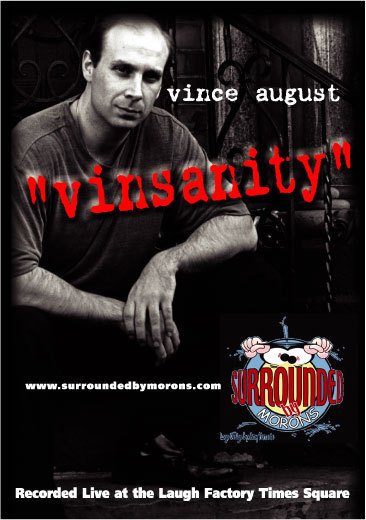
Vince A. Sicari is a municipal judge in South Hackensack, N.J. who moonlights as a stand-up comic, and a fairly successful one at that, named Vince August.

He is now sending his lawyer to argue before the New Jersey Supreme Court that he should be allowed to continue his night and weekend job, overturning a 2008 ethics ruling that for a judge to do stand-up creates  “an appearance of bias, partiality or impropriety or otherwise negatively affect the dignity of the judiciary,” in violation of the Judicial Conduct Code. The issue is complicated by the fact that municipal judges almost have to moonlight as something—they earn only $13,000 a year. Sicari argues that his comedian gigs generate the bulk of his income, and that the two careers are separate. He says doesn’t make jokes about his cases or lawyers, nor sensitive issues involving race and gender, and on the bench he is as serious as, well, a judge.

Thus, your Ethics Quiz of the Day gives you an opportunity to judge “Judge Shecky”:

Is it ethical for a judge to moonlight as a stand-up comic? Continue reading

“Argo” and the Horrible Thought

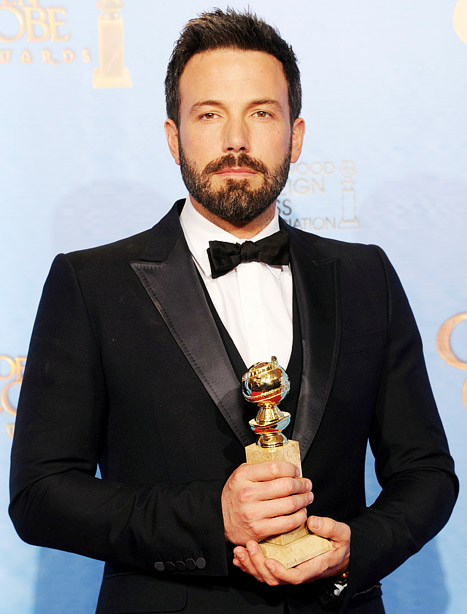
Thanks a bunch, Ben.

Thanks a bunch, Ben.

“Argo” prompted a disturbing thought that has been haunting me since I saw the picture. I am sorry that I had the thought, and hoped that it had been successfully banished by time and hope. Unfortunately, the juxtaposition of “Argo” winning the Best Picture Oscar combined with the inappropriate and intrusive appearance of Michelle Obama to announce it, complete with a politics-tinged speech that was as gratuitous as it was manipulative, caused that thought to begin burning in my brain again. Alas, here it is.

At the conclusion of “Argo,” former President Carter is heard emphasizing the obvious, that in 1980 he would have loved to have taken credit for the audacious  rescue of the six American Embassy workers from Iran that was engineered by his CIA. But, Carter says, do so would have endangered the remaining hostages, and though it would have helped his politically besieged Presidency (which was lost to Ronald Reagan that same year, in part because of Carter’s perceived weakness in handling the hostage crisis), giving all of the credit to Canada was the right and responsible thing to do.

I am no admirer of Jimmy Carter’s policies, personality, Presidency or leadership. He is, however, an ethical man. He was President before the hyper-partisanship that has rotted our politics, before the “perpetual campaign” style of leadership launched by Clinton, and before every act by every main stage player in Washington appeared to be dictated by the need to hold power, rather than by the needs of the people. My horrible thought is that I believe the current President and his  Machiavellian political advisors would not have done as Carter did, if the “Argo” scenario played out in 2012, as that Presidential election approached. This White House, facing the prospect of defeat, would find a way to leak its participation in the successful rescue, judging its retention of power a higher goal than protecting the hostages that may well have died anyway.

I wish I didn’t have this thought, but I cannot banish it. The unseemly chest-thumping and credit-grabbing over the killing of Bin Laden, the leaking of details about the deliberations leading to it, the deceptive handling of the Benghazi disaster, and yes, the inability of the President’s political strategists to resist attaching the President or his wife to anything remotely positive—even the Academy Awards— while refusing to accept responsibility for any mistake, miscalculation or failure (See Bob Woodward on the disinformation campaign regarding the looming sequester, beginning with Obama’s outright lie in the third Presidential debate, “The sequester is not something that I’ve proposed.”), all have me convinced that the days when we can trust a President to risk his own grip on power for the good of the country are gone, perhaps forever.

As I said, it is a horrible thought, and I fervently wish I didn’t have it. I want to trust and admire our nation’s leaders, the President most of all. But the leaders of both parties have earned this level of distrust, and I see no signs that they are capable of making that horrible thought, and other too, go away.

Ethics Dunce: Any South Carolinian Who Votes For Disgraced Ex-Governor Mark Sanford

You'll never know if this movie is still playing in the Mark Sanford Head Multiplex...

You’ll never know if this movie is still playing in the Mark Sanford Head Multiplex…

When Mark Sanford was last entrusted with high elected office in South Carolina, he…

  • Carried on a clandestine adulterous affair with a South American “soul mate” when he was supposed to be serving as the governor of the state,
  • Went AWOL from the state and his duties, telling aides that he was “hiking” in South America when he was really doing something very different in Argentina,
  • Used official funds to pay for his personal affair,
  • Lied about it,
  • Humiliated his wife and family while embarrassing South Carolina and his party, and
  • Was censored by the state legislature.

Now, displaying a level of gall only politicians and Hollywood actors can achieve, Sanford is back seeking office in South Carolina, running for the open seat in its 1st Congressional District. His strategy appears to be that old stand-by of the habitual miscreant, evoking the virtue of forgiveness and redemption, as well as suggesting that God wouldn’t rule out voting for him. In his first TV ad, Sanford says that he has learned about a “God of second chances.” Continue reading

Judge Ken Anderson: A Judge With An Ethical Obligation To Resign

Ken Anderson

Regret isn’t enough.

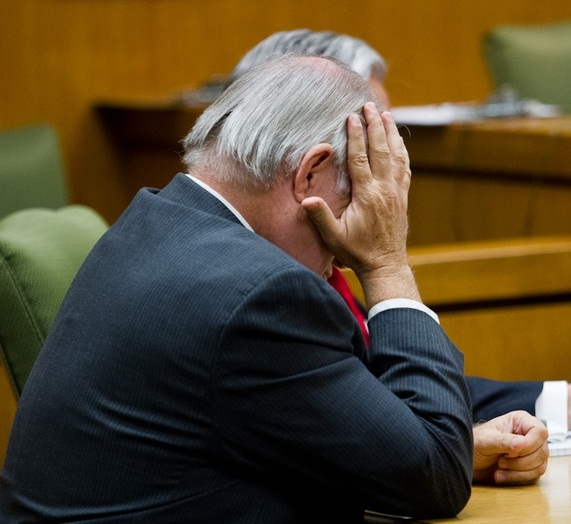
Ken Anderson has been a Williamson County (Texas) district judge since 2002, but in 1987  he was the district attorney who prosecuted Michael Morton for fatally beating his wife to death. Morton was convicted and served 25 years in prison before DNA tests proved he was innocent. (This is yet another triumph of The Innocence Project.) Another man has been arrested for the murder of Morton’s wife Christine, as well as a second woman he allegedly killed in similar fashion while Morton was behind bars.

Last week, a five day hearing examined Judge Anderson regarding his conduct in the case, in a special court of inquiry to determine whether he engaged in criminal wrongdoing as well as unethical prosecution. Among the questions raised was why Anderson never divulged to Morton’s defense team a police report that Morton’s neighbors had said that they saw a suspicious man walking into the woods behind the Morton home shortly before the murder, and why Morton’s three-year-old son’s statement that “a monster,” not his father, beat the child’s mother to death was similarly withheld. On the stand enduring five hours of questioning, a tearful Anderson could only say that he didn’t remember not turning over the evidence to the defense, while defense attorneys adamantly insisted that they never received it. The hearing also revealed that Anderson kept his lead investigator from testifying at trial, when his testimony would have ensured that the child’s statement and the report about the stranger were raised in court, as well as allowing defense attorneys to cross-examine the investigator regarding his peculiar theory of the case.The theory, which was subsequently endorsed by DA Anderson, was that Morton become homicidal after his wife fell asleep when he sought to have sex with her, and donned his scuba wet suit so his son wouldn’t know it was him beating her to death. Continue reading

Easiest Ethics Question Of The Month

" Dear Ellie: The firm seems a little shady to me, but I need the experience. Should I take the offer?"

” Dear Ellie: The firm seems a little shady to me, but I need the experience. Should I take the offer?”

Over at Above the Law, Ellie Mystal posts a request for advice from a desperate job-seeking lawyer, and polls readers for their response. The lawyer has an offer from a local attorney she says has a reputation for being unethical and untrustworthy. He has filed for bankruptcy once; he is being investigated by the local bar and the government, and former employees say he’s atrocious to work for. The inexperienced lawyer asks,

“Is this really bad for an entry-level lawyer to work for an (arguably) bad lawyer? Is it an absolute NO? Which one is more important: get some experience or working at a right/good firm? To put it another way, which one is worse: having no experience or working at a bad firm? I keep searching job postings and there is no opening for entry-level. Everyone looks for experienced lawyers. So I get the impression that no experience is the worst.

“I don’t know what to do with this offer. Feels not right to accept this offer but cannot just forgo. So give me some advice — should I accept his offer?”

Well, let me th—NOOOOOOOO!!!! Absolutely NOT! Never in a million years! NEVER!

And yet, almost 20% of Above the Law’s mostly lawyer readers voted for the choice reading, “Yes. Beggars can’t be choosers.”

That is disturbing. Continue reading

And Speaking of Grading Ethics…

.

Grrrrrrrrr!

Grrrrrrrrr!

..I am reminded of a grading traumatic experience of my own, involving a famous professor whose curve was the opposite of Prof. Frölich’s.

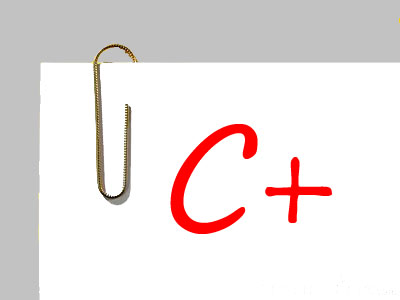
But first, an aside. Many readers have asked my views on the weird story of  Megan Thode, the grad student who sued to have her C+ grade changed, alleging that it was the result of bias and will cost her 1.3 million dollars in lost income. The judge was understandably annoyed at having to decide the case, and has suggested a compromise between the parties to relieve him of the responsibility of perhaps having to change the grade himself. There was no good result possible here. If the school really had a bias against Megan and she could prove it, then the law suite was valid. She shouldn’t have her career disrupted because of unfair grading. If, on the other hand, her grade was within the range of proper discretion, the law suit was a threat to the education system, and had to be be fought until the last dog died. Nor should the school compromise, as it would create a system in which grades have no integrity and where anyone could buy an inflated grade by threatening court action. Ultimately, the judge decided that the grade had to stand. What I see here is an educational system on all levels collapsing from a toxic combination of warped objectives (education for monetary payoffs, not for its own sake) and a dearth of trust in the competence and integrity of the educators.

Now the story of my own disputed C+, starring the renowned Chester James Antieau. Continue reading

Jonah Lehrer Shows Us A Level One Apology: Remorse, Regret, Contrition. Sincerity? Who Knows…

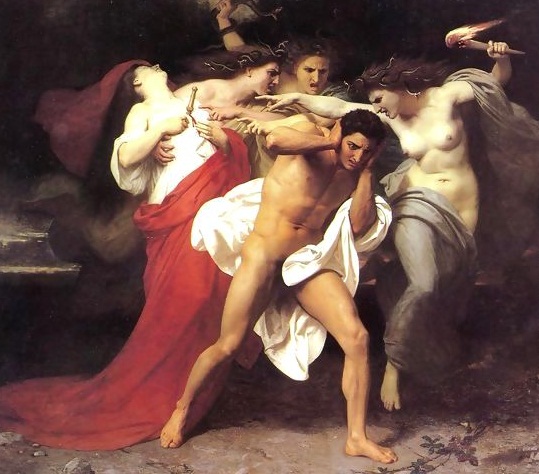
The-Remorse-Of-OrestesWhen we last looked in on writer Jonah Lehrer last summer, he had detonated his career and credibility with a series of incidents of serious professional misconduct that led to his ignominious firing from The New Yorker, where he once was regarded as a rising star. First he was caught plagiarizing himself, recycling a previously published work as an original  essay for the magazine. That led to an investigation showing that this was not the first time he had taken such an unethical short-cut. Finally, it was discovered that he had fabricated Bob Dylan quotes in his best-selling book about, ironically enough, creativity. When confronted about this, Lehrer lied. Soon he was out of a job and condemned to the limbo reserved for writers who deceive their readers: Jason Blair, Stephen Glass, James Frey, Janet Cooke, and others. It is not a pleasant or profitable place to be.

Lehrer was recently invited to speak to a gathering at the Knight Foundation, and chose the forum to deliver an apology for his conduct. It would be difficult, I think, to deliver a better one. On the Ethics Alarms Apology Scale, the most ethical apology, at the top of the scale, is this one:

1. An apology motivated by the realization that one’s past conduct was unjust, unfair, and wrong, constituting an unequivocal admission of wrongdoing as well as regret, remorse and contrition, as part of a sincere effort to make amends and seek forgiveness.

That is exactly what Lehrer delivered to the Knight Foundation, and through his blog, the rest of us. He said…

“..I am the author of a book on creativity that contained several fabricated Bob Dylan quotes. I committed plagiarism on my blog, taking, without credit or citation, an entire paragraph from the blog of Christian Jarrett. I also plagiarized from myself. I lied to a journalist named Michael Moynihan to cover up the Dylan fabrications.

“My mistakes have caused deep pain to those I care about. I am constantly remembering all those people I’ve hurt and let down – friends, family, colleagues. My wife, my parents, my editors. I think about all the readers I’ve disappointed, people who paid good money for my book and now don’t want it on their shelves.I have broken their trust. For that, I am profoundly sorry. It is my hope that, someday, my transgressions might be forgiven.

“I could stop here. But I am convinced that unless I talk openly about what I’ve learned so far – unless I hold myself accountable in public – then the lessons will not last. I will lose the only consolation of my failure, which is the promise that I will not fail like this again. That I might, one day, find a way to fail better.

“The lessons have arrived in phases. The first phase involved a literal reconstruction of my mistakes. I wanted to have an accounting, in my head, of how I fabricated those Dylan quotes. I wanted to understand the mechanics of every lapse, to relive all those errors that led to my disgrace. I wanted to understand so that I could explain it to people, so that I could explain it in a talk like this. So that I could say that I found the broken part and that part has a name. My arrogance. My desire for attention. My willingness to take shortcuts, provided I don’t think anyone else will notice. My carelessness, matched with an ability to excuse my carelessness away. My tendency to believe my own excuses.

“But then, once I came up with this list of flaws, and once I began to understand how these flaws led to each of my mistakes, I realized that all of my explanations changed nothing. They cannot undo what I’ve done, not even a little. A confession is not a solution. It does not restore trust. Not the trust of others and not the trust of myself. What’s more, I came to see that my explanations were distracting me from the more important reality I need to deal with.

“Because my flaws – these flaws that led to my failure – they are a basic part of me. They are as fundamental to my self as those other parts I’m not ashamed of. This is the phase that comes next, the phase I’m in now. It is the slow realization that all the apologies and regrets are just the beginning. That my harshest words will not fix me, that I cannot quickly become the person I need to be. It is finally understanding how hard it is to change.

“Character, Joan Didion wrote, is the willingness to accept responsibility for one’s own life. For too long, I did not accept responsibility. And by not accepting responsibility – by pretending that all of my errors were accidents, that my carelessness was not a choice – I kept myself from getting better. I postponed the reckoning that was needed.

“There is no secret to good decision-making. There is only the obvious truth: We either confront our mistakes and gain a little wisdom, or we don’t and remain a fool.”

You can read the whole speech here. Continue reading

“Free Wi-Fi” And Journalism’s Flagrant Untrustworthiness

You’ve probably memorized that State Farm TV commercial where the woman tells her friend that she believes everything on the internet because it has to be true, and introduces her “French model” date—a grotesque geek wearing a belly pack who can barely manage “Uh..Bonjour!”—whom she met on the internet. Well, last week we were treated to a lesson in how the mainstream media, even its most prestigious and trusted members, are about as trustworthy as her date.

None other than the exalted Washington Post breathlessly reported last week, in a front page story, that “the federal government wants to create super Wi-Fi networks across the nation, so powerful and broad in reach that consumers could use them to make calls or surf the Internet without paying a cellphone bill every month…If all goes as planned, free access to the Web would be available in just about every metropolitan area and in many rural areas.”

The story was stunning and worrisome–Why is the government competing with private enterprise? How can it undertake such a sweeping discretionary initiative with the Treasury deep in debt? Wait, what??—and rapidly spread all over the 24-hour news media, including cable, radio and the internet (Uh..Bonjour!). It is there still, largely uncorrected. The story, meanwhile, was essentially untrue, a mistake. Yet as of yesterday, it was still being reported and argued about as fact on such respectable and trusted websites as Salon, Reason, UPI, Business Investor, The Daily Caller, NPR and many more. The Post, meanwhile, has still not published a clear and prominent retraction, and the reporter who wrote the erroneous story is still spreading misinformation. Continue reading

Soccer, Sports, Corruption, and Cultural Rot

Bitter rot After a moment’s reflection, I realized that it was inevitable that international soccer would be rocked by a match-fixing scandal. If I should have seen it coming, and I care as much about soccer as George S. Kaufman cared about Eddie Fisher’s social life*, then the officials of the sport should have seen it coming too.

From the New York Times:

“…A European police intelligence agency said Monday that its 19-month investigation, code-named Operation Veto, revealed widespread occurrences of match-fixing in recent years, with 680 games globally deemed suspicious. The extent was staggering: some 150 international matches, mostly in Africa, Asia and Latin America; roughly 380 games in Europe, covering World Cup and European championship qualifiers as well as two Champions League games; and games that run the gamut from lower-division semiprofessional matches to contests in top domestic leagues.”

Thus soccer, the most played, most followed, most passionately cheered of all major team sports has been rigged. It doesn’t matter that all the games weren’t rigged; what matters is that now nobody can be sure that a game isn’t rigged. How can a fan care, deeply care, about the outcome of an athletic contest when there is always a lurking, justified suspicion that victory is undeserved and that defeat is unfair? In the span of just a few weeks, we have heard the golden boy of American and international cycling admit that he was at the center of a cheating conspiracy, and that he used lies, influence and financial power to make his sport a contest of which competitor could break the rules most effectively. New revelations from Miami, meanwhile, indicate that Major League Baseball’s so-called steroid era, which supposedly had been vanquished forever, may never have gone away at all: several current stars, like the Yankees’ Alex Rodriguez and 2011 National League MVP Ryan Braun, have been linked to treatments at a clinic known for human growth hormone therapy. Big sports mean big money, and where there is big money, there will always be clever, dishonest people willing to crush laws, ethics, sportsmanship and public trust in order to get more of it. Continue reading