Consequentialism, Bias, Moral Luck and Malpractice on PBS’s “Downton Abbey”

downton_abbey

The fourth episode of the PBS sensation “Downton Abbey” provided a clinical examination of how bias of all kinds can rule the most important decisions in our lives, and how moral luck so frequently determines our conclusions about whether those decisions were right, wrong, or really, really wrong. It also shed some light on the  current policy conundrum of how best to consider medical malpractice suits—as a fair and necessary means of rewarding the victims of professional errors, or as a decidedly unfair device that distorts the practice of medicine and inflates its costs without improving treatment.

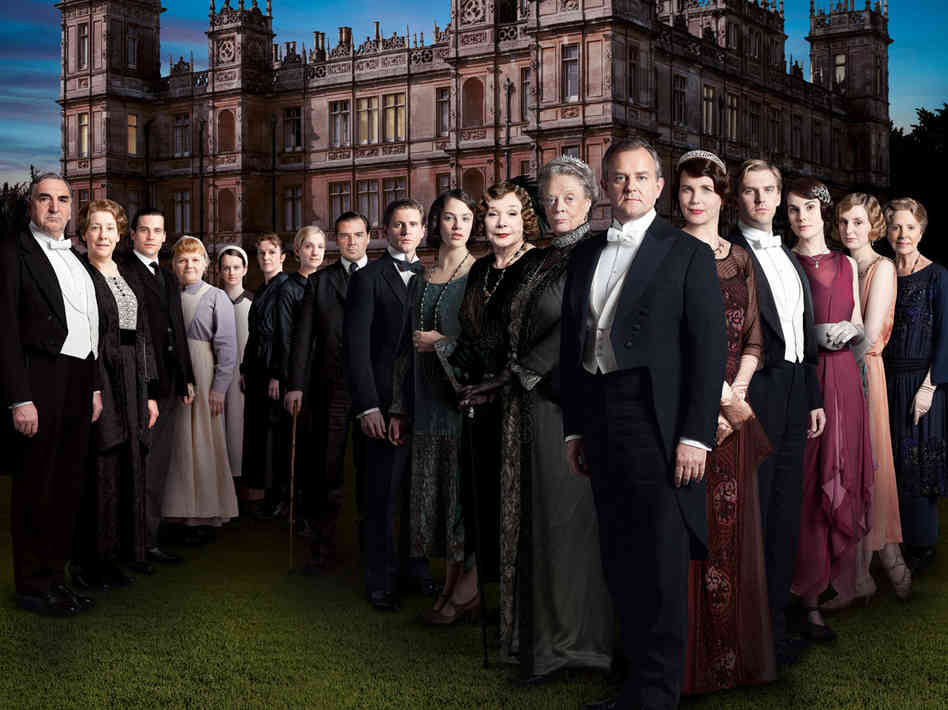
For those who have not caught the trans-Atlantic mania of following the saga of the Earl of Grantham and his extended family as they try to maintain their life of luxury as members of the landed aristocracy post-World War I, here are the relevant plot points of the most recent episode (in the U.S.; Great Britain is a season ahead of us):

Sybil, the much loved but rebellious daughter of the Earl is staying at the family estate (all right, castle) as she prepares for childbirth. (She and her Irish revolutionary husband Tom are on the lam from British authorities, but never mind that). The Earl naturally wants the best medical care for his daughter, and rejects the long-time family physician, Dr. Clarkson, for the task, because he has made some faulty diagnoses of late that led to all kinds of sorrow in last season’s drama. So the Earl calls in a renowned surgeon to the upper crust who is upper crust himself, Sir Philip Tapsell. (He appears to be an arrogant, pompous jerk, but the show’s writers show him giving sage and well-worded advice to the Earl’s non-Irish revolutionary son-in-law on the delicate matter of his sperm count, so we know he’s not a fraud as well.)

The Earl’s American but far too deferential wife Cora (in case you wondered whatever happened to the cute Elizabeth McGovern from “Ordinary People,” the answer is, “This!”) seeks to rescue Dr. Clarkson from a stinging snub by insisting that he come to Downton Abbey and be present for the childbirth as what we would call a consulting physician to Sir Philip, who doesn’t want one. Two head-strong doctors and hostile doctors looking after the same patient—yes, this will work out well.

Sure enough, Sybil’s pregnancy takes an ominous turn. Her ankles are swollen (“Perhaps she has thick ankles!” huffs Sir Philip, pooh-poohing the symptom. “She does not!” replies loyal Dr. Clarkson), her mental state is confused, and there is protein in her blood. Clarkson concludes that Sybil is toxemic and believes she could suffer eclampsia if she isn’t taken to the hospital immediately for a Caesarian section. Sir Philip dismisses him as a hysteric hack, and insists that Sybil’s pregnancy is normal and fine. Since Caesarians were risky in the 1920’s, often resulting in the deaths of the mother, the baby, or both, he believes Dr. Clarkson is giving irresponsible advice. As critical minutes tick away, Lord Grantham asks Clarkson if he can guarantee that Sybil will survive the ordeal of a Caesarian. “There are no guarantees,” he replies, correctly. Not hearing what he wanted to hear, the worried father turns to Sir Phillip and asks how certain the blue-blood doc is that the operation is unnecessary. “Completely certain,” is the ridiculous reply.

Announcing that certainty is a better bet than equivocation, Lord Grantham decrees that Sybil will remain at the castle to have her child, which she promptly does. All seems to be well, too, with a healthy baby, a beaming mother, a relieved family, and a smugly gloating Sir Phillip. But then Sybil goes into the violent seizures characteristic of eclampsia, and it is too late to save her. She dies. Dr. Clarkson’s diagnosis was correct. The family is devastated; Sir Philip is stunned, Cora is furious at both him and her husband, and the Earl of Grantham is feeling guilty.

Got that?

Cora’s anger, the Earl’s guilt and the vindication of Dr. Clarkson are all the result of a bad-tasting recipe of hindsight bias and moral luck. Sybil might have not gone into convulsions. She might not have survived the Caesarian, in which case Dr. Clarkson would be the one looking incompetent, Sir Phillip would say “I told you so,” and Cora would be furious at a different doctor but the same decision-maker, her husband, who would still be sleeping in the guest room. Continue reading
What An Untrustworthy National Media Has Brought Us To: The Sandy Hook Truthers

One big wedge is missing.

One big wedge is missing.

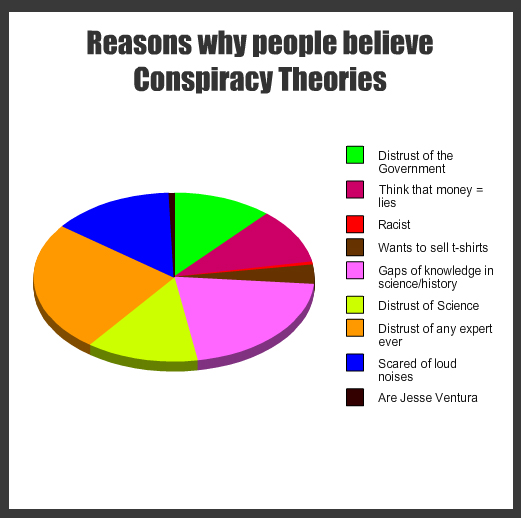
Until recently, I was happily unaware that an active conspiracy theory has metastasized around the Sandy Hook Elementary shooting, what can be thought of as the soot and sludge of the still-rolling ethics train wreck created by that tragedy, except that this is unfair to soot and sludge. The internet is abound with theorists, including at least one professor, who believe that the shooting was an elaborate hoax, possibly engineered by the Obama administration to facilitate gun confiscation and the repeal of the Second Amendment.

In a recent incident reported by Salon, a Newtown man who sheltered some students from the school after the shooting has been relentlessly harassed by Sandy Hook Truthers who have accused him of being part of the government plot. Continue reading

Consequentialism Alert At Redskins Park!

Washington, D.C. has a grand tradition of nepotism. Sometimes it works; it's wrong all the time.

Washington, D.C. has a grand tradition of nepotism. Sometimes it works; it’s wrong all the time.

A year ago, I wrote about the dilemma faced by Washington Redskins coach Mike Shanahan, who was mired in another terrible season with a failing offense engineered by his son Kyle, the team’s offensive coordinator.  Here we have the ethical problem with nepotism, I wrote…

“There is no way to tell what is happening or what the effect of the nepotism is, which is why all appearance of impropriety situations are toxic to trust; there is no way to tell whether the apparent conflict is causing real harm or not. When everything goes well, the doubts will be muted and there won’t be a crisis in public trust, but that is luck, and nothing more…Not only are the Skins losing, but the leaks have sprung in Nepotsim Central, where Kyle Shanahan is responsible. It was fully predictable, not that this would happen, but that it could very well happen, way back in 2010 when Mike Shanahan had the bright idea of hiring sonny boy. Not foreseeing this is a miserable failure to play ethics chess: when a choice is a good bet to create an ethics problem a few moves from now, don’t make it. Owner Snyder should have forbidden it; Kyle should have turned the job down.”

Ah, but that was then, and this is now. The vicissitudes of moral luck have struck again.  Now Kyle’s offense is working like a charm, thanks to the magic arm, legs and mind of rookie quarterback sensation Robert Griffin III. Now the ‘Skins are the NFL East Champions! Now Kyle is an offensive wizard, not a putz, and Coach Dad a visionary for hiring him. What’s the matter with a little nepotism? Never mind!

This is rank consequentialism in its worst form. Nepotism is an unethical way to run any staff, company, team, business or government, unfair, inherently conflicted, irresponsible, dangerous and corrupting. It should be recognized as such from the beginning, and rejected, not retroactively justified if it “works.”

I’m sure there were and are non-relatives of the Redskins coach who could have devised a successful offense with RG3 taking the hikes. The ethical thing to do was to find them and give one of them the job.

The Redskins coach’s nepotism is just as unethical in 2013 as it was in 2012, 2011, and 2010.

The East Harlem Lockdown Drill: Is Stupid Unethical?

paris-puppet-show-children

I was tempted to make this jaw-dropping incident an Ethics Quiz, but my mind is unalterably made up. While mistakes are not unethical, staggering stupidity on the part of professionals is, even if one of the consequences of that stupidity is the good faith belief that a cruel and irresponsible act is the right thing to do.

Less than a week after the Sandy Hook shootings, Greer Phillips, the principal in East Harlem’s P.S. 79 decided that this was the perfect time to conduct an unscheduled, unannounced lockdown drill. Not a fire drill. A “a stranger with a gun who might kill everybody is in the school!” drill.

Brilliant!

Thus at 10 am on December 18, a woman’s voice came over the Horan School’s loudspeaker and announced in shaky tones that there was a “shooter” or “intruder” in the building, and that teachers needed to “get out, get out, lockdown!”

Did I mention that the school serves students with special needs like autism, severe emotional disabilities, cerebral palsy and other disorders? Boy, I bet they were fooled! What a great drill! I mean, it scared the piss out of the teachers; imagine how those students must have felt! Continue reading

Professional Discipline For Unethical Law School Deans?

Why not?

What the North Carolina Bar considers a trustworthy lawyer...

What the North Carolina Bar considers a trustworthy lawyer…

Law professor Ben Trachtenberg has caused a stir by suggesting in a law review article for the University of Missouri Law School Journal  that law school administrators responsible for intentional and egregious misrepresentations in advertising for their schools have violated the professional ethics codes and could, and should, face discipline, such as disbarment.

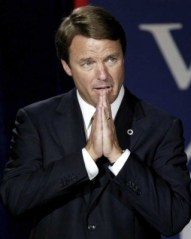
I don’t want to cause Nando a fatal cognitive dissonance attack, really I don’t, but I agree with the professor wholeheartedly. I have long believed that the Model Rules prohibition of dishonesty in Rule 8.4 should be applied to lawyer conduct not related to the practice of law more frequently and stringently than it is. Lawyers, for their own protection, are fond of the fictional Clinton myth that one can be an upright and trustworthy lawyer while displaying deceitful and dishonest conduct in their “personal lives,” as if lawyers are ethically schizophrenic. The proof: John Edwards still has his license.

The law school deans that Trachtenberg targets, however, don’t get the benefit of this pass. They are lawyers who were dishonest in their professional duties that, while not requiring a law license, have a clear impact on the legal profession.  Trachtenberg writes,

“In light of the common application of Rule 8.4(c) to lawyers who engage in dishonesty unconnected with the practice of law, there is little doubt that dishonest law school marketing conducted by members of the bar justifies professional discipline. Paul Pless lied repeatedly, over a period of years, about the quality of incoming students at the University of Illinois College of Law, deceiving the ABA and U.S. News, along with prospective students and others who relied on statistics they compiled.191 Mark Sargent conspired with colleagues to engage in similar conduct at Villanova.192 Can anyone dispute that these men engaged in “conduct involving dishonesty, fraud, deceit or misrepresentation”? Surely serial dishonesty—committed with the purpose of gaming the rankings used by prospective students deciding whether and where to spend tens (if not hundreds) of thousands of dollars—is at least as serious a violation as falsifying a resume and transcript.”

Sure it is. As with Edwards, however, the profession is unlikely to be willing to expand the range of activities by lawyers outside of actual practice that will trigger discipline. Continue reading

Ethics Quiz: The Case of the Maybe Killer Lawyer

Tough one! Are you ready?

Convicted killer and lawyer too?

Convicted killer and lawyer too?

Richard Buchli, a Missouri lawyer who was convicted of beating his law partner to death, was getting a new trial after it was revealed that the prosecution had illegally withheld exculpatory evidence from the defense. There was some strong evidence supporting his conviction, such as the fact that the partner’s blood was splattered on Buchli’s clothes in a manner consistent with a beating death. (Buchli argued that he got bloody trying to revive his partner.) The court, however, frustrated with the prosecution continuing to drag out discovery and failing to deliver all the evidence to Buchli’s legal team, threw out the conviction completely and barred all the evidence in the case, effectively making Buchli, who had been in prison since 2002, a free man.

Now Buchli, who was disbarred in 2005 (killing your law partner is considered unethical), wants his law license back. Your Ethics Alarms Ethics Quiz Question:

Should he get it? Continue reading

Naked Teacher Principle Update: The Streaking Teacher Variation

Pro Tip: This is not the way to hold on to that "Teacher of the Year" award.

Pro Tip: This is not the way to hold on to that “Teacher of the Year” award.

The Naked Teacher Principal has a growing number of variations. I think my favorite is still the Butt-Painting Teacher With A Bag Over His Head Variation, but this one is pretty good.

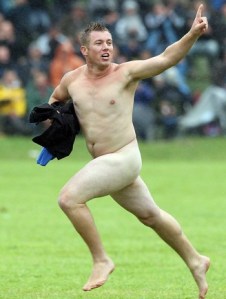
Mark Bringhurst, a fifth-grade teacher for eight years at Winslow Elementary School in New Jersey, and the Vineland School District’s 2011-12 teacher of the year, has been fired for streaking naked through an apartment complex parking lot. He was arrested in March after his mad dash and charged with public lewdness.

Bringhurst told police he did it on a dare from someone he met online (?), and that he had made the same nude run a year earlier. There was no indication that strong spirits were involved, which raises the interesting question: who would you consider more trustworthy, someone who runs around naked in public when he’s had too many, or someone who does it stone sober? Continue reading

Ethics Dunce: The ABA Journal

"I just know we're forgetting something! "Effects"? No, that's not it..."Ethanol"? No, no..."Prosthetics"? Arrrgh! What IS it?

“I just know we’re forgetting something! “Effects”? No, that’s not it…”Ethanol”? No, no…”Prosthetics”? Arrrgh! What IS it?”

This is as disheartening and it is shocking. The American Bar Association Journal, the monthly magazine of the nation’s largest lawyer organization and in many ways the face of the legal profession in the United States, just announced its 6th Annual Blawg 1oo, its reader-chosen list of the best law-related blogs on the web. There are many excellent blogs honored, of course; indeed all of them are useful or entertaining. I’ve visited most of them, and some, like Popehat, the Legal Professions Blog, Above the Law, the Volokh Conspiracy, Scotus Blog,  the New York Personal Injury Law Blog, and Over-Lawyered, I check on several times a week. There is a remarkably wide range of blog topics covered, including superhero law, practicing law in China and zombies. Guess what’s not covered?

Legal ethics. Continue reading

Incompetent Elected Official of the Month: Rep. Tim Ryan (D-Ohio)

Ah, yes, those old football injuries that tighten up and cause you to walk like you're drunk after going to a wedding where nobody drank to excess. Who hasn't been in that situation?

Ah, yes, those old football injuries that tighten up and cause you to walk like you’re drunk after going to a wedding where nobody drank to excess. Who hasn’t been in that situation?

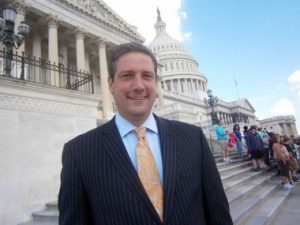
Let’s be clear, now: Rep. Ryan is not politically incompetent, no sireee! He’s no fool; he knew that an arrest for public intoxication in August might be a high hurdle on the route to his re-election, especially since the matter wouldn’t be resolved until after the November 7. So when the rising star of a congressman, seeking election, now safely accomplished, to his sixth term, was arrested in Virginia, Ryan’s staff managed to keep the embarrassing incident out of the papers, cable news broadcasts and political junkie blogs. He had been  stopped by a police officer who observed him staggering along the sidewalk, and Ryan refused to take a Breathalyzer alcohol test as the officer requested, precipitating his arrest. The incident, after all, might have been misunderstood. Can’t have that. Continue reading

TV Ethics, Viewed From A Sickbed

This isn’t how I look. This guy looks BETTER than I look…

[ As regular readers here might have guessed, I am ill, and have been since Thanksgiving. I can barely read, can’t really research, and whatever appears below was composed in 10 minute increments with hours or days in between. I’m hoping to be catching up very soon. Thank you for your patience]

What do you do when any movement or exertion makes you cough your guts out, when you can’t sleep but have to rest, when your brain is so blurry from viruses and medication that you can’t even compose a blog post for three days? (Sorry.) If you are me, and I hope for your sake that you aren’t, you watch TV.

I got one jolt of legal ethics horror that I hadn’t remembered re-watching Kevin Costner’s “The Untouchables,” directed by Brian DePalma. In the movie’s climax, Al Capone’s trial on income tax evasion has come to a crisis point, as Elliot Ness (Costner) realizes that the jury has been bribed to acquit him. Despite documentation of that fact, the corrupt judge tells Costner that the trial will proceed, whereupon Costner extorts him to prompt “a change of heart.” Now the judge shocks the courtroom by announcing that he is trading juries with another trial next door. The new, un-bribed twelve will decide Capone’s fate.

This is, of course, beyond ridiculous. Adversary attorneys must be able to choose a jury in voir dire, where each potential juror is questioned. Trading juries just invalidates two trials. Even if they could trade juries, which they couldn’t, the Capone trial would obviously have to start all over again since the new jury wouldn’t know what was going on.

None of this occurs to Al Capone’s panicky lawyer, however, who, realizing that the jig is up, announces that “we” are changing “our” plea to “guilty.” Chaos reigns. Capone (Robert DeNiro) punches his lawyer in the face, and I don’t blame him one bit.  A lawyer can’t plead guilty against the wishes of his client! The judge couldn’t accept such a plea, and Capone wouldn’t be bound by it. This would be an embarrassing distortion of the justice system in a Warner Brothers cartoon, but for a movie based on historical figures and events to sink so low is unforgivable. (“Carrie” aside, Brian DePalma was a hack.) Continue reading