The President’s Ethics Grades So Far

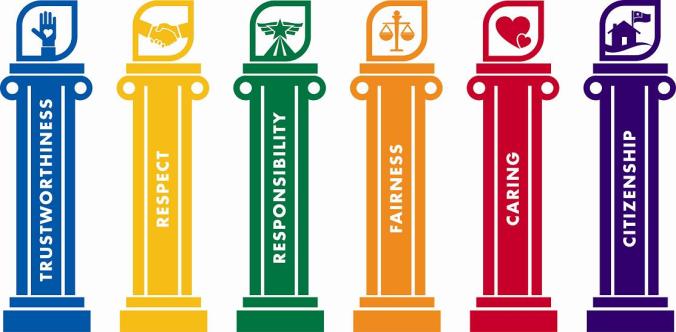
six-pillars

Is it fair to grade President Trump on his ethics after less than a month? Of course. If he wanted to pay attention to this area, the President would certainly seek an objective progress report. There has been enough activity in three weeks to give some preliminary grades. Ethics Alarms began this adventure with low expectations; after all, I have never read or heard a single statement from the President, ever, that suggests that he thinks about or cares about ethics at all. His behavior and opinions appear to be entirely governed by rationalizations, emotions, and impulse. However, we do have hope, and three weeks of a presidency is not sufficient to extinguish it. There is plenty of time for President Trump to address his ethical shortcomings

Let’s use the Josephson Institute for Ethics’ Six Pillars of Character for this exercise. All graded categories should be regarded as incomplete, and the offered grades as provisional only. Remember, these are ethics grades only.

I. TRUSTWORTHINESS, including Honesty in communication, Candor, Truthtelling, Reliability, Sincerity, Honesty in Conduct, Integrity, Loyalty

The President and his agents, like Spicer and Conway, have been especially loose with facts and assertions, some of which can be excused a bit as carelessness, but the sheer volume of misinformation is daunting. I suppose one could argue that Trump is reliably unpredictably, but that’s not what the value of reliability is all about. The President’s astounding verbal sloppiness makes it impossible to gauge sincerity (is he really out to ban Muslims, or just determined to keep out Muslim terrorists?) I score Trump relatively high on integrity, as shown by his Inaugural speech. Whatever he thinks he means, he really means it. (The contrast is Hillary Clinton.) Trump is loyal. Loyalty is a troublesome value that can be abused as often as not: he was loyal to appoint Ben Carson to the cabinet, but it’s still an unethical act, since Carson is unqualified beyond belief. But loyalty also covers conflicts of interest, and the appearance of impropriety. The President’s conflict of interest problems have not been seriously addressed, and won’t be.

He hasn’t been trustworthy, so his grade here is..

F

II. RESPECT, including Civility, Courtesy, Decency, Dignity, Tolerance, Acceptance, Autonomy Continue reading
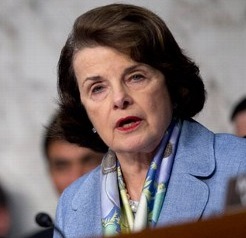
From The Sally Yates Misinformation Files: Senator Diane Feinstein, Ethics Dunce And Incompetent Elected Official Of the Month

Biased, hypocritical and ignorant is no way to go through life, Senator...

Biased, hypocritical and ignorant is no way to go through life, Senator…

Adding to the ignorance and misinformation drowning ethics comprehension regarding the Sally Yates affair, Sen. Feinstein used her questioning of Attorney General designate Jeff Sessions this morning to misrepresent the ethical duty of that office. (I don’t have a link yet, since I just watched it on C-Span.)

First, Democratic Senator Feinstein set some kind of modern political record for gall by asking Sessions for assurances that he would objectively and independently represent the justice system and the people, and not be a “political arm of the White House.” A political arm of the White House (and the Democratic Party) is exactly what Eric Holder’s and Loretta Lynch’s Justice Department were, and the Senator knows it and never raised her voice in opposition to it for eight years! The question is a fair one, but she is estopped from asking it. Indeed, for any Democratic Senator to ask that question is tantamount to deceit, suggesting that the previous Justice Department met the standard Feinstein is demanding that Sessions acknowledge.

This is the unethical double standard mindset that Democrats have been displaying since November 8.

Following that master class in hypocrisy, Feinstein lauded the justly fired Sally Yates for embodying that ideal. Feinstein is ignorant of what lawyers do and the ethical principles their profession obligates them to follow, apparently. Continue reading

More On The Unethical Sally Yates: Her Conflict Of Interest Deception

...and you shouldn't have accepted the job, either.

…and you shouldn’t have accepted the job, either.

Here is another ethics aspect of the disgraceful Sally Yates episode that the complicit news media isn’t covering: it was unethical for her to accept the job of acting Attorney General in the first place.

She had an apparent conflict of interest when she was offered the job. This is indisputable; it’s just being ignored by fawning partisans. Here is the applicable ethics rule of Yates’ bar and jurisdiction:

Rule 1.7–Conflict of Interest: General Rule

(a) A lawyer shall not advance two or more adverse positions in the same matter.

(b) Except as permitted by paragraph (c) below, a lawyer shall not represent a client with respect to a matter if:

(1) That matter involves a specific party or parties and a position to be taken by that client in that matter is adverse to a position taken or to be taken by another client in the same matter even though that client is unrepresented or represented by a different lawyer;

(2) Such representation will be or is likely to be adversely affected by representation of another client;

(3) Representation of another client will be or is likely to be adversely affected by such representation;

(4) The lawyer’s professional judgment on behalf of the client will be or reasonably may be adversely affected by the lawyer’s responsibilities to or interests in a third party or the lawyer’s own financial, business, property, or personal interests.

(c) A lawyer may represent a client with respect to a matter in the circumstances described in paragraph (b) above if

(1) Each potentially affected client provides informed consent to such representation after full disclosure of the existence and nature of the possible conflict and the possible adverse consequences of such representation; and

(2) The lawyer reasonably believes that the lawyer will be able to provide competent and diligent representation to each affected client.

(d) If a conflict not reasonably foreseeable at the outset of representation arises under paragraph (b)(1) after the representation commences, and is not waived under paragraph (c), a lawyer need not withdraw from any representation unless the conflict also arises under paragraphs (b)(2), (b)(3), or (b)(4). Continue reading

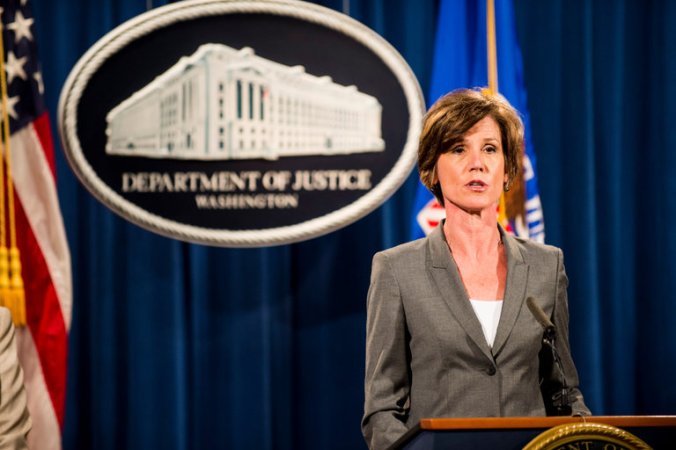
Sally Yates Is Not A Hero. Sally Yates Is An Unethical Lawyer, And “Betrayal” Is Not Too Strong A Word For Her Conduct

yates

When you read pundits, journalists, your Angry Left Facebook  friends and even a few misguided lawyer proclaiming Sally Yates a hero, trust me, they either don’t know what they are talking about, or they are have allowed bias to make them stupid.  The Justice Department’s acting Attorney General who was fired minutes ago for refusing to defend President Trump’s Executive Order regarding Middle East immigration was not acting heroically. She was acting as a partisan, political operative, and by doing so, breached her duties an attorney as well as the District of Columbia Rules of Professional Conduct.

And I do know what I am talking about.

Yates was a holdover from the Obama administration, but to an ethical lawyer, that wouldn’t have mattered. Her client hadn’t changed; it is the United States of America. Neither had her professional obligations. Her client was still the government of the United States, and she was still duty bound to defend its laws, as determined by the legislature and the executive, the President of the United States. Under the Rules of Professional Conduct of the jurisdiction in which she practices, the District of Columbia (the Rule is 1.13) Yates had but one ethical option if she determined that her client wanted to engage in conduct she deemed illegal, repugnant, or unwise. Having made her concerns known, she could resign (Rule 1.16) , and quietly. She is duty bound not to harm her client during the representation (Rule 1.3, of which the District has an especially tough version), nor make public statements, or statements she has reason to believe will be made public, that breach her duty of loyalty. In defiance of all of that, tonight Yates stated, in a letter to her department’s lawyers,

“At present, I am not convinced that the defense of the executive order is consistent with these responsibilities, nor am I convinced that the executive order is lawful.”

The only ethical conclusion of that statement is “therefore I am withdrawing.” Yates said that her decision not to defend the order included questions not only about the order’s lawfulness, but also whether it was a “wise or just” policy. That’s not her job. Lawyers are not permitted to substitute their judgement for their clients.

She was fired, and should have been. She should also be the subject of am ethics inquiry. This has nothing to do with the merits of Trump’s order. Former Harvard professor (and legal ethics prof) Alan Dershowitz, hardly a GOP flack, said tonight that Yates’ decision wasn’t legal, but political. Exactly. As a lawyer, she should have made her position clear from a legal perspective to the President, and then either followed his directive or quit. Her rogue announcement contradicted a finding by the Justice Department’s Office of Legal Counsel, which  approved the executive order “with respect to form and legality.” Nor did her outrageous grandstanding require courage. She was not going to keep her job anyway, so she decided to abuse the trust of the President to encourage partisan Trump-haters to hoot and applaud for an act of legal ethics defiance. (Ethics rules don’t apply when Donald Trump is involved, haven’t you heard?)

Yates is also a hypocrite. The Holder Justice Department, of which she was a part, defended multiple Executive Orders by President Obama that were legally dubious, and other actions as well. That Justice Department was one of the most disgracefully partisan within memory, a neat trick, since we have had a couple of decades of unethically partisan Justice Departments. Yates showed her pedigree tonight. She used her position as an attorney–the highest one there is—for her client, the United States, to undermine her client’s objectives, publicly and to her client’s detriment. The Trump administration has called this a betrayal.

That’s exactly what it is.

(More here..)

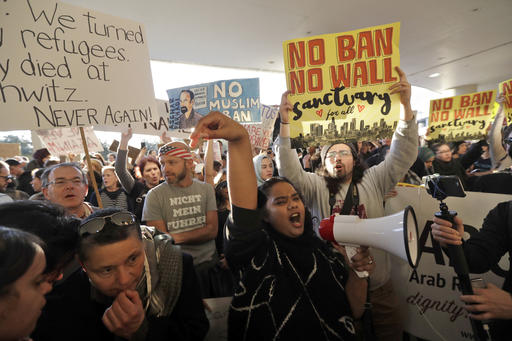
The Easy Ethics Verdict On Trump’s Middle East Immigration Suspension

immigration-protests

There are three steps to evaluating the ethical nature of any law or government action. The first is what was done. The second is how it was done. The third, and usually most difficult to assess, is why it was done, and whether the measure’s objectives are ethical, including whether the measure can reasonable be expected to accomplish them. . What President Trump’s controversial Executive Order temporarily halting immigration from seven Muslim nations is was covered in the previous post on the subject. Thanks to the fact that our mainstream journalists are incapable of reporting some news events without allowing their biases to distort or confuse the facts, the what was misrepresented to the public, and that misrepresentation is reflected in most discussions of the relevant issues on the web.

How the measure was implemented is an ethics  issue, as this involves competence, responsibility, accountability, diligence and leadership.

The Executive Order was incompetent and irresponsible.

There, that was easy.

It’s nice to be able to post an analysis here that nobody will disagree with. Usually I don’t even bother posting such verdicts.

The sudden order (you can read it here) caused world-wide confusion. Passengers were barred from flights to the United States. Customs and border control officials received notice and instructions in the wee hours of the morning, and many began work without knowing what they were supposed to do.  The order  blindsided Trump’s cabinet—what there is of it so far—including Homeland Security chief John Kelly and, incredibly, “Mad Dog”  Mattis, the new Secretary of Defense, who was not consulted by the White House during the preparation of the order and was not given an opportunity to provide input while the order was being drafted. Mattis did not see a final version of the order until a few hours before President Trump arrived to sign it at the Pentagon. Now he really has reason to be be mad. Continue reading

The Media’s Unethical Reporting On Trump’s Refugee Pause Order: Does Telling The Whole Story Fairly And Accurately Even Matter To These Hacks Any More? Does Their Trump-Hating Audience Even Care?

How many of these protesters have read the Executive Order they are protesting? My guess; none of them.

How many of these protesters have read the Executive Order they are protesting? My guess: none of them.

I didn’t intend this to become Outrageously Unethical Journalism Sunday, but that’s how it is turning out. Not my fault. Don’t blame the messenger.

Here, for the sake of organization and clarity, are some things that you may not have been told about the Trump refugee order that all the Sunday Morning TV shows are and the news sources yesterday were going nuts over. I couldn’t watch all of the former, of course, and some are going on as I write this. Maybe some responsible journalism snuck in, and if it did, please let me know who was responsible, in both senses of the word. So far, however, the mainstream news media is doubling down on its determination not to allow facts to get in the way of its 24-7 effort to demonize President Trump, and my increasingly bats Facebook friends, and yours, I assume, are taking it all as the Utter Truth…

I. Calling the Trump Executive Order a “Muslim Ban” is a lie. Nothing less.

II. In 2011, President Obama ordered a halt to the acceptance of refugees from Iraq for six months (that’s twice the three months of the Trump order yesterday) with no adverse reaction from the news media whatsoever.

III. The seven nations targeted in Trump’s order were not his administration’s collection, but Obama’s, with the addition of Iran.

IV. All of this had to be included in any competent, fair and truthful report about yesterday’s order. As of yesterday, none of it was, at least in major news sources, or the information was buried deep in the reports under hysterical headlines.

Got all that?

It is 100% true. If you were not aware of it before, you are misinformed. If you or your family, friends or acquaintances were on social media proclaiming that the order proves Trump is Hitler, just as you suspected, without knowing the above, you are spreading fake news. If you did this while knowing the above, you are deliberately misrepresenting reality to press your misguided false narrative. Or, in the alternative, you are a rationalizing fool.

Remember, no ethical analysis can proceed without accurately establishing the answer to the question, “What’s going on here?” If one does not have the facts, one cannot perform the analysis. Answering the question incorrectly, as in “What’s going on here is that a xenophobic madman just violated the Constitutional right to the free exercise of religion!!!! ARGGGHHH!” also guarantees a flawed analysis.

You will note that the best sources for establishing the shockingly biased and unethical reportage of this event are conservative sources. This is because this right-biased alternative to the left-biased news media developed specifically for situations like this, in which the truth is deliberately skewed by political bias from the exact same people the public has been taught to trust to keep it informed. As the previous post also demonstrates, that trust is no longer warranted.

Right up front, I want to credit Prof. William Jacobson of Cornell Law School. Every single news source had an obligation to include the information he researched and posted on his blog, but none did.  Now, some details:

1. Read the order itself. Scroll past it if you want to my commentary, but as the professor says, “You should read the actual EO, because most of the media and leftist pundits either have not or are lying if they have.” It is long; I have formatted it for easier reading, but it is long. Nonetheless, the news media have proven beyond, not just a reasonable doubt but the shadow of a doubt that its journalists cannot be trusted to digest this kind of document and relay it truthfully.

Res ipsa loquitur: CNN, from which I obtained the text, headlines the order,

Full text of Trump’s executive order on 7-nation ban, refugee suspension

But there is no ban! That headline is fake news. If you don’t read the order yourself, and yet start ranting on Facebook about the suspension of freedom of religion or some other non-factual nonsense, then you are irresponsible, and you are spreading disinformation. Read it yourself, ascertain what it means if you are uncertain, or shut up about it.

And welcome the era of biased, untrustworthy, partisan journalism.

Here is the EO: Continue reading

Ethics Quote Of The Month: NBC’s “Meet The Press” Host Chuck Todd


“Where I think political correctness got in the way of what we all knew as reporters and didn’t fully deliver was how hated the Clintons were in the heartland. And I think it was a fear of, ‘Oh, is it going to look like it’s sexist, anti-woman if we say that?’… I think we underplayed it a little bit out of political correctness fears… No member of the press corps wants to look like they’re singling out a group and making a group feel bad…. If we sort of were straight-up honest and blunt about hey do we understand the level of hatred that’s out there and you know, all the Hillary for Prison signs that are out there, we certainly would have at least made the viewer know, hey, you know, she’s not well-liked in some places in this country in ways that’s times 10 when it comes to Trump…. What do I think we did wrong in this election? The biggest thing is we didn’t tell the stories of all Americans. We told the stories of coastal Americans. And ultimately, that’s like the larger trust issue. We were more likely to do a story about the Dreamer that might get deported with new policies than we were about the 19-year-old opioid addict who feels hopeless in Rolla, Missouri. And, I’m not, I don’t pick on Rolla, Missouri, it’s, my point is that we just, we did not equally tell those stories very well, right, and, we were not, that is an out-of-touch issue.”

“Meet the Press” host Chuck Todd last week being interviewed by former Bush White House press secretary Ari Fleischer in his “1947” podcast.

chuck-todd1. I suspect this quote, from a podcast I had never heard of before, may end up being quite famous. It should be.”Meet the Press,” by pedigree and habit if no longer on merit, is the flagship of theoretically tough, objective broadcast journalism. Its host, right here, in this quote, admits that he, his colleagues and industry, “we,” were and are biased and partisan. Equally remarkable, he didn’t seem to understand the significance of what he was saying.

This isn’t an ethical quote, for in its phrasing and the unethical mindset it reveals, it is quite horrifying. It’s an ethics quote, because it reveals something important and useful about ethics, specifically the wretched ethics and complete lack of trustworthiness that now infects most of American journalism. One should not be able to read Todd’s comments and express disapproval of the Trump administration’s hostility to the press. The news media deserves hostility.  Its conduct has forfeited the right to be believed or respected. If it could be believed or trusted, Chuck Todd wouldn’t have said this.

2. In this statement, Todd’s candor provides a smoking gun example of one of Ethics Alarms’ mantras, “Bias makes you stupid.”

3. Todd’s equivocations, euphemisms and minimizing verbiage are as provocative as they are infuriating. “Didn’t fully deliver… underplayed it a little bit …If we sort of were straight-up honest…. we certainly would have at least made the viewer know….we did not equally tell those stories very well. Todd is admitting bias and deliberate misreporting, but using Hillary Clinton’s “it wasn’t the best choice” rhetoric (Rationalization 19A, The Insidious Confession) to imply only that it was kind of, sort of, not exactly the best thing to do in retrospect. The weasel-words are as damning as what Todd is admitting to.

4. The context of Todd’s navel-gazing and that of many of his colleagues is “What did we do wrong that helped elect Donald Trump?” and not, as it should be, “How was our journalism unethical and how can we be more ethical going forward?” We already know, or should know, why Todd and his colleagues’ work was unethical: they were 100% committed to defeating Donald Trump, and just as committed to shaping the narrative of the campaign according to how the Democratic Party and Hillary Clinton wanted it shaped: Hillary’s election was inevitable. Continue reading

Why Health and Human Services Nominee Price’s Smoking Gun Ethics Breaches Won’t Disqualify Him

smoking-gun

There was good news on the Trump Administration Ethics Train Wreck, still just pulling out of the station. Despite the ethically-challenged reaction fro the Trump transition team when it was revealed that Monica Crowley had plagiarized in her latest book, somebody, somewhere, persuaded the conservative radio talk-show host to resign her new White House post. Good. But as many—most?—predicted, the muck is just beginning to bubble to the surface.

CNN reports that Rep. Tom Price,Trump’s nominee for Secretary of Health and Human Services who will have much of the responsibility for dismantling Obamacare  without triggering a health system crash, appears to have engaged in a flagrant instance of using his position for financial gain.  Last year, Price purchased shares in Zimmer Biomet, a medical device manufacturer [Full disclosure: I have one of their artificial hip joints, setting off metal detectors at airports all over the world] right before he introduced  legislation that would have directly benefited the company.

Price bought between $1,001 to $15,000 worth of shares in the company last March, and then, less than a week after the transaction,  introduced the HIP Act (Clever!) to delay until 2018 a regulation that industry analysts believed  would significantly hurt Zimmer Biomet, one of two companies most affected by a regulation that limits payments for joint implant procedures. Not only did Price have a financial stake in the regulation he tried to stall,but after Price introduced  his bill, Zimmer Biomet’s political action committee donated to the Georgia congressman’s reelection campaign.

Merely a coincidence, I’m sure.

Price is scheduled to appear before the Senate Health Committee this week, and the Senate Finance Committee later. He should withdraw, or failing that, Trump should pull the nomination. Price’s purchase of the Zimmer Biomet shares isn’t the first time he’s used inside information (the inside information being “I’m going to propose a bill”) to buy shares in a company. The Wall Street Journal reported last month that he traded roughly $300,000 in shares over the past four years in health companies while pursuing legislation that could affect their bottom lines.

Yeccch. Continue reading

From The “Is The News Media Trying To Destroy Any Credibility It Has Left, Or Is It Just Too Biased And Stupid To Help Itself?” Files: The New York Times’ “Fact Check”

who-can-you-trustIn July 2016, Donald Trump said, in one of his more accurate public statements:

Homicides last year increased by 17% in America’s fifty largest cities. That’s the largest increase in 25 years. In our nation’s capital, killings have risen by 50 percent.

In July 2016, “Last year” meant 2015, as absolutely everyone understood. Homicides in D.C. did increase by 54 percent in 2015, from 105 in 2014 to 162. The statement was accurate.

Now, however, it’s 2017. This means that “last year” doesn’t mean 2015 any more, but 2016!  Figures on the year just completed show that homicides in D.C. fell in 2016 to 135. Thus the New York Times–you know, that flagship of trustworthy American journalism—through its reporter Emily Badger, decided to “fact-check” that statement by Trump from July, and found that he deceived us. Again. Badger wrote:

“Another end-of-year fact-check, while we’re at it: Mr. Trump claimed during the campaign that the homicide rate in his new home in Washington rose by 50 percent. In fact, it fell by 17 percent in 2016.”

There he goes again! Lying his head off! Citing fake statistics! But trust us, folks, we’ll be right there at the ready for the next four years, so he can’t get away with this constant deception!

Notice how the Times uses “claimed” to imply that Trump was making stuff up.  But he wasn’t making stuff up. The Times was making stuff up by “claiming” in this fact-check that Trump  misstated the facts, when he did not.  He wouldn’t have even been wrong, as Eugene Volokh points out, if he had been comparing 2016 to 2014, the year he was comparing 2015 to in July. The homicide rate in D.C. rose by  28 percent from 2014 to 2016.

‘Trump falsely stated that crime rose in Washington D.C.’ is a lie. It is fake news.

Writes the law professor, using far more restraint than I would (or will):

There’s a lot to be said for not focusing too much on year-to-year changes in homicide statistics, which can be volatile. Even a rise over two years doesn’t tell us that much, though it’s troubling. And we should indeed remember that homicides and other crimes have generally declined sharply from their 1991 peak (though of course we want to be watchful for any reversal of the trend). If the argument is simply in favor of caution about reading too much into yearly statistics, I’m all for that.

But the New York Times “fact-check…” suggests that Trump got his facts wrong (he “claimed” one thing but “in fact” it was something else), and I think it misleads readers into missing the fact that, even counting the 2016 decline, the homicide still rose sharply from the reference year Trump was using — 2014 — to the present.

Continue reading

Comment Of The Day: The Russian Cyber-Attack Report: Observations And Questions

putin

Ethics Alarms is grateful to reader Greg, the author of this first Comment of the Day of the New Year, for supplementing the recent post here, and providing a critical and more detailed assessment of the intelligence community’s much ballyhooed report on its conclusions regarding Russian cyber-attacks during the 2016 election, with the alleged purpose of defeating Hillary Clinton.

I am particularly relieved that he shares my own reaction to the report, which simply did not deliver on what was promised by James Clapper in the hearings earlier in the week. Oddly, the news media and almost everyone I know miraculously seem to think it did.  The two key issues I, and I assume everyone, wants clarified is 1) whether Russia was indeed trying to elect Donald Trump, as opposed to generally gumming up the works, embarrassing the likely President (Clinton, of course), undermining public faith in the democratic system, and basically making everyone involved look like fools, knaves, and boobs (Note that Trump appeared to be handling his side of that task all by himself) , and 2) did their efforts in fact have any effect on the results? Answering the first clearly and decisively is essential to understanding the second: to most people, if Russia’s actions were designed to make Trump President, and in fact Trump did shock the world by becoming President, this creates a rebuttable presumption that in fact the Russian Government, and Vladimir Putin in particular, did affect the results of the election. That millions of people regard the matter in this way is certain, because we know that millions of people are desperately searching for some conspiracy or sinister outside agency to explain an event that shattered their expectations and world view.

We also know that the false belief that the sequence Conduct  A is intended to cause Result B, A occurs,  B occurs after A, ergo A caused B, is widely accepted, because public school  teachers are too busy teaching that the United States oppresses minorities  to get around to logic.  Now, that sequence is utter crap, validating, among other things, superstitions and rain dances, but never mind most people think that way.

Yet the report provides no evidence to support the intelligence community’s conclusions in either matter. I find that incomprehensible, and also irresponsible. What the report does  say, in essence, is, “Trust us, we’re experts,”  and leaves the rest to confirmation bias. Could the authors not have provided some evidence to support these conclusions? If not, why not?

Here is Greg’s Comment of the Day on the post, The Russian Cyber-Attack Report: Observations And Questions:

This so-called “25-page report” is almost entirely padding and filler. I read it and I don’t see anything in it that adds to what we knew before the report was issued. Continue reading