More Revelations Regarding Elizabeth Warren’s Alleged Unauthorized Practice of Law, and Why This Matters

Prof Jacobson, on his blog Legal Insurrection, is in line for an Ethics Hero award with his tenacity regarding Elizabeth Warren’s dubious qualifications to engage in the practice of law in  Massachusetts. The overwhelming reaction by his colleagues in legal academia, and mine in the legal ethics community, has been to airily dismiss his arguments as trivial, far-fetched and thinly disguised political warfare, since Jacobson is an unapologetic conservative blogger (and a distinguished one.) Meanwhile, the mainstream media has, I think it is fair to say, completely ignored the story.

Part of this is undoubtedly because of the ignorance of most journalists regarding the importance of the legal ethics rules in question. Part of it is probably due to the accurate assessment by editors and TV news producers that the average American’s brain would switch off right around the time the story mentions Massachusetts Rule of Professional Conduct Rule 5.5 Subsection (c), and will start wondering about how Blair from “The Facts of Life” is going to do on “Survivor.” And part of it, infuriatingly, is because most journalists are willing to forgo the ethical duties of their profession in order  to ensure that a Democrat wins back Ted Kennedy’s Senate seat, and character be damned.

The rude brush off Prof. Jacobson is getting in this wagon-circling exercise is wrong in every way, and does injustice to every person and institution involved, including the Massachusetts legal establishment, the legal profession, ethical lawyers (which, believe it or not, the vast majority of them are), Senator Brown, the U.S. Senate, Massachusetts voters, and the American public. Bar associations across the country regularly punish ordinary lawyers who practice law without proper authorization, and there is a reason: a lawyer who won’t or can’t obey the most basic requirement of the profession—be sure you are practicing law legally—should not be trusted to handle the important transactions and controversies of their clients’ lives. Continue reading
More From Prof. Jacobson On Elizabeth Warren’s Law License

Uh, guys? Do you even care what really happened any more?

[ Original post here]

He has read various critiques of his analysis and allegations, and addresses them here. Jacobson also spoke with the much quoted General Counsel of the Mass Board of Bar Overseers, and confirmed that  Michael Fredrickson was not speaking officially or on behalf of the BBO, but rather giving his personal opinion.

For my part, I am dismayed, if not shocked, that the legal establishment, as well as legal ethicists who should know better, are letting their political biases dictate their analysis. It is true that Jacobson is an openly conservative blogger as well as a long-time critic of Warren, but he raises legitimate questions that deserve to be taken at face value, whatever their source. The fact Fredrickson, the BBO General Counsel, felt it necessary to personally defend Warren in the absence of sufficient facts strongly suggests a pro-Warren bias in the disciplinary system, where it really shouldn’t matter who breaks the rules, but whether or not they have. Similarly, over at the Legal Ethics Forum, legal ethics legend Monroe Freedman comments,

“It surprises me that so much commentary has been expended on such a relatively unimportant issue, which apparently was raised in the first place to embarrass a candidate for the Senate in a race that has matters at stake that could affect the future of the country.” Continue reading

“The Truth About Human Nature”: Gulliver, Horse People, Absolutism and Lies

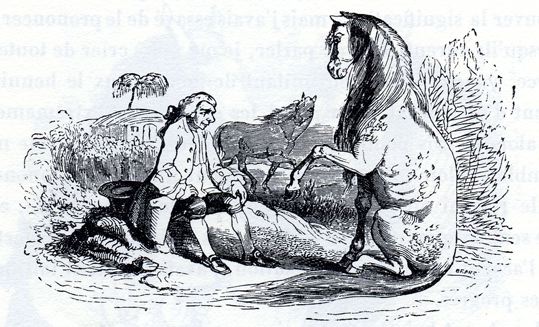
Gulliver among the Houyhnhnms

As I recuperate from air travel hell and try to gather my wits, here is a provocative essay examining how Jonathan Swift explored the complex function of lying in human nature. The essay is by Prof. Lee Perlman, in the New Atlantis, and you can read it here.

___________________________________

Source: The New Atlantis

Graphic

Why Journalists Can’t Shoot Straight

George probably wasn’t lying, but Bill sure was.

The issue in the Washington Post’s weekly Outlook section concerned the virtues and dangers of honesty in a Presidential campaign, a matter that interests me from the perspective of ethics, presidential history, and citizenship. Two Post reporters were given the assignment of creating sidebars to the main article, one on candidates who told the truth and were punished for it, the other on campaign lies that came back to haunt the Presidents involved.

These are not difficult assignments, by any means. Either would be a legitimate term paper topic for a high school senior’s history class; both would be rejected as a history major’s thesis topic as overly simplistic. Yet both Rachel Weiner and Aaron Blake botched their tasks, and would have earned D’s at best in high school history, and that’s only because of grade inflation. The reasons for their failures exemplify the inadequacy of the mainstream media for the job we need it to do during a Presidential election.

Continue reading

Mike Daisey Follow-up: Behold! The Classic Response of the Self-Righteous and Unethical!

Mike Daisey in China. Or, standing in front of a big poster. What difference does it make which, really?

Soon after I posted my article about Mike Daisey’s representation of fabricated events and facts as truth in his January feature on NPR, the actor/activist posted this dismissive explanation on his own blog.  It is Dan Rather’s Memogate excuse taken to the next level, the epitome of self-justification of the unapologetic zealot who believes that all is fair in the battle against (what he regards as) evil, employing a full battery of rationalizations for unethical conduct:

1) Daisey’s lies don’t matter, because they were used to expose a real problem (a.k.a “the ends justify the means”); Continue reading

Unethical Quote of the Month: Mike Daisey

“Well, I don’t know that I would say in a theatrical context that it isn’t true. I believe that when I perform it in a theatrical context in the theater that when people hear the story in those terms that we have different languages for what the truth means.”

Actor, writer, activist Mike Daisey, in an interview with NPR’s Ira Glass, exploring how Daisey was able to justify fabricating facts and accounts for the earlier aired—and just retracted—“American Life” installment called “Mr. Daisy  Goes To The Apple Factory.” NPR checked the particulars of Daisey’s first hand account of the human rights and labor violations he claimed to witness at Apple’s factory in China, and found that the writer had embellished, exaggerated,  and misrepresented much of what he reported. What NPR had broadcast as journalistic reporting was an excerpt from Daisey’s acclaimed touring one-man stage show, The Agony and Ecstasy of Steve Jobs.”

Mike Daisey, lying to us for our own enlightenment

Daisey’s quote, which is both illuminating and chilling, argues that using made-up stories and personal accounts in a theatrical context qualifies as truth, even if the same misrepresentations in a journalistic context are inappropriately false. The problem with his argument, and the flawed ethical theory behind it, is that both the NPR audience and his theater audience believe that Daisey is telling the truth. Daisey’s solution to the problem is simple: his one-man show does tell the truth…it just uses lies to do it. Continue reading

Wikipedia Ethics

An article in the Chronicle Of Higher Education serves as a stark lesson in how policies, procedures and bureaucracy can warp an organization’s purpose and lead to self-destructive conduct that injures stakeholders and destroys trust. The entity at issue: Wikipedia. And now we know why, despite the immense growth and improvement in the web’s community encyclopedia, it still can’t be trusted….and may never be trustworthy.

Historian and researcher Timothy Messer-Kruse tells of his decade-long effort to correct misinformation in Wikipedia relating to the Haymarket riot and subsequent trial in 1886, a landmark episode in the social, political and labor history of America. Messer-Kruse discovered that the entry included an outright error that had become standard in the historical accounts, but that he had personally proven was false through meticulous research. But Wikipedia wasn’t interested in accuracy: Continue reading

The New York Times Asks: “Should We Be Truth Vigilantes?” Ethics Alarms Answers: “No, Because You Can’t Be Trusted.”

Should Times reporters be like Wonder Woman's lasso of truth?

In an appeal to New York Times readers that is at once alarming, naive, arrogant and ominous, Arthur Brisbane, the Times’ “public editor” (Translation: ombudsman) asks whether the paper’s reporters should be “truth vigilante(s)… should challenge ‘facts’ that are asserted by newsmakers they write about.”

The answer is no, no, no, and for the obvious reasons. Times reporters are biased, and not inclined to challenge dubious statements they agree with or that come from political figures they like, and are inclined to find statements “non-factual” because of their own preferences and biases. Helpfully, the two examples cited by Brisbane are exactly the kinds of statements the Times, and most of the press, are completely incapable of handling fairly. Here’s the first: Continue reading

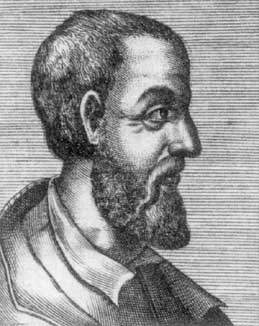
Five Ethics Lessons from Jerome Cardano (“Who?”), and One More

Remember his name?

A chance reference in a book I was perusing yesterday reminded me of a fascinating historical figure whom I hadn’t thought about in decades—which still gives me an edge over most people, who have never thought about him at all. He is Jerome Cardano, or, in the Italian version of his name, Gerolamo Cardano, an archetypical Renaissance man from Italy who walked the earth between 1501 and 1576. When I first learned about him those many years ago, his remarkable life didn’t give me any ethical insights because I wasn’t thinking about ethics then. Now, reviewing the facts of his remarkable life, I find that it carries at least five lessons with value for anyone who strives to live in a more ethical culture, and to have his or her own life contribute to making the world a better place.

Lesson 1 : DiligencePlay the hand you are dealt the best you can.

Cardano’s mother attempted to abort him by taking various poisons, but succeeded only in making him unhealthy. He stuttered; he was incapable of sexual relations, and had chronic insomnia, supposedly resulting in an “annual period” where he got little or no sleep for two to three months. He was afflicted at various times with the plague, cancer, dysentery, and many lesser ailments, yet he led a life full of extraordinary accomplishments and adventures, and continued to be active and breathing for 75 years, when most of his class and era died before they reached 45. Continue reading

Calvin College, Forfeiting Its Right To Exist

As further proof of evolution, the chimp is behaving exactly like his distant relatives, the adminsitrators of Calvin College

I don’t know what the exact point is that marks where a religious school’s departure from legitimate adherence to its core beliefs metastasizes into a nuisance to society and civilization by affirmatively encouraging life-crippling ignorance. I do know, however, that Michigan’s  Calvin College has passed that point.

Two religion professors at Calvin wrote scholarly papers suggesting that new discoveries in genetics and evolution raised questions about the literal reading of Genesis that could no longer be brushed aside. Neither professor questioned the existence of God or the role of their church, but they argued that the findings of rigorous, modern science may require a theological re-examination of literalist Biblical teachings. Readers of The Banner, the publication of the Christian Reformed Church in North America, promptly blew a Biblical gasket:

“To protect the church and college from false teachers and contrary orthodox beliefs it would be right to let these guys go,” said one commenter. “Clearly, professors who deny the scriptures as interpreted by our creeds and who have broken the promise they made when they signed the Form of Subscription should be fired,” said another. From yet another: “Why is it that so many Christians and academics in Christian colleges seem more concerned about keeping in step with what the world teaches than they are about what God’s Word teaches? Are we ashamed of God’s Word in the face of the beliefs of our worldly peers?”

Calvin investigated the two professors, and as a consequence one of them, John Schneider, resigned the tenured position he had held for 25 years, as part of a settlement with the college. Continue reading