Observations on Being Forced to Watch Network and Cable TV

A lost remote (it’s got to be around here somewhere!) has trapped me in Direct TV for the last two days, and I noticed…

1. I saw yet another unclever, gratuitous example of those working in the once ascendant, now gutter-level medium of television (Edward R. Murrow would be so disappointed…) thinking that using code for “fuck” is hilarious and appealing. [This recurring topic was discussed again just about a week ago]

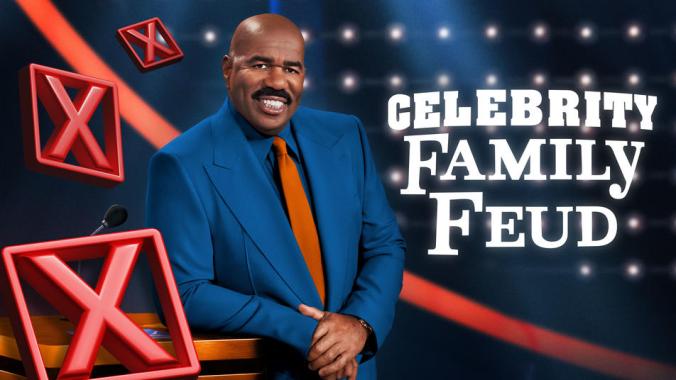
The local Fox channel was promoting the syndicated “Family Feud” show, itself now almost continuously obsessed with smutty questions and answers, with the catch phrase, “What the Feud!” Does the letter ‘F’ now automatically suggest “fuck?” Is the implication that “fuck” is intended, buried somewhere or barely implied intrinsically hilarious to the average TV audience? The depressing phenomnon reminds me of when my theater did a special performance of “Moby Dick Rehearsed” for middle-school kids and a lot of them couldn’t stop giggling and making wise-cracks every time an actor mentioned the whale—“Dick,” you know—or said “she blows.”

Continue reading

Observations on Media Research Center’s 2023 Political Joke Survey

The Media Research Center, a conservative “media watchdog” roughly the Right’s equivalent of Media Matters but with a much bigger job, analyzed six of the daily late night comedy shows: Comedy Central’s “The Daily Show,” ABC’s “Jimmy Kimmel Live!”, NBC’s “The Tonight Show Starring Jimmy Fallon” and “Late Night with Seth Meyers,” CBS’s “The Late Show with Stephen Colbert” and “The Late Late Show with James Corden” until its April exit, from January 3, 2023 through December 22, 2023. The results are here. The researchers counted 9,518 jokes they judged political in nature, and broke them down into categories. 1,601 targeted progressive, Democrats and figures on the left of the political spectrum. 186 aimed at people, groups, or institutions not associated with either side. 7,729 or 81% of the jokes were considered barbs at were directed at individual, organization or positions considered to be conservative. 493 targets were the objects of a single joke, with 285 of these on the right, 167 on the left, and the remaining 41 on non-partisan topics.

The unbalanced percentages are only a surprise in that they are less lopsided than I would have guessed, but still obviously showan absurdly unfair partisan bias. If, as was once the norm in all political comedy, all sides and parties were mocked relatively equally with the President in the White House taking most of the fire, political humor can be fairly categorized as entertainment with the primary objective being to make as many people laugh as possible. Distorted to this extent, however, late night comedy becomes a self-evident propaganda weapon that plays a significant part in the mainstream media mission to sway elections and manipulate public opinion.

Some telling findings:

Continue reading

Ethics Quiz, TV Talk Show Dept.: Unethical Or Well-Known Standard Practice? [Corrected]

Ann Althouse posted that video as genuine. Is it possible that Ann has never been on a TV talk show or news show? I sure have, and there is no chance, none, that Graham Norton sprung a surprise request on British theater and movie icon Judy Dench, who is 88, that she deliver a Shakespeare speech or sonnet on the spot.

Guests on talk shows are always prepped; they are told what the interview is going to cover, and no competent host, certainly not a veteran like Norton, would dare risk embarrassing a guest by putting them on the spot without notice and adequate preparation time.

Of course Dench knew she was going to be asked to recite some Shakespeare, and was ready. Being an actress, she also was ready to act as if the request was a surprise. And, of course, knowing little or nothing about how show business works, most of Norton’s viewers were impressed and fell for the stunt. Norton wins. Dench wins.

And someone who styles herself a truth-teller passes along the sham as genuine.

Your Ethics Alarms Ethics Quiz of the Day is…

Is Norton and Dench’s put-on ethical?

Continue reading

Rolling Stone Proves You Can Find Ethics Enlightenment In The Strangest Places

What could be a more unlikely locale for ethics lessons than a standard web click-bait list? Yet against all odds and defying all precedent, Rolling Stone has posted such a list that could sustain multiple courses in ethics: business ethics, popular culture ethics, media ethics, and ethical decision-making generally. It is called “The 50 Worst Decisions in TV History.”

Not all of the items on the list have ethical implications, and not all of the choices for the list belong there. Not only that, what I thought would be the #1 Worst Decision right up to the end in Rolling Stone’s countdown was missing entirely, presumably because of the generational bias (and ignorance) of the writers. Almost all of the TV network and production decisions listed occurred in the last thirty years: I assume this is why the list even missed ABC’s infamous decision to replace the ailing Dick York as Darren, the long-suffering hubby of Samantha the Witch on its hit sitcom “Bewitched,” with another, lookalike actor, the inferior Dick Sargent, without any explanation on the show, as if the audience wouldn’t notice. (Ethics lesson: Treating your customers/followers/fans/audience members like idiots is disrespectful, incompetent, and irresponsible: unethical.)

No, that wasn’t the missing #1. Be patient.

Continue reading

Saturday Ethics Alerts, 1/16/21: “Nevermore!” If Only…

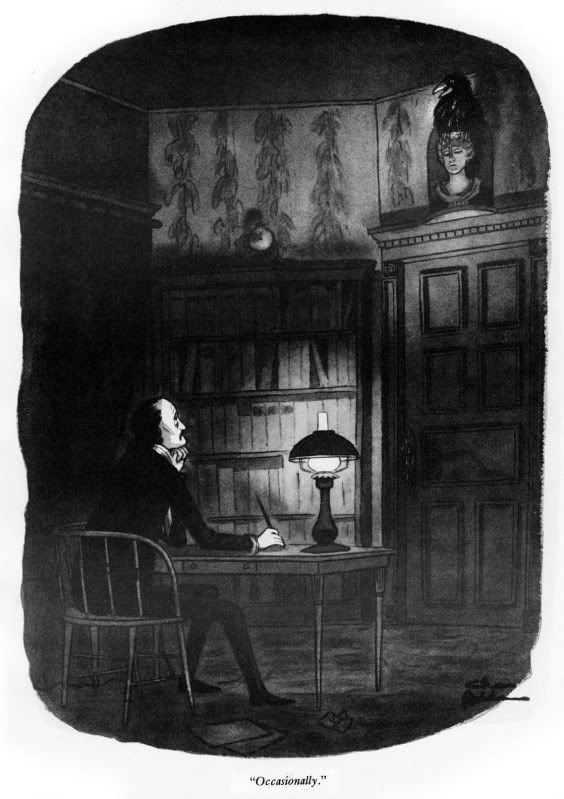
Raven Addams

The 18th Amendment to the U.S. Constitution, prohibiting the “manufacture, sale, or transportation of intoxicating liquors for beverage purposes,” was ratified by the requisite number of states on this date in, 1919. It was a great, botched, ethics experiment. Alcohol was too far embedded in the culture for too long and in too many ways, and the laws prohibiting alcohol were badly drafted and engendered public resentment and contempt. Still, as the Ken Burns documentary on the topic made clear, the damage being caused by alcohol abuse before Prohibition was permanently slowed down and reversed by the ban, though the ban itself was doomed from the start.

1. Quote of the Day: I just finished watching “We Bought A Zoo” again, and it reminded me of the quote, alluded to in the film, by the real life English man who did buy a zoo, and whose story was transferred to America in the film staring Matt Damon. Benjamin Mee said in his book (with the same title as the film) about the adventure, “You know, sometimes all you need is twenty seconds of insane courage. Just literally twenty seconds of just embarrassing bravery. And I promise you, something great will come of it.”

He’s absolutely right, and this principle has enriched my own life too many times to count.

Continue reading

Is It Unethical To Use HIV Transmission As A Plot Element In Drama?

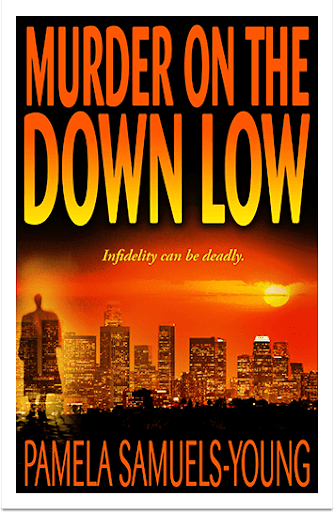
In an essay in The Body, an HIV-AIDS community website, Abdul-Aliy A Muhammad argues that it is unethical and exploitive for writers to use the disease as a plot point in TV shows and movies. His argument is pitched at black writers particularly. (In case you are not familiar with the term he uses, the “down low” refers to apparently heterosexual black men who secretly have sex with males.) He argues in part,

Last week’s episode of the popular show on the Oprah Winfrey Network (OWN), Greenleaf, provided a storyline that’s become all too familiar—the disclosure of HIV status as a spicy and scandalous plot twist.

…During this season, at the end of episode three, a shocking reveal happens: AJ was raped in prison, and the person who raped him transmitted HIV to him. AJ is now suffering from HIV disease and finally tells Grace. That’s how the episode ends. As an HIV-positive Black person, my heart sank, because again, the failure to hold any nuance with HIV emerged, 16 years after the “down low” and HIV plot twists of the early 2000s. It’s as if we’re frozen in time.

… I want to say this to the writers and producers of Greenleaf, and other Black creatives: HIV is not a plot twist device. HIV is not a caricature, and HIV is not predatory. Yes, there are the very real stories of people contracting HIV after being raped, and yes, there are some people who are not fully open to their partners and who may have transmitted HIV. But the narrative of HIV as a hidden monster and prison rape are not what drive the epidemic in Black communities.

…[T]here have been many harmful representations of HIV stories in the media. Let’s start with Tyler Perry’s 2010 film…For Colored Girls Who Have Considered Suicide / When the Rainbow is Enuf. In his film adaptation, Janet Jackson’s character, “Lady in Red,” is married to a man named Carl Bradmore…His character is struggling with sexual desire and can be seen cruising for other men in the film, and ultimately there is a scene where oral sex is performed in a car. Hardwick’s character Carl Bradmore is in a BMW under a bridge and gets head from another Black man.

…Throughout the film, Lady in Red has a scarf tied around her neck, and toward the end, the scarf is red. She coughs frequently and drinks tea, ostensibly to soothe her throat. The drama erupts toward the end of the film, when they are both sitting on a bed and not facing each other. She says something to the effect of, “You can keep your sorry and your HIV”—which is saved as a grand reveal, to provide shock and melodrama to the story. Shange’s original play includes no “down low” men, and it was written before HIV, so these aspects were specifically added by Perry.

I watched this film in shock…. My mother was a Tyler Perry fan; she thought his desire to (and practice of) giving leading roles to Black actors was something to celebrate. I on the other hand felt… here again is another media representation of the [down low] monster as a viral operative to drive the drama of the plot, and to both titillate and disgust. There is data that suggests that Black people aren’t doing anything behaviorally different than white people when it comes to intimacy or other vulnerable ways to become HIV positive. The difference in disproportionate infections comes from anti-Black racism that discourages trust of systems and incarcerates and criminalizes Black people. Our vulnerability is undergirded by the lack of infrastructures of care and the breakdown of food systems in the hood and in the rural South.

Until we truly consider the truth about HIV and not the easily propagated myths, we are doing more harm to our communities and aren’t standing in solidarity with HIV-positive Black people…. Isn’t it time for TV and film catch up and stop with the same tired use of HIV as plot twist or cautionary tale. Continue reading

Tuesday Ethics Tidbits, 7/7/2020: Goodbye To “Social Q’s,” Faithless Electors And A Weenie Judge

1. I’m cancelling Philip Gallanes. The advice columnist in the Times’ Sunday Styles section has provided some interesting topic for discussion here, but there have to be some consequences for irresponsibly spreading propaganda and falsehoods, even if they are sanctioned by his employers. In response to a “Social Q’s” query from someone who was annoyed that a neighbor had posted a “Defund the Police” sign and asked if it would be ethical to eschew calling the cops if she saw her neighbor’s house vandalized (Answer: Of course not.), Gallanes had to give readers the whole set of George Floyd Freakouts talking points:

“Many of the reports I’ve read about defunding the police focus on limiting the deployment of armed police officers to situations where they may be necessary and helpful — such as violent crimes. Many activists point to the large share of state and local budgets dedicated to police services when many calls to police (about persistent homelessness or family conflicts, for instance) would be better handled by social workers. Why not redirect some police funds to affordable housing and mental health services, they ask?”

Then why not say what you mean, I ask? Defund means defund. I resent this dodge.

“Still others would like to dismantle the current model of policing, as Minneapolis has pledged to do, and reimagine community safety given the frequency with which officers kill unarmed Black men and women.

And how’s that working out so far for Minneapolis, Phil? The frequency in which officers kill unarmed Black men and women is called “infrequently,” and the frequency is decreasing. Continue reading

The Man Who Coarsened America

He didn’t set out to, of course. Like most figures in cultural history who leave the culture a little (or a lot) worse than they found it, Craig Gilbert, who died this week, just wanted to try something new he thought might work, and, of course, to make a buck. He was successful on both counts, but unfortunately, the law of unanticipated consequences took over.

What he wanted to try was the reality TV show, though he didn’t call it that. In the early 1970’s, Gilbert was an established documentary-maker of note and  a producer at WNET, the New York PBS station. He had the inspiration of  having a camera crew follow a real, ostensibly typical American family as it went about living for months, to let the public see what happens behind the closed doors of their neighbor’s homes.

WNET agreed to spend $1.2 million to finance the project), and Gilbert set about seeking an appropriate family for the venture.

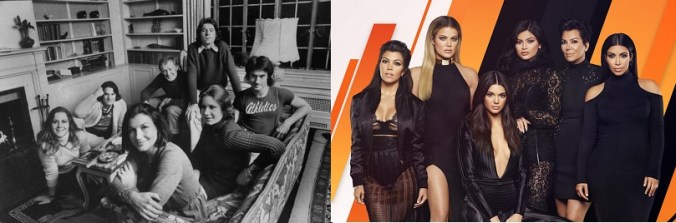
Gilbert searched for a family that was ostentatiously middle class with a lot of kids spanning different age groups. He settled on the the Loud family, Bill and Pat, with  their five children, Lance, Kevin, Grant, Delilah and Michele. The Louds didn’t know what they were getting into, because it was something no family had ever gotten into before. Over 300 hours of filming over seven months in 1971, they were recorded in increasingly intrusive ways, creating scenes that made the Louds into national soap opera stars, except that it was their real life being watched and talked about. “An American Family” was broadcast two years later as a 12-part series, and gradually took over the lives of the family members. Continue reading

Morning Ethics Warm-Up, 3/16/2020: Zugswang!

Good morning, inmates!

I’ve been reading that social isolation may be deadly. Zugswang!

Last week “ethics zugswangmade a return to Ethics Alarms, and you can expect to read a lot more of it. The chess term describing the dilemma is which the only safe move is to stay still, and staying still is impossible, seems to be applying to increasing numbers of dire situations recently, especially in the ethical sense, in which all choices are unethical.Upon reflection, several posts involved ethics zugswang even when I didn’t use that term. The woman whose student loan debts topped 900,000 dollars is in zugswang. Progressive feminists who use gender-baiting as a partisan weapon are in self-condemned zugswang when political allies use misogynist terms against conservative women.

It’s really fun saying “zugswang,” but I will try to touch on some matters that don’t involve ethics zugswang….like…

1. “Hogan’s Heroes” ethics. I never thought it would happen, but a cable channel is re-running “Hogan’s Heroes” episodes. The very popular Sixties sitcom about POW prison camp and the wacky and inept Nazis running it has been thoroughly excoriated as outrageously tasteless and politically incorrect. My father loved the show because anything that made the Nazis look ridiculous was aces with him. Is it tasteless and offensive to show “Hogan’s Heroes” today?

It was clearly satire, in the same spirit as Larry, Moe and Curly playing Hitler and cronies, or Charley Chaplin in “The Great Dictator”—or, to pick a recent example, the child’s view of Hitler as an imaginary friend in “Jo-Jo Rabbit.” The show obviously took its inspiration from “The Great Escape,” of which it is virtually a parody (without the executions, of course.) WW II vets like my father were accustomed to the Nazis being ridiculed and trivialized in the process. In an age that has seen the Holocaust Museum’s exhibits and widely distributed documentaries about the full barbarity of Nazi Germany, the satire may no longer work.

There are other reasons why “Hogan’s Heroes” is no longer funny, despite the very talented cast. Its laugh track is annoying now, especially when the jokes are old and repetitive: how hard can you keep laughing when Sgt. Schultz (John Banner) says “I know nothing! NOTHING!” for the thousandth time? Perhaps the kiss of death for the series is the ubiquity of series star Bob Crane as Hogan, Crane was always smarmy for my taste, but knowing his fate—Crane was bludgeoned to death by a likely participant in his sick S & M porno ring that involved, among other revolting activities,  secretly videotaping women engaged in sex—make watching the show a painful experience. Continue reading

Yes, It’s Another “Ick Or Ethics?” Quiz: Sarah Palin’s Surprise

Believe it or not, that’s Sarah next to the bear….

To be absolutely transparent, my mind’s made up on this one: I think it’s unethical. However, I admit to be a hard-liner on this issue, which is “The duty of leaders not to debase their positions or former positions for personal gain or ego gratification.”

Let me introduce this  horrific cultural episode by saying that I regard the TV show involved, “The Masked Singer,” among the Top Ten Stupidest Shows in the history of network television, and I’ve seen a LOT of network television, far more than is good for me. Its existence is an insult to the public, its taste and intelligence, and the United States of America. Maybe the species too. Adam and Eve.

Now here is the video clip. Consider yourself warned: it cannot be unseen or unheard:

http://www.youtube.com/watch?v=nnzKzHKUKoo

Yes, Sarah Palin dressed up in a rainbow teddy bear suit and rapped “Baby Got Back” on national television.

The lyrics from Sir Mix-a-Lot’s Noel Cowardesque 1992 hit:

Oh, my, God Becky, look at her butt
It is so big, she looks like
One of those rap guys’ girlfriends.
But, ya know, who understands those rap guys?
They only talk to her, because,
She looks like a total prostitute, ‘kay?
I mean, her butt, is just so big
I can’t believe it’s just so round, it’s like out there
I mean gross, look
She’s just so, black
I like big butts and I can not lie
You other brothers can’t deny
That when a girl walks in with an itty bitty waist
And a round thing in your face
You get sprung, want to pull up tough
‘Cause you notice that butt was stuffed
Deep in the jeans she’s wearing
I’m hooked and I can’t stop staring
Oh baby, I want to get wit’cha
And take your picture
My homeboys tried to warn me
But with that butt you got makes (me so horny)…

Nice. Classy!

Your Ethics Alarms Ethics Quiz of the Day:

Was Palin’s appearance on “The Masked Singer” icky, funny, or unethical?

Continue reading