From Hero to Idol: Congratulations, Scotty McCreery!

Way back in March, long before the 2011 edition of American Idol had winnowed its hopeful singers down to the final thirteen, 17-year-old Scotty McCreery earned an Ethics Hero here by bravely taking responsibility for the mistreatment of another contestant in the group segment of the audition process at a time when the judges seemed to be in the mood to make someone pay for it. The incident has been forgotten, but it showed Scott to be a young man of unusual integrity and courage. Little did Ethics Alarms realize  that he was also the singer to beat, and nobody beat him. Last night, he was crowned the American Idol.

Fame and fortune changes people, as we all know, and too often for the worse. Still, McCreery’s prospects of holding on to his core values look strong, because his character looks strong, and everyone, whether or not they follow American Idol and whether or not they groove to Scotty’s milieu, Country-Western music, should applaud the entry of a talented and ethical young man into the popular culture.

Congratulations, Scotty. In March we knew you were good; we didn’t know you were this good.
Legal Ethics Train Wreck on “The Good Wife”

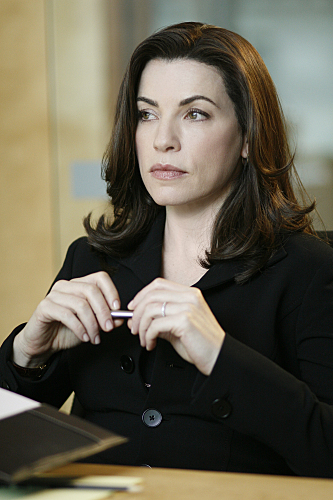
Oh, Alicia, Alicia...what have they done to you?

The CBS legal drama “The Good Wife” continues to show the seamy side of big firm legal practice, with heroine Alicia Florrick’s firm, Lockhart, Gardner and Bond, its adversaries, and even Good Alicia herself violating legal ethics rules with abandon, and at an accelerating rate, based on recent episodes. There is nothing wrong with this as entertainment, as long as the Rules themselves are not being misrepresented (they aren’t), the misconduct isn’t being presented as ethical (it isn’t, though it is sometimes hard to tell), and viewers don’t get the idea that this is how most law firms behave. Unfortunately, like most legal shows, “The Good Wife” fails in this important realm. I work with many large law firms, and they are all very aware on the ethical lines, bold or fuzzy, that they must not cross, and take their obligations seriously.

The most recent episode of “The Good Wife,” entitled “Getting Off” included a full-fledged ethics train wreck sparked by the firm’s habitually unethical adversary, the fecund Patti Nyholm. In the middle of representing the defendant hospital in a lawsuit brought by a Lockhart, Gardner and Bond, Nyholm is fired by her firm and removed from the case. With a twinkle in her eye, she approaches none other than the Lockhart firm to represent her in a multi-million dollar lawsuit against her former firm for discrimination and wrongful termination, on the theory that it fired her because she was pregnant. Continue reading

The SATs: Flat Learning Curve=Unfair Questions

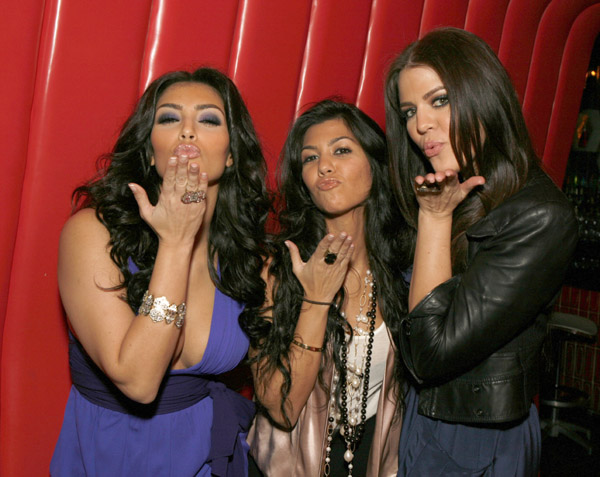
The secret to acing your SATs? Know your Kardashians!

After all the anger, debate and controversy in the Sixties over affirmative action and the Scholastic Aptitude Tests, with the case finally being made to the public’s satisfaction that including test questions  based on cultural references likely to be unfamiliar to African-Americans or lower-income students (such as, famously, questions about yachting) negatively affected their test scores, wouldn’t you think that it would have been thoroughly understood by the people who make up the SAT scores that questions with a cultural bias were inherently unfair and incompetent questions?

Here is the prompt for the essay question in the SAT test given to high school students across the country last week : Continue reading

Ethics Night on “American Idol,” As An Ethics Hero Is Born

Ethics Hero, Scotty McCreery

“American Idol’s” group portion of its winnowing process always is the most fascinating chapter of its yearly saga, as the singing competition briefly shifts into full reality show mode. I’ve never been convinced that it was a fair method to judge aspiring singers who were competing as solo acts, as it frequently results in superior vocalists being dumped because they couldn’t sing harmony, learn choreography and lyrics under pressure, or play well with others. I know you have to get that mass of ambition and ego reduced to 24 people somehow, but group day is the equivalent of throwing darts at a dartboard.

It makes for great ethics scenarios, though. The format guarantees it, as the contestants have to form groups of four or five in a cruel process reminiscent of choosing sides for pick-up baseball games, guaranteeing that some people will end up feeling like the fat kid who always gets chosen last, if at all.

Last night there were several featured ethics dramas, with the judges, as they have been all season, being less than consistent in their responses to them. Continue reading

Comment of the Day: “Dr. Phil’s Child-Abusing Mom”

I don’t want to pick on Cara, who made this comment in reply to my response to her earlier comment that objected to the original post referring to forcing a seven-year-old child  to drink hot sauce and making him stand in a cold shower as punishment as “abuse.” That comment had such gems as “screaming is not necessarily an indication of abuse, some children just can not express themselves” and “depending on how you look at it, all disciplinary methods could be called abusive.” Her follow-up message, even more than her first, shows how people can come to excuse, rationalize and eventually accept truly terrible and cruel conduct, by others and eventually themselves. Rationalization cripples the ethics alarms, and eventually, as in Cara’s reasoning, we are excusing evil, and condemning those who stand against it, arguing, as she does here, that they have no standing to judge others, since everybody makes mistakes.

The comment makes a better case than anything I have written thus far for the importance of us all to engage in constant efforts to perfect our ethical sensitivity, to improve our ethics alarms, and to be vigilant against facile rationalizations.

Here’s a challenge: How many rationalizations can you count being used here? I find at least six, and perhaps as many as eight.

Here is the comment, by Cara, on “Dr. Phil’s Child-Abusing Mom”: Continue reading

ABC News’ Unethical, Dishonest and Biased “What Would You Do?”

ABC’s News’ periodic segment “What Would You Do?” is public opinion manipulation crossed with bad social behavior research, seeking the entertainment value of hidden camera shows. The segments stage outrageous public scenarios—a caretaker mistreating a wheelchair-bound senior, for example, to see how bystanders will react. Any potential benefit of the segments—might they encourage people to consider intervening when they see blatantly unethical  behavior?—is swallowed whole by the more likely negative results. One is that the existence of a hidden camera show that stages such charades creates inevitable cynicism and skepticism. Most witnesses to crimes and other shocking public conduct have enough mental and social hurdles to clear before they can reach the decision to take action without ABC News giving them another. The thought “I wonder if this is fake?” may be just enough to still someone’s ethics alarms and cause them to discount the duties of rescue and confrontation. Indeed, several of the scenarios stages for the show have been unconvincing. “What Would You Do?” also provides a convenient rationalization for those who are inclined to ignore fellow human beings in peril: “This must be set-up.”

In addition, “What Would You Do?” often carries a more sinister feature, courtesy of the biased journalists at ABC. Sometimes the simulated conduct appears to be designed to portray the worst of human values, with the clear implication that such conduct is common in America. And sometimes, like last week, this is driven by a political agenda. Continue reading

Dr. Phil’s Child-Abusing Mom

I stopped watching Dr. Phil when I discovered that he was a fraud. There have been some substantial benefits of this pledge on my part; for example, I didn’t see the recent episode about problem children, which showed videotape of a mother from Anchorage, Alaska torturing her child.

Incredibly, Jessica Beagly, mother of six, oversaw the videotaping of her squirting hot sauce into the mouth of her adopted Russian son and forcing him into a cold shower. She made the tape so Dr. Phil could give her some advice on a segment that aired in November  called “Mommy Confessions.” The studio audience was brought to tears by the tape, and Dr. Phil, no fool he, described the punishment as “over the top.”

Consequences (so far): Continue reading

“American Idol” Jumps the Ethics Shark

Just four audition episodes into the new “American Idol,” it is obvious that the show is done. It might hang on for a few, even several more seasons; after all, “Happy Days” continued for almost a decade after Fonzie jumped the shark. But it’s still over, and it wasn’t because the show lost its center and star, the acid-tongued, irresistible Simon Cowell…well, not exactly. It didn’t have to be the case, but when Simon left, the show lost the one thing it has to have–integrity. Continue reading

CNN and John King, Endorsing “Newspeak” and Disgracing American Journalism

And so it begins.

CNN’s John King: “Before we go to break, I want to make a quick point. We were having a discussion about the Chicago mayoral race. My friend Andy Shaw used the term ‘in the crosshairs’ in talking about the candidates. We’re trying, we’re trying to get away from that language. Andy is a good friend, he’s covered politics for a long time, but we’re trying to get away from that kind of language.”

What “kind of langauge”? Oh, you know: vivid language. Metaphors. Similes. Can’t have that on CNN, because, as everyone knows, a completely unrelated use of a cross-hairs graphic on a Sarah Palin campaign map had nothing to do with the shooting of  Rep. Gaby Giffords and 19 others, but the media decided to make everyone think it was the fault of the map anyway. So now a news network, which is supposed to convey information, is apologizing for a guest’s use of the word “cross-hairs” in a context that had nothing to do with violence. Continue reading

The Comment of The Day: Yes, It’s About Tide Commercials, But Read It Anyway

Ethics Alarms reader Lianne Best weighs in on the Tide (with Acti-lift!) ads, with a valuable observation with far broader ethics significance. She aptly describes exactly how norms of appropriate conduct become corrupted and coarsened (or sometimes enlightened and improved!) over time:

“I hope I’m not too late to the Tide with Acti-Lift! party, but for those who say these ads are “just marketing” and don’t have any real impact … the first time I saw each of these ads, I was horrified. With each subsequent viewing I was less and less offended, until they became normal. Participating in unethical behavior starts with it becoming normal, so these seemingly innocuous commercials are actually pushing the snowball down the slippery slope. Those with influence, whoever they may be, must be cautious with its use.”