Army Policy Is Apparently That Its Prosecutors Must “Believe All Women”

This story, initially reported by the Associated Press, is at very least ominous, and at most a reminder that the Biden Administration’s position is that a man accused of sexual assault is considered guilty until proven innocent.

Unless the man is Joe Biden, of course.

At the beginning of last month, the Army’s head sexual assault prosecutor, Brig. Gen. Warren Wells, was fired from his job by Secretary of the Army Christine Wormuth. The justification given was a 2013 email in which he had the audacity to remind Army defense lawyers that they were the last line of defense against false accusations. The message read,

Continue reading

Ethics Alarms Presents With Sorrow: The Worst Ethics Conflict Of All

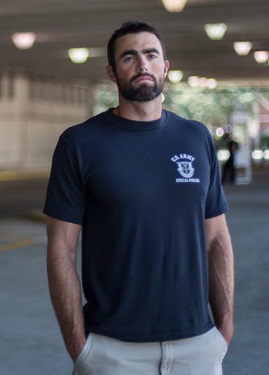
Dan Quinn's not a soldier any more because he disobeyed orders...and stopped a man from raping a kid in Afghanistan. War is hell.

Dan Quinn’s not a soldier any more because he disobeyed orders…and stopped a man from raping a kid in Afghanistan. War is hell.

An ethics conflict occurs when two unquestionable ethical values demand opposite results in the same situation.

An impossible ethics conflict is when the typical priorities of duty require the worst outcome.

This is an impossible ethics conflict.

Interviews and court records reveal that the American military command has ordered American soldiers and Marines not to intervene in Afghanistan when they observe Afghan military commanders and soldiers raping boys, even when the abuse occurs on military bases. The local practice is called bacha bazi, (“boy play”).  The  policy aims at avoiding conflict and maintaining good relations with the Afghan police and militia units that the United States has trained to fight the Taliban. It also embodies the theory that the U.S. should not  impose its cultural values on other nations. Pederasty is widely accepted in Afghanistan, and being surrounded by young teenagers, a.k.a. male rape victims, is mark of social status for powerful men.

Imagine how bad the Taliban must be if these are “the good guys.”

Asked via e-mail about this American military policy by the New York Times, the American command spokesman in Afghanistan, Col. Brian Tribus, replied, “Generally, allegations of child sexual abuse by Afghan military or police personnel would be a matter of domestic Afghan criminal law…there would be no express requirement that U.S. military personnel in Afghanistan report it,” with the exception of when rape is being used as a weapon of war.

Well, we certainly can’t have that. The response ducks the ethical issues entirely. Continue reading

Ethical Quote Of The Month: Sgt. Shane Ortega

Trans Military Service Member

“You have to exercise patience with people, but people are not going to understand the subject overnight.”

—-Sgt. Shane Ortega, helicopter crew chief in the Army’s 25th Infantry Division, speaking to the Washington Post about his legal battle with the U.S. military, which continues to classify him as a woman despite his transition to a man.

The reason we say that “hard cases make bad law” is that the toughest cases fall between the cracks in rules and regulations, and they all have cracks. The law seeks consistent precedents, so anomalous fact patterns threaten the integrity and efficiency of otherwise effective laws and rules that work well in the vast majority of situations. Yet those hard cases usually indicate flaws in policies, rules and laws, and sometimes point to the need for change.

Often, an organization, especially a bureaucratic one like the military, will deal with such disruptive cases by simply looking past the actual facts, and treating them “by the book.” Ortega represents a particularly glaring instance of this phenomenon, which in his case not only harms his career, but also makes the military appear rigid to the point of absurdity.

Yet, as his Ethical Quote of the Month indicates, he understands. Change is painful, and it takes time. Continue reading