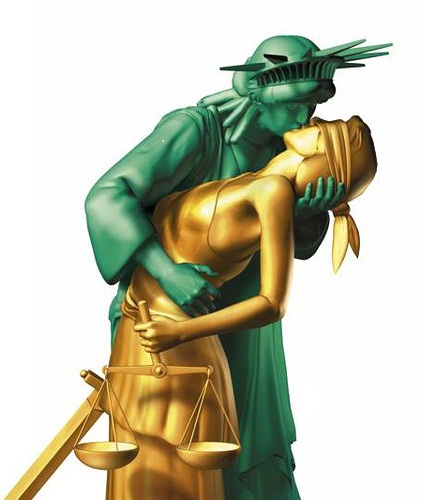
Remember former Perkins Coie lawyer Bradley Datt, the ex-Perkins Coie litigator whose post-Charlie Kirk assassination Facebook Facebook entry began, “Charlie Kirk got famous as one of America’s leading spreaders of hatred, misinformation and intolerance.The current political moment—where an extremist Supreme Court and feckless Republican Congress are enabling a Republican president to become a tyrant…”? The firm correctly fired the jerk, but such worthies as Unethical Website “Above the Law” and a lot of my Trump Deranged Facebook friends endorsed his “extremist Supreme Court” and “tyrant” analysis.
The U.S. Supreme Court just confirmed a major constitutional limitation on presidential power by striking down the sweeping tariffs that President Donald Trump imposed in a series of executive orders. By a vote of 6-3, the justices ruled that the tariffs exceed the powers given to the President by Congress under a 1977 law providing him the authority to regulate commerce during national emergencies created by foreign threats.
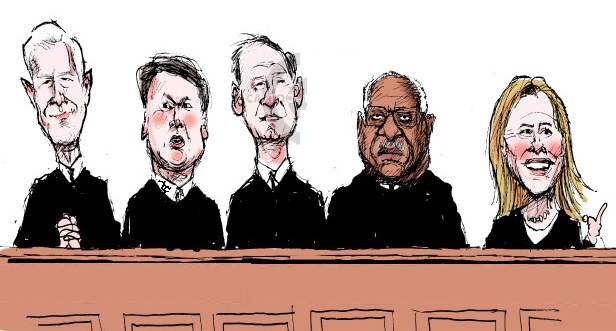
The opinion is here; analysis is everywhere, but what I care about right now is that when the centerpiece of the President’s economic program and foreign trade policy was before the Supreme Court, the alleged “radical” Justices did not rubber stamp it and did not “bend a knee,” but rather, as they are sworn to do, followed the law and the Constitution and ruled that President Trump had exceeded his powers. Three of the supposedly “radical” justices (if you’re not willing to distort the law in the direction the Axis favors, you’re radical), Roberts, Gorsuch and Barrett, joined with the three lock-step progressive DEI Justices (a black woman, a lesbian, and the “Wise Latina”). They are the ones who apparently make up their hive mind on cases before they even read the briefs based on what Democrats want, to foil the Republican POTUS. Fortunately, the other six Justices have some integrity
Because, you see, Trump isn’t a “king,” and the system works, just as the balance of power among the branches of government is supposed to.




 Ethics Alarms