From The Ethics Alarms “Stop Making Me Defend Sarah Huckabee Sanders!” Files: “The Advocate” Lies About The Masterpiece Cakeshop Case


Wouldn’t it be wonderful if activists had integrity? Unfortunately, most of them don’t, and I only say “most” because I haven’t checked all of them. Virtually all that I have checked spin, distort facts, and lie outright, because the ends justify the means to them, and they, of course, are Right. It’s the Saint’s Excuse. Lies that advance the cause are benign.

The latest disgraceful example of wilful deception in support of a passionately felt cause came from the LGBT publication “The Advocate,” as well as many Democratic and progressive news sources. They all chose to deliberately misrepresent what the President’s spokesperson said about his position was on The Great Cake Controversy…all the better to rev up hate and fear among their readers. You see a typical example in the label to the video above. “Sarah Sanders: Trump OK with businesses hanging anti-gay signs.” She did not say that. The video proves she did not say that. She was asked if the President agreed with the Solicitor General in his oral argument before the Supreme Court in the Masterpiece Cakeshop case when he said that it would be lawful and possible for a baker to hang a sign saying, “We don’t bake cakes for gay weddings.” She said yes. Of course yes. The government’s case is that a baker should not be forced to “participate/endorse” a ceremony that his religion declares morally wrong, and thus is not discriminating by refusing to make cakes for same sex weddings, as long as the baker does not generally discriminate in providing service on the basis of sexual orientation. If the Court agrees, then a baker such as the owner of Masterpiece Cakeshop can legally follow the dictates of his faith and not make same- sex wedding cakes, and if he isn’t selling them, he not only could but should inform potential same-sex couples of that fact.

This is not, by any fair assessment, an “antigay sign.” It makes no antigay assertions at all. The statement is false. Unequivocally, intentionally false. Continue reading

Comment Of The Day #2: “Back To The Bigoted Baker: It’s Complicated…More Than I Thought”

This the second of the Comments of the Day on the post about the Great Cake Controversy; a third arrived last night, which will appear shortly. It was authored by the always provocative Mrs. Q—you can tell because she always uses ampersands. I used to turn them back into “and,” and then decided that this was a signature feature.

The three Comments of the Day on this topic are as different as they could be. I detest the Colorado baker controversy, because three people could have and should have avoided the whole thing, saved a lot of time, money, and ink, and just exhibited some empathy and proportion rather than avoiding the Golden Rule so emphatically. I detest it, but it certainly is a rich ethics subject.

Here is Mrs. Q’s  Comment of the Day on the post Back To The Bigoted Baker: It’s Complicated…More Than I Thought:

When my wife & I were looking for wedding rings we stopped at a place where the owner after talking to us went on a strange rant about some NFL player who came out gay. The owner went so far as to physically mimic kissing another guy in telling his story, and shivering with wide toothed disgust at the thought. He didn’t say he wouldn’t sell us a ring, but obviously we didn’t want one from his store & the feeling was mutual.

We could have gone on Yelp and given the store a bad review or complain to someone who could “go after” him politically, but at the end of the day our relationship didn’t (doesn’t) need others affirmation. We were certainly hurt – not by his thoughts but the manner in which he shared his thoughts. Yet we picked our proverbial battle and let it go. Why? because we too are Christian and know no one person can ever really give us what we need. Hurt feelings can be gotten over and forgiveness heals wounds far faster than enacting revenge because someone doesn’t agree with us or what we do.

We have to ask what will be next. I don’t believe suddenly we’ll see “No Homo’s Allowed” signs on shops. And ultimately that’s not what I believe this case is about. Also I’m not convinced that these bakers are bigots either. Instead I suspect what this case is ultimately about religion and thought police. Orthodox Muslims having to make non-Halal foods, Jewish deli’s selling pork, Christians making Satanic themed confections. I’d rather see a few victim-minded SJW’s get butt-hurt than force others to sign off on what are ultimately another persons *private* beliefs. Forcing business owners to think as we wish sets a dangerous precedent while walking away from a shop not being affirmed only requires one to find another place to go. And honestly it’s fairly easy to find smug leftist affirmation at businesses. Yes…even in small towns too. Continue reading

Comment Of The Day #1: “Back To The Bigoted Baker: It’s Complicated…More Than I Thought”

There were so many thoughtful and diverse comments on the post about the Great Cake Controversy that I could have justified four or five Comments of the Day. I chose two. This is the first, by the indefatigable Michael Ejercito. Here is his Comment of the Day on the post Back To The Bigoted Baker: It’s Complicated…More Than I Thought:

“Art is notoriously difficult to define. To that list, I could argue for the addition of gardeners, landscapers, bathroom floor tilers, interior designers, architects, website designers, marketing consultants, and on and on. Is a sign-maker an artist? A printer?”

This is a feature, not a fault, of the First Amendment. Courts must make findings of fact based on evidence and testimony. Courts did in fact do just that in Hurley v. Irish American Gay, Lesbian, and Bisexual Group of Boston, 515 U.S. 557 91995) and Rumsfeld v. Forum for Academic and Institutional Rights, Inc., 547 U.S. 47 (2006).

In its amicus brief, the Department of Justice spent a total of six paragraphs detailing how public accommodations laws do not ordinarily implicate freedom of expression.

“Justice Kennedy became involved in some of this discussion about where to draw the lines — the ready-made/custom cake distinction, the speech/conduct distinction, and the distinction between selling a cake in a shop and supervising the cutting of a cake at a ceremony…”

It is a distinction that must be made.

It is a tenuous argument, at best, that the sale of sign-making supplies constitutes expression. Thus, Colorado’s laws properly apply to such, and it is unlawful to refuse to sell sign-making supplies because the purported customer is a Westboro Baptist or a militant Islamist. And religious discrimination laws must cover unpopular religions, or else it fails to achieve its own purpose. Continue reading

Back To The Bigoted Baker: It’s Complicated…More Than I Thought

The last time (in July) I dealt with the apparently thornier-than-I-thought issue of the Colorado baker who refused to sell a wedding cake to a gay couple, I assumed that the Supreme Court would treat this as a pure public accommodations case, and side with Colorado and the couple. I was wrong. Now it is beginning to look like baker Jack Phillips may even prevail, based on the justices’ comments during oral argument.

Then I wrote, quoting my post when this case first surfaced…

“The court’s conclusion  is impossible to rebut. The cake the baker was asked to bake for the gay wedding differed not at all from one he would normally sell a straight couple. In truth, this had nothing to do with expression. He was just refusing to serve a gay couple because of their sexual orientation. Selling them a standard cake would neither constitute, nor would it be recognized as a “message” in support of gay marriage.

The Court agreed that a wedding cake with a customized message celebrating a same-sex marriage as such might implicate First Amendment speech issues, but “we need not reach this issue,” the court said. “We note, again, that Phillips denied Craig’s and Mullins’ request without any discussion regarding the wedding cake’s design or any possible written inscriptions.”

In other words, Phillips was gratuitously and unnecessarily being a cruel jerk. An alleged Christian who is unable to detect the basic Golden Rule application in treating fellow citizens with the minimal level of respect inherent in allowing them to buy a standard wedding cake requiring no “Yay Gay!” or “Charlie and David Forever!” messages in pink frosting deserves no sympathy or quarter from the law. Could the couple have just shrugged and found another bakery? Sure, they could have. Linda Brown could also have just shrugged and found an all-black school to attend, too.

The gay couple are not the villains here. Jack Phillips broke the social contract, as well as the law.”

Recent articles about the SCOTUS appeal have added some facts that I had missed, or not given sufficient weight. For example, Continue reading

Ethics Dunce: Ames Mayfield’s Cub Scout Den


Ames Mayfield is a smart, gutsy 11-year-old, and this episode in his life may work to his eventual advantage. Nonetheless, his treatment by his Cub Scout den was nauseating, cruel and wrong, and contradicts the very values Scouting exists to imbue.

There is another likely villain here as well.

Ames’ Cub Scout den met with a Colorado State Senator, Republican Vicki Marble, last week. Ames came prepared with a long list of typed-up questions. (I wonder where THOSE came from?)  He raised his hand to ask his first one , involving gun legislation. “I was shocked that you co-sponsored a bill to allow domestic violence offenders to continue to own a gun,” Ames said, according to a video posted to YouTube by …hmmm, not Ames but his mother. “Why on earth would you want someone who beats their wife to have access to a gun?”

Ames’s questions continued until a den leader suggested that he pause and allow the Senator a chance to answer. I wonder if Marble noted the Supreme Court’s decision n Voisine v. United States, holding that a federal statute banning firearms possession by anyone convicted of a “misdemeanor crime of domestic violence” including individuals who have “misdemeanor assault convictions for reckless (as contrasted to knowing or intentional) conduct.” Maybe Ames, who I’m sure is an avid reader of Ethics Alarms, quoted my post on the issue, which concluded in part,

The real question, from an ethical standpoint, is whether Congress can and should remove a citizen’s Second Amendment right based on a misdemeanor conviction for domestic abuse. Is that fair? Sure it is. It is already settled law that it is constitutional to prevent convicted felons from owning  guns, even if it was a non-violent felony. From an ethical public policy standpoint, why would it be overly restrictive to ban gun ownership from those who engage in a violent misdemeanor?

…The majority covers the legal logic of the decision; the ethics logic is simpler. How difficult is it not to physicality abuse a spouse to the extent that one is found guilty of breaking the law? It shouldn’t be hard. Nor do I weep for any degree of spouse-beater who is denied the right to purchase a gun. Good, I say to such a person. I don’t trust you, and I don’t trust your judgment. If having access to a gun was so important to you, you should have thought about that before you started knocking loved ones around. If the threat of losing gun rights makes hot-heads think twice before engaging in domestic violence, that’s good too.

After the meeting, the leader of Ames’s Cub Scout pack, which oversees various dens, met with the boy’s mother, Lori Mayfield, and told her that that her son was no longer welcome in the den. Her son’s question was disrespectful and too political, Lori was told. (Her son’s question…)

Accepting for the nonce that this was all Ames’ idea, which we should know is baloney, why would he be kicked out? Continue reading

Wait, WHAT? I Don’t Understand This Case At All: The Louisiana Lawyer’s Betrayal

Robert McCoy (above), facing trial for a triple murder in Louisiana, told his lawyer, Larry English, that he was innocent. Someone else had killed the victims, he insisted. English, however, knew better. He wasn’t buying any of it.

“I met with Robert at the courthouse and explained to him that I intended to concede that he had killed the three victims,” Mr. English stated in a sworn statement. “Robert was furious and it was a very intense meeting. He told me not to make that concession, but I told him that I was going to do so….I know that Robert was completely opposed to me telling the jury that he was guilty of killing the three victims,” Mr. English said. “But I believed that this was the only way to save his life.”

English’s theory was that in the state’s two-phase trail system, he would lose credibility with the jury if he insisted McCoy was wrongly charged in the face of overwhelming evidence He wanted to have the trust of the jurors in the second phase, when he would have to argue that they should spare Mr. McCoy’s life.

After the meeting, Mr. McCoy tried to fire his lawyer, saying he would rather represent himself—So would I— but Judge Jeff Cox refused to let English off the case. So, as promised, English told the jury during his opening statement that his client was a triple murderer. McCoy objected in court, protesting, “I did not murder my family, your honor ! I had alibis of me being out of state. Your honor, this is unconstitutional for you to keep an attorney on my case when this attorney is completely selling me out.”

The objection was over-ruled.  McCoy’s lawyer, the judge apparently believed, knew better than his client what his client’s best interests were.

He didn’t though. McCoy was convicted and sentenced to death despite all of that supposed good will, credibility and trust English had built up by throwing his own client under the criminal justice bus.  The victim of this Bizarro World representation appealed the conviction to the Louisiana Supreme Court, saying his lawyer had turned on him. The court ruled against him,  holding that

“Given the circumstances of this crime and the overwhelming evidence incriminating the defendant admitting guilt in an attempt to avoid the imposition of the death penalty appears to constitute reasonable trial strategy.”

Now the United States Supreme Court is going to consider the case, McCoy v. Louisiana, and the question of whether a lawyer who disregards a client’s explicit instruction to plead not guilty has breached the Constitutional right to counsel.

I am stunned.  What question? Apparently this is a thing in Louisiana. “Counsel’s strategic choices should not be impeded by a rigid blanket rule demanding the defendant’s consent,” Louisiana’s lawyers  wrote in a brief urging the court to pass on the case. Since 2000, the Louisiana Supreme Court has allowed defense lawyers to concede their clients’ guilt in four other capital cases over the clients’ express objections.

Good grief. Continue reading

Morning Ethics Warm-Up, 9/14/17: Reed College…Fired For Mentioning Grits?…Stupid Protests…The DNC Lies To Democrats…And The Times Clarifies Its Double Standards

Hi there!

1 There is another one of those hybrid ethics stories coming out of Oregon. Cross oppressive political correctness with racial-offense hypersensitivity with Lena Dunham-like totalitarian-minded progressives itching to report “wrong-thinkers” to authorities with organizations punishing individuals for private speech they did not intend to make public and what monstrosity do you get?

This: a white conductor and festival artistic director fired by a music festival after he was overheard talking to a black friend in a fake Southern accent and saying, “Do you want some grits?” or words to that effect.

I’m not going to explain in any detail what and who are unethical in this fiasco, because I shouldn’t have to. Halls is a victim. The woman who reported him after eavesdropping is worse than merely unethical: she is an evil-doer, someone who sets out to hurt other people to feel powerful. She either never heard of the Golden Rule or doesn’t accept it. (Maybe she IS Lena Dunham!) The festival’s conduct is unfair, uncaring, cowardly and irresponsible. It deserves to have its artists boycott the festival in support for Halls, but since artists tend to be leftists of the knee-jerk variety, addicted to virtue-signaling and with the depth of analysis exhibited by the typical dachshund, I wouldn’t expect any colleagial  support if I were the conductor.

If you have functioning ethics alarms, it will be obvious that the episode was disgusting and unjust, and why. If the festival’s conduct  makes sense to you, then I’m afraid you’re hopelessly corrupted.

2. Morning Warm-Up may yet morph into “stories that are so irritating I can’t stand writing full posts about them.” Take this one, for example: at small liberal arts school Reed College,  a mandatory humanities course on ancient Mediterranean civilizations was canceled after student protesters kept  interrupting the class to protest “Eurocentrism.” Western culture has been, like it or accept it or not, the beacon of world civilization, and even those who (idiotically) choose to deride or reject it need to understand the history and forces that brought us to where we are today—where we are today being a time when weak and incompetent college administers refuse to assert the indispensable fact that students are there to learn, not dictate to their elders.

My favorite part of this story: to accommodate protesters, the Reed administration agreed to allow adverse students to stand surrounding lecturers in the course. “The general understanding was that the protesters would be allowed to continue as long as they didn’t interfere in the lecture period”…as if forcing lecturers to teach under such circumstances isn’t inherently interfering, as well as intimidating to the teachers and other students.

Colleges and universities that cannot respond more effectively and professionally to such unethical bullying by extremists don’t deserve to exist at all. If you don’t want to learn about Western civilization, go to another school, probably in California. If you disrupt the learning experience of other students, you should be expelled. Continue reading

Dear Idiots: Please Stop Making Me Defend The Bigoted Baker

I am pleased that the Supreme Court will be taking the case of Jack Phillips, the Colorado baker who refused to sell a wedding cake to a gay couple because, he said, they wanted it to be customized, and doing so would offend his faith.  His claim is based on the First Amendment, which prevents the government from making you say what you don’t want to say as much as it prevents the government from stopping you from saying what you want to.

Colorado’s courts denied that Phillips was doing anything but saying that he doesn’t like or respect gays sufficiently to make the exact same cake for them that he would make for non-gays.  I agree with their holding that his actions violated the public accommodations laws. I wrote when this case first reared its frosted head…

“The court’s conclusion  is impossible to rebut. The cake the baker was asked to bake for the gay wedding differed not at all from one he would normally sell a straight couple. In truth, this had nothing to do with expression. He was just refusing to serve a gay couple because of their sexual orientation. Selling them a standard cake would neither constitute, nor would it be recognized as a “message” in support of gay marriage.

The Court agreed that a wedding cake with a customized message celebrating a same-sex marriage as such might implicate First Amendment speech issues, but “we need not reach this issue,” the court said. “We note, again, that Phillips denied Craig’s and Mullins’ request without any discussion regarding the wedding cake’s design or any possible written inscriptions.”

In other words, Phillips was gratuitously and unnecessarily being a cruel jerk. An alleged Christian who is unable to detect the basic Golden Rule application in treating fellow citizens with the minimal level of respect inherent in allowing them to buy a standard wedding cake requiring no “Yay Gay!” or “Charlie and David Forever!” messages in pink frosting deserves no sympathy or quarter from the law. Could the couple have just shrugged and found another bakery? Sure, they could have. Linda Brown could also have just shrugged and found an all-black school to attend, too.

The gay couple are not the villains here. Jack Phillips broke the social contract, as well as the law.”

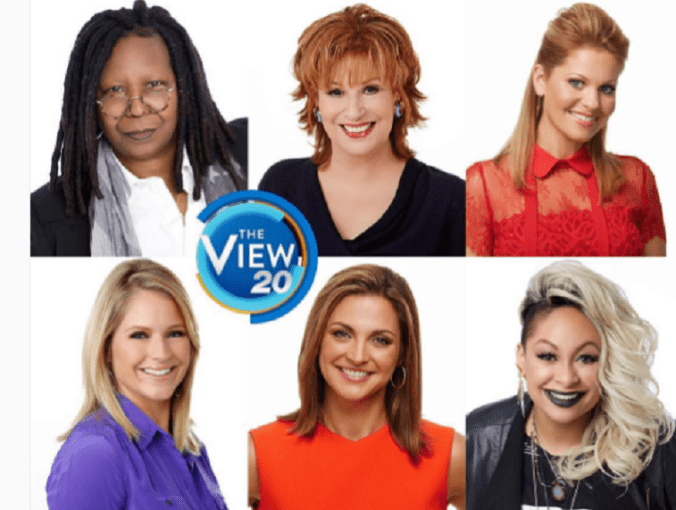
Now that SCOTUS has decided, by agreeing to review the case,  that he has perhaps a scrawny, shaky legal leg to stand on before they kick it out from under him, Phillips and his lawyer are taking a premature victory lap, as if making it quite clear that you think gays are second class citizens is something to be proud of (and, sadly, too many still think it is.) Their publicity campaign took them all the way to The View, a wise choice. After all, nothing can make an unethical position seem more persuasive than when it is being attacked by idiots, and idiots of the left-wing persuasion are pretty much what ABC’s “Six Opinionated Female B and C List Celebrities Sitting Around Slamming Conservatives”  daytime show has to offer. (To be fair, the show usually has one even dumber right-wing idiot on hand to make the left-wing idiots seem astute by comparison.) Continue reading

( PSSST! The Supreme Court Just Unanimously Pointed Out That The Courts Blocking The Trump Temporary Travel Ban Were Playing Partisan Politics, Not Objectively And Ethically Doing Their Jobs)

As many predicted (including me), the Supreme Court unanimously slappped down the lower court injunctions based on claims that the Trump temporary travel restrictions on six Muslim countries were unconstitutional, writing,

But the injunctions reach much further than that: They also bar enforcement of §2(c) against foreign nationals abroad who have no connection to the United States at all. The equities relied on by the lower courts do not balance the same way in that context. Denying entry to such a foreign national does not burden any American party by reason of that party’s relationship with the foreign national. And the courts below did not conclude that exclusion in such circumstances would impose any legally relevant hardship on the foreign national himself. See id., at 762 (“[A]n unadmitted and nonresident alien . . . ha[s] no constitutional right of entry to this country”). So whatever burdens may result from enforcement of §2(c) against a foreign national who lacks any connection to this country,they are, at a minimum, a good deal less concrete than the hardships identified by the courts below.
At the same time, the Government’s interest in enforcing §2(c), and the Executive’s authority to do so, are undoubtedly at their peak when there is no tie between the foreign national and the United States. Indeed, EO–2 itself distinguishes between foreign nationals who have some connection to this country, and foreign nationals who do not, by establishing a case-by-case waiver system primarily for the benefit of individuals in the former category. See, e.g., §§3(c)(i)–(vi). The interest in preserving national security is “an urgent objective of the highest order.” Holder v. Humanitarian Law Project, 561 U. S. 1, 28 (2010). To prevent the Government from pursuing that objective by enforcing §2(c) against foreign nationals unconnected to the United States would appreciably injure its interests, without alleviating obvious hardship to anyone else.

…The Government’s application to stay the injunction with respect to §§6(a) and (b) is accordingly granted in part. Section 6(a) may not be enforced against an individual seeking admission as a refugee who can credibly claim a bona fide relationship with a person or entity in the United States. Nor may §6(b); that is, such a person may not be excluded pursuant to §6(b), even if the 50,000 person cap has been reached or exceeded. As applied to all other individuals, the provisions may take effect.

Got that?

“To prevent the Government from pursuing that objective by enforcing §2(c) against foreign nationals unconnected to the United States would appreciably injure its interests, without alleviating obvious hardship to anyone else.” Continue reading

Morning Ethics Warm-Up: 6/23/17

1. When I am forced to be away from Ethics Alarms for a long time, as was the case yesterday, it often renews my musings about whether I respond too much to reader comments. Everyone generally does just fine when I’m silent, and sometimes I find that fascinating and unexpected new topics have not only sprung from whatever ethics fertilizer I left behind,  but have grown and flourished like bamboo.

Unfortunately, I have also noticed that there have been a lot ( as in “too many”) of extended arguments between commenters that not only extend beyond reasonable limits, but also explode into personal attacks. I admit that Ethics Alarms is, for a moderated blog, unusually tolerant of this phenomenon. One reason for that is that sometimes such epic confrontations are both entertaining and enlightening, as when liberal commenter and Ethics Alarms immortal tgt and uber-conservative commenter Steven J. Pilling engaged in the Ethics Alarms equivalent of the Lincoln Douglas debates, only occasionally snapping and calling each other names.

However, while the occasional emotional outbursts are excusable, they should be rare. Reprimanding a commenter for  commenting style and habits is certainly fair, but doing it repeatedly is boring; and I want to remind everyone that while it is often frustrating, allowing someone to have the last word is not capitulation, especially when that last word is not particularly persuasive.

We also owe ourselves and everyone else self-awareness. When a commenter finds himself or herself repeatedly embroiled in long, heated exchanges, that commenter should consider the possibility that he or she is the problem.

The general principle is that we should strive to have all comments contain substance that advances the discussion. “You’re an asshole” is occasionally justified (when a comment has objectively revealed a commenter to be an asshole, and even then is not mandatory), but rarely.

2. When President Trump issued his trolling tweet about James Comey and the possibility that there were “tapes” of their conversations, I wrote that it was the President’s dumbest tweet to date. (I think he has made worse ones since, but at this point any tweet by the President is evidence of crippling stubbornness, impulsiveness and bad judgment). I did not think that what was obviously a bluff without substance would still be considered a headline-worthy issue many weeks later. Continue reading