Here Is Why Baseball Fans, And Almost Everyone Else, Are Ignorant Of How The Law Works…

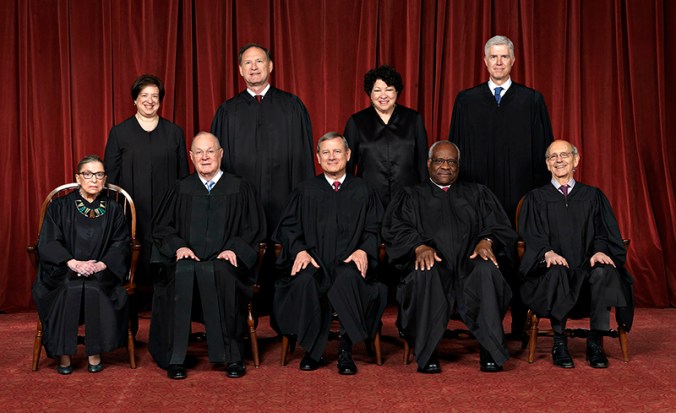
Last night, while I was watching a lousy Red Sox loss to the Oakland A’s, the Boston broadcasters announced their mid-game poll: “Do you agree with the Supreme Court decision on sports betting?” Viewers were supposed to text one number for yes, another for no. It was quite clear that the Sox announcers themselves had no clue what the decision was, however, as Jerry Remy and Dave O’Brien began debating the pros and cons of legalizing sports betting. The debate was edifying, but had nothing to do with the Court’s decision in Murphy v. National Collegiate Athletic Association whatsoever.

They and thousands of Red Sox fans had no clue what the decision was, and their ignorance didn’t stop them from voting on what they thought it was. What they thought it was came from second and third hand social media posts, and misleading headlines (“Supreme Court Strikes Down Anti-Sports Betting Law”) as well as brain-dead reports on the meaning of the majority ruling. (“Today the Supreme Court opened the door to legalized sports betting by declaring the federal law banning it unconstitutional…”). On a local news channel in the D.C. area, a reporter was dispatched to “investigate” if the reporting on the decision was accurate. “We began by reading the decision itself,” he said,

Wow! What a concept! Read the opinion rather than depend on ignorant reporters who don’t know the Constitution from “Hiawatha” to explain it based on what they think they know, which is not remotely like knowing anything!

Quoting again from ScotusBlog, here’s what “the decision on sports betting” was…

The 10th Amendment provides that, if the Constitution does not either give a power to the federal government or take that power away from the states, that power is reserved for the states or the people themselves. The Supreme Court has long interpreted this provision to bar the federal government from “commandeering” the states to enforce federal laws or policies. [The] justices ruled that a federal law that bars states from legalizing sports betting violates the anti-commandeering doctrine…

…In a decision by Justice Samuel Alito, the court began by explaining that the “anticommandeering doctrine may sound arcane, but it is simply the expression of a fundamental structural decision incorporated into the Constitution” – “the decision to withhold from Congress the power to issue orders directly to the States.” And that, the majority continued, is exactly the problem with the provision of PASPA that the state challenged, which bars states from authorizing sports gambling: It “unequivocally dictates what a state legislature may and may not do.” “It is as if,” the majority suggested, “federal officers were installed in state legislative chambers and were armed with the authority to stop legislators from voting on any offending proposals. A more direct affront to state sovereignty,” Alito concluded, “is not easy to imagine.”

Later on, Alito makes it clear that the decision isn’t pro-sports betting or anti-sports betting. The decision is anti-the federal government telling the states that they can’t pass certain kinds of laws, and the subject matter of those laws are irrelevant to that principle. The decision in Murphy v. National Collegiate Athletic Association  no more approves legalized sports betting than it approves speed limits over 90 or letting felons vote in state elections. The decision says that while the federal government can pass its own laws, it can’t order the states not to pass laws.

Never mind! Thousands of Red Sox fans had opinions based on misunderstanding the decision, just as many bloggers and online commenters worked themselves into a frenzy about the evils or benefits of sports betting, aided by journalists who literally, not figuratively, didn’t know what they were writing about, and didn’t have the integrity or common sense to find out.

Good job, everybody!


Morning Ethics Warm-Up, 5/15/2018: Alito Gets One Right, Ellison Deceived, And An Ancient, Unethical Tactic Works Once Again…

To a glorious morning, Ethics-Lovers!

1. Bad Alito, Good Alito.  As I briefly noted yesterday (and hopefully will do in detail today), Justice Alito authored an unethical and embarrassing dissent defending a lawyer who deliberately betrayed his client by telling the jury that he had killed someone his client denied killing. Bad Alito. However, the arch-conservative jurist also authored the majority opinion in Murphy v. National Collegiate Athletic Association, in which the SCOTUS majority struck down a virtuous but unconstitutional law, and did so clearly and well.

These are, I think, my favorite Supreme Court opinions, where the Court ignores the motives and objectives of a law and simply rules whether the legislature is allowed to behave like that. I don’t know, but I would guess that most of the majority feel the way I do about organized sports gambling: nothing good can come of it, and a lot of harm is inevitable. One they get the green light, I’m sure that as many states will take over sports gambling for its easy revenue as now prey on its poor, desperate and stupid with their state lottery scams. Everyone involved–sports, fans, athletes, states, the public’s ethical compass—is going to be corrupted by letting the sports betting genie out of its bottle: just watch.

Nevertheless, the Professional and Amateur Sports Protection Act, a 1992  law known as PASPA, should have been struck down decades ago; I’d love to know why it took so long. No, it did NOT ban sports betting, though this is what far too many news reports tell you. Congress can ban sports betting directly if it chooses to, as it is interstate commerce. This isn’t in dispute. What it did in 1992, however, was to order states not to pass laws states have a constitutional right to pass. The distinction matters. From SCOTUS Blog, which is usually the best source for analysis of these things:

The 10th Amendment provides that, if the Constitution does not either give a power to the federal government or take that power away from the states, that power is reserved for the states or the people themselves. The Supreme Court has long interpreted this provision to bar the federal government from “commandeering” the states to enforce federal laws or policies. [The] justices ruled that a federal law that bars states from legalizing sports betting violates the anti-commandeering doctrine…

…In a decision by Justice Samuel Alito, the court began by explaining that the “anticommandeering doctrine may sound arcane, but it is simply the expression of a fundamental structural decision incorporated into the Constitution” – “the decision to withhold from Congress the power to issue orders directly to the States.” And that, the majority continued, is exactly the problem with the provision of PASPA that the state challenged, which bars states from authorizing sports gambling: It “unequivocally dictates what a state legislature may and may not do.” “It is as if,” the majority suggested, “federal officers were installed in state legislative chambers and were armed with the authority to stop legislators from voting on any offending proposals. A more direct affront to state sovereignty,” Alito concluded, “is not easy to imagine.”

…The court also rejected the argument, made by the leagues and the federal government, that the PASPA provision barring states from authorizing sports betting does not “commandeer” the states, but instead merely supersedes any state laws that conflict with the provision – a legal doctrine known as pre-emption. Pre-emption, the majority explained, “is based on a federal law that regulates the conduct of private actors,” but here “there is simply no way to understand the provision prohibiting state authorization as anything other than a direct command to the States,” which “is exactly what the anticommandeering rule does not allow.”

Got it.

Good decision. Continue reading

McCoy v. Louisiana

Today the Supreme Court ruled in favor of Robert LeRoy McCoy, who was convicted of three counts of murder after his lawyer refused to follow his instruction and plead not guilty as he directed. I had predicted that his convictions would be over-ruled; I also wrote,

“If the Supreme Court does anything but overrule Louisiana in this case by a 9-0 vote, I may turn in my law license in exchange for a free Whopper at Burger King.”

Well, the vote wasn’t 9-0. I think instead of turning in my license, I’m going to turn in my respect for the so-called conservative wing of the Court. The majority opinion was authored by Justice Ginsberg, with Kagan, Sotomayor, Breyer, Roberts, and Kennedy concurring. Two of the conservatives concurred in a dissent authored by Alito: Gorsuch and thomas.

I haven’t had time to read it as carefully as I have to to do a thorough analysis, but I read it well enough to flag it as an embarrassing collection of rationalizations. While the majority opinion interprets a straightforward case according to what is significant about it—a lawyer pleaded guilty for him when his client demanded that he plead non guilty, thus making the conclusion unavoidable, Alito resorts to desperate excuses. Well, this kind of case isn’t likely to happen again. So what? A man was robbed of his Sixth Amendment rights! His story was ridiculous. So what? If that’s his story, he has the right to tell it. The lawyer was placed in a tough situation by a client whose claims were unbelievable. The jury decides who to believe, and a defendant has the right to let them do that. McCoy’s lawyer didn’t believe him. So what? Welcome to criminal defense work. McCoy was going to be convicted anyway.

What????

I can’t believe a Supreme Court Justice is making these arguments. So what? The principle of the rule of law is that it is vital that the defendant, if he is convicted, is convicted the right way, constitutionally. The conduct of McCoy’s lawyer was indefensible under the ethics rules, and the Constitution.

Reading the whole opinion and the dissent is revealing, and not in a good way. The majority opinion shows us that the Supreme Court can’t say the sky is blue without making the case in the mots turgid way possible. This opinion should have been a few pages at most.

The dissent lets us know that Justices Alito, Gorsuch and Thomas look for minuscule fragments of justifications to avoid doing the right thing.


Windy Morning Ethics Warm-Up, 3/2/18: More Supreme Court Fun, Transparency Games, Ethical and Unethical Quotes Of The Day…

GOOD MORNING!

(Wind storms all over Virginia, knocking out power and my e-mail, and blowing over a tree that narrowly missed my son’s car!)

1 Lack of Transparency? What lack of transparency? During a lecture and moderated discussion at U.C.L.A. this week in which he was a a participant and invited guest, Treasury Secretary Steven Mnuchin was heckled with hisses, jeers, shouted insults and profanity from students and protesters, some of whom were ushered and even carried out by police officers. A programmed sixth grader in the audience even questioned him about the fairness of passing permanent tax cuts for companies and expiring cuts for individuals, because as we all know, 10-year-olds are well-versed in tax policy theory.

Afterwards, Mnuchin  revoked his consent for the official video of the event to be released, perhaps because he was flustered by the harassment and it showed. In response to criticism of this virtual censorship,

The Treasury Department, through a spokesperson, said that what the Secretary did wasn’t what he obviously did—a Jumbo, aka “Elephant? What elephant?”—saying,

“The event was open to the media and a transcript was published. He believes healthy debate is critical to ensuring the right policies that do the most good are advanced.”

He just doesn’t want anyone to see or hear the debate.

A related point: The protests were organized by Lara Stemple, a U.C.L.A. law professor, and students and faculty members participated. Protests are fine; disrupting the event is not. Faculty members who assisted in the heckling should be disciplined, and students who participated should be disciplines as well.  It’s an educational institution, and all views sgould be openly explored and heard without interference. No guest of the university should be treated this way. Ever. No matter who it is or what their position. The treatment on Mnuchin was unethical.

2. More Supreme Court fun with ethics! Minnesota’s law banning “political” clothing and buttons from polling places is being challenged as an affront to free speech. The law prohibits people from wearing a “political badge, political button or other political insignia” at a polling place on an election day, and a member of the tea party movement sued after his “Tea Party” message got him in trouble when he came to vote.

Here is Justice Samuel A. Alito’s exchange with Daniel Rogan of the Hennepin County Attorney’s Office, who was defending Minnesota’s law:

“How about a shirt with a rainbow flag?” asked Alito. “Would that be permitted?”

“A shirt with a rainbow flag?” Rogan repeated. “No, it would — yes, it would be — it would be permitted unless there was — unless there was an issue on the ballot that — that related somehow to — to gay rights.”

Justice Alito: Okay. How about an NRA shirt?

Mr. Rogan: An NRA shirt? Today, in Minnesota, no, it would not, Your Honor. I think that that’s a clear indication—and I think what you’re getting at, Your Honor—

A T-shirt bearing the words of the Second Amendment? Alito asked.

Probably banned because of the gun-control issue, Rogan said.

The First Amendment? Alito asked. Probably not, Rogan answered.

Got it. The First  Amendment isn’t a political statement, but the Second Amendment is. That led Justice Neil M. Gorsuch to observe: “Under your interpretation of ‘political,’ it would forbid people from wearing certain portions of the Bill of Rights into a polling place but not other portions of the Bill of Rights. And I guess I’m just wondering what compelling interest Minnesota has identified that requires a statute that goes so much further than the vast majority of states?”

In contrast, Justice Anthony M. Kennedy asked J. David Breemer, a lawyer for the Pacific Legal Foundation, representing the challengers, “Why should there be speech inside the election booth at all, or inside the what you call the election room? You’re there to vote.”

This is a problem requiring an “all or nothing” solution. Either all forms of political speech must be allowed, or no speech at all. In a sick time where citizens honestly argue that a MAGA cap or a picture of a gun makes them feel threatened and “unsafe,” the ethical option would seem to be Justice Kennedy’s. No speech, messages, no logos, no photos, no American flags. Last fall I voted wearing my Red Sox jacket.

Uh-uh. Continue reading

It’s A Comment Of The Day Weekend! First Up…Comment Of The Day (3): “An Ethics Alarms Holiday Challenge! Identify The Rationalizations, Logical Fallacies, Falsehoods And Outright Errors In This Essay…” AND, In Related News, Another Bakery Gets Slammed In Oregon

I’m not exaggerating: I have at least four Comments of the Day stacked up on the Ethics alarms runway after this one, and there are usually COTDs arriving on Saturdays. I can’t promise to get all of them up today, especially since I’m hacking away at the 2017 Ethics Alarms Awards, and this is a long working weekend at ProEthics. Still, I will get a lot of them to you, and it’s a provocative group, as you will soon see.

But first, a prelude and some context.

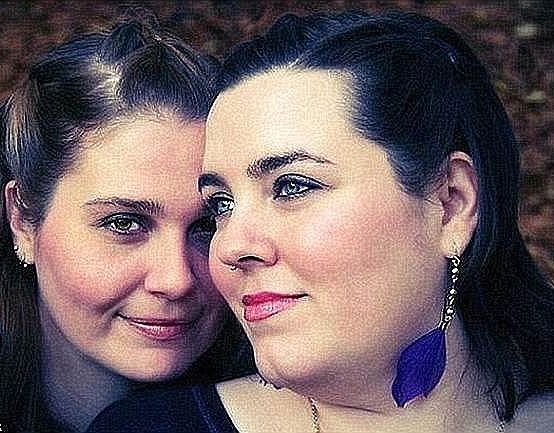
An Oregon appellate court this week upheld a ruling against the owners of the since-closed Sweetcakes by Melissa,  Aaron and Melissa Klein, forcing them to pay emotional-distress damages of $135,000 to Rachel and Laurel Bowman-Cryer, a lesbian couple for whom they refused to design and sell a wedding cake almost five years ago. The Klein’s argued that state Labor Commissioner Brad Avakian violated state and federal laws and their rights as artists to free speech, their rights to religious freedom and their rights as defendants to  due process.

The Oregon court ruled that the Kleins’ argument that their cakes entail an artistic expression is “entitled to be taken seriously,” but it’s not enough for the couple to assert their cakes are pieces of art:

“Although we accept that the Kleins imbue each wedding cake with their own aesthetic choices, they have made no showing that other people will necessarily experience any wedding cake that the Kleins create predominantly as ‘expression’ rather than as food.”

This mess commenced  when Rachel Bowman-Cryer went to the suburban Portland bakery with her mother in January of 2013. When Aaron Klein was told that the wedding did not involve a male partner,  he said that the bakery did not make cakes for same-sex weddings. They left, but soon the mother returned to argue with Klein as Rachel sat in the car, weeping. her mother went in to speak with Klein. The mother told Klein she had once thought like him, but having two gay children forced her to see the error of her ways.  Klein retorted with Leviticus: “You shall not lie with a male as one lies with a female; it is an abomination.”

The complaint and action by Oregon’s Bureau of Labor and Industries followed. You can read the opinion here.

Ugh.

This case is even worse than the one currently before the Supreme Court, discussed here. Continue reading

From The Ethics Alarms “Stop Making Me Defend Sarah Huckabee Sanders!” Files: “The Advocate” Lies About The Masterpiece Cakeshop Case


Wouldn’t it be wonderful if activists had integrity? Unfortunately, most of them don’t, and I only say “most” because I haven’t checked all of them. Virtually all that I have checked spin, distort facts, and lie outright, because the ends justify the means to them, and they, of course, are Right. It’s the Saint’s Excuse. Lies that advance the cause are benign.

The latest disgraceful example of wilful deception in support of a passionately felt cause came from the LGBT publication “The Advocate,” as well as many Democratic and progressive news sources. They all chose to deliberately misrepresent what the President’s spokesperson said about his position was on The Great Cake Controversy…all the better to rev up hate and fear among their readers. You see a typical example in the label to the video above. “Sarah Sanders: Trump OK with businesses hanging anti-gay signs.” She did not say that. The video proves she did not say that. She was asked if the President agreed with the Solicitor General in his oral argument before the Supreme Court in the Masterpiece Cakeshop case when he said that it would be lawful and possible for a baker to hang a sign saying, “We don’t bake cakes for gay weddings.” She said yes. Of course yes. The government’s case is that a baker should not be forced to “participate/endorse” a ceremony that his religion declares morally wrong, and thus is not discriminating by refusing to make cakes for same sex weddings, as long as the baker does not generally discriminate in providing service on the basis of sexual orientation. If the Court agrees, then a baker such as the owner of Masterpiece Cakeshop can legally follow the dictates of his faith and not make same- sex wedding cakes, and if he isn’t selling them, he not only could but should inform potential same-sex couples of that fact.

This is not, by any fair assessment, an “antigay sign.” It makes no antigay assertions at all. The statement is false. Unequivocally, intentionally false. Continue reading

Comment Of The Day #2: “Back To The Bigoted Baker: It’s Complicated…More Than I Thought”

This the second of the Comments of the Day on the post about the Great Cake Controversy; a third arrived last night, which will appear shortly. It was authored by the always provocative Mrs. Q—you can tell because she always uses ampersands. I used to turn them back into “and,” and then decided that this was a signature feature.

The three Comments of the Day on this topic are as different as they could be. I detest the Colorado baker controversy, because three people could have and should have avoided the whole thing, saved a lot of time, money, and ink, and just exhibited some empathy and proportion rather than avoiding the Golden Rule so emphatically. I detest it, but it certainly is a rich ethics subject.

Here is Mrs. Q’s  Comment of the Day on the post Back To The Bigoted Baker: It’s Complicated…More Than I Thought:

When my wife & I were looking for wedding rings we stopped at a place where the owner after talking to us went on a strange rant about some NFL player who came out gay. The owner went so far as to physically mimic kissing another guy in telling his story, and shivering with wide toothed disgust at the thought. He didn’t say he wouldn’t sell us a ring, but obviously we didn’t want one from his store & the feeling was mutual.

We could have gone on Yelp and given the store a bad review or complain to someone who could “go after” him politically, but at the end of the day our relationship didn’t (doesn’t) need others affirmation. We were certainly hurt – not by his thoughts but the manner in which he shared his thoughts. Yet we picked our proverbial battle and let it go. Why? because we too are Christian and know no one person can ever really give us what we need. Hurt feelings can be gotten over and forgiveness heals wounds far faster than enacting revenge because someone doesn’t agree with us or what we do.

We have to ask what will be next. I don’t believe suddenly we’ll see “No Homo’s Allowed” signs on shops. And ultimately that’s not what I believe this case is about. Also I’m not convinced that these bakers are bigots either. Instead I suspect what this case is ultimately about religion and thought police. Orthodox Muslims having to make non-Halal foods, Jewish deli’s selling pork, Christians making Satanic themed confections. I’d rather see a few victim-minded SJW’s get butt-hurt than force others to sign off on what are ultimately another persons *private* beliefs. Forcing business owners to think as we wish sets a dangerous precedent while walking away from a shop not being affirmed only requires one to find another place to go. And honestly it’s fairly easy to find smug leftist affirmation at businesses. Yes…even in small towns too. Continue reading

Comment Of The Day #1: “Back To The Bigoted Baker: It’s Complicated…More Than I Thought”

There were so many thoughtful and diverse comments on the post about the Great Cake Controversy that I could have justified four or five Comments of the Day. I chose two. This is the first, by the indefatigable Michael Ejercito. Here is his Comment of the Day on the post Back To The Bigoted Baker: It’s Complicated…More Than I Thought:

“Art is notoriously difficult to define. To that list, I could argue for the addition of gardeners, landscapers, bathroom floor tilers, interior designers, architects, website designers, marketing consultants, and on and on. Is a sign-maker an artist? A printer?”

This is a feature, not a fault, of the First Amendment. Courts must make findings of fact based on evidence and testimony. Courts did in fact do just that in Hurley v. Irish American Gay, Lesbian, and Bisexual Group of Boston, 515 U.S. 557 91995) and Rumsfeld v. Forum for Academic and Institutional Rights, Inc., 547 U.S. 47 (2006).

In its amicus brief, the Department of Justice spent a total of six paragraphs detailing how public accommodations laws do not ordinarily implicate freedom of expression.

“Justice Kennedy became involved in some of this discussion about where to draw the lines — the ready-made/custom cake distinction, the speech/conduct distinction, and the distinction between selling a cake in a shop and supervising the cutting of a cake at a ceremony…”

It is a distinction that must be made.

It is a tenuous argument, at best, that the sale of sign-making supplies constitutes expression. Thus, Colorado’s laws properly apply to such, and it is unlawful to refuse to sell sign-making supplies because the purported customer is a Westboro Baptist or a militant Islamist. And religious discrimination laws must cover unpopular religions, or else it fails to achieve its own purpose. Continue reading

Back To The Bigoted Baker: It’s Complicated…More Than I Thought

The last time (in July) I dealt with the apparently thornier-than-I-thought issue of the Colorado baker who refused to sell a wedding cake to a gay couple, I assumed that the Supreme Court would treat this as a pure public accommodations case, and side with Colorado and the couple. I was wrong. Now it is beginning to look like baker Jack Phillips may even prevail, based on the justices’ comments during oral argument.

Then I wrote, quoting my post when this case first surfaced…

“The court’s conclusion  is impossible to rebut. The cake the baker was asked to bake for the gay wedding differed not at all from one he would normally sell a straight couple. In truth, this had nothing to do with expression. He was just refusing to serve a gay couple because of their sexual orientation. Selling them a standard cake would neither constitute, nor would it be recognized as a “message” in support of gay marriage.

The Court agreed that a wedding cake with a customized message celebrating a same-sex marriage as such might implicate First Amendment speech issues, but “we need not reach this issue,” the court said. “We note, again, that Phillips denied Craig’s and Mullins’ request without any discussion regarding the wedding cake’s design or any possible written inscriptions.”

In other words, Phillips was gratuitously and unnecessarily being a cruel jerk. An alleged Christian who is unable to detect the basic Golden Rule application in treating fellow citizens with the minimal level of respect inherent in allowing them to buy a standard wedding cake requiring no “Yay Gay!” or “Charlie and David Forever!” messages in pink frosting deserves no sympathy or quarter from the law. Could the couple have just shrugged and found another bakery? Sure, they could have. Linda Brown could also have just shrugged and found an all-black school to attend, too.

The gay couple are not the villains here. Jack Phillips broke the social contract, as well as the law.”

Recent articles about the SCOTUS appeal have added some facts that I had missed, or not given sufficient weight. For example, Continue reading

Ethics Dunce: Ames Mayfield’s Cub Scout Den


Ames Mayfield is a smart, gutsy 11-year-old, and this episode in his life may work to his eventual advantage. Nonetheless, his treatment by his Cub Scout den was nauseating, cruel and wrong, and contradicts the very values Scouting exists to imbue.

There is another likely villain here as well.

Ames’ Cub Scout den met with a Colorado State Senator, Republican Vicki Marble, last week. Ames came prepared with a long list of typed-up questions. (I wonder where THOSE came from?)  He raised his hand to ask his first one , involving gun legislation. “I was shocked that you co-sponsored a bill to allow domestic violence offenders to continue to own a gun,” Ames said, according to a video posted to YouTube by …hmmm, not Ames but his mother. “Why on earth would you want someone who beats their wife to have access to a gun?”

Ames’s questions continued until a den leader suggested that he pause and allow the Senator a chance to answer. I wonder if Marble noted the Supreme Court’s decision n Voisine v. United States, holding that a federal statute banning firearms possession by anyone convicted of a “misdemeanor crime of domestic violence” including individuals who have “misdemeanor assault convictions for reckless (as contrasted to knowing or intentional) conduct.” Maybe Ames, who I’m sure is an avid reader of Ethics Alarms, quoted my post on the issue, which concluded in part,

The real question, from an ethical standpoint, is whether Congress can and should remove a citizen’s Second Amendment right based on a misdemeanor conviction for domestic abuse. Is that fair? Sure it is. It is already settled law that it is constitutional to prevent convicted felons from owning  guns, even if it was a non-violent felony. From an ethical public policy standpoint, why would it be overly restrictive to ban gun ownership from those who engage in a violent misdemeanor?

…The majority covers the legal logic of the decision; the ethics logic is simpler. How difficult is it not to physicality abuse a spouse to the extent that one is found guilty of breaking the law? It shouldn’t be hard. Nor do I weep for any degree of spouse-beater who is denied the right to purchase a gun. Good, I say to such a person. I don’t trust you, and I don’t trust your judgment. If having access to a gun was so important to you, you should have thought about that before you started knocking loved ones around. If the threat of losing gun rights makes hot-heads think twice before engaging in domestic violence, that’s good too.

After the meeting, the leader of Ames’s Cub Scout pack, which oversees various dens, met with the boy’s mother, Lori Mayfield, and told her that that her son was no longer welcome in the den. Her son’s question was disrespectful and too political, Lori was told. (Her son’s question…)

Accepting for the nonce that this was all Ames’ idea, which we should know is baloney, why would he be kicked out? Continue reading