More Revelations Regarding Elizabeth Warren’s Alleged Unauthorized Practice of Law, and Why This Matters

Prof Jacobson, on his blog Legal Insurrection, is in line for an Ethics Hero award with his tenacity regarding Elizabeth Warren’s dubious qualifications to engage in the practice of law in  Massachusetts. The overwhelming reaction by his colleagues in legal academia, and mine in the legal ethics community, has been to airily dismiss his arguments as trivial, far-fetched and thinly disguised political warfare, since Jacobson is an unapologetic conservative blogger (and a distinguished one.) Meanwhile, the mainstream media has, I think it is fair to say, completely ignored the story.

Part of this is undoubtedly because of the ignorance of most journalists regarding the importance of the legal ethics rules in question. Part of it is probably due to the accurate assessment by editors and TV news producers that the average American’s brain would switch off right around the time the story mentions Massachusetts Rule of Professional Conduct Rule 5.5 Subsection (c), and will start wondering about how Blair from “The Facts of Life” is going to do on “Survivor.” And part of it, infuriatingly, is because most journalists are willing to forgo the ethical duties of their profession in order  to ensure that a Democrat wins back Ted Kennedy’s Senate seat, and character be damned.

The rude brush off Prof. Jacobson is getting in this wagon-circling exercise is wrong in every way, and does injustice to every person and institution involved, including the Massachusetts legal establishment, the legal profession, ethical lawyers (which, believe it or not, the vast majority of them are), Senator Brown, the U.S. Senate, Massachusetts voters, and the American public. Bar associations across the country regularly punish ordinary lawyers who practice law without proper authorization, and there is a reason: a lawyer who won’t or can’t obey the most basic requirement of the profession—be sure you are practicing law legally—should not be trusted to handle the important transactions and controversies of their clients’ lives. Continue reading

More From Prof. Jacobson On Elizabeth Warren’s Law License

Uh, guys? Do you even care what really happened any more?

[ Original post here]

He has read various critiques of his analysis and allegations, and addresses them here. Jacobson also spoke with the much quoted General Counsel of the Mass Board of Bar Overseers, and confirmed that  Michael Fredrickson was not speaking officially or on behalf of the BBO, but rather giving his personal opinion.

For my part, I am dismayed, if not shocked, that the legal establishment, as well as legal ethicists who should know better, are letting their political biases dictate their analysis. It is true that Jacobson is an openly conservative blogger as well as a long-time critic of Warren, but he raises legitimate questions that deserve to be taken at face value, whatever their source. The fact Fredrickson, the BBO General Counsel, felt it necessary to personally defend Warren in the absence of sufficient facts strongly suggests a pro-Warren bias in the disciplinary system, where it really shouldn’t matter who breaks the rules, but whether or not they have. Similarly, over at the Legal Ethics Forum, legal ethics legend Monroe Freedman comments,

“It surprises me that so much commentary has been expended on such a relatively unimportant issue, which apparently was raised in the first place to embarrass a candidate for the Senate in a race that has matters at stake that could affect the future of the country.” Continue reading

Well, There Goes Elizabeth Warren’s Legal Ethicist Vote! (UPDATED)

On the positive side for Prof. Warren, at least she may be able to  truthfully say that in Massachusetts, she’s more Cherokee than lawyer…

As thoroughly researched by Cornell Law Professor ( and conservative blogger) William Jacobson, Democratic Senate candidate Elizabeth Warren practiced law in her Cambridge, Massachusetts office for more than a decade without ever being licensed to practice law in that state. His findings are here. Continue reading

Prosecutor, Prosecute Thyself!

The New York Times revealed this week that more than 300 district attorneys’ offices engage in a practice that is a clear violation of legal ethics and probably illegal as well.  These prosecutors partner with debt collecting agencies, which sent thousands of threatening letters to people across the country who have bounced checks, threatening them with harsh penalties and imprisonment. The letters bear the seal and signature of the local district attorney’s office, which gives them extra persuasive power.The companies also try to sell the check-writers  on budgeting and financial responsibility classes, and if they sign up, the district attorneys’ offices get a commission, in addition to a fee from the firms. It’s all in the interest of more efficient law enforcement, prosecutors argue; the partnerships free them to work on more serious crimes. Continue reading

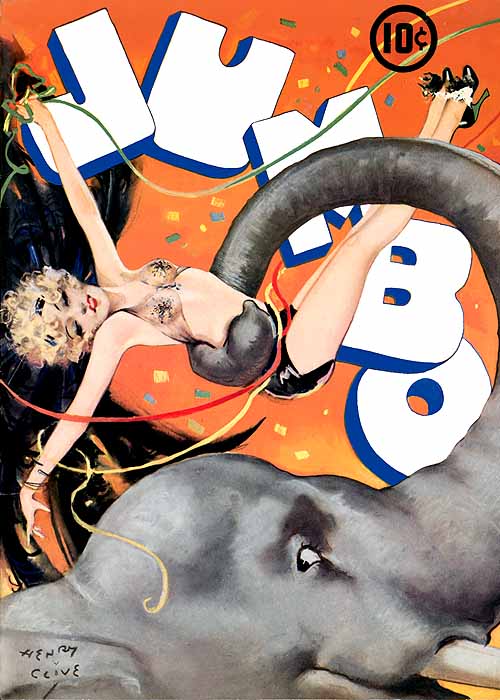
Introducing the Jumbo Award and Its First Recipient: John Mark Heurlin, Esquire.

Today Ethics Alarms is launching a new category, the Jumbo Award. The Jumbo is named after the famous moment in the 1935 musical (and 1962 movie adaptation)“Jumbo” in which a clown, played in both by the sublime Jimmy Durante, is trying to sneak the largest elephant in the world out of the circus, which has been seized by creditors.  A sheriff intercepts the would-be elephant-napper, and demands, “Where do you think you are going with that elephant?” To which Durante’s character replies innocently, as if the pachyderm at the end of the rope in his hand is invisible, “Elephant? What elephant?”

Henceforth, the Jumbo will be periodically awarded to an ethical miscreant who continues to try to brass his or her way out of an obvious act of ethical misconduct when caught red-handed and there is no hope of ducking the consequences. And the first recipient is faux lawyer John Mark Huerlin.

Huerlin was suspended from the practice of law, yet was caught representing himself as a lawyer in several ways, which you cannot do while you are suspended. To do so is an ethical violation in itself—dishonest, defiance of the bar, and the unauthorized practice of law. Nonetheless, he used a letterhead that referred to the “Law Offices of John M. Heurlin” and an email address that read “JheurlinLaw@Netscape.net.” But the real kicker was that Heurlin held himself out as an attorney in litigation on his own behalf, by following his name with “Esquire” on court pleadings.

Huerlin told the bar that he could explain everything. Esquire means that I’m a lawyer in good standing? My goodness! This is all a big misunderstanding, then. I didn’t use “Esquire” to indicate that I was a lawyer. I thought “Esquire” just meant that I was a subscriber to the magazine, Esquire!

Now either disbarred or soon to be, Mr. Huerlin is officially authorized to replace that confusing reference to his reading habits with a new suffix, so he can present himself as John Mark Huerlin, Jumbo.

_______________________________

Facts: ABA Journal

Graphic: Abracadabra

Ethics Alarms attempts to give proper attribution and credit to all sources of facts, analysis and other assistance that go into its blog posts. If you are aware of one I missed, or believe your own work was used in any way without proper attribution, please contact me, Jack Marshall, at  jamproethics@verizon.net.


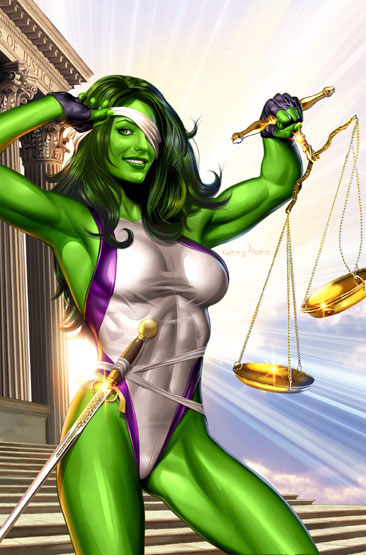
She-Hulk Legal Ethics

One of the most creative websites around, Law and the Multiverse, discusses the legal issues that would arise in a parallel existence in which super-heroes were real. The site finally delved into the topic of legal ethics a couple of weeks ago, and the post is both fun and informative on the issue of lawyer solicitation.

She-Hulk’s alter-ego, Jennifer Walters (who, unlike She-Hulk, is not green) is a practicing attorney. (So is Daredevil, and if anyone knows why they never formed a firm, let me know.) The post involves the propriety of She-Hulk’s soliciting legal business at the scene of a rescue. The issue is pretty straightforward. It does not, however, deal with the question of whether She-Hulk can ethically practice law when she is not Jennifer Walters. Does Walters’ license still apply to She-Hulk, who looks different, sounds different, thinks differently and has a different personality? The question is similar to the issue of whether Dr. Hyde can legally. practice medicine.

Oh well, maybe they’ll take that one up another time. You can read about She-Hulk’s legal ethics problem here.

Quiz: Which Law Enforcement Fiasco Was More Unethical?

It’s Quiz Time!

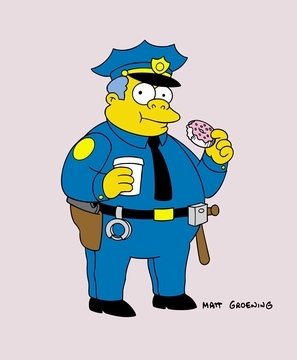
Chief Wiggum would be an upgrade.

Today’s topic: Why the public doesn’t trust the law enforcement system. Here are two horrible and true, tales of AWOL ethics involving law enforcement in New York and Tennessee. Which is more unforgivable, A or B?

A. Brooklyn, NY: The Perpetual Warrant

What is the fair limit of “the police made  an honest mistake”? Let’s say the police have a warrant to search your house, and come to your door because they got the address wrong—and it’s a mistake. At least they didn’t break down the door in the middle of the night. OK, mistakes happen. Then they come again, because they got your address in error again. Annoying, but they seem embarrassed: they aren’t trying to harass you.

And then they arrive 48 more times. Continue reading

Possessed Lawyer Ethics

Is it unethical for a lawyer to claim she is possessed by a client’s dead wife?

This  question has been puzzling professional responsibility experts for decades. Okay, not really. In fact, surprisingly, it just doesn’t happen all that often. But in Arizona, a lawyer is now facing suspension for claiming that she was possessed by the spirit of a client’s dead wife, then lying about it under oath. The dead wife is being accused of illegal immigration.

[OK, I made up that part, too. Sorry; couldn’t resist.]

The ABA Journal reports that the lawyer, Charna Johnson, began representing a client during his divorce proceedings. Continue reading

When Money Curdles Ethics

A stimulating ethics alarm drill surfaced over at Freakonomics, where Stephen Dubner challenged the site’s  readers to help him compile a list of goods, services and activities that one can legally give away or perform gratis, but that  when money changes hands, the transactions become illegal. It is a provocative exercise, especially when one ponders why the addition of  money should change the nature of the act from benign to objectionable in the view of culture, society, or government. It is even more revealing to expand the list to include uses of money that may not create illegality, but which change an act from ethical to unethical. Continue reading