A New Rationalization For A Slow Sunday: #57A The Utilitarian Cheat, or “If It Saves Just One Life”

On another thread, a reader attacked the Rationalization List <GASP!>,, the beating heart of Ethics Alarms, arguing that many of what are labelled rationalizations are valid justifications and cited as such on this very site. A vile canard! Of course many rationalizations can also be valid arguments for or against conduct. Take #59. The Ironic Rationalization, or “It’s The Right Thing To Do.” We do the right things because they are right, but we also have calculated why they are right, which means dealing with and rebutting the counter-arguments that might suggest those decisions are not right.  However, #59 addresses the frequent use of the “It’s the right thing to do” as a argument-ender, employing it as evidence when it really has to be a conclusion based on other evidence and analysis.

The latest addition to the Ethics Alarms Rationalization List does not have this problem. It is almost always a cheap rhetorical device, slyly edging what needs to be a clear-eyed, rational analysis of proposed conduct into the confounding realm of emotion. #57 A, The Utilitarian Cheat or “If its saves just one life” is a sub-rationalization under #57, 57. The Universal Trump, or “Think of the children!”  (It could easily be the other way around.)

#57 A. The Utilitarian Cheat or “If it saves just one life”

Invoking Rationalization #57A is as good a test as there is for identifying an untrustworthy demagogue. The claim that something is worth enacting, eliminating, establishing or doing is ethically and morally validates “if it saves juts one life” is aimed directly at the mushy minds of sentimentalists  and the dangerously compassionate. If the argument is made in good faith, the speaker is an incompetent dolt; usually it is the desperate last resort of a someone who has found that their real arguments are inadequate or unpersuasive.

The insidious trick inherent in the device is that we agree that human life is precious, and that we can not and will not place a dollar sign on a human being. The next step, however, in which a single life, or even many, is deemed justification for any expense or other draconian societal trade-offs, is impractical and irrational. It would save many lives if automobiles were built like tanks and could never exceed five miles an hour. Locking up ever angry husband that threatened the life of an estranged spouse with a menacing phone call would save many lives. So would forcing women to carry their babies to term, eliminating the right to have an abortion. Torture used without restrictions probably would save one life or more. Prohibition was sold using #57A.

All of these policy conundrums and many others are too complex by far to use simple-minded absolutism as their ethical guideline, and about 30 seconds of logical clarity will usually make that clear.  Those who employ The Utilitarian Cheat, however, don’t want clarity. It is an appeal to embrace acts that can do wide-ranging harm to society, civilization, human aspirations and liberty, because un-named lives can be saved. Though it is opposite of the exploitation of human life for other goals that Kantian ethics forbids, it is equally invalid.

___________________________

Graphic: gunssavelives.net

Ethics Quiz: Italy’s New Strategy To Fight The Mafia

corleone-family

Anyone who has seen “The Godfather” I or II has a sense of the mafia culture in Italy. That wasn’t fiction; indeed, it was probably understated, and is strong as ever. Now legislators are experimenting with a radical new approach to fighting organized crime in the country, a deep-rooted pathology that has persisted for centuries.The strategy is draconian: separating children from their mob families and moving them to a different part of Italy to end a generational cycle of crime. Families are the heart of organized crime: the “Godfather” films’ portrayal was absolutely accurate on that score.

Italian magistrate Roberto Di Bella began taking children away from their criminal families after seeing children as young as 11 or 12 serving as lookouts during murders, participating in drug deals and mob strategy sessions, and learning how to shoot an assault rifle. “Sons follow their fathers,” he told New York Times reporter Gaia Piani Giani. “The state can’t allow that children are educated to be criminals.”

Di Bella began taking children away from parents convicted of mob ties five years ago,  separating about 40 boys and girls, ages 12 to 16, from their families. Sometimes the children’s mothers accompany them to the new locales. The rest of the embryonic mafiosi  go into foster care.Di Bella says that none of the children he has taken away from their families have committed a crime since, and impressed with his results,  Italy recently passed statutes that legalize the strategy as a way to destroy crime families.

Of course the program is controversial.  Di Bella, however, believes that it is a utilitarian necessity. He told the Times that mafia fathers have written to him to thank him for for giving their children a chance at a normal life, their children have told him they feel liberated, and mothers ask if he will do it for their children.

Your Ethics Alarms Italian Ethics Quiz of the Day:

Is the policy of removing children from organized crime families ethical?

Continue reading

Self-Driving Car Ethics: Who Do They Decide To Kill? You?

av-choice

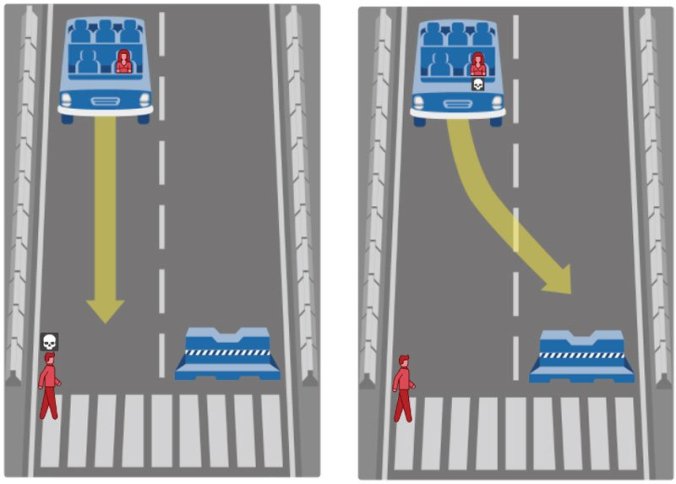
CBS’s “Bull,” a drama about a jury consultant (played by “NCIS” alum Michael Weatherly) is an ethics mess…but then, so is the former jury consultant Weatherly’s  character is loosely  based on: “Dr.” Phil McGraw. The show does find some interesting ethics issues, however. A couple of weeks ago the story involved the programming in an experimental self-driving car. The issue: is it ethical for such a car to be programmed to kill its passenger if it has to make a life or death choice?

The ethical conflict involved is the so-called “trolley problem,” which is, as the name suggests, over a hundred years old. British philosopher Philippa Foot developed it into series of hypotheticals in 1967. In 1985, American philosopher Judith Jarvis Thomson scrutinized and expanded on Foot’s ideas in The Yale Law Journal. Here is one of Thompson’s scenarios:

“Suppose you are the driver of a trolley. The trolley rounds a bend, and there come into view ahead five track workmen, who have been repairing the track. The track goes through a bit of a valley at that point, and the sides are steep, so you must stop the trolley if you are to avoid running the five men down. You step on the brakes, but alas they don’t work. Now you suddenly see a spur of track leading off to the right. You can turn the trolley onto it, and thus save the five men on the straight track ahead. Unfortunately,…there is one track workman on that spur of track. He can no more get off the track in time than the five can, so you will kill him if you turn the trolley onto him.”

The problem: Now what, and why?

A. Throw the switch in order to maximize well-being (five people surviving is greater than one).
B. Throw the switch because you are a virtuous person, and saving five lives is the type of charitable and compassionate act a virtuous person performs.
C. Do not throw the switch because that would be a form of killing, and killing is inherently wrong.
D. Do not throw the switch because you are a Christian, and the Ten Commandments teach that killing is against the will of God.
E. Do not throw the switch because you feel aiding in a person’s death would be culturally inappropriate and illegal. Continue reading

A New Poll Shows That President Elect Trump’s Popularity Is “Soaring”…GOOD!

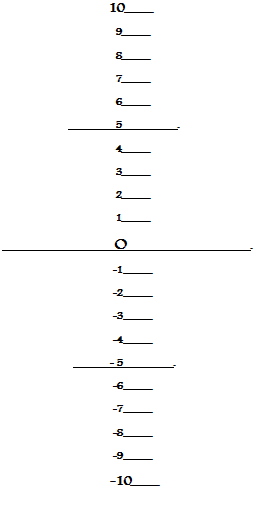
Yes, it's that cognitive dissonance scale again! See, if the nation and the U.S. Presidency is +10, and a newly elected POTUS was -3 before being elected, what happens?

Yes, it’s that cognitive dissonance scale again! See, if the nation and the U.S. Presidency is +10, and a newly elected POTUS was -3 before being elected, what happens?

Ann Althouse, who blogged about the poll, seemed surprised. “Why do you think this happened?” asks the astute, well-educated, presumably historically informed law professor.

Why? Because that’s the way it’s supposed to work, and that’s the way it has always worked, that’s why. I explained this phenomenon here, to the jeers of skeptics. I also wrote, “Most people don’t understand the Presidency or their own culture,” though I’m a bit surprised that it applies to Ann. In the original post about the vicious attempts on the Left to undermine the new President before he has even taken office, I explained,

“Americans have always realized that the slate is cleared when someone becomes President, and that the individual inherits the office and the legitimacy of that office as it has been built and maintained by it previous occupants. He (no “he or she” yet, sorry: not my fault) becomes the symbol of the nation, the government and its people, a unique amalgam of prime minister, king and flag in human and civilian form. That immediate good will, respect for the Presidency, and forgiveness of all that went before has made the transfer of power in the US the marvel of the world, and has kept the nation from violence and division. It is part of our strength as a society. It is part of the election process, and a vital one.”

Let me quote the Gallup piece I cited before, backing this up:

“In general, the American public rates all new presidents positively — all have received majority approval in their debut ratings — though Obama is clearly near the top of the list. The three presidents who took office after the death or resignation of their predecessors tended to start out with even greater public support, as the nation rallied around the new chief executive in times of crisis. These include Harry Truman in 1945 with an 87% approval rating, Lyndon Johnson with 78% in 1963, and Gerald Ford with 71% in 1974.”

The new POLITICO/Morning Consult poll of registered voters found that 46% of voters now have a very favorable or somewhat favorable opinion of the previously reviled Trump.  Now only 34%  have a very unfavorable opinion of him, with 12% somewhat unfavorable. Continue reading

Ethics Dunce Collective: The American Music Awards

I can make this uncharacteristically short. Just re-read the post on John Oliver’s nasty full-show, post-election anti-Trump rant, and substitute “American Music Awards.” Also worth reviewing is the list of rationalizations used to justify Oliver, which I posted here, especially since so many of them are also being trotted out to excuse the ambushing of Mile Pence when he dared to exercise his right to enjoy “Hamilton” on Broadway without being personally called out and attacked by the cast.

It can be argued that the American Music Awards’ insults to the duly and lawfully elected POTUS—who has yet to do anything as President— last night were even worse than Oliver’s disrespectful ad hominem barrage. At least Oliver, a skilled satirist, was occasionally amusing. The two AMA hosts from Saturday Night Live were juvenile, desperate and amateurish, counting on their Trump-hating demographic for laughs they didn’t earn. If we ever see a more inept impression of Donald Trump than Jay Pharoah’s, be it in four years or a century, I’ll be shocked. Worst of all, however, was Gigi Hadid’s unfunny, mean and hypocritical imitation of Melania Trump, for the crime of existing.  The principle, just for application to Republican First Ladies, now, is apparently that having an accent  makes you ridiculous and an idiot.

If anyone, anywhere, on a live television show had dared to do such a grotesque mockery of Michelle Obama when she was the incoming First Lady, they would have been tarred a boor, a racist, and a virtual traitor.

I wonder which of the rationalizations will be used to defend Hadid? Whatever they are, the real defense is just this, the same that is being used to defend “Hamilton”: We hate these people, and they don’t deserve to be treated fairly.

Got it.

One clarification: Green Day is a political band, and their decision to shout No Trump / No KKK” during their performance of the catchy and tuneful  “Bang Bang” is as fair as it was predictable…also moronic, but what do you expect? It’s a band.

Revelations From The John Oliver Video Post: What I Have Learned

light-bulb PREFACE: I have just returned from a crazy three day odyssey that had me lecturing on Massachusetts legal ethics in Boston, Washington, D.C. legal ethics in the nation’s capital, and, professional ethics, legal ethics and accounting ethics in Tucson, Arizona. Keeping pace with ethics developments was even more difficult than it usually is when I’m on the road, because I had almost no time in between flights, meetings and various hassles to get to a newspaper, surf the web, or watch TV. And my browser kept crashing.

I wrote the John Oliver post, frankly, as low-hanging fruit. His performance was vile and hateful, barely funny, self-indulgent, and disrespectful in a damaging way, and I didn’t think, and still don’t, that there should be much disagreement on that assessment. I expected the usual “lighten up,” “he was only joking “[he was NOT only joking], and “he has right to free speech” comments, because I always get those any time I point out that a comedian has been unfair and irresponsible. I did not expect,for the post to get more single day traffic than all but one previous Ethics Alarms entry, and so many comments, many of which with troubling social and political significance. I returned to my office to find more comments waiting for moderation than have ever been there at one time, and I apologize for that: I try to get them cleared withing hours if not minutes. Of course, a disproportionate number of them were garbled nonsense, or just invective with no point whatsoever. They didn’t make it.

I also had some tough calls, with repetitious comments that misrepresented the post, made irrelevant or factually mistaken assertions, and also were abusive. I fear that I may have been inconsistent, and perhaps less tolerant than usual, and I’m not referring to the occasional comment I allowed to be published just to show the kind of comments that weren’t being posted. The problem is that this site is a intended to be a colloquy, and poor quality comments just make the threads hard to read, and also undermine the site.

I may have to be more ruthless in moderating comments in the future. I’m thinking about it.

Ethics is all about processing new information. Here are some useful things I learned, or re-learned, from the reaction to the post, “Ethics Dunce: HBO’s John Oliver”….

1. Otherwise reasonable, fair, smart people really do think that Donald Trump justifies unethical conduct and that makes it okay. Continue reading

“The Ethicist” Endorses Vigilantism

No, you can't scam the scammers....

No, you can’t scam the scammers….

I haven’t been monitoring the New York Times’ “The Ethicist” column as much as I once did. After the original author of the feature, Randy Cohen, was jettisoned, the various ethicists, pseudo-ethicists and imaginary ethicists the Times recruited to fill his  slot have ranged from inconsistent to incompetent, and I stopped checking regularly until recently. Now the column has a real ethicist, for once: Kwame Anthony Appiah teaches philosophy at N.Y.U., and wrote “The Honor Code: How Moral Revolutions Happen.”  He seems to be thorough and explains his analysis using valid ethical systems. He’s a vast improvement over his immediate predecessors, but he goofs too.

A questioner asked about how he should handle scammers who tricked his father out a check. He wrote offering a threat and a settlement. They were to  return half the money, or he would report them to the consumer-affairs division of their state’s attorney general’s office and the Consumer Financial Protection Bureau, register complaints on websites and generally see that they suffered for their fraud.  His demand: send  a certified check, made out to his father, by the deadline. It worked; he got the amount requested, and the check cleared.

“But it was not certified, and it arrived after the due date,” he wrote. “Do I have an obligation to uphold my end of the deal, by not registering complaints about an outfit that is clearly scamming elderly people?”  Continue reading

Ethics Hypothetical: Rules, Compassion, Integrity, Fairness, And A Looming Race Card

clock2

[The hypothetical is inspired by two recent events I witnessed in the past week.]

Preface: The state requires new bar admittees to take a one-day course covering the basics of practicing law in the jurisdiction—how the courts work, special procedural rules, unique aspects of local practice, horror stories, the works. They must complete the course or they can’t be certified, and the court-ordered series of lectures and presentations is held only once a month.

A company runs the mandatory curriculum under contract to the state, and is required to confirm in writing to the courts that its requirement have been fulfilled. One key requirement is that every attendee must be present for every minute of the presentations, except for brief emergencies, like using the rest rooms. The course administrators carefully monitor attendance. The published description of the course directs that once the course begins, theoretically at 9 am sharp, no late-comers will be admitted.

As you might imagine, missing the session can be quite a hardship, as participants often live and work in other jurisdictions.

The Event: It is 9:08 am on the day of the program, and the introductory video that begins the orientation is almost finished. It consists of interviews with members of the bar about the benefits of practicing in the state, the importance of ethical practice, etc: to say it is not substantive is an understatement. Literally nothing that is said and shown in the video is anything but boilerplate.

A young man, sweating profusely, bursts in the door, looking unhappy and desperate. “I’m sorry I’m sorry!” he babbles. He says that he had to drive up from a neighboring state and had an accident. “Can I still get in?” he pleads.

The male staffer responsible for the session chats briefly with an associate. The program was late starting, and this late arrival will miss nothing if he goes in now. “All right,” the honcho says as the young man heaves a sigh of relief. “I shouldn’t do this, but you haven’t missed anything.” As he goes into the auditorium, one can here the opening remarks of the first speaker, a judge. It is now 9:12 am, and another young man bursts through the door on a dead run. “My crazy cabbie’s been driving me all over the city for an hour!” he shouts. “I flew in last night from Arizona! Please, please, don’t make me do this again…I barely was able to afford this trip.” The administrator is wondering if he had seen the previous guy go into the auditorium. He’s heard this judge’s spiel many times: all that has been missed, to be honest, are a few (lame) jokes. “All right, all right, get in there quick!” he tells the new supplicant. “I’ll finish your paperwork during the break!” The kid looks like he’s going to cry, he’s so relieved.

I’m there, watching this (I’m on the program) and say to the administrator, “I bet this happens every time.” He says, “It does. I know that nobody misses anything that isn’t in the printed materials until 9:15, so it’s a hard stop after that.”

And another late arrival bursts through the door. It’s a bit after 9:14. The staffer has just told me that the final final deadline is 9:15, and it’s not that yet. This poor guy is bleeding through his pants,  has a big bruise on his face, and is saying something about a bicycle accident. By the time he gets himself settled—he is told that there is no time to clean up—it’s past 9:16. He starts toward the auditorium door as the other staffer says, “OK, that’s IT,” and starts to take the registration materials and lists away….just a very stressed young African-American woman enters, in plenty of time to see the bicycle rider, who is white, enter the auditorium. I can hear the judge through the open door. He’s still telling jokes, longer this time than usual.

Issues and Observations

1. The young woman was not admitted, and told that she had to come back another month. She too was from out of state. She also had a legitimate-sounding excuse.

  • Was that fair to her?
  • Should it have mattered that the program had not yet reached a serious stage?
  • She was told that 15 minutes was the absolute, unwaivable deadline. That was true, but it was not the deadline the company was contracted and pledged to enforce. That deadline was 9:00 am.

2. Should the explanations used by the latecomers play any part in the decision to allow them in? Why? Continue reading

Health And Survival Rationing Ethics

cointoss

Beginning in 2012, Dr. Lee Daugherty Biddison, a critical care physician at Johns Hopkins and some colleagues have held public forums around Maryland to solicit the public’s opinions about how life-saving medical assistance should be distributed when there are too many desperately ill patients and not enough resources. The exercise was part of the preparation  for Biddenson’s participation in preparing official recommendations for state agencies that  might end up  as national guidelines regarding when doctors should remove one patient from a ventilator to save another who might have a better chance of surviving, or whether the young should have priority over the old.

Ethically, this is pure ends justifying the means stuff. The Golden Rule is useless—How would you like to be treated? I’d want to be left on the ventilator, of course!–and Kantian ethics break down, since Immanuel forbade using human life to achieve even the best objectives…like saving a human life. Such trade-offs of life for life (or lives) is the realm of utilitarianism, and an especially brutal variety….so brutal that I doubt that it is ethics at all.

When Dr. Biddenson justifies his public forums by saying that he wants to include current societal values in his life-for-a-life calculations, she is really seeking current biases, because that’s all they are. On the Titanic, it was women and children first, not because it made societal sense to allow some of the most productive and vibrant minds alive to drown simply because they had a Y chromosome, but because that’s just the way it was. Old women and sick children got on lifeboats;  young men, like emerging mystery writer Jacque Futrelle (and brilliant young artist Leonardo DiCaprio), went down with the ship. That’s not utilitarianism. That’s sentimentalism.

The New York Times article mostly demonstrates that human beings are incapable of making ethical guidelines, because Kant was right: when you start trading one life for another, it’s inherently unethical, even if you have no choice but to do it. Does it make societal sense to take away Stephen Hawking’s ventilator to help a drug-addicted, habitual criminal survive? Well, should violating drug laws sentence a kid to death? TILT! There are no ethical answers, just biased decisions. Continue reading

The Strange, Unique, Sort-Of Unethical Movie Career Of Marnie Nixon, a.k.a. Deborah Kerr, Natalie Wood, And Audrey Hepburn

"Heeeeere's MARNI!"

“Heeeeere’s MARNI!”

Marni Nixon died last month at 86, and I have been intending to write about her ever since.  An accomplished soprano with perfect pitch and a rare gift for mimicry, Nixon secretly dubbed in the songs for Deborah Kerr as Anna in “The King and I,” Natalie Wood as Maria in “West Side Story” and Audrey Hepburn as Eliza Doolittle in “My Fair Lady,” three of the most successful and honored Hollywood adaptations of Broadway musicals. In doing so she was assisting in the perpetration of a fraud on critics and audiences, but one that had, and indeed has, some legitimate ethical arguments, and rationalizations too, to justify it. Why is using a stunt singer any more dishonest than using a stunt man? Isn’t film about making the audience accept illusions in pursuit of art? If an audience member will be more likely to enjoy a film thinking that a major star can really sing, why is it wrong to make it possible for them to believe that, at least for a while?

The reasoning would have more power if long before Marnie did her secret singing Hollywood hadn’t already made a classic musical, “Singin’ in the Rain,” that pronounced the practice fraudulent. Marni Nixon was a real life Cathy Seldon, the Debbie Reynolds contract player forced to supply the singing and speaking voice for a talentless silent film superstar, Lina Lamont, whose real voice would make dogs run for refuge and men claw off their ears, and whose continued status as a money-making asset for the studio depended on making her successful in talkies.

Ironically,  even “Singin’ in the Rain” engaged in the same fraud it was ridiculing. Debbie Reynolds was a competent singer, but a richer, more mature voice was needed to match the image of Jean Hagen, the terrific comic actress playing Lina. So when Debbie was shown secretly replacing Lina’s nightmarish singing voice with her own, another singer was secretly used, uncredited, to dub Debbie. Her voice fit Lina perfectly, because the voice put in Debbie’s mouth while she was supposedly putting her voice into Lina’s was the real voice of… Jean Hagen. Continue reading