In Sports, Discretion Is The Enemy Of Integrity

The Denver Bronchos last second win over the San Diego Chargers last weekend was one more game decided by a controversial pass interference call. That rule, with which the NFL has been tinkering and which is now complicated by a video review system, is becoming increasingly controversial this season. Wrote Times football columnist Ben Shpiegel,

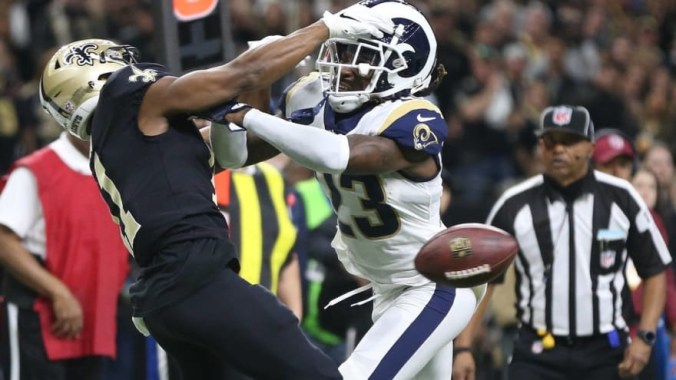
[E]very week across the N.F.L.’s vast empire one player interferes with another before a pass arrives — and goes unpunished for it. In these moments, when yellow penalty flags remain lodged in officials’ pockets, aggrieved coaches weigh emotion against reason: Do they challenge the non-call, hoping that by sheer luck it will be overruled by the new video review mechanism? Or do they stew on the sideline, red flag pocketed, and resign themselves to the unlikelihood of a reversal?…After 12 weeks of wasted challenges and lost timeouts, of inconsistency and obfuscation, the league’s erratic application of the defined standard for overturning an on-field decision — “clear and obvious visual evidence” — has made the football masses yearn for simpler times, such as when no one knew what constituted a catch. Over all, through Week 12, 15 of 77 reviews of pass interference were overturned, though nearly half of those reversals — seven of 15 — were initiated by the officials in the replay booth, who are responsible for challenges in the last two minutes of the half… The questionable calls have dented confidence in a mechanism ostensibly intended to restore it after a mess of an N.F.C. championship game, in which Rams cornerback Nickell Robey-Coleman, without consequence, walloped Saints receiver Tommylee Lewis before the ball arrived.

The dilemma isn’t restricted to football. In any sport where an official’s judgment plays a big role in game results, the interjection of technology and the universal broadcast of games has created an integrity crisis. Before multiple camera angles and the  possibility of replays, umpires and referees could blow a crucial call and nobody would be the wiser, or at least would be able to prove that the game was decided by a non-player’s botch. Now, bad calls are there, on a big screen, then the internet, for all to see over and over. The Luddite argument that missed calls are the “human element” and “part of the game” made sense when there was nothing to be done about it. It is ridiculous now. Continue reading

Late Night Ethics Refresher, 10/20/18: Bad Art And Baseball Roshomon

Having a nice weekend?

Literally nothing can spoil my mood now that the Red Sox are going to the World Series…and playing the Dodgers.

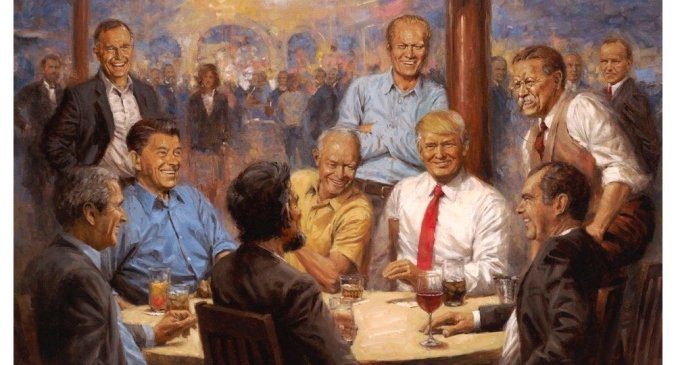
1. White House art ethics? I’ve been wanting to post about this all week.  Here is the painting President Trump has hung in the White House:

I love it. It makes me smile every time I see it. But because there is nothing President Trump could do that the news media and the “resistance” wouldn’t mark as shameful; and scandalous, he is actually being attacked for his choice of art.

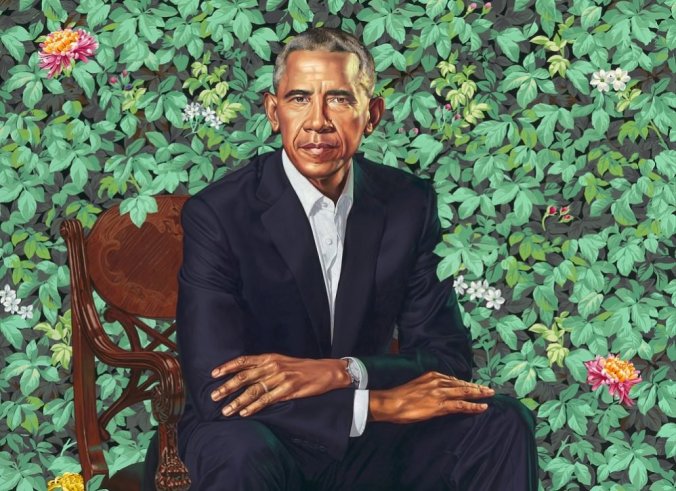
Well, to hell with them, which I’m sure is Trump’s attitude. Sure it’s a tacky painting; I’m pretty sure the artist knows that, and doesn’t care. Called “The Republican Club,” it is the work of Missouri artist Andy Thomas. Trump is President and for at least four years he’s living in the White House: he can put up whatever art he likes. If it makes him smile like it does me, then that’s a good enough reason to hang it. It’s bad art, but so was Obama’s official portrait showing him being slowly devoured by plants with the sperm on his face, and that one didn’t make anyone smile, except the artist.


By the way, CNN displays its ignorance by writing that “Chester Arthur, Rutherford B. Hayes and James Garfield are presumably in the crowd, but impossible to identify.” I could identify Arthur easily. Can you? Garfield, Hayes, and Benjamin Harrison, whom CNN’s reporter apparently never heard of, were all similarly bearded, and there are two bearded faces near Arthur that could be two of them. I can’t find McKinley anywhere, so maybe the artist was minimizing the presence of the murdered Presidents—given the tenor of Democratic rhetoric,  that might be prudent—which means the bearded figures are Hayes and Harrison. Also missing is the only impeached Republican President, Andrew Johnson. Yeah, poor Andy would be a skunk at the picnic too. Continue reading

How The Human Factor Foils Technology And Ethics: A Case Study (UPDATED)

Baseball finally installed a replay review system to address umpire calls that were shown by TV slow-mo to be clearly wrong. For all the complaining about the system, it was the only ethical choice. Mistaken calls were changing the results of games, and because of technology, this was now obvious to all. Only technology could solve the problem.

Unfortunately, however, human beings still control the technology. Bias, emotion and other impediments to ethics will still prevail more often than we like to think. Yesterday’s Red Sox Yankee game provided a classic example.

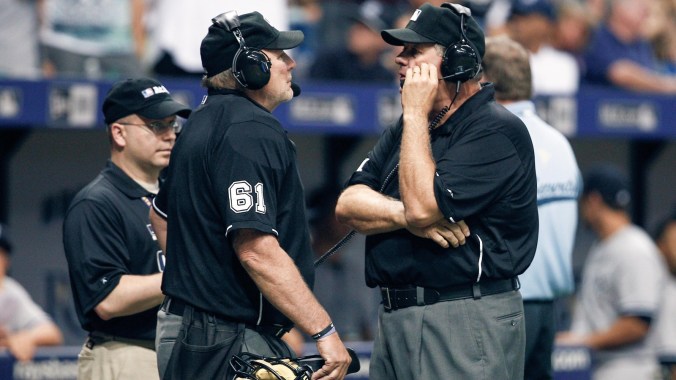
Yankees manager Joe Girardi challenged a safe call on the Sox’s Andrew Benintendi when he slid into second base for an apparent double. The video showed that the second base umpire had missed the play. Upon review—the umpires put on headsets to get the verdict from a New York studio where another set of umpires check the video from multiple angles—the call was reversed, and Benintendi was out.

In the same inning, Red Sox manager John Farrell challenged an inning-ending double play. The review showed Red Sox baserunner Mookie Betts safely reached second before the throw, allowing the Red Sox to score the game’s first run. For the second time in a single inning, Greg Gibson,  the second base umpire, had his call reversed. I have never seen this happen before. For an umpire, this is not just embarrassing, it is professionally humiliating.

Later, in the seventh inning, the same star-crossed (cross-eyed?) umpire  called Yankee Greg Bird  out as he was doubled off second base after a lineout. The video this time was more conclusive than the first challenge: the umpire blew it, again. Bird had beat the throw.

While the challenge was being reviewed, the Red Sox broadcasters, who had concluded that Bir should have been called safe at second, were talking about the rarity of the same umpire being reversed three times in a single game. Sox color man Dennis Eckersley wondered aloud if professional courtesy and loyalty might affect the review.  What he was really asking was whether the umpires in New York would allow a colleague to be exposed to the disgrace of being reversed three times in one game. This wouldn’t only  make him look bad, after all. It would make umpires look bad. Three strikes and you’re out, after all.

Sure enough, the decision from New York was that the call at second was correct. Bird was out, even though the video showed he was safe.

The umpires have plausible deniability here: this was hardly the first time that a replay review seemed at odds with a video. Nonetheless, it was a sobering display. By all appearances, the umpires distorted the game to protect one of their own who was having a terrible night. They were employing the Golden Rule in the kind of setting where the Golden Rule works against an ethical result, not for it.

Fortunately for the umpires, allowing the third blown call at second was allowed to stand had no effect on the game’s outcome, but that is just moral luck. The umpires made a very clear statement. They regard loyalty to colleagues as more important than their profession, the game, their fans, or public trust. They, or at least the umpires involved, cannot be trusted to put aside their biases and conflicts when their duties demand it. Technology may be unbiased, but the humans using it are not. Professionals are not always professional when a colleague’s fate is involved.

Humanity is the ultimate conflict.

Case Study: The Botched DP, Baseball, Ethics Evolution, and “Getting It Right”

manager-mike-matheny-argues

I know this is a long essay.

Yes, it involves baseball.

Bear with me. I think it is worth your time.

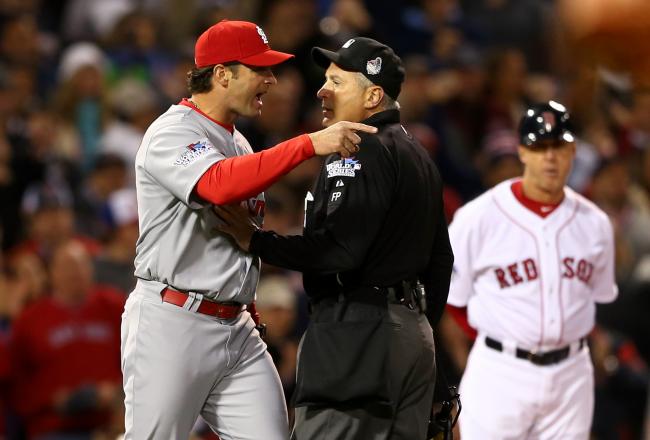
Last night, in Game 1 of the 2013 World Series, embarrassingly kicked away by the St. Louis Cardinals and won handily by some team called the Boston Red Sox,  an intricate ethics drama appeared, allowing us to see the painful process whereby a culture’s ethical standards evolve and change in response to accumulated wisdom, altered attitudes and changing conditions. An obviously mistaken umpire’s call was reversed by the other umpires on the field as the Cardinals manager argued not that the original call had been correct, but that reversing it was a violation of tradition, established practice and precedent….in other words, doing so was wrong, unfair, unethical because “We’ve never  done it this way,” a variation of the Golden Rationalization, “Everybody does it.”   You should not have to appreciate baseball (but if you don’t, what’s the matter with you?) to find the process illuminating and thought-provoking. Continue reading