Dancing With Thomas Jefferson: How Assholes Make the Law Spoil Life For Everyone

Coming to a place of honor and reflection near you.

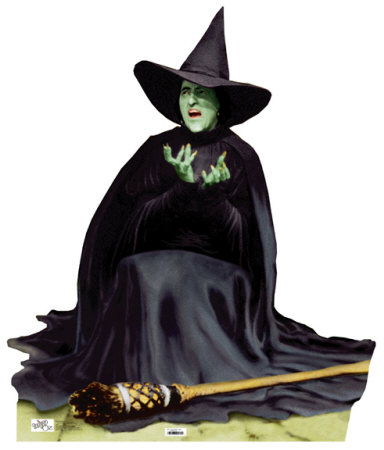
On Saturday, the U.S. Park Police forcefully arrested five “Code Pink” protesters under the dome of the Jefferson Memorial for defying a recent Federal Appeals Court ruling that dancing at federal monuments was not constitutionally protected expression.

Perhaps you missed that ruling earlier this month, which was, I presume, made necessary by the realization that a flash mob could break out at any moment at the Lincoln Memorial or the Alamo. That was not the threat in 2008, however, when Mary Oberwetter was arrested, also at the Thomas Jefferson Memorial, for hoofing to celebrate Thomas Jefferson’s birthday.

She sued the National Park Service for violating her First Amendment rights, and on May 17 the U.S. Court of Appeals for the D.C. Circuit held that the Jefferson Memorial should have a “solemn atmosphere” and that dancing, silent or otherwise, was an inappropriate form of expression there. The appellate judges concurred with the lower court that the memorial is “not a public forum,” and thus demonstrators must first obtain a  permit. Demonstrations that require permits in the Park Service’s National Capital region are defined as

“…picketing, speechmaking, marching, holding vigils or religious services and all other like forms of conduct which involve the communication or expression of views or grievances, engaged in by one or more persons, the conduct of which has the effect, intent or propensity to draw a crowd or onlookers. [The] term does not include casual park use by visitors or tourists which does not have an intent or propensity to attract a crowd or onlookers.”
The Appellate Court wrote: Continue reading

OH NO! Political Correctness Got Me!

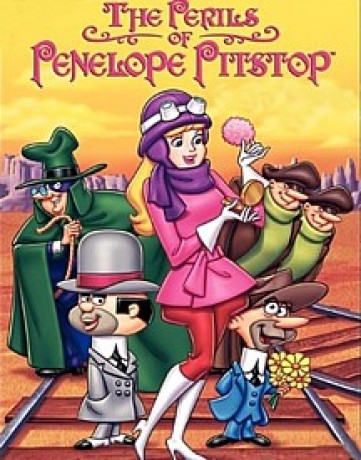
Late last night as I was battling worry and insomnia, my TV remote transported me to the Cartoon Network where I encountered, for the first time  in 40 years, a minor Hanna-Barbara animated series called “The Perils of Penelope Pitstop.” Like all Hanna-Barbara shows, but especially the Saturday morning variety, “Penelope” was crudely drawn and aimed its humor at the lowest common denominator: compared to it, Woody Woodpecker is Faulkner. Drawn in by the comforting sounds of great vocal artists of the era like Mel Blanc and Paul Winchell, however, I watched about ten minutes of the show and realized, to my horror, that I now found it offensive…and not for the reason that I found it annoying in 1970 (it is, after all, moronic).

The plot of  every episode of “The Perils of Penelope Pitstop” (a spin-off of H-B’s more successful but just as repetitious and silly “Wacky Racers”) was the same. A female auto racer who is also a blonde, helpless bimbo with a Southern accent is stalked by a villain called “The Hooded Claw,” voiced by the great Paul Lynde.  The Hooded Claw, for no discernible reason,  concocts elaborate plots to kill Penelope, but is foiled, at the last second, every time. The cartoon is an obvious riff on “The Perils of Pauline,” the famous Pearl White silent movie cliffhanger serial in which each segment ended with the heroine tied to a railroad track or falling to earth dragging a collapsed parachute. Yet I found it impossible to appreciate the cartoon’s meager charms because of the loud clanging of  ethics alarms in my brain. Why is the only woman in the show portrayed as a walking, talking Barbie Doll? And why are kids being encouraged to laugh at a woman being stalked by a homicidal maniac? Because he’s an inept homicidal maniac? What could possibly be funny about stalking, an insidious phenomenon that every year leads to multiple murders?

“Oh my God,” I thought. “I’m politically correct!Continue reading

From First Amendment Outrage to Ethics Hypothetical: The Westboro Baptist Church vs. Brandon, Miss. Hoax

"Never mind!"

Bulletin: The story about how citizens and law enforcement personnel in Brandon, Miss. foiled the efforts of Fred Phelps’ homophobic Westboro Baptist Church to disrupt the funeral of a serviceman killed in Afghanistan never happened. The source of the hoax is unclear, but an enterprising Stars and Stripes blogger investigated and has determined that it never happened. The Church was never even in Brandon.

I detest fake web stories and the people who create them, as you probably know. The public is  confused enough by reality without having falsehoods, fabrications and hoaxes added to its database. Luckily, this is not a news site, but an ethics site, and my commentary about those who applauded this tale of a community conspiring to rob a group of their U.S. Supreme Court confirmed constitutional rights is as valid as when it was widely assumed that the story was real.

The foiling of Fred Phelps’ gang by “Mississippi Burning” tactics is not only an ethics hypothetical that most people flunked, but also an effective trap to lure the self-righteous into agreeing  that ends justify unethical means as long as the victims of those ends are sufficiently despicable.   This group includes one of the most quoted commentators on the story, who approved of the fictional response by the town and wrote,

“This is a template for how to handle the Westboro people. If lawsuits don’t work, other means will. Whatever it takes to keep them from harassing bereaved military families on the day their fallen loved ones are laid to rest.”

He was wrong then, and he’s wrong now.

Ethics Quote of the Day: Lori Palatnik

Is "ding-dong" wrong?

“In life we must know what is good and what is evil. Yes, we are commanded to remember that there is evil in the world, and not only are we allowed to celebrate when it is destroyed, we must.”

Mrs. Lori Palatnik, in an essay today entitled “Is It Proper To Celebrate Osama bin Laden’s Death?”

Writer David Sirotka at Salon, among others, has sharply criticized the jubilant reaction of most Americans to the terrorist’s death. He found the chanting crowds in front of the White House and Times Square disturbing, symbolizing a gleeful embrace of violence as the way to address problems, an instance of becoming the enemy in order to defeat it: Continue reading

Don’t Cheer Mississippi’s Westboro Baptist Tactics Too Loudly: You Never Know Who Might Hear You

"Demonstrators? Just leave them to us."

Sgt. Jason Rogers, who was killed in action in Afghanistan, was buried two weeks ago in Brandon, Mississippi. As is its custom, the Westboro Baptist Church, fresh from U.S. Supreme Court-confirmed constitutional protection, was prepared to sully Sgt. Rogers’ funeral with its usual hateful chants about how God kills our soldiers to punish our sinful, homosexual-loving ways. Its plans were foiled, however, by a little bit of traditional Mississippi social control ingenuity.

A couple of days before the funeral, one of Fred Phelps’ vile cultists boasted about the upcoming protest while visiting a Brandon gas station, and the good citizenry on the scene gave him the sound beating they felt his sentiments warranted. Continue reading

Why I Hate Hate Crime Laws

Just do it with love, and they'll be lenient...

I did it to myself, I confess: reminding myself of the nation’s offensive hate crime laws while writing about the McDonald’s beating, pausing in the middle of the main theme of the post to note the foolishness of investigating whether or not an unprovoked attack qualifies as a hate crime. Hate crime laws infuriate me every time I think about them, because they represent the lowest and most cynical form of cultural values-setting by lawmaking, an important governmental task that is increasingly a lost art, because today’s lawmakers care more about posturing and power than values.

Two unidentified men beat Bryan Stow, a 42-year-old paramedic, senseless in the parking lot outside Dodger Stadium on opening day. Why? He was wearing a San Francisco Giant jersey, and it was Dodger territory. Continue reading

No-Hit Piñatas and the Killers of Childhood

This is a no-hit piñata. Send it to Hell.

The latest device invented by childhood-fearing adults is the “no-hit piñata,”a new invention designed to make the ancient traditional child’s game less violent. Instead of hitting the colorful paper container with sticks to get at the candy and toys inside, the children pull strings, and the piñata opens non-violently.

What fun.

This is just another sally from the growing number of whimsy-challenged and anti-violence-addled parents and psychologists, who won’t rest until no child ever again picks up a stick to use as an imaginary gun, plays soldier, watches the Roadrunner push Wile E. Coyote off a cliff, or participates in a dodge ball game. Continue reading

Backtracking on Virtual World Ethics


Anything unethical about these guys?

I was wrong.

New technology challenges our ethics because we have no immediate frames of reference to rely on. The situations created by the use of new technology require us to reach back to things we are more familiar with for guidance, and we risk choosing comparisons that prove to be superficial and inaccurate over time. This is the trap I fell into when I first approached the question of whether a player’s misconduct —or rather his avatar’s misconduct—in virtual worlds like World of Warcraft and Second Life could be unethical. My frame of reference was video games, role-playing games like Dungeons and Dragons,  and games generally. If engaging in Second Life is analogous to playing a game, then vandalizing someone’s home in cyberspace is no different from invading another player’s country in Risk. If “Warcraft” is essentially similar to playing a video game, then “killing”  an avatar is no more unethical than mowing down enemy soldiers in Medal of Honor.

And if virtual games were fantasies, I reasoned, then declaring anything that took place in their boundaries unethical was tantamount to policing thought. Thoughts are not unethical;  actions are. Case closed, right? Continue reading

Comments of the Day: “Bully Ethics…”

I was in New York all day, and returned to find a plethora of excellent comments on the post, “Bully Ethics: Lessons from Casey the Punisher.” Two of the finest follow, and they go well together: Michael on the dilemma facing the bullied child, and Lianne on her family’s solution.

First, Michael:

“Bullies only understand violence. If you are being bullied, how can you stop it? Continue reading

Now THIS is Incivility…

The Victim

University of St. Thomas math professor Douglas Dokken is a devoted University of Minnesota fan, but the school mascot’s hijinks became just a little too annoying for him during  a men’s gymnastics meet Saturday night. When Goldy Gopher tapped him on the shoulder one time too many, Dokken wheeled around in his seat and punched him right in the kisser.

The  professor, though sincerely remorseful over his stuffed-animal abuse and bad manners, has been banned from the University of Minnesota’s Sports Pavilion and Williams Arena for a year. Goldy’s face needs some stitches, and he was left speechless. But then Goldie never says anything anyway. After all, he’s a gopher.

Physical violence is not the answer, even to a dumb question like, “How do you stop a guy in a 7-foot gopher suit from bugging you?”