
Comment Of The Day: “Comment Of The Day: ‘Catching Up: Professional Ethics And The Challenger Disaster’”
The category is Celebrity Ethics, Royal Ethics or Marketing Ethics, depending on your point of view. Unfortunately for ethical clarity, how you answer today’s Ethics Alarms Ethics Quiz may depend on which category you choose.
Sarah Ferguson, Duchess of York, is embarrassing the Royal Family again, only this time it isn’t by throwing snowballs at photographers or by not being as demure and lovely as the late Princess Diana. This time, the self-exiled and divorced Fergie is trading on her title to make a living as an internet huckster. She has a website that peddles a juicer for weight loss and “The Perfecter Ultra”:
The Perfecter Ultra Heated Styling Brush combines innovative ionic technology with pure black tourmaline heating plates for ultimate convenience in achieving salon quality hairstyles at home. Create silky straight styles or beautiful bouncing curls, reduce frizzies or add volume to thinning hair, the Perfecter Ultra is the remarkable styling tool that does it all.
The Duchess has also been appearing on QVC, the cable shopping network where shopping addicts, lonely recluses and easy marks hang out. Among the Royals, with whom she is already on the outs, this is considered…unseemly. Concludes Tom Sykes at the Daily Beast:
“Her website majors in its attempts to cast her shill as public service, saying, “One of my missions in life now is to help people fight their weight challenges so they can live longer, healthier and happier lives. Take it from me: you can do it!” But the truth is, Fergie is selling her title, and getting paid a no-doubt healthy fee for her promotional activities.”
There’s little doubt that “selling her title” is a fair description.
Your Ethics Alarms Ethics Quiz of the Day is…
Apparently this has been going on at Arlington, Virginia’s Washington and Lee High School, from which my niece graduated, for years. The school calls about a third of its graduating classes “valedictorians,” so 1) the school can put it on their college applications and deceive those who haven’t connected the dots; 3) make certain the school can claim a female valedictorian, a black valedictorian, an Asian-American valedictorian, a trans valedictorian…you know, because everyone is above average, like in Lake Woebegon, and 3) the official rationalization, to eliminate competitiveness for honors among students, because life isn’t competitive.
Back when I wrote about this in June, 2010, the news was that…
In many high schools around the country, as many as fifty graduating seniors were designated “valedictorians…
Now honor inflation ins some schools is more than double that, so this atrocious practice is obviously catching on. Integrity is such a chore. Excellence, superiority, achievement…they are all chores too. As for the genuinely superior students, they are out of luck: this is the high school equivalent of all the gladiators standing up and crying “I’m Spartacus!,” except now it’s “I’m the smartest one in the class!” This Maoist denial of the fact that some of us earn more success than others and that there is nothing wrong with doing so is all the rage, and you can expect to hear more such ideas as the various candidates to lead the nation, one founded on the principle of personal self-determination based on ambition and enterprise, argue about how to deal with “income inequality.” Income inequality is but a subset of talent, industry, risk-taking and ability inequality…and good fortune inequality too. Might high schools sending graduates out into the world with the cuckoo concept that everyone should be regarded as equally accomplished whether they really are or not also contribute to income inequality?
Why yes, I think so. Continue reading

“Yikes! Doc says I have to go back to 1976 and make sure Jenner wins the Ladies Decathlon!”
It is testimony to the passion, breadth and erudition of the readership here that when I miss an ethics angle to a story, it almost always is raised, and well, by someone else. Here is a wonderful example, johnburger’s ethical objection to the instant, inaccurate and unethical recasting of Olympic athlete Bruce Jenner as female, because Jenner has adopted another gender identity more than 30 years later. I’ll have a brief note in the end,
Here is johnburger’s Comment of the Day on the post, Confused Ethics Observations On Caitlyn Jenner, Up and Down the Cognitive Dissonance Scale: Continue reading
A rather long preface is in order. Bear with me, please…
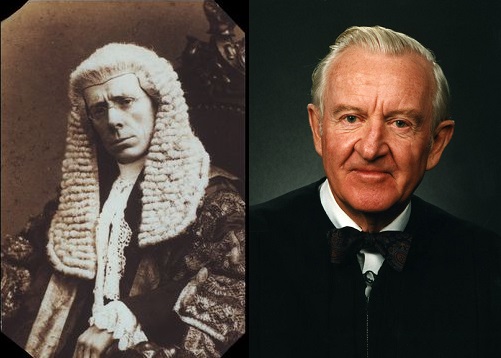
In the great, underperformed Gilbert and Sullivan operetta “Iolanthe,” W.S. Gilbert, a lawyer by training, devised a satirical judicial solution to a dire turn in the plot. Iolanthe, a fairy, violated Fairy Law by marrying a mortal, who happened to be the Lord Chancellor of England (he never noticed her wings, apparently.) The transgression commands the death penalty, but Iolanthe received a pardon on the condition that she allow her husband to think her dead, which she does for a couple of decades, much of which she spends doing penance at the bottom of a froggy stream, on her head.…but I digress.
When she learns, however, that her husband of yore is about to marry the sweetheart of her half-fairy son, who, though the Lord Chancellor doesn’t know it, is also his son, Iolanthe reveals herself and the paternity to the Lord Chancellor, who is duly stunned. This again triggers the death penalty and just minutes away from the finale, it looks like Iolanthe is going to end up like Carlo in “The Godfather,” as the fairy equivalent of Clemenza waddles on to the stage. (That’s how I would stage it, anyway.) Then this happens: Continue reading

Now if Cox came to work like this, I take it all back...
Indiana deputy attorney general Jeff Cox tweeted “use live ammunition” in response to a tweet by progressive magazine Mother Jones that riot police had been ordered to remove union supporters from the Wisconsin state Capitol in Madison. Mother Jones published the tweet as evidence of what it believes is the predominant conservative mindset, and the progressive blogosphere was soon using his tweet as a rallying cry.
Cox was fired Wednesday. Quite correctly, too. Continue reading
Stephen Sondheim’s “Finishing the Hat” is a fascinating reflection on a remarkable career and the craft of making musicals by the greatest living master of the form. In the course of recounting his formative years, triumphs, failures, and duels with producers, authors and composers, Sondheim also critiques the lyrics of his predecessors, contemporaries and role models—as long as they are dead. In a nod to gentility or cowardice, the only living lyricist he subjects to his expert critiques is himself.
Sondheim is a tough judge, as one might expect from a composer/lyricist who meticulously measures each vowel sound and stressed syllable for maximum effect. He is also, by virtue of both his reputation and technical expertise, an influential one. The lyricists he grades highly in the book, such as Frank Loesser, Cole Porter and Dorothy Fields, are likely to have their reputations burnished by his praise, and those he slams, like Lorenz Hart and Noel Coward, will suffer by comparison. Because of this, Sondheim had an obligation, as a respected expert in his field, to make each case carefully and fairly. To his credit, Sondheim seems to recognize this, and all of his critical discussions of an individual lyricist’s style and quirks include specific examples and careful analysis. We may disagree with Sondheim as a matter of personal taste, but it is difficult to argue with his specific points, because they are backed up by examples, technical theory, and the weight of his authority.
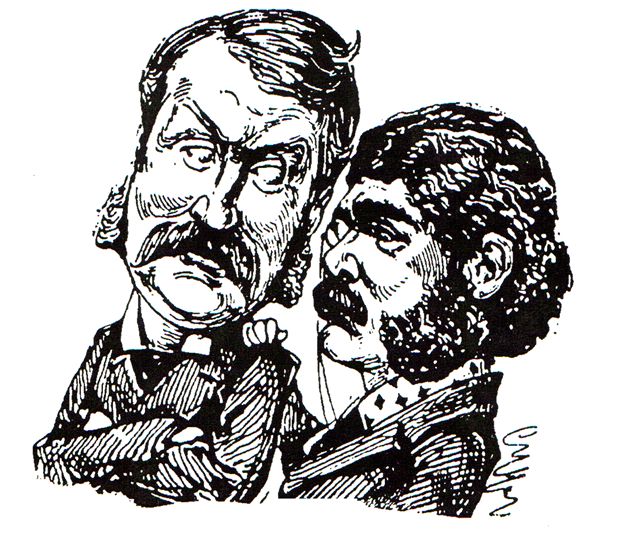
It is therefore surprising and disappointing to see Stephen Sondheim slide into expert malpractice when he undertakes, clearly half-heartedly, a critique of the lyrics of W.S. Gilbert, of Gilbert and Sullivan fame. Continue reading
In many high schools around the country, as many as fifty graduating seniors were designated “valedictorians,” because the traditional honor for the top academic performer is a coveted credential, and the schools wanted as many students as possible to have the benefit of it. On their future resumes, will these students footnote “valedictorian” to let potential employers know that it doesn’t mean they were #1 in their class? Of course not. Their schools have given them a license to inflate their qualifications and achievements. Until every school clones its valedictorians, the credential now is inherently deceptive, and it is the high school administrators, not the students, who are doing the deceiving.
Ah, but “you ain’t seen nothin’ yet!” The New York Times reported that at least ten law schools, S.M.U., New York University, Georgetown, and Tulane among them, have deliberately altered their grading curves—-some retroactively—in order to make their graduates artificially look better to employers. Continue reading
“I disapprove of what you say, but I will defend to the death your right to say it.”
—–Evelyn Beatrice Hall (describing Voltaire’s attitude toward freedom of speech.)
“We will defend to the death your right to say anything to get a laugh, unless you are threatened by religious zealots and terrorists, in which case we will fold like Bart Stupak in an origami competition.”
—–Ethics Alarms (describing Comedy Central’s attitude toward freedom of speech.)
 Ethics Alarms
Matthew B. scored a Comment of the Day by raising an issue I had never thought about before: how the misapplication of PowerPoint leads to inadequate training and information dissemination within organizations and bureaucracies. He also references the reluctance of managers to know when to hand over decision-making to subordinates. That is something I have thought about, a great deal.
Two of my favorite movies illustrate how competent leaders and managers know when to delegate a crucial decision down. “Topsy-Turvy,” the superb 1999 film depicting the creation of “The Mikado” by Gilbert and Sullivan, accurately depicts the real incident when, after the final rehearsal, W.S. Gilbert told the “Mikado” cast that he was cutting “My Object All Sublime,” also known as “The Mikado’s Song.” Gilbert was a tyrannical director, and the cast was terrified of incurring his wrath. This time, however, they stood up to him. The cast as one told him that he was making a mistake. The soloist, Richard Temple, they told their shocked and steaming director who also had conceived of the song, should have the chance to perform it in front of an audience. His fellow cast members were certain it would be a hit. Gilbert, recognizing the certitude the cast must have had to risk his fury at being contradicted, decided that his performers might have a clearer understanding of the show even that he had, and relented. Temple would sing about letting “the punishment fit the crime” on opening night.
The song was an instant sensation, like “The Mikado” itself, and is still one of the most quoted of all G&S songs.
The other example is at the climax of “Hoosiers,” the great basketball film based on the true story of the miraculous Indiana state championship won by a tiny school from Milan, Ind. in 1954. During the last time-out before the team’s last chance to score, which would, if successful, give the team a one-point victory over their greatly favored competition in the championship game, the coach (Gene Hackman), who has led the ragtag group this far by emphasizing teamwork over individual achievement, lays out a play in which the team’s superstar, Jimmy Chitwood will be a decoy. He plans for another player to take the final shot, but the team doesn’t move. “What’s the matter with you?” he shouts as his players just stare, looking hesitant. “If I get the shot, I’ll make it,” Jimmy says, after a long pause. So the coach, who has insisted all season that his word was law, makes the same decision Gilbert did. When your subordinates are that sure, trust them. They know better than you.
Jimmy shoots and scores the winning basket as time runs out.
Here is Matthew B.’s Comment of the Day on “Comment Of The Day: ‘Catching Up: Professional Ethics And The Challenger Disaster’”:
Continue reading →