Ethics Dunce: Broward (Florida) Circuit Judge Barbara McCarthy

Come on! How can you put a guy like this in jail?

Many Americans don’t comprehend the meaning of “justice.”  It is unfortunate that some of these Americans are  judges.

Ryan LeVin, 36, is a drunk, a drug abuser, a playboy, a scofflaw and a killer. He killed Craig Elford, 39, and Kenneth Watkinson, 48, as they were walking to their beachside hotel in 2009. LeVin was driving recklessly in his $120,000 Porsche 911 Turbo, ran them down, and  fled the scene. That was only the latest of his offenses: LeVin was already on probation in Illinois for crashing into a Chicago police officer and instigating a high-speed chase. He has more than 50 traffic violations. What really matters, however, is that Ryan LeVin is rich.

Because he is rich, when LeVin offered enough money to the widows of the two men he killed in his act of vehicular homicide, a Florida judge agreed to let him off with two years of house arrest rather than the 45 years in prison that you or I would serve for a similar crime. Continue reading
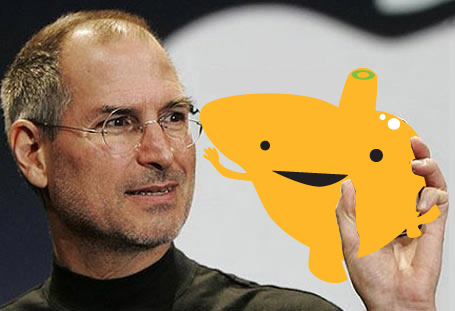
A Strong Consequentialist Argument for Steve Jobs’ Liver…But Is It Right?

Steve Jobs and friend

Back in June of 2009, when “Ethics Alarms” was but a twinkle in my eye, there was a momentary controversy when ailing Apple CEO Steve Jobs was able to use his enormous wealth to land on multiple regional organ transplant lists, thus vastly improving his chances of getting a precious liver transplant in time to save his life. The California native ultimately got a Tennessee liver, but critics cried ethics foul. The organ transplant distribution system is not supposed to be based on wealth: otherwise, why not just auction off livers to the highest bidders? Because most insurance companies won’t cover multiple listings, only the richest patients can afford to employ this strategy, meaning that a system that is supposed to be means-neutral favors the wealthy after all. Continue reading

The Facebook Founder’s Sinister and Unethical Hundred Million Dollar Gift

When is a hundred million dollar gift to help schools unethical?

It is unethical when it represents the power of money taking control of government. It is unethical when it induces politicians to breach their duty to obey the law. It is unethical when it demonstrates that the principles of democracy and law can be bought, sold, and distorted for a price.

In a shocking development last week that received very little thoughtful or critical coverage from the news media, Facebook mogul and co-founder Mark Zuckerberg gave the Newark schools $100 million in return for dictating how the schools are run. Zuckerberg, backed by Oprah Winfrey, another billionaire, who put the school governance sale on her TV show,  wants Newark Mayor Cory Booker to run them.  New Jersey Governor Chris Christie, who also appeared on the strange Oprah segment, has agreed in principle to make Booker the overseer of his city’s infamously bad school system. As for the fact that a New Jersey statute doesn’t allow the governor to put the mayor of a city in charge of its schools once the state has taken over control of them, well, money, not the law, rules in New Jersey, and that appears to be just dandy according to the state’s governor, Zuckerberg, Oprah, Republicans, Newark parents, news editors and citizens.

Meanwhile, that whirring sound you hear is Thomas Jefferson spinning in his grave. Continue reading

Unethical or Dumb? Three Scenarios From The News

Many actions that appear to be unethical at first glance are really just thoughtless, careless decisions by people who should know better. It is only when knowing better is an obligation of their jobs or positions that a foolish mistake becomes unethical, or when it involves willful disregard for basic ethical principles.

Here are three scenarios from the news. Your choices: Dumb, Unethical, or Dumb and Unethical. Continue reading

Ethics Heroes: The Billionaires of “The Giving Pledge”

Encouraged by Warren Buffett and Bill Gates, more than 30 U.S. billionaires have pledged to give at least half of their fortunes to charity. Buffett and Gates launched The Giving Pledge project in June. The Giving Pledge does not accept money, or try to steer its participants to any particular cause.  Nor is it a contract. The project asks billionaires to make a moral commitment to give away their wealth to charity.

This is clearly the ideal time for such an effort, when state and local governments are fighting deficits and less wealthy donors are having difficulty meeting prior levels of charity. It is also an eloquent statement by a group of productive, talented, hard-working and patriotic Americans that has been unfairly used too often as a cheap political target by the Obama Administration, Congress and the media.

Nothing bad whatsoever can come from The Giving Pledge. Continue reading

Is Immortality Unethical?

When a writer posits an intriguing theory and then fails to support it credibly, there are only a few alternate conclusions the reader can reach. One is that it is a viable theory, but the advocate didn’t have the skills to explain it. Another is that it is a mistaken theory, and the advocate is wrong. A third is that the failure of the writer to make a case for his theory shows how wrong it is.

A recent article in The Guardian is in the last category, I suspect. It is an argument so inadequate and dominated by flaccid rationalizations  that it nearly disproves the proposition it is supposedly defending. The thesis: “Immortality isn’t unethical.” Continue reading

Remembering Ted Kennedy Fairly

Today, on the Sunday before the new year, the New York Times Magazine has its annual issue of brief profiles of famous, important, and not-so-famous-but-still-important people who breathed their last in the past twelve months. It is always a fascinating collection; for me, the exercise is a slap in the face, focusing my wandering attention upon how many remarkable lives and achievements have escaped my awareness and proper appreciation—and this is only a small, random collection. The last of the profiles, however, was about a life I knew a lot about: Ted Kennedy. In my view, the piece fails an ethical imperative. It doesn’t mention Mary-Jo Kopechne. Continue reading