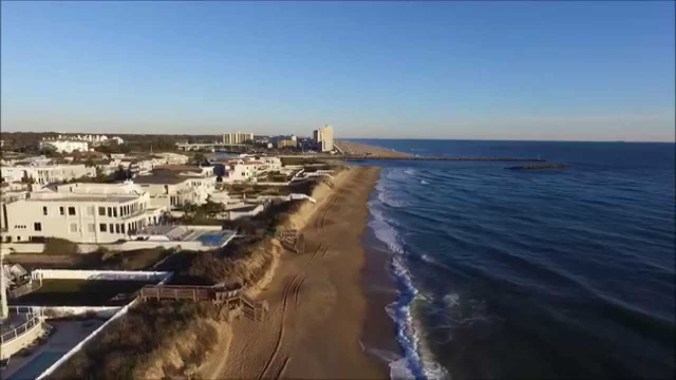
Good Morning from Virginia Beach, VA…
…where I am giving a legal ethics seminar to a law firm this morning!
1. Count the ethics issues in Travel Hell…This story is true, and I’m not changing any names, because nobody is innocent.
Last night I had to drive to Virginia Beach after another seminar in D.C., and after yet another road trip on family business. It turned out to be a three and a half hour drive in a pouring rain. Arriving at 2:20 am at the Virginia Beach Westin, where I was supposed to have a room, I was immediately informed by the graveyard shift desk clerk that we could not stay there…because the previous occupants of the room reserved for us (my wife and business partner also made the trip) had “left fecal matter” all over the room, creating a HAZMAT situation. Not to worry, though! The beachfront Hilton would put us up, at the Westin’s expense!
Since I wasn’t paying for the room, this was small consolation.
Of course, we had unloaded the car, and the Hilton was 20 minutes away, and the desk clerk had neither an address nor a phone number, which I pointed out to her was essential. (The point of staying at the Westin was that it was convenient to the location of the law firm.) So we loaded up the car and set out to the new destination, arriving just before 3 am. There, the Hilton desk clerk told us that the hotel had just begun an audit, and we could not be put in a room for at least 20 minutes. I was literally afraid to tell my wife this, as she was in the car alternately fuming and wincing in pain because the endless trip had revived her sciatica.
I was not nice to the Hilton desk clerk, who swore that she told the Westin about the problem, and that they should have told us. I said that I didn’t care whose fault it was, they were now responsible for two weary travelers, and that it was her responsibility to fix the problem. She found a very nice man who got a big tip from me for taking charge of our vehicle and taking our stuff up to our room when the “audit” was over.
Once in the room, we discovered that two of the lamps didn’t work, the desk lamp was missing, and the clock was blinking. I told the clerk to send someone up and have the room in the shape I expect hotel rooms to be in before I walk in the door—including having the clock set and functioning.
On the plus side, no fecal matter was in evidence….
2. Why people hate lawyers…Branson Duck Vehicles and Ripley Entertainment are facing multiple lawsuits in the horrific duck boat accident that killed 17 people in Missouri , including nine members of a single family. In court papers filed this week, the companies’ lawyer cited an 1851 maritime law to limit or eliminate liability for the July tragedy.
In a filing in federal court in Missouri, the defendants denied negligence in the sinking of the boat, and argues that if a court does find negligence, they have no liability because, under that law, “the Vessel was a total loss and has no current value. No freight was pending on the Vessel.”
The reaction was predictable. Human beings have no value? This was a Hail Mary defense tactic to be sure, but if that’s the clients’ best option, it is the lawyers’ duty to argue it, IF they first inform their clients that it is a likely public relations disaster that as a cure could be worse than the disease, and seems unlikely to do anything but inflame a jury.

 Ethics Alarms