Not Everyone Can Use Obnoxious Rationalization 11B, “The Royal Rationalization”

Eric 14 of Sweden

[Reminder to Humble Talent, whose useful addition to the Rationalization List was recently explained here. I still need your choice of a name before I can add it!]

You find new rationalizations—well, ones you hadn’t thought of before— in the strangest places.

This one is hardly new: it hails from the 16th century at least. It ambushed me on a 2018 Smithsonian special about the discovery of the “Mars,” a sunken Swedish warship that was built between 1563 and 1564. It was the pride and joy of Sweden’s King Eric XIV’s fleet, and one of the largest warships of the time. “Even larger than the famous Swedish ship Vasa,” Wikipedia tells us. I’ll take ‘Famous Swedish Warships’ for $100, Alex!”  

The discovery was announced in August, 2011, and in November it was announced that the shipwreck’s identity had been confirmed by its unique cannons along with “other findings.”  The Smithsonian channel’s 2018 production describing further investigations added that the “Mars” identity was confirmed by the discovery of silver coins minted by Eric XIV the year before the battle that sunk her in 1563.

The coins bore what historians say was Eric’s official motto: “God Gives to Whoever He Chooses.”
Continue reading

Ethics Train Wreck Warning: Affirmative Action for the Hideous

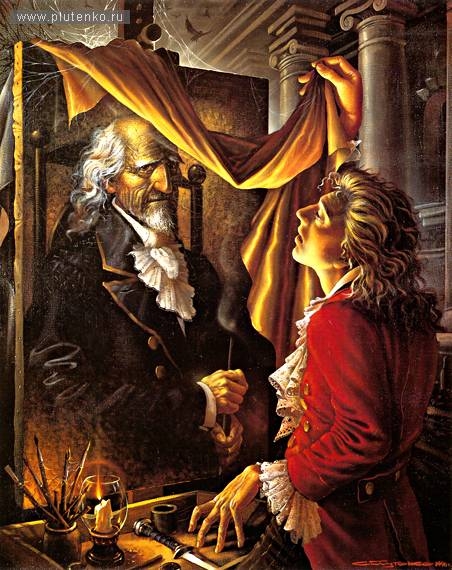
You won't need that portrait any more, Dorian...the Americans with Disabilities Act has you covered!

It is rare that an ethics train wreck of culture-wide proportions can be prevented with a firm, “Shut up, and go away!” This appears to be one of those times, however, and if anyone is reluctant, I hereby volunteer for the job.

Daniel S. Hamermesh, a professor of economics at the University of Texas, is shilling for his book, “Beauty Pays,” in which he proves the unremarkable fact that being attractive is an advantage in society , and being unattractive is an impediment. He recently hit the op-ed pages of the New York Times, writing, among other things, this:

“Why this disparate treatment of looks in so many areas of life? It’s a matter of simple prejudice. Most of us, regardless of our professed attitudes, prefer as customers to buy from better-looking salespeople, as jurors to listen to better-looking attorneys, as voters to be led by better-looking politicians, as students to learn from better-looking professors. This is not a matter of evil employers’ refusing to hire the ugly: in our roles as workers, customers and potential lovers we are all responsible for these effects.”

“How could we remedy this injustice?”

Whoa! There it is, the magic words that open the door for ham-handed social architects to do what they always to do, try to remedy the results of natural human proclivities and preferences with laws. Continue reading