Memorial Day Ethics Hero Emeritus: Theodore Roosevelt, Jr., 1887–1944

Teddy Jr

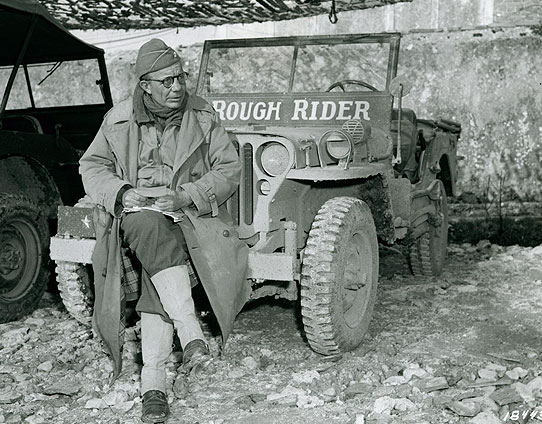
The latest inductee into the Ethics Alarms Heroes Hall of Honor has a familiar name that burdened him with exorbitant expectations his entire life. Yet against all odds, he managed to add to its prestige.

With some notable exceptions that you can probably name, being the son of a President of the United States has proven to be a burden and often a curse. Being the oldest son of our most flamboyant President was particularly hard on Teddy Roosevelt’s boy who shared his name, and through young adulthood, Theodore Roosevelt, Jr.  experienced migraine headaches and other symptoms of anxiety and stress. The President was even cautioned by a family friend and physician that his constant badgering was ruining his son’s health.

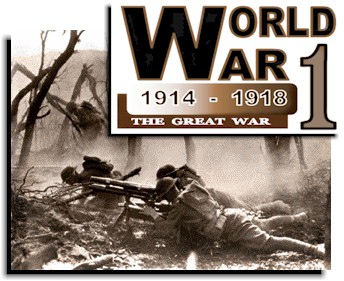
Young Ted still followed his father’s path to fame by enrolling at Harvard, then became a partner in a Philadelphia investment banking firm. With the U.S. entry into the Great War, Roosevelt enlisted in the army, fought in Europe, rose to the rank of lieutenant colonel, and was gassed and shot in the kneecap in 1918.  Roosevelt received the Distinguished Service Cross. He was renowned for his courage under fire as well as his unusual concern for the men under his command: at one point, he personally purchased new boots for his entire battalion. After the war, Roosevelt was instrumental in the founding the American Legion in 1919. Continue reading

A Presidents Day Celebration (PART 3): When The Going Got Tough

 presidents.

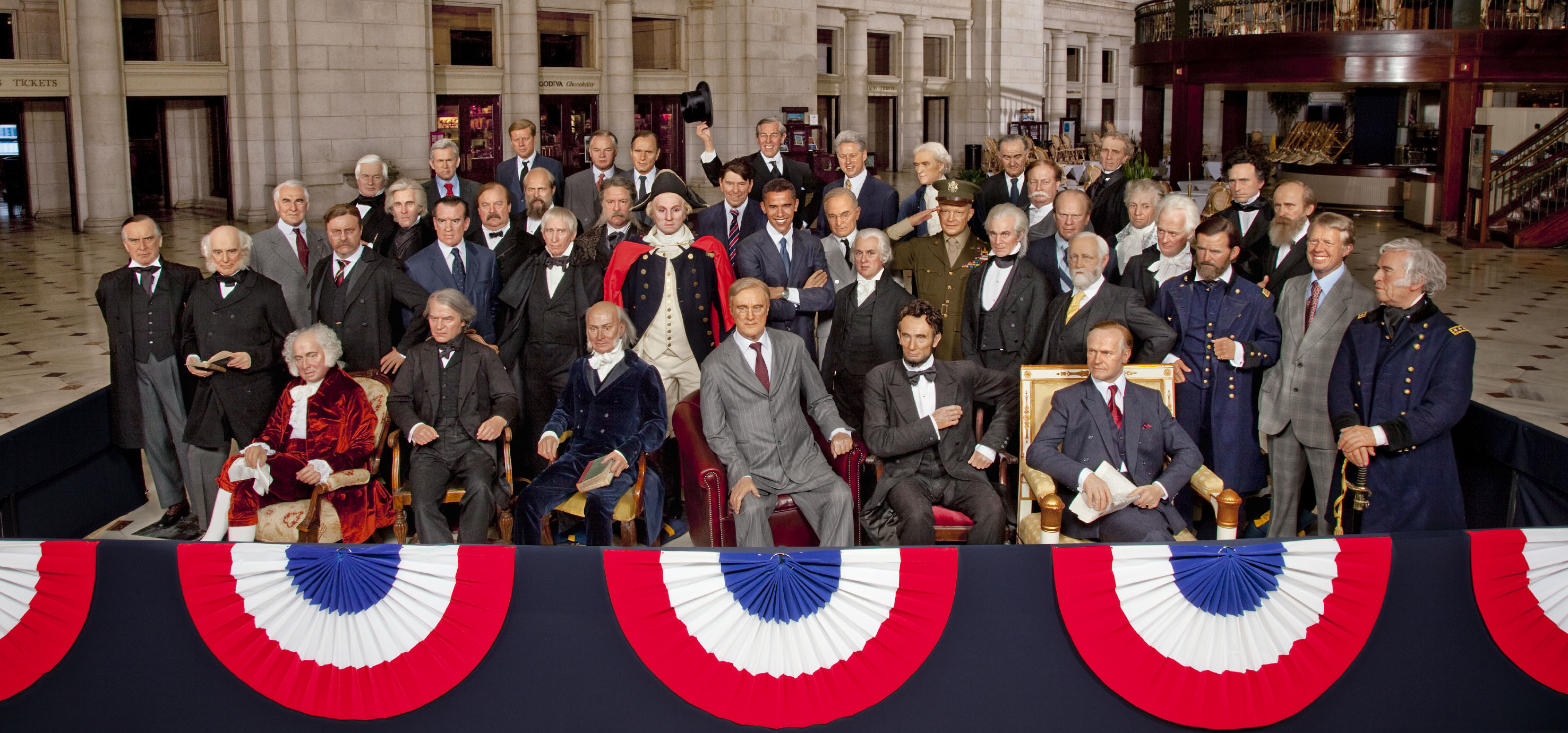
The Presidents really get interesting now, as a political leadership culture in the U.S. matures, the stakes of failure become greater, and technology, labor upheaval, expanding big business and greater influence on world affairs transforms the Presidency into truly the toughest job on earth.

Grover Cleveland

grover

Another one of my favorites, Cleveland was known for telling the truth ( he as called “Grover the Good”), but he participated in one of the most elaborate deceptions in Presidential history.

As explained in historian Matthew Algeo’s 2011 book, “The President Is a Sick Man,”  President Cleveland noticed an odd bump on the roof of his mouth in the summer of 1893, shortly after he took office for the second time. (Cleveland is the only President with split terms, the hapless Republican Benjamin Harrison winning an electoral college victory that gave him four years as the bland filling in a Cleveland sandwich.) The bump was diagnosed as a life-threatening malignant tumor, and the remedy was removal. Cleveland believed that news of his diagnosis would send Wall Street and the country  into a panic at a time when the economy was sliding into a depression anyway, and agreed to an ambitious and dangerous plan to have the surgery done in secret. The plan was for the President to announce he was taking a friend’s yacht on a four-day fishing trip from New York to his summer home in Cape Cod. Unknown to the press and the public was that the yacht had been transformed into a floating operating room, and a team of six surgeons were assembled and waiting.

The 90 minute procedure employed ether as the anesthesia, and the doctors removed the tumor, five teeth and a large part of the President’s upper left jawbone, all at sea. They also managed to extract the tumor through the President’s mouth while leaving no visible scar and without altering Cleveland’s walrus mustache. Talking on NPR in 2011, historian said,

“I talked to a couple of oral surgeons researching the book, and they still marvel at this operation: that they were able to do this on a moving boat; that they did it very quickly. A similar operation today would take several hours; they did it in 90 minutes.”

But the operation was a success. An artificial partial upper jaw made of rubber was installed to replace the missing bone, and Cleveland, who had the constitution of a moose, reappeared after four days looking hardy and most incredible of all, able to speak as clearly as ever. How did he heal so fast? Why wasn’t his speech effected? He endures doctors cutting out a large chuck of his mouth using 19th century surgical techniques and is back on the job in less than a week? No wonder nobody suspected the truth.

Then, two months later, Philadelphia Press reporter E.J. Edwards published a story about the surgery, thanks to one of the doctors anonymously breaching doctor-patient confidentiality. Cleveland, who in his first campaign for the White House had dealt with Republican accusations that he had fathered an illegitimate child by publicly admitting it, flatly denied Edwards’ story, and his aides  launched a campaign to discredit the reporter. Grover the Good never lies, thought the public, so Edwards ended up where Brian Williams is now. His career and credibility were ruined.

Nobody outside of the participants knew about the operation and the President’s fake jaw until twenty-four years later, after all the other principals were dead except three witnesses.  One of the surgeons decided to  publish an article to prove that E.J. Edwards had been telling the truth after all.

This is a great ethics problem. Was it ethical for Cleveland to keep his health issues from the public? In this case, yes, I’d say so. Was it unethical for the doctor to break his ethical duty? Of course. Was Edwards ethical to report the story? Sure.

The tough question is: Was Cleveland ethical to deny the story and undermine the reporter’s credibility? I think it was a valid utilitarian move, and barely ethical: it was better for the nation to distrust one reporter than the President, especially when his secret was one he responsibly withheld, and his doctor unethically revealed. Continue reading

On Its 100th Anniversary: Remembering The Great War’s Christmas Truce Of 1914

christmas-truce-1914-H

On December 7, 1914, as the horrible, pointless, world-disrupting “War to End All Wars”  was only five months old, Pope Benedict XV suggested a truce for the celebration of Christmas. The governments of the battling nations rejected the idea, but in the days leading up to  Christmas and after, many of  the soldiers in the trenches of this ugly conflict took the Pope’s advice.

On December 20, Germans soldiers in some areas took in British wounded from the no man’s land between the warring armies. A German soldier reported on December 22 that both sides had been heard singing Christmas Carols in the trenches. German troops arriving into the lines had begun bringing Christmas trees, and some men placed them on the parapets of the fire trenches. Then, on Christmas Eve, many German and British troops serenaded each other across the lines. Allied soldiers reported that sometimes their singing was accompanied by German brass bands. Then, Christmas Day, 1914, some of the German soldiers left their trenches and  carefully approached Allied lines, shouting“Merry Christmas” in French and English. Allied soldiers climbed out of their trenches, and shook hands with the men who had only recently been trying to kill them. Some even exchanged exchanged gifts of cigarettes and and food. There were even instances where soldiers from opposing sides played soccer: in England, one organization is holding a match next week against a German team to commemorate such contests. Continue reading

Comment of the Day: “Comment of the Day: ‘An Unethical Website, Golden Rule Malpractice And The Worst Anti-Bullying Program Ever'”

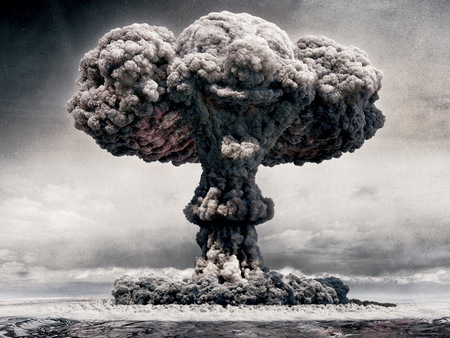
Atom bomb cloud

Responding to according2grayson’s passionate defense of non-violence and the Golden Rule while encountering bullies (as well as while opposing despots on the march), Steve-O-in-NJ enriched Ethics Alarms with an epic response including historical perspective, ethics and personal experience.

Here is his terrific post—long but not to be missed—and the Comment of the Day, on Comment of the Day: “An Unethical Website, Golden Rule Malpractice And The Worst Anti-Bullying Program Ever”:

I question this litany of life experiences, since it sounds a bit too pat and a bit too neat to be real, or at least it sounds sanitized/incomplete. Those with truly outstanding records usually don’t feel the need to trumpet them. That said, I wasn’t there, so maybe it is all true.

I know I tried the non-violent approach a few times, and it just lead to more bullying. I also tried the fight-back approach, smashing one bully’s head against the sidewalk and nearly strangling another, and it frankly didn’t get much more done beyond getting the bullies off my back temporarily. That said, a temporary respite from abuse is better than absorbing abuse every day without a respite. What really broke one group of problem people was a combination of finally going to the authorities and the people overreaching.Despite the justified criticism of Catholic schools (a whole separate discussion), they did have one very big thing going for them: no one who was enrolled had to be, or had any right to be, and dismissal or necessary discipline was easily accomplished. Continue reading

The Ethics Alarms List of Debate Cheats and Fallacies

fallacy

I realized it was time to post the definitive Ethics Alarms List of Debate Cheats and Fallacies after once again having to point out to an indignant commenter that calling  him a jerk based on a jerkish comment was not an ad hominem attack, and that saying idiotic things on-line carry that risk. Here, at last, is the current list, adapted from multiple sources. As with the Rationalizations List, with which this occasionally overlaps, I invite additions. Participants here should feel free to refer to the various fallacious arguments by number, and to apply critically them to my posts as well as the comments of others. Am I immune from occasionally falling into one or more of these bad debate techniques and rhetorical habits? No. The other reason I wanted to get the list up was to reinforce my own efforts to be persuasive without being manipulative.

1. Ad Hominem Attack

An ad hominem attack means that one is substituting the character or quality of an adversary’s thought for the argument the adversary is presenting. This is unfair, as well as misleading. “Your argument is invalid because you are a crook, a fool, an idiot” is an ad hominem attack. It is not an ad hominem attack to prove an argument idiotic, and conclude, on the basis of signature significance, (which requires that an  argument be so idiotic that no non-idiot would conceive such a thing and dare express it),that the one making the argument is an idiot, since only an idiot would make such an argument. Confusing the true ad hominem attack with the latter is a useful deflection by poor advocates of the fair consequence of their advocacy. Idiots can still hold valid positions, and disproving the position has nothing to do with proving they are idiots.

1 a. The Toxic Introduction.

A more subtle application of the ad hominem attack is The Toxic Introduction, where the argument of another is introduced by noting a negative quality about the individual. The effect is to undermine the argument before it has even been heard, by its association with a less than impressive advocate.

2. Butch’s Stratagem (The Straw Man)

Continue reading

Frank Buckles, Speaker Boehner, and the Duty To Remember

Frank Buckles is our last chance to remember...

They fought overseas in battles with strange names like the Meuse-Argonne Offensive. They sang charmingly upbeat songs like “Over There!” and “Inky-Dinky Parley-Voo.” A lot of them were gassed, about 200,000 were wounded, 120,000 died, and many of them who  came home were never the same, dubbed “the lost generation” by Ernest Hemingway. They were America’s “doughboys,” the young homegrown heroes of World War I, who arrived late to a pointless war they didn’t start, and became the first American soldiers to die in large numbers in foreign lands.

The last of them died last week. His name was Frank Buckles, and he had lied about his age to become a soldier at the tender age of 16. In his 110 years, Buckles took part in a lot of history, sailing for the Continent on the Carpathia, the very same ship that rescued the Titanic’s survivors; traveling the world by sea as ship’s purser, which afforded him an accidental encounter with Adolf Hitler, and having the bad luck to be in the Philippines when the Japanese invaded, ending up as a prisoner for most of World War II.

Sen. Jay Rockefeller (D-W.Va.), and Rep. Shelley Moore Capito, (R-W.Va.) have introduced resolutions to allow fellow West Virginian Buckles to lie in honor in the Rotunda of the U.S. Capitol, where the public could pay their respects to him by filing past his casket. Though usually reserved for former presidents and distinguished members of Congress, unelected American citizens of distinction have laid in state in the Rotunda, such as civil rights icon Rosa Parks and Gen. Douglas MacArthur.

Apparently Speaker of the House John Boehner doesn’t think Buckles makes the grade, for he has rejected the idea and decreed that the last World War I soldier in a special ceremony at Arlington National Cemetery, but not at the Capitol. Continue reading

Rahm Emanuel, History and Hyperbole Ethics

There are times when obvious exaggeration is nothing worse than politeness, nothing more than an expression of admiration and affection. “You’re the best boss anyone ever had,” is in this category, especially when the boss is retiring or dying. But when one is speaking in public about controversial and historical matters involving well-known public figures, the margin between excusable hyperbole and unethical dishonesty or worse is much smaller. Al Gore learned this when he played loyal Vice-President on the day his President was impeached by vote of the House of Representatives. Gore’s statement that Bill Clinton was “a man I believe will be regarded in the history books as one of our greatest Presidents” was intended as supportive, but interpreted as a toadying endorsement of Clinton’s unsavory and dishonest conduct, impeachable or not. It probably cost Gore the Presidency.

Worse yet was Trent Lott’s clumsy effort to praise the ancient, infirm and mentally failing Sen. Strom Thurmond at his 100th birthday party. Lott said, “I want to say this about my state: When Strom Thurmond ran for president we voted for him. We’re proud of it. And if the rest of the country had followed our lead, we wouldn’t have all these problems over all these years, either.” Thurmond, running on the Dixiecrat ticket, had opposed segregation, and Lott’s comment, less fact than flattery, made him sound like he longed for the days of Jim Crow and “white only”rest rooms. The lessons of these hyperbolic gaffes are similar: if the well-intentioned compliment concerns a public figure in historical context, historical exaggerations either appear to be unjust to history or its important figures, seem to make inappropriate value judgments, or come off as a blatant effort to mislead the public.

Rahm Emanuel hit the Trifecta with his fawning farewell to President Obama, as he left the White House to run for Mayor of Chicago. Obama, he said, is “the toughest leader any country could ask for, in the toughest times any president has ever faced.”

Wow. Continue reading