April 19, 1943: The Warsaw Ghetto Uprising

Warsaw uprising

A fortuitous confluence of events, dates and topics: following yesterday’s discussion of an absurd and passive application of a warped “love your enemy” approach to school bullying and the week’s earlier explication of the importance of using Nazi comparisons when they are appropriate as well as the problems arising from the rampant historical ignorance and apathy in the U.S, we arrive at April 19. I doubt that one citizen in a thousand could identify or explain the significance of today’s date in world history, but we all should; it is the essence of our duty to remember. For on this date in 1943, the residents of the Warsaw ghetto in Poland, realizing that they were in the process of being liquidated, fought back against their Nazi captors, and for almost a month, despite being outnumbered and outgunned, disrupted the extermination and, though they were ultimately defeated (most of the leaders committed suicide with cyanide as the Germans began to round them up), their courage sparked other uprisings in the ghettos in Bialystok and Minsk, and the Treblinka and Sobibor death camps.

The Germans had planned to begin the final elimination of the Warsaw Jews on the eve of Passover, so the anniversary of the beginning of the revolt is perfectly placed. Make sure you quiz the Palestinian cause fan in your life regarding the Warsaw ghetto revolt, and see if it rings any bells—it probably won’t. Learning the history may help you explain to them why the state of Israel will make no deals until the nation’s right to exist is acknowledged and unequivocal.

They, and you, can read about the Warsaw ghetto uprising here.

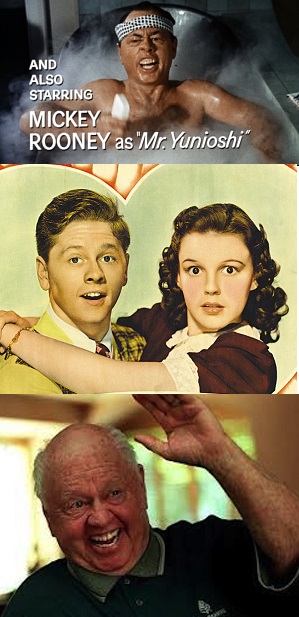
My Mickey Rooney (1920-2014) Post: “Ethics, Stereotypes, and Holly Golightly”

Some of the many faces of Mickey Rooney...

Some of the many faces of Mickey Rooney…

Ethics Alarms has almost 15,000 tags, which means that a lot of diverse topics hard been discussed here in connection with ethics issues. Saddened as I was to learn of the passing of the great Mickey Rooney, truly one of the most talented and versatile individuals in entertainment history and the last of MGM musical stars from the Golden Age of Hollywood, I can’t justify honoring his ethics; by all accounts, Mickey was not as admirable a human being as he was a performer. Still, Ethics Alarms has a Mickey Rooney post, from 2011, and when I read it over just now, I still liked it. Thus I will honor Mickey by reposting my defense  of perhaps his most criticized performance. For one of his best, watch this. Yes, Judy’s in it too. (TCM has made everyone take down their Mickey clips, but so far, this Russian pirate site still has it. I know, I know—but Mickey would approve. This ethical breach is for you, Mick…) Continue reading

Ethics Heroes: The Mourners of Harold Jellicoe Percival

It’s a simple story.

Thanks Dad. Thanks, Harold. Oh, shut up. Justin!

Thanks Dad. Thanks, Harold. Oh, shut up. Justin!

From the Los Angeles Times:

When Harold Jellicoe Percival died last month, the British World War II veteran’s obituary mentioned that he had no close family to attend his funeral. But after the obituary went viral, hundreds of people showed up to honor him Monday. Percival, who served as a member of the Royal Air Force’s Bomber Command, died on Oct. 25 at the age of 99. His obituary requested that “any service personnel who can attend his funeral service would be appreciated.” It spread across social media brought it to the attention of service members and veterans organizations in Britain, They, in turn, rallied people to attend his funeral and honor his memory on Armistice Day.

There were reportedly 100 mourners in the church, and another 400 standing outside.

The ethical virtues demonstrated here are respect, gratitude, kindness, and citizenship. Somebody please explain this to Salon’s clueless, obnoxious, ungrateful and ethically, historically, logically and rhetorically-challenged writer Justin Doolittle, who argues that there is no reason to thank veterans for doing the dirty work of democracy and putting their lives on the line to protect his. Continue reading

Comment of the Day: “Jimmy Kimmel, Child Abuse, And Signature Significance”

(I am backed up three deep on the “Comments of the Day,” and I apologize to the deserving and patient commenters.)

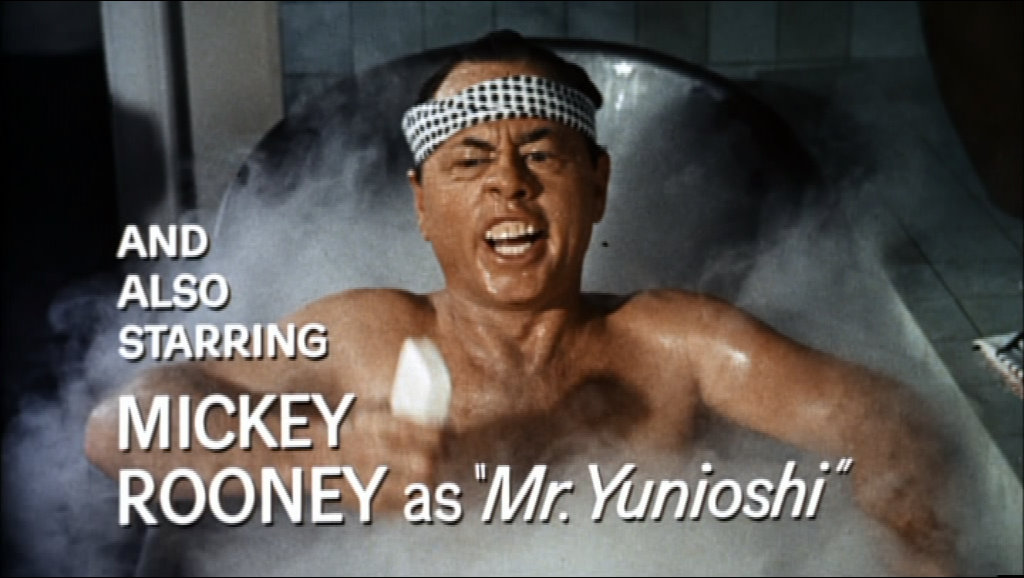
And who can forget Mickey Rooney's hilarious turn in that beloved American film masterpiece "Breakfast at Tiffany's"?

And who can forget Mickey Rooney’s hilarious turn in that beloved American film masterpiece “Breakfast at Tiffany’s”?

Alex Yuan raised an element of the revolting Jimmy Kimmel stunt discussed in my post, an extension of his penchant for using children as uncomprehending props for his often ugly comedy, that I glided right over: Why was showing a child suggesting that wiping out the Chinese was  a viable solution to national problems even considered fit for broadcast, when a similar comment about Jews, gays, Hispanics or blacks would be considered instantly taboo? Why doesn’t the ethics alarm sound when the minority being slurred or threatened is Asian?

Here is his Comment of the Day on the post, Jimmy Kimmel, Child Abuse, And Signature Significance:

It is interesting that you should mention political correctness because I can’t help feeling that in deciding it appropriate to air this segment, ABC – perhaps as a reflection of societal attitudes at large – is illustrating the alleged double standard against Asians when it comes to how topics concerning minorities and other protected classes are handled in public. Continue reading

War, Syria, Leadership and Ethics

Indecisiveness and narcissism makes great drama, bad leaders, and gets people killed , too.

Indecisiveness and narcissism makes great drama, bad leaders, and gets people killed , too.

I try to think about the ethics of war as little as possible, much less write about it. It is too frustrating, and ultimately a waste of time: the same debates and philosophical arguments have been made, eloquently and passionately, for not just hundreds but thousands of years, and only the mechanics of warfare have changed.

My father, a war hero and a man who would have loved to have devoted his life to the military if his wounds hadn’t prevented it, used to say that war was the stupidest of all human activities. “There is nothing good about war,” Dad said. “Yet it is sometimes necessary and unavoidable. And don’t ask me to reconcile those statements: I can’t. Nobody can.” I remember asking him about General Patton, who led my father and his comrades during the Battle of the Bulge. “Patton supposedly loved war,” I said. “He did,” my father replied. “He was insane.” He loathed Patton.

The Syria crisis has triggered all the same arguments again, and I want no part of them. Ethical analysis doesn’t work where warfare is concerned. The conduct of ritualized killing combatants and innocents is, at best, an extreme utilitarian act that always creeps into  ethically indefensible “the ends justify the means” territory before the end of hostilities. So many invalid rationalizations are used to justify killing—“It’s for a good cause,” or the Saint’s Excuse, prime among them, with “They started it!” following close behind—that it is useless to tote them up. The war most often cited as a “moral war,” World War II, still involved the killing of innocent non-combatants by the Allies. ( My father remained amazed at the efforts at “limited war” in Iraq, noting that Allied soldiers were expected to accept civilian deaths as unavoidable and not a matter of concern. He also felt that the current dedication to half-measures just guaranteed longer wars, more deaths, and less satisfactory results. “It’s war,” he said. “You can’t make it humane or sensible; you can only make it shorter. Telling the military that it has to waste time and military personnel to avoid civilian deaths makes no sense. There is no such thing as a humane war.” Naturally, he approved of Truman’s decision to drop the atom bomb, in part, he admitted, because he was slated to be in the Japanese mainland invasion force that was likely to sustain up to a million casualties.) The Allies engaged in atrocities too, such as the fire-bombing of Dresden.

You want to talk about the problem of supporting terrible people and factions to defeat another? World War II is the champion on that score. The U.S. partnered with Stalin, who was a greater mass murderer than Hitler, and defeated Japan, the enemy of China, allowing Mao, a greater mass murderer than Stalin and Hitler combined, to enslave a billion people. The peace negotiated after the Second World War was only slightly less destructive than the one that ended the First World War (and led directly to the Second): The U.S. handed over half of Europe to Communism, laying the seeds of the Cold War that only avoided ending humanity in a nuclear holocaust by pure moral luck. The fact that WWII is the “best” war powerfully makes the case: ethics and war have nothing to do with each other. Each renders the other useless and incoherent. Continue reading

Comment of the Day: “Ethics Hero Emeritus: Henri Salmide, 1919-2010”

Henri Salmide

Henri Salmide, Hero: Unknown in the US, and only barely recognized in Germany or France. Greatly appreciated on Ethics Alarms, however.

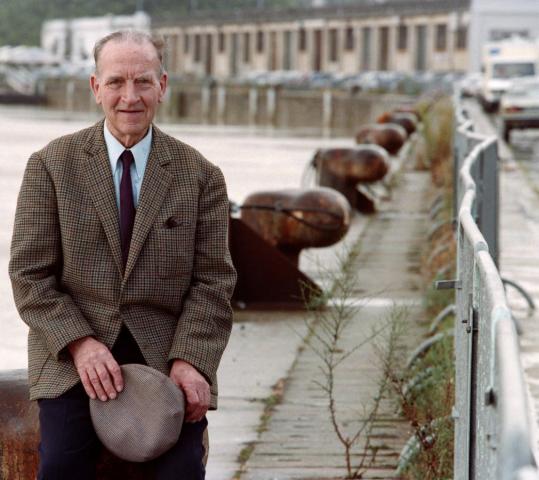
German visitor Reinhard Gross sent me a useful clarification on the 2010 Ethics Alarms tribute to Henri Salmide, who as a German soldier in World War II saved the French port of Bordeaux by defying orders to blow it up and blowing up his German superiors instead. You can read the post on Salmide, an Ethics Hero Emeritus, here, and his New York Times obituary here. It’s an inspiring story, and if you are not familiar with Salmide, you should be.

Salmide lived the rest of his life as a French citizen in Bordeaux, and until late in life was seldom noted for his heroic act in France, so strong was the bias against him as a former German soldier. I asked Reinhard what the attitude in Germany was toward Salmide, and his Comment of the Day was the response. It also provides some insight on the the long and painful process the German culture must work through, as the German people come to terms with the dark Nazi period, when their society and its values were so horribly warped, with such tragic consequences for Germany and the world.

Here is Reinhold Gross’s Comment of the Day on the post Ethics Hero Emeritus: Henri Salmide, 1919-2010…and I thank him for reminding me of Henri Salmide’s courageous and ethical act: Continue reading

Ethics Hero Emeritus: Bob Fletcher (1911-2013)

Bob Fletcher

So many heroic citizens perform their exemplary ethical acts in near obscurity, never receiving widespread recognition or praise, never seeking it, and never missing it either. These are the best role models of all, but we learn about only a tiny percentage of them.

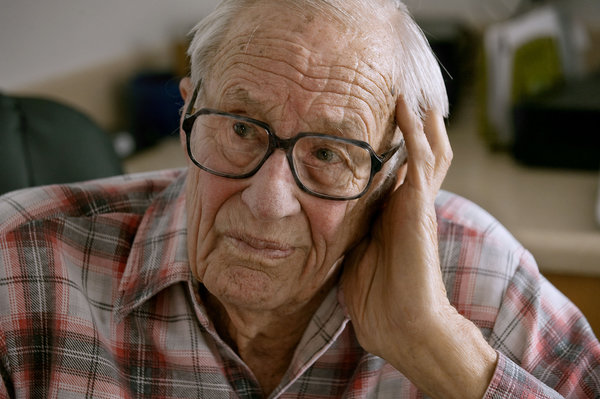
One such exemplar we learned about when he died this week is Bob Fletcher, a former government agriculture inspector who changed the course of his life to help his neighbors, who were in the midst of being abused and betrayed by their country. Continue reading

My Father, Memorial Day, and Reflections

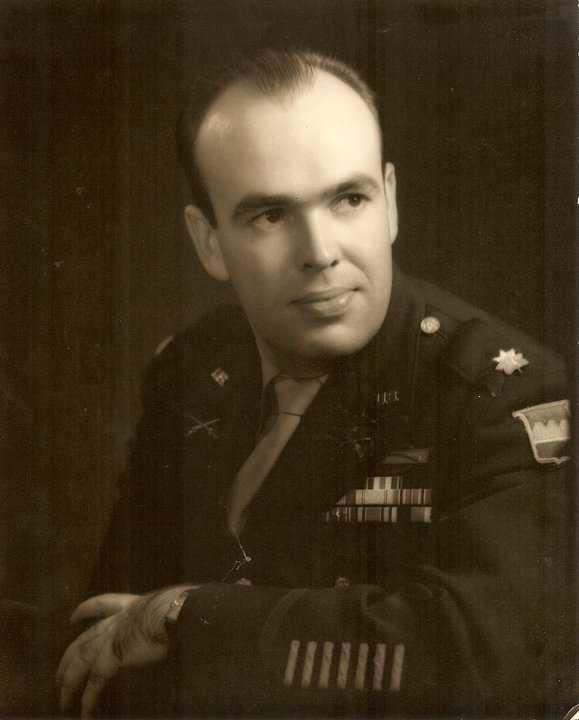
Jack Marshall Sr Army portrait

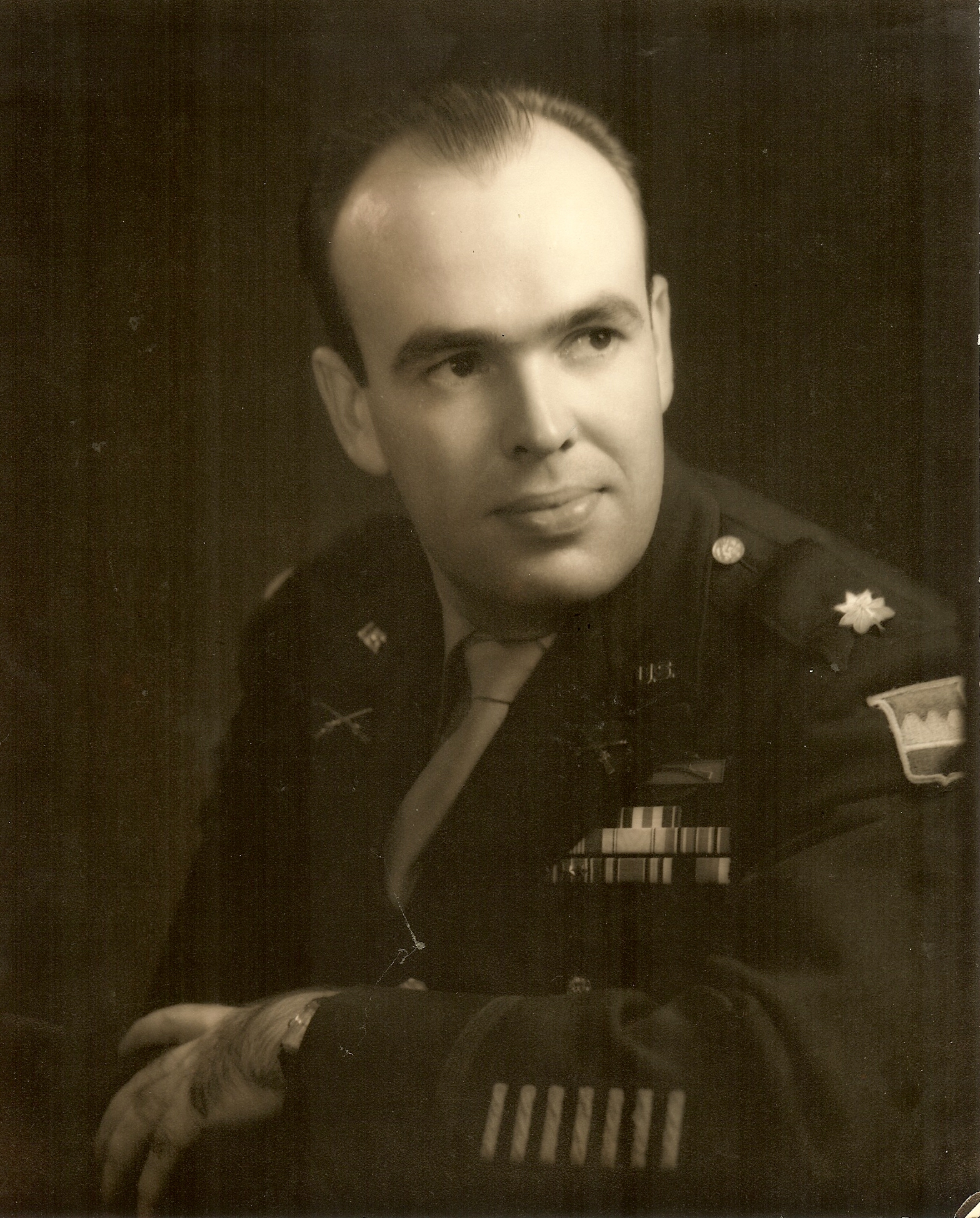
[In the last few years of his life, my father used to take my sister and me on a pilgrimage to Arlington National Cemetery on the Sunday of Memorial Day Weekend. He was always strangely jolly about it, though appropriately reverent. We always visited the oddly inadequate Battle of the Bulge memorial, where my dad would usually tell us one new story of his horrible experiences in that conflict that he had previously suppressed. We always paid our respects to the humble grave of Audie Murphy, World War II’s most decorated American soldier. We did NOT visit the grave of my dad’s own father, whose betrayal of his mother he would never forgive, though my grandfather, a veteran of the First World War, was also buried at Arlington. Mostly we just walked around the beautiful surroundings, with Dad periodically admiring some grand monument and suggesting, tongue in cheek, that he wouldn’t mind being under something like that some day. Continue reading

Ethics Hero Emeritus: Ewald-Heinrich von Kleist-Schmenzin

The first Nazi soldier Ethics Hero.

The SECOND Nazi soldier Ethics Hero!

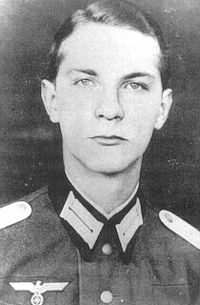
Ewald-Heinrich von Kleist-Schmenzin didn’t accomplish anything heroic, but boy, did he try. The last surviving member of the most famous and closest call of the many failed plots to kill Adolf Hitler, von Kleist-Schmenzin is a ringing example of how the only difference between a a deathless hero and some guy with an unspellable name that you never hear of until he dies sometimes is just luck, and moral luck at that.

von Kleist-Schmenzin was 90 when he perished at his home in Munich this week, outliving almost all of his fellow conspirators in Operation Valkyrie by just short of seven decades. After that near-miss assassination attempt failed (because the bomb-in-a-briefcase dropped near Hitler’s feet by chief conspirator Claus von Stauffenberg was inadvertently moved just enough to save Der Fuhrer’s miserable life), von Kleist-Schmenzin managed to convince Gestapo interrogators that he wasn’t part of the plot, though in truth he was originally given the assignment of planting the bomb. He ended up in prison (the fact that his father was also involved in the plot and was one of those executed guaranteed that) and later was sent back onto the battlefield, but only random chance prevented him from being remembered as the man who ended the war…in fact, it foiled him twice. Continue reading

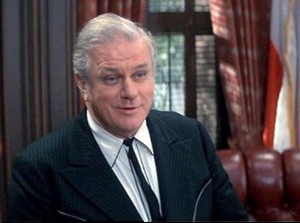
Ethics Hero Emeritus: Charles Durning, 1923-2012

Charles DurningWorld War II veterans are dying by the thousands every year now; “the Greatest Generation” is running out of members. When one of the survivors of World War II combat who became famous in subsequent pursuits leaves us, it is important to remember that their brave service to their country was probably the most important thing they did in their lives, and was their invaluable gift to all of us. In most cases, that is how the veterans looked at it too. I know my late father did.

I can’t be sure about the great character actor Charles Durning in this regard, because he generally refused to talk about his World War II experiences, which resulted in his being honored by a Silver Star and three Purple Hearts. This too is admirable. His military service was his duty, but having to kill other human beings, no matter who they are, is something that throw most ethical people into a searing conflict of values and emotions. Durning, who died today at the age of 89, preferred to discuss his acting.

He was as talented and brave at entertaining us as he was in combat. Never a leading man, Charles Durning could play drama and comedy with equal deftness, and given the chance to be in a musical, the (awful) film version of “The Best Little Whorehouse in Texas,” he proved that he could sing and dance well too. He was outstanding in such classic films as “The Sting,” “Dog Day Afternoon” and “Tootsie,” an actor who seemed incapable of seeming false or inauthentic  while never playing the same kind of character twice. Perhaps the performance that was closest to the real Charles Durning was in his Emmy-winning role on “NCIS” in the episode “Call of Silence,” in which he played an elderly Marine veteran and Congressional Medal of Honor recipient who is tortured by the belief that he had been responsible for the death of his best friend in combat.

Durning’s own military service would have made an exciting movie on its own.  His highest rank was Private First Class, and like many others, he did the most dangerous and dirtiest work of the war. On D-Day, June 6, 1944, and was among the first troops to arrive at Omaha Beach in Normandy, after overshooting  his landing zone and having to fight his way to the beach.  He was severely wounded by a German “S” Mine on June 15, 1944 at Les Mare des Mares, France, but despite suffering from the effects of shrapnel in the left and right thighs, the right hand, his head, and his chest, he declared himself fit to return to the lines, which he did just in time for the Battle of the Bulge. During that battle he was wounded again, captured, and survived the German massacre of American prisoners at Malmedy, one of the most heinous war crimes perpetrated in the field.

We should honor the memory of Charles Durning as a wonderful actor who contributed a great deal to films and popular culture, entertaining millions in the process. We should also honor him as a patriot, a soldier, a citizen, a World War II veteran and a hero, not because he was unique, but because he was not, and when we salute him as he passes from this world, we also honor all the anonymous and forgotten fighting men like him who never became famous, saved the United States and the human race, and who, like Charles Durning, refused to boast about it.