Yoo’s Rationalization, or “It isn’t what it is,” was a relatively late addition to the Ethics Alarms Rationalizations List, arriving in November of 2016; indeed, it is numbered at #64. Because “It isn’t what it is” has become perhaps the most employed rationalization of all in political discourse in the weeks and months since then, it is remarkable that it took me, as a fanatic collector of rationalizations (or the lies we tell ourselves to make us feel ethical when we are not) to realize the importance of this one. It is also noteworthy when that fact dawned on me, for November 2016 was the month that Donald Trump was elected President, and the American Left decided to abandon its principles as well as “democratic norms”—irony there!—in order to destroy him, and, if possible, get him out of office without the bother of an election. That assault continues to this day, though now the focus had shifted to keeping him from being elected again, and, if possible putting him in prison.
Because putting political adversaries in prison is what democracies do...huh?
For convenience, allow me to re-publish the entirety of the entry for Rationalization #64:
64. Yoo’s Rationalization or “It isn’t what it is”
Named after John Yoo, the Bush Justice Department lawyer who wrote the infamous memo declaring waterboarding an “enhanced interrogation technique,” and not technically torture, #64 is one of the most effective self-deceptions there is, a handy-dandy way to avoid logic, conscience, accountability and reality.
Examples of this are everywhere. Paul Krugman, the progressive economist and Times columnist, began a column like this:
“Remember all the news reports suggesting, without evidence, that the Clinton Foundation’s fund-raising created conflicts of interest?”
The Clinton Foundation’s fundraising created a conflict of interest, by definition. For a non-profit organization, with family connections to either a current Secretary of State or a Presidential candidate, to accept money from any country, company or individual who has or might have interests that the Secretary or potential President can advance is a conflict. It’s indisputable. No further ‘evidence” is needed.”
How does Krugman deal with this problem? Simple: he convinces himself that screaming conflicts aren’t what they are without “evidence,” by which he means “proof of a quid pro quo.” But a quid pro quo is bribery, not a conflict of interest. A conflict of interest might lead to bribery, but a conflict is created as soon as there is a tangible reason for an official’s loyalties to be divided.
Yoo’s Rationalization or “It isn’t what it is” turns up everywhere, and has since time began. A mother swears that her serial killer son “is a good boy,” so she doesn’t have to face that fact that he’s not. It is denial, it is lying, but it is lying to convince oneself, because the truth is unbearable, or inconvenient. It is asserting that the obvious is the opposite of what it is, hoping that enough people will be deluded, confused or corrupted to follow a fraudulent argument while convincing yourself as well. The Rationalization includes euphemisms, lawyerisms, and the logic of the con artist. Illegal immigration is just immigration. Oral sex isn’t sex, and so it’s not adultery, either. I didn’t steal the money from the treasury! I was just borrowing it!
And waterboarding isn’t torture.
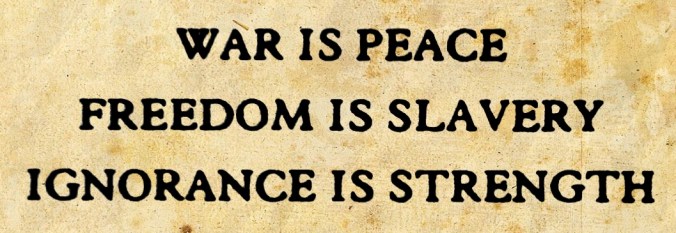
#64 also could be named after Orwell’s “1984,” and called “Big Brother’s Rationalization” in homage to “War is Peace,” etc. But John Yoo deserves it.
In the article that announced the addition of #64, I cited another example:
I saw a prime example of it this morning, in former Homeland Security Secretary Janet Napolitano’s op-ed about the “Deferred Action For Childhood Arrivals Program,” a euphemism for “amnesty for illegal immigrants who arrived as kids with their parents, so they can grow up and vote Democratic.”
She writes,
“This narrative about an initiative that has given temporary haven and work authorization to more than 700,000 undocumented minors, the so-called Dreamers, still has critics howling about presidential overreach, about brazen nose-thumbing at the rule of law and about encouraging others to breach the borders of the United States. But there’s a problem with this take on the program. It is dead wrong.”
What the program really is, she explains, is “prosecutorial discretion,” like the case by case discretion prosecutors have to use to avoid misusing resources. This is Rationalization #64. Continue reading →







 Ethics Alarms