Jake Stein’s Tears

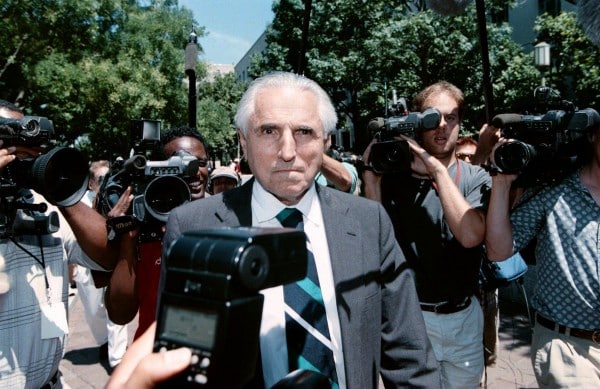
Legendary D.C. lawyer Jake Stein died last week at 94. He was that rarity in Washington and among lawyers, a universally respected attorney who had made few enemies and had few detractors. He was also long regarded as the sage of the profession in D.C., whose thoughtful and erudite essays that closed the bar associations’ monthly magazine, Washington Lawyer, were perhaps the most-read features of the publication.

I was reminded in his New York Times obituary that Stein represented Kenneth W. Parkinson, a former lawyer for President Nixon’s re-election committee, when he was charged with conspiracy and obstruction of justice in the Watergate scandal. Parkinson was the only indicted Watergate figure who was acquitted, and Stein’s skillful defense was considered to be the reason.  His closing argument was made unusually dramatic by Stein weeping as he described Parkinson as a pawn of “confessed perjurers,” and pleaded for the jury to consider his client’s character and the wounds the unjust prosecution had inflicted on it. “Doesn’t a lifetime, where you built it up grain by grain, weigh against that?” Stein asked plaintively.

I wonder: were Stein’s tears real, and does it matter? Continue reading

I Expect Non-Lawyers And Journalists To Misunderstand This Basic Legal Ethics Principle….But HARVARD LAW SCHOOL?

Kaboom.

This is a repeat issue, so I could make this short and link to the previous Ethics Alarms post on this annoying subject, or  here, when I defended Hillary Clinton when she was being called a hypocrite for once defending  a child rapist, or maybe the post titled,  No, There Is Nothing Unethical Or Hypocritical About A Feminist Lawyer Defending Roger Ailes.or this post, when liberal icon and former Harvard Law professor Larry Tribe was representing a coal company. I have vowed, however, that if I accomplish nothing else with this blog, I will do my best to put a stake through the ignorant and destructive idea that lawyers only represent clients they agree with, admire, or personally support. Here its is again, the ABA rule that is quoted somewhere in every jurisdiction’s attorney conduct regulations. Let’s do it really big this time:

ABA Model Rule 1.2(b): “A lawyer’s representation of a client, including representation by appointment, does not constitute an endorsement of the client’s political, economic, social or moral views or activities.”

Got that? Memorize it Print it out and carry it in your wallet, and hand it to your ignorant loud-mouth family member who complains about those scum-bag lawyers who represent bad people. Post it on social media and  in online comment sections where people are bloviating about the same. idiotic misconception.

What we can do about Harvard, however, I just don’t know. You know what they say, “Get woke, lose all respect and credibility as a trustworthy advocate for civil rights and the Rule of Law.” Okay, I’m going to have to work on that… Continue reading

Now THIS Is A Frivolous Lawsuit!

Sounds noble in theory, but it doesn’t always work when the one saying “no” is a judge.

Lawyers and the public mean different things when they call a lawsuit “frivolous.” The public and the news media mean that the suit is silly, desperate, based on a crazy theory or unlikely to succeed. Lawyers, however, know that suits that seem  silly, desperate, based on a crazy theory or unlikely to succeed sometimes win. Sometimes, they even change the law for the better. ABA Rule 3.1 explains,

Rule 3.1: Meritorious Claims & Contentions

A lawyer shall not bring or defend a proceeding, or assert or controvert an issue therein, unless there is a basis in law and fact for doing so that is not frivolous, which includes a good faith argument for an extension, modification or reversal of existing law….

Comment:The filing of an action or defense or similar action taken for a client is not frivolous merely because the facts have not first been fully substantiated or because the lawyer expects to develop vital evidence only by discovery. What is required of lawyers, however, is that they inform themselves about the facts of their clients’ cases and the applicable law and determine that they can make good faith arguments in support of their clients’ positions. Such action is not frivolous even though the lawyer believes that the client’s position ultimately will not prevail. The action is frivolous, however, if the lawyer is unable either to make a good faith argument on the merits of the action taken or to support the action taken by a good faith argument for an extension, modification or reversal of existing law.

The guy currently  suing me for defamation, for example, hasn’t quite crossed the “frivolous” line, though he is arguing that what is clearly opinion is an assertion of fact, contrary to all existing jurisprudence. His appeal, however, while batty, does make an argument that I assume in in good faith, that a Supreme Court case supports his definition of libel. It doesn’t, but he has the right to make an argument in the hope that some judge or appellate panel will agree. Of course, he is also not a lawyer, so he can’t be held responsible for violating legal ethics.

This guy can be, however: Continue reading

Morning Ethics Warm-Up, 10/17/18: Travel Hell Edition

Good Morning from Virginia Beach, VA…

…where I am giving a legal ethics seminar to a law firm this morning!

1. Count the ethics issues in Travel Hell…This story is true, and I’m not changing any names, because nobody is innocent.

Last night I had to drive to Virginia Beach after another seminar in D.C., and after yet another road trip on family business. It turned out to be a three and a half hour drive in a pouring rain. Arriving at 2:20 am at the Virginia Beach Westin, where I was supposed to have a room, I was immediately informed by the graveyard shift desk clerk that we could not stay there…because the previous occupants of the room reserved for us (my wife and business partner also made the trip) had “left fecal matter” all over the room, creating a HAZMAT situation. Not to worry, though! The beachfront Hilton would put us up, at the Westin’s expense!

Since I wasn’t paying for the room, this was small consolation.

Of course, we had unloaded the car, and the Hilton was 20 minutes away, and the desk clerk had neither an address nor a phone number, which I pointed out to her was essential. (The point of staying at the Westin was that it was convenient to the location of the law firm.) So we loaded up the car and set out to the new destination, arriving just before 3 am. There, the Hilton desk clerk told us that the hotel had just begun an audit, and we could not be put in a room for at least 20 minutes. I was literally afraid to tell my wife this, as she was in the car alternately fuming and wincing in pain because the endless trip had revived her sciatica.

I was not nice to the Hilton desk clerk, who swore that she told the Westin about the problem, and that they should have told us. I said that I didn’t care whose fault it was, they were now responsible for two weary travelers, and that it was her responsibility to fix the problem. She found a very nice man who got a big tip from me for taking charge of our vehicle and taking our stuff up to our room when the “audit” was over.

Once in the room, we discovered that two of the lamps didn’t work, the desk lamp was missing, and the clock was blinking. I told the clerk to send someone up and have the room in the shape I expect hotel rooms to be in before I walk in the door—including having the clock set and functioning.

On the plus side, no fecal matter was in evidence….

2. Why people hate lawyers…Branson Duck Vehicles and Ripley Entertainment are facing multiple lawsuits in the horrific duck boat accident that killed 17 people in Missouri , including nine members of a single family. In court papers filed this week, the companies’ lawyer cited an 1851 maritime law to limit or eliminate liability for the July tragedy.

In a filing in federal court in Missouri, the defendants denied negligence in the sinking of the boat, and argues that if a court does find negligence, they have no liability because, under that law, “the Vessel was a total loss and has no current value. No freight was pending on the Vessel.”

The reaction was predictable. Human beings have no value? This was a Hail Mary defense tactic to be sure, but if that’s the clients’ best option, it is the lawyers’ duty to argue it, IF they first inform their clients that it is a likely public relations disaster that as a cure could be worse than the disease, and seems unlikely to do anything but inflame a jury.
Morning Ethics Warm-Up, 7/19/2018: The All-Denial Edition

Good Morning!

On this day in ethics, 1918: Washington catcher Eddie Ainsmith claimed that he should be deferred from the draft because he was a major league baseball player. Uh, nice try, Eddie, but no,  Secretary of War Newton D Baker ruled, as he tried to suppress uncontrollable eye-rolling..

1. “California, here I come!…here I come!…here I come!…” Oh. Never mind. The California Supreme Court took a measure off the ballot that would have allowed Californians to vote on whether the state should be divided into three smaller states, like this:

In its opinion, the Court argued that the changes demanded by the ballot measure exceeded California voters’ broad authority to enact laws by initiative, established in 1911. If enacted, the measure would have in effect abolished the state Constitution and all existing laws, which would have to be replaced by lawmakers  in the three new states. The measure would also alter the laws that define California’s boundaries, amending the state Constitution. That cannot be done by initiative, but instead requires approval by two-thirds of both houses of the Legislature to be placed on the ballot.

I know that the splitting up of California was a transparent effort to hijack the Senate by adding four more guaranteed Democrats. It was also doomed, since this plot would need to pass Congress and not be vetoed by the President. Still, wouldn’t something as obvious as violating the state Constitution arise before the wacko measure was placed on the ballot? How incompetent can you get? How much more incompetent can California get?

2. THIS will end well… Facebook claims that it will be removing false information from its pages when it threatens to cause violence, before it will cause violence. Sure, we all trust Facebook as an objective, trustworthy arbiter of speech, don’t we? Don’t we? Especially since they use the ever-reliable Snopes to check. During an interview with ReCode’s Kara Swisher, Mark Zuckerberg cited Holocaust denials as the kind of misinformation Facebook would allow to remain on the platform.  “At the end of the day, I don’t believe that our platform should take that down because I think there are things that different people get wrong,” Zuckerberg told Swisher. “I don’t think that they’re intentionally getting it wrong.”

He doesn’t? I’m not sure Holocaust denial is automatically eligible for Hanlon’s Razor; on the other hand, there are good faith idiots. Speaking of idiots, Zuckerman was surprised when his ignorant shrug sparked angry attacks like that of Jonathan Greenblatt, CEO of the Anti-Defamation League, who said, “Holocaust denial is a willful, deliberate and longstanding deception tactic by anti-Semites that is incontrovertibly hateful, hurtful, and threatening to Jews.Facebook has a moral and ethical obligation not to allow its dissemination.”  Continue reading

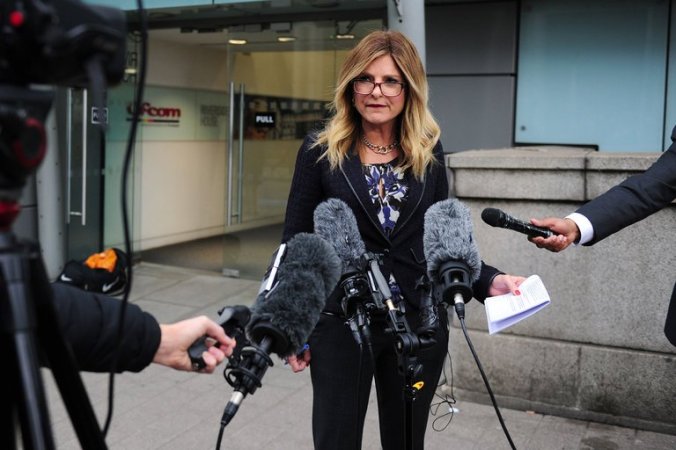
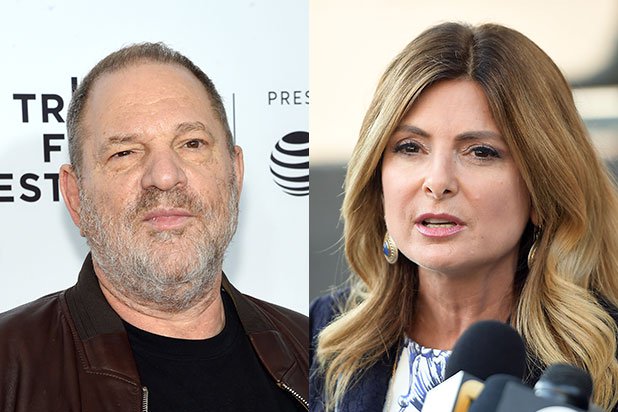
That Settles It, If It Wasn’t Obvious Already: Lisa Bloom Is An Unethical Hack (But I Could Be Wrong…)

Now, don’t sue me, Lisa! Remember what it says in the “About” section (above), this is all just my opinion. When I say you are a stunningly unethical lawyer, that’s just my analysis; it’s true I know something about legal ethics, teaching and consulting on it full time, but I can’t assert my opinion as fact. I can’t read your mind or slog through your soul. I don’t know what a bar disciplinary committee would decide, though I know this is a famously gray area in legal ethics, so unethical conduct is unlikely to be punished.  And when I say you’re a hack, remember that “hack” isn’t a description subject to objective proof, any more than, say, “asshole.” Perhaps your definition of “hack’ is different from mine. In fact, I’m sure it is.

That said, your conduct is a professional disgrace. I think. Who knows? I may be wrong.

In an interview with BuzzFeed News published this weekend, Bloom, speaking of her recently terminated representation of Harvey Weinstein, said

“I can see that my just being associated with this was a mistake. All I can say is, from my perspective, I thought, ‘Here is my chance to get to the root of the problem from the inside. I am usually on the outside throwing stones. Here is my chance to be in the inside and to get a guy to handle this thing in a different way.’ I thought that would be a positive thing, but clearly it did not go over at all.”

Bloom added that she will no longer represent men accused of sexual misconduct, “even those who convincingly tell me they are innocent….I will just make the best choices I can out of every situation. I have clearly not been successful. I think anybody who does big bold things fails. And I definitely failed on this one.”

What Bloom has failed at is called “being a trustworthy and competent lawyer.”

The next day, during an appearance on Good Morning America, Bloom even more explicitly threw her former client under the metaphorical bus:

“It’s gross, yeah,” Bloom told GMA. “I’m working with a guy who has behaved badly over the years, who is genuinely remorseful, who says, you know, ‘I have caused a lot of pain.’”

Did Bloom actually graduate from law school, or did she just apprentice in her mother’s office (she is Gloria Allred’s daughter) and somehow get an honorary license? Did she never learn about the a lawyer’s duties of loyalty and confidentiality? She obviously didn’t know about conflicts of interest, since she represented Weinstein while agreeing to let him turn her book into a TV miniseries.

Ethics Alarms has previously criticized lawyers who have publicly undermined their former clients. The most recent example  was last year, when a former Trump lawyer used his experiences while representing the future Presidential candidate decades earlier to write a scathing mid-campaign attack on his former client in the Huffington Post. I wrote,

There is strong disagreement in the profession about whether the answer to “Is this unethical?” should be an outright yes. The status of loyalty among the legal ethics values hierarchy is as hotly contested now as it ever has been. If a lawyer wants to attack a former client in a matter unrelated to the representation and no confidences are revealed in the process, is that a legal ethics breach? If it is, it would be a very tough one to prosecute. I think it’s a general ethics breach, as in wrong and unprofessional. It is disloyal, and clients should be able to trust their lawyers not to come back years later, after a client let the lawyer see all of his or her warts, and say, “This guy’s an asshole.” It undermines the strength of the public’s trust in the profession.

Continue reading

Here’s Something The News Media Hasn’t Explained Regarding The Weinstein Scandal: Those Victim Confidentiality Agreements Are Unethical, And Maybe Illegal

Rose McGowan, the new Sexual Harassment Fury on social media, says she was raped by Weinstein and had to accept a $100,000 settlement with a confidentiality agreement as a condition of the deal. That means that if she subsequently told her story and accused Weinstein, she would be liable for damages, and would have to return the money. Right?

Not exactly. Most of the accounts in this sordid series of events make it seem like confidentiality agreements are iron clad and enforceable. Often they are neither. McGowan’s almost certainly wasn’t.

Debra Katz, an attorney specializing in sexual harassment law suits, recently explained that if employees or former employees came forward with information about Weinstein participating in criminal misconduct, their non-disclosure agreements or confidentiality agreements would probably be unenforceable, saying,

“These kind of very broad NDAs or confidentiality agreements typically violate public policy. Employees have to have the legal ability to discuss any concerns about unlawful behavior in the workplace … These broad provisions that would effectively silo people, make them feel like they can’t speak about this, are simply an instrument to put fear in people.”

My position has always been that lawyers who construct such agreements, knowing that they are unenforceable, are committing sanctionable ethical misconduct. The lawyer for the employee being silenced, moreover, has an obligation to let the client know that the requirement is unconscionable. Of course, it’s the client’s decision whether she wants to take the money.  It is also unethical to make an agreement you have no intention of honoring. Continue reading

Morning Ethics Warm-Up, 10/11/2017: Words, Debt, And Costumes

Good morning from Richmond, Va.!

1 Passengers keep piling onto the Harvey Weinstein Ethics Train Wreck:

  • Fashion designer Donna Karan, questioned about Weinstein at an event, said in part:

“I also think how do we display ourselves? How do we present ourselves as women,” Karan said to the Daily Mail. “What are we asking? Are we asking for it by presenting all the sensuality and all the sexuality?”

Then she pointed to Weinstein’s achievements, and said Weinstein and his wife were “wonderful people.”

(Note to the designer: men who use their power to harass and assault women are not wonderful people by definition.)

After the predictable response to these idiotic comments, Karan protested that her quote was taken out of context, as if the context wasn’t Harvey Weinstein, and issued a low level apology that could only mean, “I’m deeply sorry I said something in public that reveals the miserable level of my values.”

  • Lindsay Lohan, currently in exile in Great Britain and Dubai, used social media to remind her fans in the US that she is, after all, a moron, writing on Instagram,

“I feel very bad for Harvey Weinstein right now. I don’t think it’s right what’s going on….He’s never harmed me or did anything to me – we’ve done several movies together.I think everyone needs to stop – I think it’s wrong. So stand up.”

One of the real benefits of social media is that it reveals the total lack of ethics comprehension, reasoning ability and life competence that inflict so much of the public, including celebrities. With clarity of thought like that, is there any mystery regarding how the once rising star managed to mangle her career despite beauty, talent, and early success?

  • NBC was presented with the Weinstein story before it was broken by the New York Times, says Ronan Farrow, the author of a new Weinstein investigative piece in The New Yorker. The network hasn’t said why. Does it have to? Weinstein was close to both the Clintons and the Obamas, and the scandal directly implicates the Democratic party and its core supporters….like NBC. It is fascinating to watch cable and network anchors and guests desperately try to analogize Weinstein to President Trump, but the Hollywood mogul was enabled by self-righteous liberals and was given the King’s Pass (with an assist from the Saint’s Excuse) because he gave to Planned Parenthood and Hillary, making him, in Donna Karan’s words, “wonderful” by definition. The analogy is Bill Clinton, of course, and any journalist who refuses to acknowledge that has confessed crippling partisan bias.

2. This brings us to a quote by blogger Ann Althouse:

“My hypothesis is that liberals — including nearly everyone in the entertainment business — suppressed concern about sexual harassment to help Bill Clinton. Giving him cover gave cover to other powerful men, and the cause of women’s equality in the workplace was set back 20 years.”

Her hypothesis is correct, and I said so when the liberals, feminists, abortion zealots, artistic community and others circled their wagons around Clinton during the Lewinsky scandal. This is one reason why Hillary’s campaign stance as standard-bearer for women’s rights and victims of sexual assault was so grotesque.

Here’s another quote from Althouse that I like:

“Who are the women who accepted the deal as offered by Harvey Weinstein? Will their names be kept out of the press? Should they?…

…So much silence facilitating so much harm! Should the women who took the bargain and got what they wanted out of it be regarded as victims and entitled to keep their names secret, or are they part of a system that hurt many others, and subject to outing.”

I’ve answered this question in various comments on previous posts, much to the unhappiness of readers who believe that victims who remains silent and thus allow evil to continue shouldn’t be criticized. The women are part of the system, and accountable. Continue reading

Here We Go Again: Harvey Weinstein, Lisa Bloom And The Thing About Lawyer Ethics That The Public And The News Media Just Cannot Seem To Grasp

LawNewz writes, and in so doing wins a Legal Ethics Dunce so easily that I’m not even going to bother,

Feminist attorney Lisa Bloom, who has represented dozens of women against accused sexual harassers like Donald Trump and Bill O’Reilly, is now representing an alleged sexual harasser. In, quite frankly, a shocking move, Bloom agreed to give her “advising” services to film studio executive Harvey Weinstein, who is accused of harassing women over a thirty-year timespan. Immediately, many in the legal world wondered what would motivate such a principled women’s rights advocate to represent a man facing such sordid accusations.

Weird! I have the strangest feeling I have been here before…it’s Ethics Alarms déjà vu!

No, I have been here before, and if you’ve read the blog regularly, so have you, like here, for example, when the post was called,  No, There Is Nothing Unethical Or Hypocritical About A Feminist Lawyer Defending Roger Ailes.or here, when I defended Hillary Clinton….yes, you read that right…when she was being called a hypocrite for once defending not only a child rapist, but a guilty child rapist.  Then there was this post, when liberal icon Larry Tribe was representing a coal company. Bloom, Tribe, Estrich and Hillary all have the same defense, not that lawyers should need a defense for being lawyers.

Let’s see…I think I’ll quote myself from the Hillary piece this time… Continue reading

Coincidence, Ethics Violation, Or A Playground Rhyme Come True: The Lawyer’s Burning Pants

I love this story!

 Miami defense lawyer’ Stephen Gutierrez shocked onlookers when his pants burst into flames mid-trial as he was addressing the  jury. Gutierrez was defending a client  accused of intentionally setting his car on fire in South Miami. Yes, it was an arson case. He had just begun his closing argument when smoke started billowing from his pants pocket.

By sheer coincidence I’m sure, the lawyer was arguing that the defendant’s car spontaneously combusted—just like the lawyer’s trousers!— and was not intentionally set on fire. Observers told police that Gutierrez had been fiddling in his pocket right before his pants ignited. He ran out of the courtroom, and the jurors were ushered out as well. After  Gutierrez returned unharmed, he told the judge that  it wasn’t a staged  demonstration gone horribly wrong, but just a coincidence. A faulty battery in his e-cigarette had caused the fire.

In an arson trial.

During closing argument.

Where the defense was “spontaneous combustion.”

Okay!

Jurors convicted Gutierrez’s client of second-degree arson anyway. Miami-Dade police and prosecutors are now investigating the episode, and Miami-Dade Circuit Judge Michael Hanzman is deciding whether to hold him in contempt of court.

Comments: Continue reading